Economy
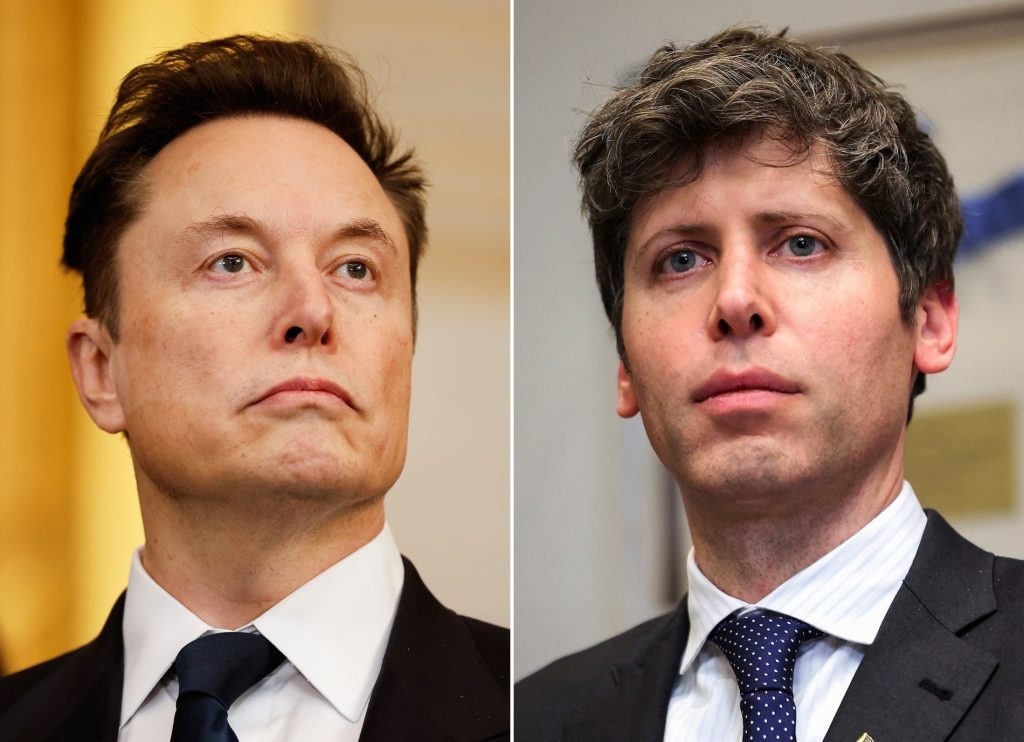
Elon Musk loses lawsuit against OpenAI, Sam Altman
- /home/naijuinz/public_html/wp-content/plugins/mvp-social-buttons/mvp-social-buttons.php on line 27
https://naijablitznews.com/wp-content/uploads/2026/05/ewfw-1-1000x600.jpg&description=Elon Musk loses lawsuit against OpenAI, Sam Altman', 'pinterestShare', 'width=750,height=350'); return false;" title="Pin This Post">
- Share
- Tweet /home/naijuinz/public_html/wp-content/plugins/mvp-social-buttons/mvp-social-buttons.php on line 72
https://naijablitznews.com/wp-content/uploads/2026/05/ewfw-1-1000x600.jpg&description=Elon Musk loses lawsuit against OpenAI, Sam Altman', 'pinterestShare', 'width=750,height=350'); return false;" title="Pin This Post">
Elon Musk’s lawsuit against OpenAI has been decided in favour of the latter after the world’s richest person accused the artificial intelligence company of abandoning its original mission to benefit humanity.

A federal jury in Oakland, California, found OpenAI, CEO Sam Altman, and president Greg Brockman, not liable for Musk’s claims that they broke a contract made with him and unjustly enriched themselves.
In an unanimous verdict on Monday, the nine-person jury stated that Musk brought his case too late. Judge Yvonne Gonzalez Rogers aligned with the decision.

“I think there’s a substantial amount of evidence to support the jury’s finding, which is why I was prepared to dismiss on the spot,” Rogers told Musk’s legal team.
Speaking after the verdict, Musk’s lawyer Marc Toberoff said the tussle “is not over,” adding that the tech billionaire would have a strong basis for an appeal.
Toberoff told reporters that the ruling, based on the statute of limitations, ”has factual components but it has major legal components as well.”
Musk, Altman, Brockman, and Microsoft CEO Satya Nadella all gave testimony in the three-week trial that featured several prominent Silicon Valley executives.
The outcome of the case eases the path for OpenAI to proceed with a planned initial public offering that could value the business at $1 trillion.
Economy
OPEC+ approves fourth oil output increase since Hormuz closure
The Organisation of Petroleum Exporting Countries and its allies, also known as OPEC+, has approved the fourth oil output increase since the Hormuz closure crisis.
The decision followed renewed commitments by Saudi Arabia, Russia, Iraq, Kuwait, Kazakhstan, Algeria and Oman to support market stability.
In a statement issued at the weekend, OPEC stated: “The seven OPEC+ countries, which previously announced additional voluntary adjustments in April and November 2023, namely Saudi Arabia, Russia, Iraq, Kuwait, Kazakhstan, Algeria and Oman, met virtually on June 7, 2026, to review global market conditions and outlook.
“In their collective commitment to support oil market stability, the seven participating countries decided to implement a production adjustment of 188,000 barrels per day from the additional voluntary adjustments announced in April 2023.
“This adjustment will be implemented in July 2026. The additional voluntary adjustments announced in April 2023 may be returned in part or in full, subject to evolving market conditions and in a gradual manner.
“The countries will continue to closely monitor and assess market conditions and, in their continuous efforts to support market stability, reaffirmed the importance of adopting a cautious approach and retaining full flexibility to increase, pause or reverse the phase-out of the voluntary production adjustments, including reversing the previously implemented voluntary adjustments announced in November 2023.
“The seven OPEC+ countries also noted that this measure will provide an opportunity for the participating countries to accelerate their compensation.
“The seven countries reiterated their collective commitment to achieving full conformity with the Declaration of Cooperation, including the voluntary production adjustments, which will be monitored by the Joint Ministerial Monitoring Committee (JMMC).
“They also confirmed their intention to fully compensate for any overproduced volumes since January 2024. The compensation period will be extended until the end of December 2026.”
It added: “The seven OPEC+ countries will hold monthly meetings to review market conditions, conformity and compensation. The seven countries will meet on July 5, 2026.”
Economy
Naira depreciates to N1,397/$ in parallel market
The naira on Friday depreciated to N1,397 per dollar in the parallel market from N1,390 per dollar on Thursday.
Likewise, the naira depreciated to N1,365 per dollar in the Nigerian Foreign Exchange Market, NFEM.
Data from the Central Bank of Nigeria, CBN, showed that the indicative exchange rate for the market rose to N1,365 per dollar from N1,359.75 per dollar on Thursday, reflecting N5.25 depreciation for the naira.
Consequently, the margin between the parallel and official markets widened to N32 per dollar from N30.25 per dollar on Thursday.
The turnover in the interbank foreign exchange market recorded its fourth daily decline by 42.5 per cent to $73.6 million from $128.2 million on Thursday.
This week, the naira strengthened by N1 per dollar in the official market, with turnover in the interbank foreign exchange market climbing to N683.2 million, representing a 76.7 per cent rise compared to N386.54 million recorded the previous week.
However, the local currency weakened in the parallel by N2 against the greenback.
Economy
See Dollar to Naira exchange rate today, June 5, 2026
The Nigerian naira maintained a relatively stable performance against the United States dollar at both the official and parallel foreign exchange markets as traders monitored liquidity conditions and demand pressures.
Data from the Central Bank of Nigeria’s Nigerian Foreign Exchange Market (NFEM) showed the naira trading around ₦1,361 to the dollar, reflecting a largely steady trend compared to recent sessions. The most recent NFEM rate published by the apex bank stood at approximately ₦1,361.05/$, while trading during the week remained within the ₦1,359–₦1,365 range.
Market data from recent official trading sessions also indicated that the naira had strengthened modestly in early June, supported by improved foreign exchange supply and sustained interventions aimed at enhancing market liquidity.
At the parallel market, commonly referred to as the black market, the dollar traded at between ₦1,390 and ₦1,405 on Friday, depending on location and transaction size. Several market trackers reported buying rates around ₦1,380–₦1,395 and selling rates between ₦1,393 and ₦1,405 per dollar.
The gap between the official and parallel market rates remained relatively narrow compared with previous months, reflecting ongoing efforts to improve transparency and liquidity in the foreign exchange market.
Currency dealers said market participants continue to watch foreign portfolio inflows, crude oil earnings, and Central Bank policies, all of which remain key factors influencing the naira’s direction in the coming weeks.
As of June 5, 2026, the dollar exchanged at about ₦1,361 in the official NFEM market, while parallel market transactions ranged from approximately ₦1,390 to ₦1,405 per dollar.
-
News22 hours agoOyo Police: How Family Aide Conspired in Kidnap of Ex-Minister’s Sister, Twin Sons
-
News22 hours agoINEC clears Maku, Ombugadu, 18 others for June 20 bye-elections
-
News22 hours agoFinally, Amaechi emerges Atiku’s running mate after closed door meeting with him
-
News13 hours agoThe 30 Days of Projects Commissioning in the FCT starts today
-
News13 hours agoSad: Nigerian Labour Leader Dies At International Labour Conference In Geneva
-
News22 hours agoOhanaeze Ndigbo Bans Monarchical Titles In Edo
-
News22 hours ago‘Talk and do ‘ minister, Wike actualizing Renewed Hope Agenda as Tinubu begins commissioning of projects in Abuja to mark 3rd year
-
Metro22 hours agoFather of four missing after being swept away by floodwaters