Economy
US to deploy wireless technology in Nigeria, other West African countries
- /home/naijuinz/public_html/wp-content/plugins/mvp-social-buttons/mvp-social-buttons.php on line 27
https://naijablitznews.com/wp-content/uploads/2025/11/united-states-flag.jpg&description=US to deploy wireless technology in Nigeria, other West African countries', 'pinterestShare', 'width=750,height=350'); return false;" title="Pin This Post">
- Share
- Tweet /home/naijuinz/public_html/wp-content/plugins/mvp-social-buttons/mvp-social-buttons.php on line 72
https://naijablitznews.com/wp-content/uploads/2025/11/united-states-flag.jpg&description=US to deploy wireless technology in Nigeria, other West African countries', 'pinterestShare', 'width=750,height=350'); return false;" title="Pin This Post">
The U.S. Trade and Development Agency has concluded arrangements to deploy U.S.-made wireless infrastructure in Nigeria and other three West African countries.

According to a statement made available by the U.S Embassy, Abuja, U.STDA disclosed the funding for a feasibility study to install approximately 1,500 turnkey mobile communications base stations for deployment of wireless technology across Benin, Côte d’Ivoire, Ghana and Nigeria.
The deployment of American-made mobile base stations, it further stated will address West Africa’s urban-rural connectivity gap and provide millions of West Africans with faster, more reliable mobile access, aimed at supporting economic activity in areas.

The statement reads: “USTDA announced funding for a feasibility study to install approximately 1,500 turnkey mobile communications base stations from Massachusetts-based company Vanu Inc. (Vanu), across Benin, Côte d’Ivoire, Ghana and Nigeria.
“USTDA is bringing private sector solutions to unlock widespread, affordable, trusted internet access in off-grid communities across West Africa,” said Thomas R. Hardy, USTDA’s Deputy Director. “By helping American companies compete in these critical markets, we are offering an alternative to insecure infrastructure while creating export opportunities that make America more prosperous.”
“USTDA’s assistance will fund the study for Vanu Côte d’Ivoire, which has selected Georgia-based Vernonburg Group LLC to provide U.S. expertise to assess the commercial viability of large-scale deployment and help mobilize financing for implementation. The study will evaluate existing network infrastructure, analyze market conditions across all four countries, assess legal and regulatory frameworks, and develop a comprehensive financing plan. The project will generate substantial opportunities to deploy trusted U.S. wireless solutions, network management systems, and other digital infrastructure throughout the project’s implementation.
“The deployment of American-made mobile base stations will address West Africa’s urban-rural connectivity gap and provide millions of West Africans with faster, more reliable mobile access, supporting economic activity in areas that have historically been offline or limited to outdated 2G and 3G networks.
Andrew Beard, CEO of Vanu Inc., said: “Vanu is proud to partner with USTDA to demonstrate how our systems enable mobile network operators in West Africa to deliver broadband Internet and voice services in some of the most economically and operationally challenging markets and prove that connectivity in these markets can be profitable, sustainable and scalable. Building on our pioneering world-first Federal Communications Commission certification of a software radio product, Vanu has developed an ecosystem of American companies to deliver cost-effective systems based on open interfaces and architectures. The USTDA study will help catalyze new investment, expand U.S. exports, and accelerate deployment of trusted, secure digital infrastructure to connect billions of people worldwide.”
Economy
Elon Musk loses lawsuit against OpenAI, Sam Altman
Elon Musk’s lawsuit against OpenAI has been decided in favour of the latter after the world’s richest person accused the artificial intelligence company of abandoning its original mission to benefit humanity.
A federal jury in Oakland, California, found OpenAI, CEO Sam Altman, and president Greg Brockman, not liable for Musk’s claims that they broke a contract made with him and unjustly enriched themselves.
In an unanimous verdict on Monday, the nine-person jury stated that Musk brought his case too late. Judge Yvonne Gonzalez Rogers aligned with the decision.
“I think there’s a substantial amount of evidence to support the jury’s finding, which is why I was prepared to dismiss on the spot,” Rogers told Musk’s legal team.
Speaking after the verdict, Musk’s lawyer Marc Toberoff said the tussle “is not over,” adding that the tech billionaire would have a strong basis for an appeal.
Toberoff told reporters that the ruling, based on the statute of limitations, ”has factual components but it has major legal components as well.”
Musk, Altman, Brockman, and Microsoft CEO Satya Nadella all gave testimony in the three-week trial that featured several prominent Silicon Valley executives.
The outcome of the case eases the path for OpenAI to proceed with a planned initial public offering that could value the business at $1 trillion.
Economy
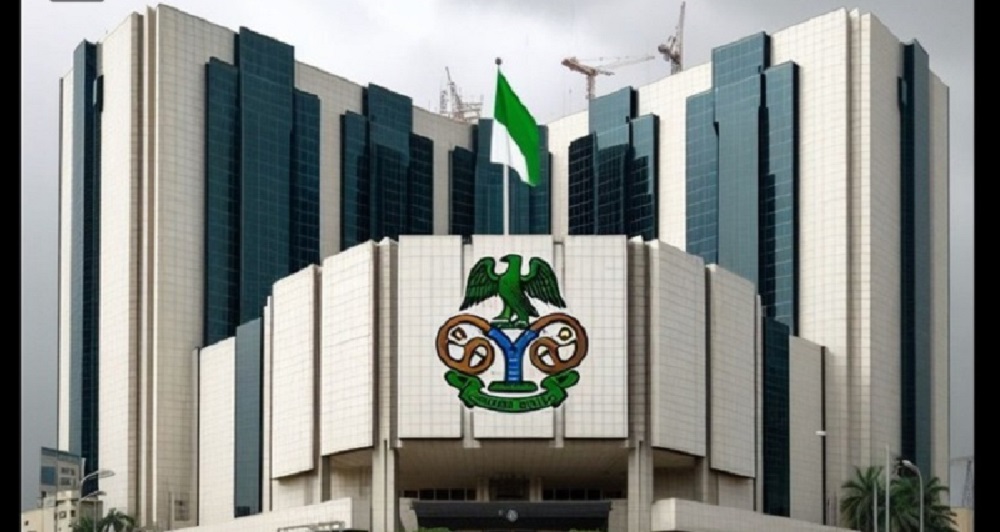
CBN Reforms Drive FX Inflows To $112b, Investors’ Confidence Rises
The Central Bank of Nigeria (CBN’s) decision to clear over $7bn unsettled FX backlogs raised investors’ confidence in the economy, supporting dollar inflows and foreign reserves accretion. Nearly three years after the backlog clearance, FX inflows into the economy rose significantly hitting $112bn in 2025.
Market analysts said rising autonomous inflows, including diaspora remittances, foreign portfolio investment, non-oil export proceeds shows positive effect of the reforms in attracting foreign capital to the domestic economy.
The rising investors’ confidence in the economy started with a systematic planning and commitment to due process through policies initiated by a combination of Central Bank of Nigeria (CBN) and fiscal authorities.
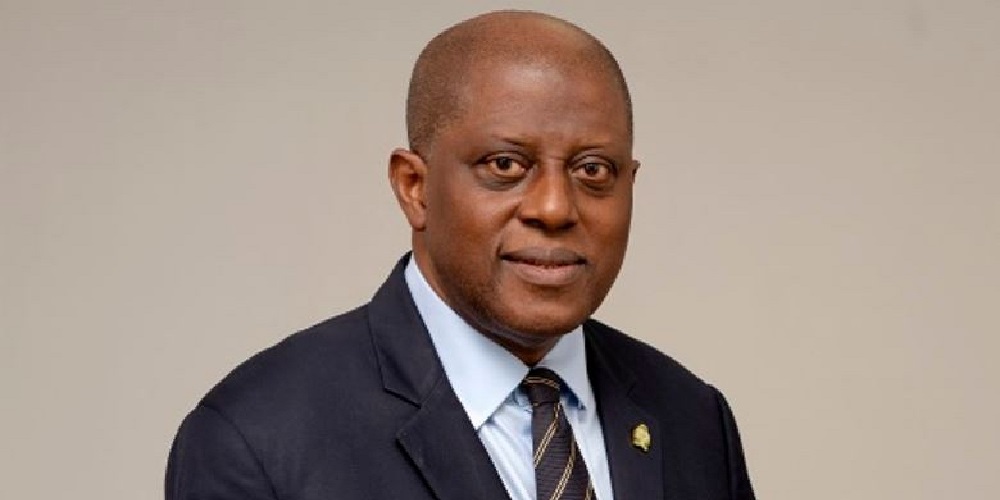
The CBN’s decision to clear over $7bn unsettled FX backlogs raised investors’ confidence in the economy, supporting dollar inflows and foreign reserves accretion, CBN Governor, Olayemi Cardoso said.
The CBN boss had explained that although he had no idea where the fund for the backlog clearance would come from, when he assumed office, but he believed it was the right thing to do, and gave investors his word.
He said: “Credibility is at the heart of any central bank. If you don’t have credibility, people do not trust you and they do not invest in your economy. When I took office, I made a promise we would pay the backlog, the verifiable backlog of monies that were owed by Nigeria to third parties.”
“And it was, at the time, estimated at over $7bn. And to be honest with you, I had no idea how I was going to do it, but I just felt it was not something to be negotiated”.
Cardoso explained that Nigeria needed to ensure that its integrity is maintained.
He said the apex bank started with a forensic audit to understand the issues better and based on the recommendations, the backlog of foreign exchange transactions was paid, which was a huge sacrifice.
He explained that “as a going concern, the CBN knows that if it expected people to continue to trust and invest in our economy, you’ve got to keep your promises”.
Some of these moves, including reforms in the exchange rate are key factors that continues to attract global investors into the economy.
Expectedly, forex inflows into the domestic economy closed 2025 at $112bn, a new report from Financial Markets Dealers Association (FMDA) has shown.
The forex inflows were dominated by autonomous sources — private capital flows outside the Central Bank of Nigeria (CBN’s) direct control — accounting for 64.94 per cent of total FX inflows during the year.
The report, which also showed that the Central Bank of Nigeria’s own FX sales rose by 126.37 per cent within the coverage period, hitting $8.94bn from $3.95bn recorded in the previous year.
Autonomous inflows surged to $72.91bn in 2025, up from $59.29bn in 2024 and $41.80bn in 2023, reflecting a near-doubling of private-sector dollar flows in two years.
The FMDA data reveals a market in which rising autonomous inflows are progressively displacing CBN-supplied liquidity as the primary driver of FX availability, even as the apex bank continues to play a stabilising role.
Total FX utilisation reached $47.17bn in 2025, driven by a dramatic surge in invisible-related transactions and sustained industrial-sector demand. The data reveal a significant compositional shift in how Nigeria consumes its foreign exchange.
Invisible-related FX utilisation surged to $27.27bn in 2025 from $11.10bn in 2024, with financial services alone accounting for $21.22bn.
Also, total import-related FX demand rose more moderately, from $15.54bn in 2024 to $19.90bn in 2025 while the industrial sector remained the largest merchandise-related source of demand at $8.43bn, up from $7.96bn in 2024.
“Oil-sector FX demand nearly doubled, from $2.26bn in 2024 to $4.98bn in 2025. Business services demand leapt from $702.38m to $3.48bn, while educational services demand fell sharply from $396.40m in 2023 to just $55.16m in 2025,” the report said.
The data indicates that invisible transactions — services, financial flows, and cross-border payments — have now eclipsed merchandise imports as the dominant driver of FX demand in Nigeria.
In the foreign exchange market, the country faced a backlog of over $7bn in unfulfilled commitments and a fragmented FX regime characterized by multiple forex rates, which had encouraged arbitrage opportunities.
This regime stifled much needed foreign investment, and led to the depletion of our external reserves which fell to $33.22bn in December 2023. It must also be understood that the cost of the FX subsidy regime is estimated to far exceed that of fuel subsidies.
The apex bank has also undertaken critical reforms to unify Nigeria’s exchange rate, eliminating distortions and restoring transparency. This unification has enabled it to clear the outstanding foreign exchange obligations, giving businesses—ranging from manufacturers to airlines—the confidence to plan and invest in the future.
To further enhance the functionality of the foreign exchange market, the CBN introduced an electronic FX matching system, which has proven effective in other markets.
With these developments came positive Fitch Ratings on Nigeria economy, signaling positive fallout from the reforms.
The global rating agency said that from exchange rate unification to reduce arbitrage in the markets, introduction of electronic FX matching platform and a new FX code to enhance transparency and efficiency in the market as well as deployment of monetary policy tightening to keep inflation on check, the Central Bank of Nigeria (CBN) has demonstrated commitment to achieving sustainable economy growth and exchange rate stability.
Already, the Fitch rating moved Nigeria’s long-term foreign-currency issuer default rating (IDR) from negative to stable, meaning that the country stands a better chance of attracting foreign investment, borrow money on international markets at better interest rates, and boost investor confidence.
Fitch also applauded government’s commitment to policy reforms implemented since its move to orthodox economic policies in June 2023, including exchange rate liberalisation, monetary policy tightening, and steps to end deficit monetisation as well as fuel subsidies removal.
“These have improved policy coherence and credibility and reduced economic distortions and near-term risks to macroeconomic stability, enhancing resilience in the context of persistent domestic challenges and heightened external risks,” the agency stated.
The S&P Global Ratings, also revised its outlook on Nigeria to “positive” from “stable” on Friday, backing the country’s ongoing economic reforms, and also affirmed the country’s rating at “B-/B”.
“The monetary, economic, and fiscal reforms being implemented by Nigerian authorities will yield positive benefits over the medium term,” S&P said.
Moody’s also upgraded Nigeria’s rating by one notch to “B3” from “Caa1”, citing notable improvements in the country’s external and fiscal positions, while Fitch last month kept its “B” rating and “stable” outlook.
The rating agencies continue to cite FX reforms instituted by Central Bank of Nigeria (CBN) as crucial in the current macroeconomic stability and push to tame inflation.
President, Association of Bureaux De Change Operators of Nigeria, Dr. Aminu Gwadabe, applauded the rating upgrade.
He said the FX reforms have really supported the stability in exchange rate, and is helping the economy to achieve desired growth.
Other analysts described the S&P rating as ‘a significant step forward in restoring investor confidence and economic stability.”
According to them, the development means an improvement in Nigeria’s creditworthiness, which could open up new opportunities for the country across several sectors.
Dr. Muda Yusuf, Convener of the Centre for the Promotion of Private Enterprise (CPPE), said the data pointed unambiguously to the impact of reform.
“The autonomous inflows are driven by the reform. Remittances from the diaspora, inflows from foreign portfolio investors, non-oil export proceeds — all manner of things outside the traditional sources of our forex. This reflects the fact that the reform has positioned the economy to attract those inflows,” he said.
On the rebound in CBN FX sales, Yusuf was careful to place the development in proper context.
“It is not necessarily because the CBN has significantly increased its intervention. A lot of inflows are coming in. Those are not CBN funds. In fact, there was a time the CBN was even buying forex on the market because of the liquidity. The bigger factor is the supply side — the fact that autonomous inflows have increased significantly,” he said.
The erstwhile Director General of the Lagos Chamber of Commerce and Industry (LCCI) also addressed the surge in invisible-related demand, noting that greater caution was needed before drawing conclusions.
“Invisible covers a lot of things. When you are paying foreign debt, it is a financial services transaction. When airlines come to Nigeria, when shipping companies operate here, when expatriates come into oil and gas and tech — all of these services have to be paid for in foreign currency. There is a lot of international transaction going on now because of the confidence the reform has restored. That is what I think is behind that increase,” he explained.
Mr. Charles Fakrogha, CEO of ECL Asset Management, said the recovery in both FX sales and autonomous inflows was consistent with what the capital market was also signaling.
“The kind of activity we are seeing from the FX market shows there are a lot of activities in terms of imports and exports. Most of these companies import raw materials, some export finished products — all of this will account for the increase we are seeing,” he said.
However, Fakrogha expressed concern about the dominance of financial services in FX utilisation.
“Financial services — you have seen a lot of activities. We have seen so many financial institutions springing up. And yet the real sector is not being carried along. When it is tough for financial services to give out loans and recover them, what happens? They go to the treasury bills market — safe investment. And the real sector suffers. These are the structural imbalances in the economy that we are seeing,” he noted.
On the role of exchange rate unification in driving inflows, Fakrogha was emphatic. “That is the fundamental of it. The unification has closed the gap for unnecessary speculation. The CBN has done quite a lot in terms of maintaining stability. If not for that unification, the dollar-naira rate would have gone beyond what we are seeing,” he said.
Mr. Aruna Kebira, CEO of Globalview Capital, argued that improved regulation and recapitalisation of financial institutions had been equally pivotal in attracting capital inflows.
“There is no direct investor that would not like to do business with a well-capitalised stockbroking firm. The regulation is so strong. All the banks are recapitalised, insurance companies are in the process of recapitalisation, and PFAs are also being recapitalised. Things have actually opened up,” he said.
“Do you know that Nigerians in diaspora now have serious confidence in the Nigerian stock market? The movement from 58,000 to 250,000 points — it is not magic. Money is coming in. It is for investment,” said Kebira.
According to him, there is a growing confidence of diaspora investors as a structural source of autonomous inflows, stressing that several of them have already set aside funds for investing in upcoming Dangote Refinery’s Initial Public Offer (IPO).
Recall that on assuming office in October 2023, Cardoso had prioritised reforms to rebuild Nigeria’s economic buffers and strengthen resilience.
CBN’s policies, including the currency reforms, led to investment inflows from abroad, and reduced interventions in the domestic forex market.
Economy
Why I Sold My Mansions In UK, US – Dangote
Africa’s richest man and President of the Dangote Group, Aliko Dangote, has revealed why he sold off his luxury properties in the United States and the United Kingdom, saying the decision was driven by his determination to remain focused on building industries.
Dangote made the revelation during a television interview where he spoke extensively about discipline, sacrifice, commitment, and the mindset that shaped his rise as one of the world’s leading industrialists.
According to him, owning expensive properties abroad became a distraction at a critical point in his business journey, especially when he decided to shift fully into industrialisation.
“When I decided to go into industry, you know what I did, I sold all my properties in the US. I had two houses in the US, big mansions, and I had a house in the UK. I wanted to really sit in Nigeria and concentrate,” Dangote said.
The billionaire businessman explained that luxury assets outside the country often come with emotional and financial attachments capable of taking attention away from bigger goals.
“Sometimes when you own a house, a holiday home anywhere, you have to create time to go and use that property,” he stated.
Dangote noted that he deliberately embraced a simpler lifestyle in order to focus his energy on creating long-term industrial visions that would transform Nigeria and Africa.
“So now, my life is very simple, wherever I go, I use hotels. When I leave, nobody will call me for any form of maintenance,” he added.
The industrialist stressed that his commitment to business expansion and nation-building required total concentration and sacrifice, insisting that creating industries is not compatible with a life driven by luxury and distractions.
“I’m committed to what I do. I need time to create visions for what I do,” Dangote declared.
-
News15 hours ago2027: I didn’t purchase ADC presidential form to be VP – Amaechi
-
News17 hours ago2027 Edo South: Grateful Ogbeide-Ihama thanks Senatorial District says “the journey forward begins together “
-
News15 hours agoLamentations of Desmond Elliot, says “I had no hand in Obasa’s impeachment”
-
News18 hours agoKilling of Oyo Teacher: Obi Demands Accountability, says Nigeria fast losing its humanity
-
News18 hours agoFood inflation spikes above 20% in 11 states
-
News14 hours agoWike Commends Quality, Speed of Abuja Projects, Says Satellite Towns Must Feel Impact of Development(Photos)
-
News21 hours agoAnger as Kano teacher r*pes four siblings aged between 4 to 7
-
Opinion14 hours agoInconclusive APC Primary in Ekiti North I: Stakeholders Await Declaration as Incumbent Rotimi Holds Decisive Margin