Connect with us

News

Shettima Urges States To Unlock Full Potential Of $750m SABER Programme

Published

on

ADVERTISEMENT
Zoom Ad
ADVERTISEMENT
Zoom Ad

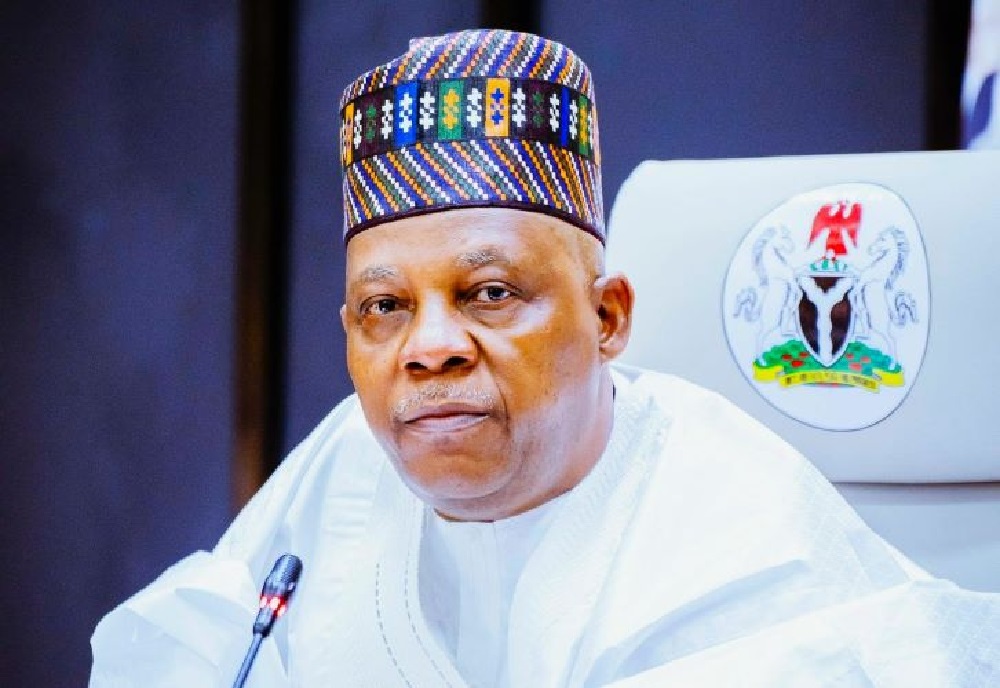
The Vice President, Kashim Shettima, has implored state governments to accelerate business-enabling reforms to unlock the full potential of the $750 million World Bank-assisted State Action on Business Enabling Reforms (SABER) programme.


This, he said, has become necessary to attract domestic and global capital, enhance local infrastructure, and drive subnational economic growth.

Shettima, who spoke on Tuesday during a stakeholder meeting on optimising the implementation of the SABER programme at the Presidential Villa, noted that a fully implemented SABER programme would help create a more predictable and transparent business environment.

He also listed other benefits of the programme to include attracting domestic and foreign investment, strengthening private-sector confidence, reducing the cost of doing business, expanding digital and physical infrastructure, improving access to land and commercial justice systems, and enhancing the competitiveness of the states.

Advertisement

“These outcomes will translate into increased economic activity, higher productivity, job creation, improved internally generated revenue, and better living standards for our citizens,” he stated.

Accordingly, the Vice President directed the Director General of the Presidential Enabling Business Environment Council (PEBEC), Zarah Mustapha-Audu, to initiate moves towards extending the lifespan of the programme by an additional year “so that our states can fully utilise the opportunities at our doorsteps.”

Shettima noted that Nigeria stood a better chance of facilitating the actualisation of its one trillion-dollar economy drive by fully optimising SABER implementation.

“I therefore encourage us to engage constructively and contribute meaningfully to our deliberations. Let us seize this opportunity to unlock the full potential of the SABER Programme and position our States as engines of economic growth, investment, and sustainable development,” he stated.

Advertisement

Shettima tied the success of the ongoing reforms of the administration of President Bola Tinubu to a conducive and enabling environment for businesses to thrive, maintaining that this could be determined at the subnational level.

“As a nation, we have embarked on a bold economic reform agenda under the leadership of His Excellency, President Bola Ahmed Tinubu, GCFR. The success of this agenda depends significantly on our ability to create an enabling environment for businesses to invest, expand, and create jobs.

“While the Federal Government continues to implement reforms at the national level, the reality remains that many of the conditions that define the experience of investors and businesses are determined at the subnational level. This is why the role of State Governments in the implementation of SABER is critical.”

Minister of State for Budget and Economic Planning, Dr Doris Uzoka-Anite, encouraged stakeholders to address identified implementation bottlenecks as the SABER programme delivers its intended outcomes for Nigeria in line with the Renewed Hope Agenda.

Advertisement

She expressed optimism that the $750 million performance-based intervention designed by the World Bank technical team and the PEBEC Secretariat would be fully accessed by the states.

Giving an overview of the SABER Programme and implementation matters, the Director-General of PEBEC, Zarah Mustapha-Audu, assured that the council remained committed to removing bureaucratic bottlenecks by working with all arms of government, civil society organisations (CSOs), the private sector, and other stakeholders towards achieving the programme’s objectives.

She explained that while the funds were tied to deliverables, progress was being made by participating states to meet all disbursement-linked indicators as stipulated by the programme.

Advertisement
Continue Reading
Advertisement

News

Atiku queries INEC over leaked data, demands full disclosure of probe report

Published

on

By

ADVERTISEMENT
Zoom Ad
ADVERTISEMENT
Zoom Ad

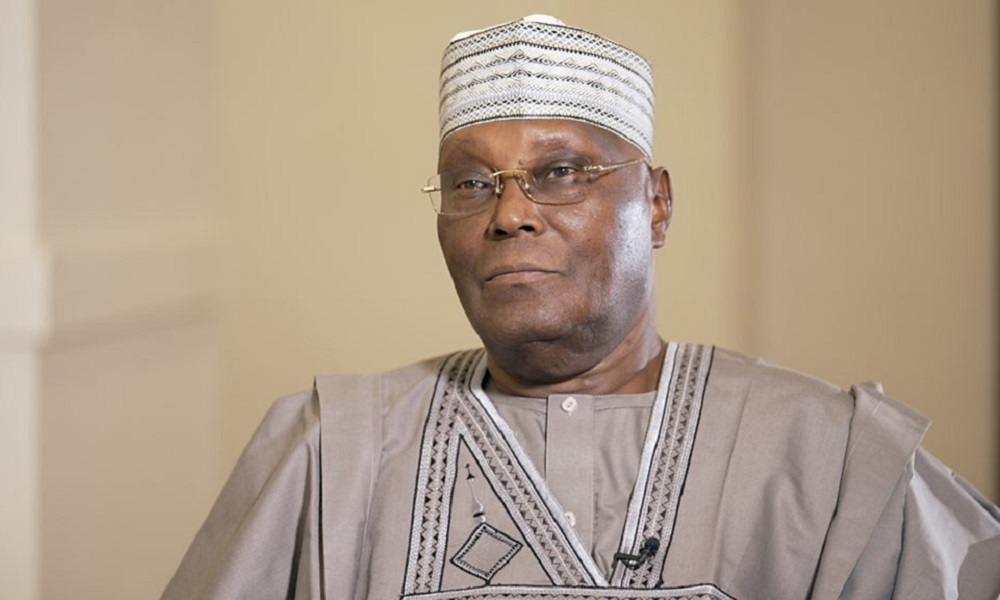
Former Vice President Atiku Abubakar has said that the latest statement by the Independent National Electoral Commission (INEC) concerning the unauthorised disclosure of information from its Continuous Voter Registration (CVR) database has only reinforced the urgent need for a full, transparent and independent investigation into the matter.

In a statement issued by his Senior Special Assistant on Public Communication, Phrank Shaibu, the presidential candidate of the African Democratic Congress (ADC) asked the commission to provide information about the individuals who leaked the data if there was no hacking.

The former Vice President noted that INEC’s own statement reveals that it has identified the specific user account through which the information was accessed and that relevant personnel have already been questioned.

“That is welcome. But identifying a user account is only the beginning. Nigerians deserve to know the full chain of custody of this information: who accessed it, who authorized its release, how it reached political actors, and whether anyone outside the Commission benefited from or encouraged the unauthorized disclosure.”

Advertisement

The Waziri Adamawa noted that while INEC has attempted to reassure Nigerians that there was no external hacking incident or breach of its ICT infrastructure, the commission has nevertheless admitted that sensitive voter information was accessed through valid official credentials and subsequently released without authorisation.

“INEC’s statement has moved this issue beyond conjecture. The Commission has now confirmed that voter information was accessed through credentials assigned to personnel participating in the ongoing CVR exercise and that such information was released without authority. That admission alone should concern every Nigerian.

“What Nigerians want to know is simple: how did information that resides within a restricted electoral database find its way into the hands of political actors and their associates? The fact that there was no external hack does not diminish the gravity of the incident. If anything, it raises even more troubling questions about internal controls, institutional safeguards, and the possibility of political interference.”

Atiku therefore called on INEC to go beyond assurances and provide Nigerians with full transparency.

Advertisement

“INEC must publish the complete findings of its investigation. Nigerians deserve to know precisely what happened, who was responsible, what disciplinary measures will follow, and what reforms are being implemented to prevent a recurrence.

“The credibility of the 2027 election will not be determined solely on election day. It is being shaped right now by the willingness of institutions to demonstrate transparency, accountability, and independence.

“Nigeria cannot afford a situation where confidence in electoral institutions is weakened before campaigns have even properly commenced. The Nigerian people deserve to know that their data is protected, that electoral systems remain secure, and that no politician—regardless of influence or position—enjoys privileged access to the machinery of democracy.

“If there has been no compromise, let the facts be made public. If electoral institutions are truly independent, let them demonstrate that independence. Democracy flourishes in transparency, accountability, and public trust—not in secrecy and unanswered questions.”

Advertisement

The former Vice President said the controversy remains particularly disturbing because the material in question was not exposed by whistleblowers, investigative journalists, or anonymous sources but was voluntarily published by Mr Lere Olayinka, spokesman to the Minister of the Federal Capital Territory, Nyesom Wike.

“INEC has confirmed that this information was retrieved using authorized credentials. Nigerians deserve to know how material obtained from a restricted electoral platform found its way into the public domain through individuals closely associated with a serving minister. That question remains unanswered.

“What makes this entire episode impossible to ignore is that the information in question did not emerge from a whistleblower, an investigative journalist, or an anti-corruption agency. It was publicly released by Mr. Lere Olayinka, spokesman to the Minister of the Federal Capital Territory, Nyesom Wike.

“INEC has now admitted that the information originated from its restricted voter registration database and was accessed using valid official credentials. Nigerians are therefore entitled to ask a simple question: how did information stored within a supposedly secure electoral database travel from INEC’s internal system into the possession of the spokesman of a serving minister?

Advertisement

“That question becomes even more compelling when viewed against the backdrop of recent political events.

“Only days before this controversy erupted, Minister Wike publicly declared with remarkable certainty that Atiku Abubakar would not secure up to ten percent of the votes in Rivers State in the 2027 presidential election. It was an astonishing claim. Not because politicians are forbidden from making predictions, but because of the confidence, precision, and finality with which it was delivered.

“Ordinarily, such comments could be dismissed as political bravado. However, Nigerians are now confronted with a disturbing reality: individuals operating within the Minister’s political circle have been found in possession of information sourced from INEC’s restricted database.

“The question therefore arises: what was the basis of such extraordinary confidence? Was it merely political chest-thumping, or does it reveal a mindset that believes certain political actors possess privileged access to institutions that are constitutionally required to remain neutral?

Advertisement

“Democracy cannot survive on assurances alone. Electoral integrity depends not only on the actual independence of institutions but also on the public perception of that independence. Once political actors begin to appear unusually familiar with information that should be inaccessible to them, public trust inevitably suffers.

“Minister Wike is not just another politician. He is a powerful member of the ruling establishment and one of the most vocal political actors in the country. Consequently, when sensitive electoral information surfaces through individuals directly associated with him, Nigerians have every right to demand answers.

“This is why the issue can no longer be reduced to the unauthorized disclosure of a single voter record. It has become a test of whether Nigeria’s electoral institutions are truly insulated from political influence or whether politically connected individuals enjoy access and advantages unavailable to ordinary citizens.

“The Nigerian people deserve to know the complete chain of custody. Who accessed the information? Who requested it? Who received it? How did it leave INEC’s custody? And why did the trail lead directly to political actors associated with a serving minister who has repeatedly made unusually confident pronouncements about the outcome of a future election?

Advertisement

“These are not partisan questions. They are questions about the integrity of the democratic process itself. Until they are fully answered, concerns about political interference, privileged access, and the neutrality of key institutions will continue to grow.”

Atiku emphasised that the issue extends far beyond the personalities involved.

“This is not about Mr. Olayinka. It is not even about Mr. Wike. It is about the credibility of Nigeria’s democratic institutions and the confidence citizens can place in them.

“Democracy depends on trust. Once citizens begin to suspect that political actors have access to the referee’s notebook, confidence in the entire process begins to erode. Electoral commissions are supposed to inspire confidence, not provoke anxiety.”

Advertisement

He further welcomed the involvement of the Department of State Services (DSS), which INEC says has commenced an independent investigation.

“The Nigerian people will expect that investigation to be thorough, impartial, and fearless. No individual, regardless of political influence or proximity to power, should be beyond scrutiny.”

Atiku warned that public confidence in democratic institutions is already under severe strain and that incidents of this nature only deepen existing concerns.

“For years, Nigerians have watched institutions that ought to stand above politics become increasingly entangled in partisan controversies. This incident reinforces the growing fear that some public institutions are being viewed not as national assets but as instruments to be manipulated for political advantage.

Advertisement

“The danger lies not only in actual misconduct but also in public perception. Elections are undermined not merely by manipulation but by the belief that manipulation is possible. Once citizens begin to suspect that electoral systems are vulnerable to partisan influence, the credibility of future elections is placed at risk.”

Continue Reading

News

Tinubu’s re-election my priority project, Oborevwori declares

Published

on

By

ADVERTISEMENT
Zoom Ad
ADVERTISEMENT
Zoom Ad

Delta State Governor, Sheriff Oborevwori, has declared that President Bola Tinubu’s re-election in 2027 remains his “number one political project,” insisting that the President’s economic reforms are yielding tangible benefits for Delta State and other subnational governments.

Oborevwori, who spoke in an interview on ARISE News monitored on Tuesday, said the improved revenue allocation under the Tinubu administration had enabled Delta to execute projects without financial strain, adding that contractors are now being paid promptly as a result of increased federal inflows.

“I’m begging people to vote for President Bola Tinubu. It’s my number one project.

That project is bigger than any other project because it will help us achieve more for our people,” the governor said.

Advertisement

According to him, for the first time in the state’s history, Delta is not indebted to contractors, stressing that project financing is now done seamlessly without waiting for monthly federal allocations.

Oborevwori attributed the development to the Federal Government’s ongoing economic reforms, arguing that increased revenues accruing to states are evidence that the policies are working.

“If the reforms are not working, will we get this money? More money is coming to the states. The reforms are working very well in Delta State, and that is why we are able to execute projects and meet our obligations,” he said.

The governor also expressed confidence that the All Progressives Congress would record strong support in Delta State in 2027, following what he described as broad consultations that led to the mass defection of political stakeholders from the Peoples Democratic Party to the ruling party.

Advertisement

He described the movement as a “political tsunami,” saying it involved party leaders, elected officials, stakeholders, religious leaders and other groups across the state.

“We all agreed that we should move. That was why the movement was a tsunami. We moved en masse into the APC, and nobody was left behind,” he said.

Oborevwori further said opposition parties had little chance of making electoral gains in Delta, insisting that ongoing projects across the state would secure voter confidence for the APC.

“There are too many projects that we have done, and we are still doing. If I start commissioning projects every week, I may not finish before the election. The people can see what we are doing, and they know the difference,” he said.

Advertisement

On the political landscape ahead of 2027, the governor dismissed concerns over the resignation of former Deputy Senate President, Ovie Omo-Agege, from the APC, saying the development did not pose any threat to the party in Delta State.

He said indications of Omo-Agege’s exit had been evident for months, noting that many of his political associates had already left the party long before his resignation.

“We saw it coming. Before he left, most of his people had already left over three months ago, so we were all aware,” Oborevwori said.

The governor also dismissed suggestions that Omo-Agege’s departure would weaken the APC in Delta Central Senatorial District, insisting that the party remained strong and united behind Senator Ede Dafinone.

Advertisement

“He is not a threat because I have won it before,” he said, adding that Dafinone remains a respected figure with deep roots in Urhoboland.

Oborevwori maintained that the APC primary election that produced Dafinone was transparent and fair, urging aggrieved aspirants to accept the outcome.

“Somebody was given the opportunity, we conducted a free and fair primary, and he lost. It is for him to embrace the outcome because the process was transparent,” he said.

The governor expressed optimism that President Tinubu enjoys strong support in Delta State, citing political alignment, development projects and personal ties as factors that would favour the President’s re-election bid.

Advertisement

He added that consultations across the state showed broad acceptance of the APC and confidence in the administration’s economic direction.

Oborevwori also claimed that Tinubu shares strong familial and political ties with different ethnic groups in Delta State, which he said would further boost his chances in 2027.

“The people of Delta State believe in President Bola Tinubu. They believe in him because, among all the candidates that may emerge, he is the only one with a strong affiliation to Delta State,” he said.

Advertisement
Continue Reading

News

Insecurity: CAN declares 3-day national mourning

Published

on

By

ADVERTISEMENT
Zoom Ad
ADVERTISEMENT
Zoom Ad

The Christian Association of Nigeria (CAN) has declared a three-day national mourning period, from June 12, to June 14 to honour the victims of violent attacks, mass abductions, and banditry across the country.

​The apex Christian body also designated June 14 as “Black Sunday” across all Churches as a mark of solidarity with families affected by the lingering security crisis.

​The President of CAN, Archbishop Daniel Okoh, made the announcement on Tuesday in Abuja while reading a communiqué issued at the end of the National Church Denominational Leaders Summit.

​The summit, held at the National Christian Centre and themed “The State of the Nation and the Way Forward,” brought together top Church leaders, block leaders, and delegates to prayerfully review the country’s challenges.

Advertisement

​Okoh expressed deep concern over the escalating wave of violence, citing recent incidents of killings, kidnappings, and destruction of communities in states such as Oyo, Ogun, Borno, Kwara, and Kogi.

​He urged the Federal Government to immediately declare a state of emergency on national security to halt the ongoing bloodshed.

​”Communities are under attack; citizens are kidnapped from their homes and places of work, travelers are abducted on highways, and farmers are driven from their lands.

​”Innocent men, women, and children are killed, maimed, displaced, and, in some cases, brutally beheaded by criminal and terrorist elements,” Okoh said.

Advertisement

​The CAN President criticised the “recurring resort to conciliatory and pacifist rhetoric by senior government officials” in response to grave security threats, calling instead, for a proactive, result-oriented approach.

​He reminded the government that the primary responsibility of any administration remains the protection of lives and property.

​Consequently, the Cleric demanded a comprehensive review of the nation’s security architecture, improved intelligence gathering, stronger inter-agency cooperation, and greater operational accountability.

He also threw his weight behind decentralising security operations, calling for the immediate acceleration of constitutional and legislative processes for the establishment of state police.

Advertisement

​The CAN President further demanded the immediate and unconditional release of all abducted school children, teachers, and other citizens currently held captive by criminal elements.

​On the humanitarian front, Okoh called for the establishment of a comprehensive compensation, rehabilitation, and resettlement programme for victims of terrorism and families who have lost livelihoods or loved ones.

He also tasked individual Churches across the federation to strengthen internal support systems by providing humanitarian assistance, trauma care, and peace-building initiatives for displaced persons within their localities.

​Okoh lamented that premature electioneering, political calculations, and party defections were taking center stage among the political class while many communities remained under siege.

Advertisement

​He advised political leaders and parties to shun divisive distractions and prioritise national security.

​The Cleric called on organised labour groups,  civil society organisations and traditional institutions to collaborate in holding the government accountable.

​Okoh reaffirmed the commitment of the Church to national unity, peace, and justice.

He stressed that, while prayers would be intensified, they must be matched with sustained civic engagement and advocacy.

Advertisement
Continue Reading

Trending

Copyright © 2024 Naija Blitz News