Connect with us

News

Reps Push Fresh Statistics Law to Drive Digital Economy, Scrap 2007 Act

Published

on

ADVERTISEMENT
Zoom Ad
ADVERTISEMENT
Zoom Ad

…Nigeria cannot build a $1trn economy on guesswork – Abbas

By Gloria Ikibah

The House of Representatives has begun moves to repeal the Statistics Act of 2007 and replace it with a new legal framework designed to modernise Nigeria’s data and statistical system for the digital era.

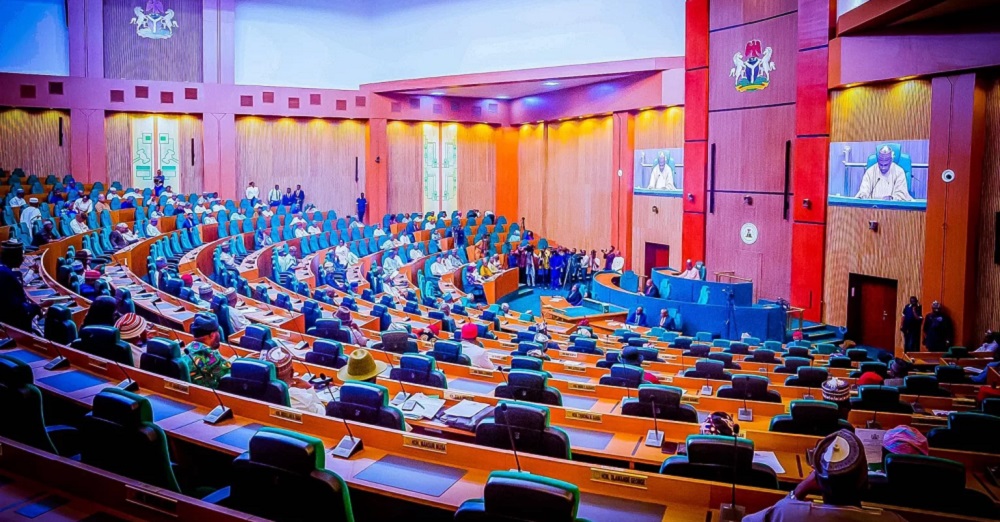
The move formed the focus of discussions at a public hearing on the Statistics Bill, 2025, held at the National Assembly on Monday, where lawmakers, government officials, academics, civil society groups and private sector stakeholders examined proposals aimed at strengthening the country’s statistical architecture.

Advertisement

Addressing participants, Speaker of the House of Representatives, Rt. Hon. Tajudeen Abbas, said the proposed legislation goes far beyond amending the existing law, describing it as a far-reaching reform intended to reposition Nigeria’s statistical system to meet the demands of a rapidly changing global economy.

According to Abbas, the Statistics Act currently in force was enacted nearly two decades ago under circumstances that bear little resemblance to today’s technology-driven environment.

He emphasised that credible and timely data remain indispensable for national planning, economic growth, budgeting, policy implementation and governance.

The Speaker said: “Today, we live in a fast-evolving digital age where data is generated at a velocity, veracity, volume and variety never seen before. The Statistics Bill, 2025 is not a minor amendment; it is a complete structural overhaul.

Advertisement

“To plan without accurate data is to build a house on quicksand. Delivering on this mandate is impossible without giving the National Bureau of Statistics timely and adequate resources, which highlights why the sustainable funding provisions in this Bill are so critical.”

Abbas argued that Nigeria’s aspiration to build a one-trillion-dollar economy will depend heavily on the availability of accurate, reliable and accessible data.

He noted that decisions on public spending, infrastructure development, social interventions and economic policies must be guided by evidence rather than assumptions.

The Speaker further explained that the proposed legislation seeks to strengthen coordination among agencies responsible for data generation, improve quality assurance mechanisms, promote digital data collection and dissemination, and provide sustainable funding for the National Bureau of Statistics (NBS).

Advertisement

He added that the reforms will bring Nigeria’s statistical system closer to international best practices, improve investor confidence, enhance public service delivery and deepen accountability in governance.

Abbas therefore called on stakeholders to actively contribute to the legislative process, as he said broad consultations are necessary to ensure the final law protects data privacy while promoting accessibility, transparency and credibility.

Also speaking at the hearing, the Statistician-General of the Federation and Chief Executive Officer of the National Bureau of Statistics, Adeyemi Adeniran, described the bill as a necessary response to the dramatic changes taking place in the global data ecosystem.

He noted that while the 2007 Act had served the country over the years, advances in technology have transformed how data is generated, analysed and utilised.

Advertisement

According to him: “The increasing use of digital technologies, administrative data systems, geospatial information, Big Data, Machine Learning, Artificial Intelligence and other emerging data sources requires a modern legal framework capable of supporting the evolving needs of the National Statistical System.”

Adeniran explained that the proposed legislation contains eight sections and 42 clauses covering key areas such as statistical governance, institutional development, data collection and management, confidentiality, accountability, funding arrangements and coordination among stakeholders.

He said the reforms will significantly improve the capacity of the National Statistical System to generate reliable and timely information required for planning, policy formulation, implementation, monitoring and evaluation of government programmes.

The Statistician-General also commended Speaker Abbas and the House Committee on National Planning and Economic Development, chaired by Rep. Gboyega Nasir Isiaka, for driving the legislative initiative.

Advertisement

Participants at the hearing, drawn from government ministries, departments and agencies, academia, civil society organisations and the private sector, are expected to submit recommendations that will shape the final version of the bill before it returns to the House for further consideration.

If passed, the Statistics Bill, 2025 is expected to provide Nigeria with a modern, technology-driven statistical framework capable of supporting national development goals and strengthening the country’s position in an increasingly data-driven global economy.

Continue Reading
Advertisement

News

Deputy Speaker Urges International Relations Students to Build Careers on Patriotism

Published

on

ADVERTISEMENT
Zoom Ad
ADVERTISEMENT
Zoom Ad

Deputy Speaker Urges International Relations Students to Build Careers on Patriotism

By Gloria Ikibah

Deputy Speaker of the House of Representatives, Rt. Hon. Benjamin Okezie Kalu, has challenged young Nigerians aspiring to careers in diplomacy and international.  relations to cultivate a deep love for their country before seeking to represent it on the global stage.

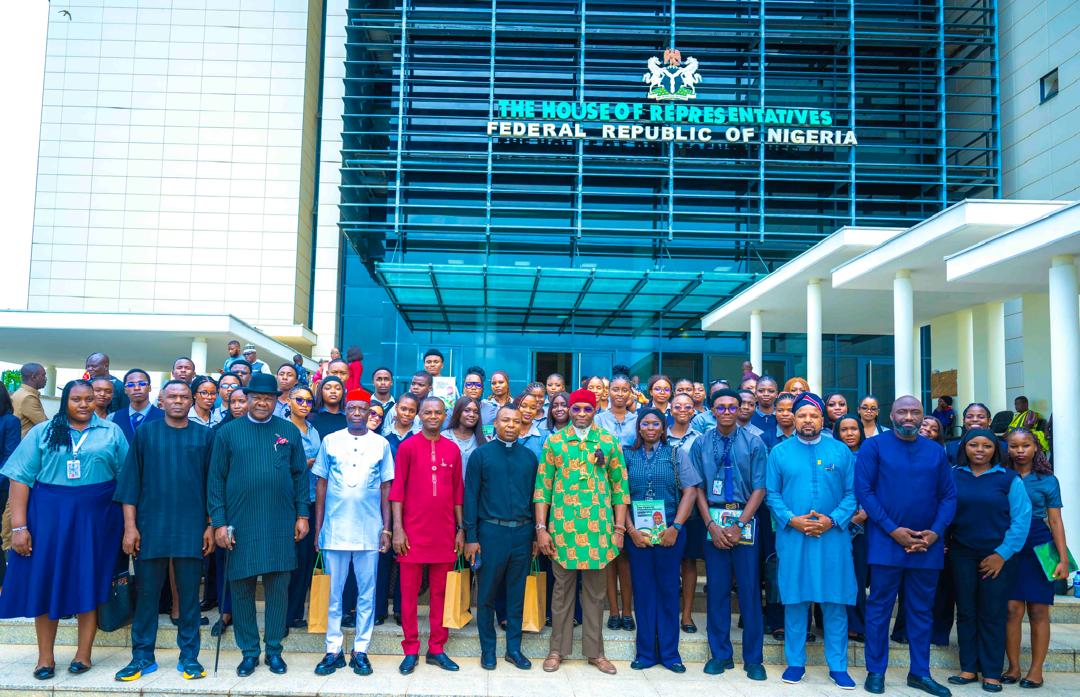
Kalu gave the advice while receiving students of the Department of International Relations, Madonna University, Okija Campus, during an educational visit to the National Assembly over the weekend.

Advertisement

The excursion formed part of the students’ academic programme aimed at exposing them to the practical workings of governance, diplomacy and Nigeria’s foreign relations architecture.

Addressing the students, the Deputy Speaker stressed that effective representation of a country begins with patriotism, noting that genuine diplomacy is driven by commitment to national interests and love for one’s homeland.
He said:

He said: “I understand most of you are from the Department of International Relations. You are going to be Ambassadors tomorrow. You are going to champion the image of the country out there. But you must understand your country first before you represent your country outside. So, your representation starts from patriotism. The spirit of patriotism, your love for Nigeria is what is going to drive you to stand and represent Nigeria tomorrow. So, if you want to a representative of Nigeria outside the shores of Nigeria, the best way to start is by loving your country”.

Kalu acknowledged that Nigeria faces numerous challenges but maintained that no other country could replace one’s homeland, regardless of opportunities abroad.

Advertisement

Drawing inspiration from the founder of Madonna University, Rev. Father Emmanuel Mathew Edeh, he said nation-building is only possible when citizens are motivated by genuine love for their country.

According to him: “I know we have so many challenges but I tell you I have been around the world and I can assure you there is no place like home.

“So, when we finally send out in the coming years to become ambassadors, you are going to live there. But you will go and come back and the only thing that will bring you back is the love you have for our great nation. If Rev. Father Edeh didn’t love our country, he will not build that citadel of learning that is producing champions and captains. It is because he first loved Nigeria.

“Do you love Nigeria? That is where it starts. You can’t represent what you don’t love. What you love is what you represent because if you represent what you love, you do it passionately without anybody telling you what to do. I congratulate you on coming to the People’s House. I pray that your dreams will become a reality”.

Advertisement

Earlier, Kalu, through his Chief of Staff, Mr Sam Hart, delivered a lecture titled “The Legislature and Nigeria’s External Relations in the Fourth Republic”, where he highlighted the increasingly important role of the National Assembly in advancing Nigeria’s foreign policy objectives.

He explained that while the President remains the chief architect of Nigeria’s foreign policy, Parliament plays a vital supporting role through legislation, oversight and diplomatic engagements.

According to the lecture: “While the President remains the chief architect of foreign policy, the Constitution assigns Parliament specific duties to assist in making those policies work at home and abroad. Foreign policy is not made only in presidential palaces and ministries; it is increasingly shaped in parliaments where the voices of the people meet the interests of the nation.

“One of the most significant developments in international relations over the past three decades has been the rise of Parliamentary Diplomacy.

Advertisement

“Parliamentary diplomacy refers to the engagement of legislators with foreign governments, international organisations, and global parliamentary bodies to advance national interests. Today, many diplomatic breakthroughs occur not only through executive negotiations but also through legislative interactions.

“The National Assembly has emerged as a vital pillar of Nigeria’s engagement with the world. Through legislation, oversight, treaty domestication, parliamentary diplomacy, economic reforms, and regional cooperation, Parliament continues to shape Nigeria’s place in the international system.

“As students of International Relations, you stand at the threshold of a profession that will define the future of nations. The world you are preparing to enter is increasingly interconnected, complex, and competitive. Nigeria needs young leaders who can think globally, act strategically, and serve patriotically”.

The visit provided the students with a firsthand understanding of the workings of Nigeria’s legislature and its role in shaping both domestic governance and international engagement.

Advertisement

The Deputy Speaker encouraged the students to remain focused on their studies and prepare themselves for leadership roles in diplomacy, governance and public service, stressing that patriotism, integrity and competence would remain essential qualities for future representatives of Nigeria on the world stage.

Continue Reading

News

7.8 magnitude quake off Philippines kills 15, sparks Tsunami warnings

Published

on

ADVERTISEMENT
Zoom Ad
ADVERTISEMENT
Zoom Ad

Philippine authorities urged people in affected coastal regions to move to higher ground after the offshore quake hit south of General Santos, a city of about 720,000.

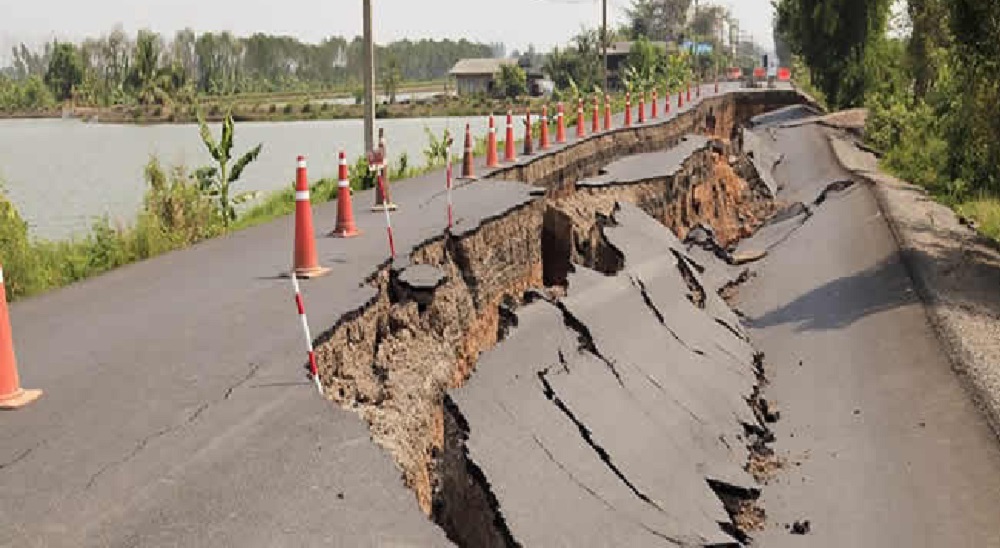
A 7.8-magnitude earthquake struck the southern Philippines on Monday, killing at least 15 people, collapsing buildings and sparking tsunami warnings across the region.

Philippine authorities urged people in affected coastal regions to move to higher ground after the offshore quake hit south of General Santos, a city of about 720,000.

A series of powerful aftershocks rocked the area from about two hours after the first quake, according to the United States Geological Survey, with the largest measuring 6.5 magnitude.
Videos posted to social media and verified by AFP showed a shopping centre with a Jollibee fast food restaurant reduced to rubble in General Santos City, while a school building that officials said was unoccupied crumpled in another.

Advertisement

“Lord, it has really collapsed! … The building has really collapsed!” someone can be heard shouting as the school structure toppled.

In another video verified by AFP, young schoolchildren could be seen screaming in the arms of their teachers as the quake violently sways them back and forth on the ground.

A flimsy metal structure could be seen collapsing in the background as the video uploaded to the school’s official Facebook page ends.

An accompanying caption said no one was under the structure when it fell.
The Pacific Tsunami Warning Center said in a notice that tsunami waves were possible along the coasts of the Philippines, Indonesia, Palau, Taiwan and Papua New Guinea.
As of 2 pm (0600 GMT), at least 15 people were reported dead, including 12 from Mindanao island’s Soccskargen region, an area that includes General Santos City.

Advertisement

Responders conduct a rescue operation at a collapsed building after a 7.8 magnitude earthquake in General Santos City on June 8, 2026.

Three more fatalities were recorded in Davao Occidental province, according to the country’s disaster agency.
The figures did not yet include two people who Police Major Roland Catoburan told AFP had been crushed to death by a collapsing wall in Alabel, a municipality near General Santos.

“We have casualties. A wall fell on them,” he said, adding officers were not being allowed to re-enter their stations, some of which now had cracked walls.

Evacuate now

Advertisement

Philippine President Ferdinand Marcos suspended classes across Mindanao island on what was to have been the first day of school, while calling on residents in coastal areas to evacuate immediately.

“Move to higher ground now. Do not wait,” he said. “Your life is more important than anything left behind.”

In Kiamba, a coastal town near the epicentre, about 50,000 residents had already done so.
“As of now, 80 percent of the population has moved to higher ground,” said Agripino Dacera, the regional disaster chief.
“All the villages along the coast were instructed to proceed to evacuation centres.”

The airport in General Santos was also closed until further notice, officials said.

Advertisement

Monday’s quake triggered evacuation warnings for coastal areas of neighbouring Indonesia and Malaysia, with Jakarta’s meteorological agency subsequently lifting its alert.

Japanese authorities issued a tsunami advisory for swathes of its Pacific coast, though waves that reached the country’s coast were reported to be no larger than 20 centimetres (about eight inches).
Earthquakes are a near-daily occurrence in the Philippines, which is situated on the Pacific “Ring of Fire”, an arc of intense seismic activity stretching from Japan through Southeast Asia and across the Pacific basin.

Eastern Mindanao was rocked by a pair of earthquakes of 7.4 and 6.7 magnitude in October that killed at least eight people.
These followed a magnitude 6.9 quake days earlier that killed 76 people and destroyed or damaged 72,000 buildings in Cebu province in central Philippines, according to government figures.

Advertisement
Continue Reading

News

Oyo brings down kidnappers’ hideout in Ibadan

Published

on

ADVERTISEMENT
Zoom Ad
ADVERTISEMENT
Zoom Ad

Report from Ibadan, the Oyo State capital, indicates that the Oyo State Government has begun the demolition of a house used as a hideout by the kidnappers of the sister of the immediate past Minister of Power, Adebayo Adelabu, and her twins.

Recall the victims were abducted last Wednesday.

They were later rescued by the police on Saturday.

The state government has moved the necessary equipment to the area to demolish the house.

Advertisement

The house is located at Lakoun Estate, Olomi-Olojuoro Road, in Oluyole Local Government Area.

It was gathered that the demolition is being carried out on Monday by officials of the Oyo State Ministry of Public Works and Transportation, accompanied by operatives of the Nigeria Police Force.

Daily Post

Advertisement
Continue Reading

Trending

Copyright © 2024 Naija Blitz News