…as secure release of 21 inmates, donates 1,000 motorcycles to teachers
…urge politicians to shun divisive politics ahead of 2027 elections
By Gloria Ikibah 
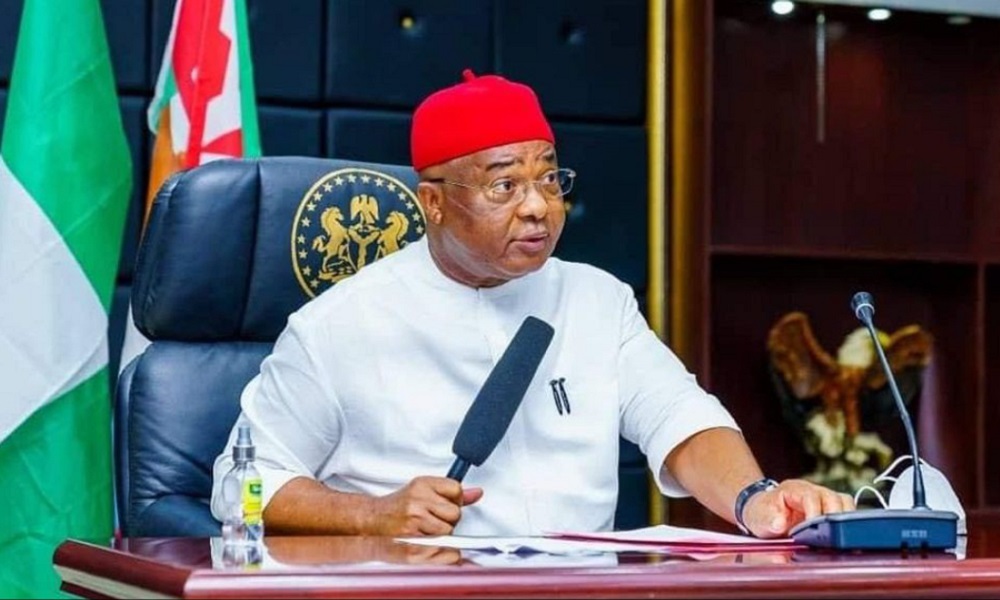
Speaker of the House of Representatives, Rt. Hon. Tajudeen Abbas, has declared that democracy is now firmly rooted in Nigeria, insisting that after 27 uninterrupted years of civilian rule, the country has moved beyond the era of military decrees and authoritarian governance.
Speaking in Zaria on Friday during the fifth phase of his empowerment programme, where he distributed 1,000 motorcycles to primary and secondary school teachers in Zaria Federal Constituency to commemorate Democracy Day, Abbas said Nigeria’s democratic journey had become irreversible.
Joining President Bola Ahmed Tinubu and other Nigerians in celebrating Democracy Day, the Speaker said the nation had made remarkable progress since the return to civilian rule in 1999.
“Our democracy has come to stay. Nigeria will never again be governed by decree. Nigeria will be governed by consent,” he declared.
As part of the celebrations, Abbas also secured the release of 21 inmates from the Medium Security Custodial Centre in Zaria after settling their fines and related obligations amounting to ₦17.5 million.
The beneficiaries, drawn from various parts of Kaduna State, had served prison terms ranging from seven months to five years. Many of the freed inmates expressed gratitude to the Speaker for giving them a second chance.
Addressing the teachers who received motorcycles, Abbas said his decision to prioritise educators was deeply personal.
“I prioritised the welfare and well-being of teachers because everything I am began in a classroom, and no nation rises above the quality of its teachers.
“Let these motorcycles carry you to school. But let them also carry a message: that democracy can touch ordinary lives, in practical ways, right here at home. Teach our children honesty, hard work, and love of country. Teach them what June 12 means,” he said.
The Speaker paid tribute to prominent figures who played significant roles in Nigeria’s struggle for democracy, saying their sacrifices paved the way for the freedoms Nigerians enjoy today.
“But democracy did not fall from the sky. It was paid for in blood, in tears, in exile, and in detention. We remember Chief MKO Abiola, whose mandate of June 12, 1993, was stolen, and who died in custody rather than surrender it. We remember Kudirat Abiola. And we remember our own. General Shehu Musa Yar’Adua, a son of the North, who died in prison because he demanded a return to civil rule.
“Malam Aminu Kano, who spent his life insisting that the talakawa must have a voice in how they are governed. Our own Alhaji Balarabe Musa from Kaduna State, who spoke truth to power until his final breath. And here in Zaria, the late Dr Yusuf Bala Usman of Ahmadu Bello University, who taught generations that citizens must question their rulers. June 12 is their day. We stand on their shoulders,” Abbas said.
According to him, despite the imperfections of democracy, Nigerians continue to embrace it because it remains the best system for peaceful change and accountability.
Abbas contrasted Nigeria’s democratic stability with developments in some African countries where elected governments have been overthrown by military regimes.
“Nigerians continue to keep faith in democracy because it is the only system that allows a nation to correct its mistakes without bloodshed. It gives the farmer in Kwarbai the same single vote as the billionaire in Lagos. It allows you to question me, your Speaker. It allows you to question all your other leaders.
“What happened in countries such as Mali, Guinea, Burkina Faso, Niger and Gabon cannot happen in Nigeria because we have chosen to be vigilant. Nigeria will never again be governed by decree. Nigeria will be governed by consent,” he stated.
The Speaker argued that democratic legitimacy must be matched with tangible results and defended the economic reforms introduced by President Tinubu since taking office.
“Let us be honest. He inherited subsidy distortions, exchange-rate chaos, collapsing revenues, and an economy on the brink of failure. The easy option was to keep postponing reality. He refused. And the numbers now speak.
“Inflation peaked at 34.8 per cent in December 2024. By April this year, it had fallen to 15.69 per cent. GDP growth rose from 2.74 per cent in 2023 to 3.87 per cent in 2025, and global institutions project growth of 4.4 per cent in 2026.
“Our gross external reserves crossed 50 billion dollars in February, the highest in 13 years, up from net reserves of barely 4 billion dollars at the end of 2023. Government revenues more than doubled, from 17.08 trillion Naira in 2023 to 37.44 trillion Naira in 2025, with money now flowing to roads, schools, hospitals, and salaries across all three tiers. Capital inflows jumped from 654 million dollars in late 2023 to 5.6 billion dollars by early 2025,” he said.
Abbas also highlighted the impact of the Student Loan Fund and investments in healthcare, security and infrastructure.
“Through the Student Loan Fund, over 1.3 million young Nigerians have received more than 242 billion Naira across 280 tertiary institutions. Right here, Ahmadu Bello University alone received over 1 billion Naira for 17,599 students.
“The number of primary healthcare centres is being doubled from 9,000 to 18,000 by next year. Defence spending has risen from 2.98 trillion Naira to 4.91 trillion Naira, and the road from Abuja through Kaduna to Kano, once a corridor of fear, is being rebuilt while the trains run again,” he said.
On the strength of those achievements, the Speaker openly endorsed President Tinubu for a second term in office.
“That is why, as 2027 approaches, I say without hesitation: this is not the time to change course. Renewed Hope is working. The evidence is on the table. Let us finish the job,” he declared.
Turning to legislative reforms, Abbas said the National Assembly had consistently risen to critical national challenges over the past 27 years.
He recalled the legislature’s opposition to the proposed third-term agenda in 2006, the adoption of the Doctrine of Necessity in 2010, the passage of the Freedom of Information Act, the creation of anti-corruption agencies, the Not Too Young To Run legislation, the Petroleum Industry Act and electoral reforms that strengthened transparency in elections.
“The Tenth Assembly is building on that inheritance with the most ambitious constitutional review in our history. Twelve public hearings across all six geopolitical zones. From 260 alteration bills, a first batch of 37 has now been prioritised. And each answers a problem you live with,” he said.
He pointed to the recent passage of the State Police Bill, alongside proposals for an Electoral Offences Commission, independent candidacy, greater autonomy for state electoral commissions and local government autonomy as evidence of the Assembly’s reform agenda.
As political activities ahead of the 2027 general election gather momentum, Abbas cautioned politicians against inflaming ethnic and religious tensions for political gain.
“Politics is not war, and the opponent is not the enemy.
“I call on all of us to campaign with facts, not fear. With ideas, not insults. Do not inflame religion. Do not weaponise ethnicity. Do not set fire to the house we all must live in simply to rule its ashes.
“The politician who destabilises Nigeria to win power will inherit nothing worth governing. History is watching, and so are our children. Let 2027 be remembered as the election in which Nigeria’s political class chose the country over self,” he said.
He also urged young Nigerians not to lose faith in the democratic process despite current challenges.
“And to you, young Nigerians, my message is direct. I know your frustrations are real. But this country is yours, and it is worth fighting for with your PVC, not your despair.
“Do not surrender the future to cynicism. Register. Vote. Run for office. Build businesses. Question us. Hold us to account. The same democracy that let a schoolteacher’s son become Speaker is open to every one of you. Hope is not naïve. Hope, backed by work, is the most radical force in any nation,” Abbas said.