Connect with us

News

Soldiers Reject Fresh Move To Deploy ‘Repentant’ Terrorists In Military Operations, Fear Sabotage, Intelligence Leaks

Published

on

ADVERTISEMENT
Zoom Ad
ADVERTISEMENT
Zoom Ad

Nigerian soldiers battling Boko Haram insurgents in the North-East have accused the Borno State government of issuing a fresh directive compelling them to work alongside ‘repentant’ terrorists who were recently reintegrated into society under the state’s controversial deradicalisation programme.


The development, according to serving military personnel who spoke to SaharaReporters, has triggered unease within frontline formations, with many soldiers expressing fears that the arrangement could expose military operations to renewed sabotage and intelligence leaks.

Sources told the media that some of the former Boko Haram fighters who publicly pledged loyalty to the Nigerian state during recent reintegration exercises have now been mobilised and attached to local security groups that support military operations against insurgents across parts of Borno State.

The soldiers alleged that the move was part of efforts by the state government to justify its rehabilitation and reintegration programme, which has come under criticism from members of the public, including victims of insurgency and some security personnel.

Advertisement

According to the sources, military authorities and troops on the ground remain sceptical about the sincerity of several former insurgents despite undergoing rehabilitation programmes.

“The government wants to prove that the reintegration programme is working, so some of these ‘repentant’ Boko Haram members are being attached to security groups that work with troops in operations,” one soldier told SaharaReporters.

“But many of us are uncomfortable with the arrangement because there have been cases in the past where information leaked and operations were compromised. Trust is a major issue.”

Another source said soldiers have deliberately kept some of the former insurgents at separate locations within military facilities because of fears that they could still maintain links with active terrorist cells operating in the region.

Advertisement

“We don’t trust them completely. There have been too many incidents in the past. That is why they are often given separate accommodation. Yet now there is pressure for us to work closely with them during our missions,” the source said.

“You can see how these Boko Haram fighters have been killing our ogas (commanders). That should tell you there is a leak in information about their movements. Yet the government is asking us to trust these people and work with them. It won’t work,” the source said.

The soldiers argued that instead of compelling troops to collaborate with former Boko Haram fighters, the Nigerian government should focus on providing better equipment, intelligence support and welfare packages for personnel risking their lives in the fight against terrorism.

According to them, the latest directive has generated anxiety among troops who fear that operational details could once again find their way to insurgent groups still active in parts of Borno and neighbouring states.

Advertisement

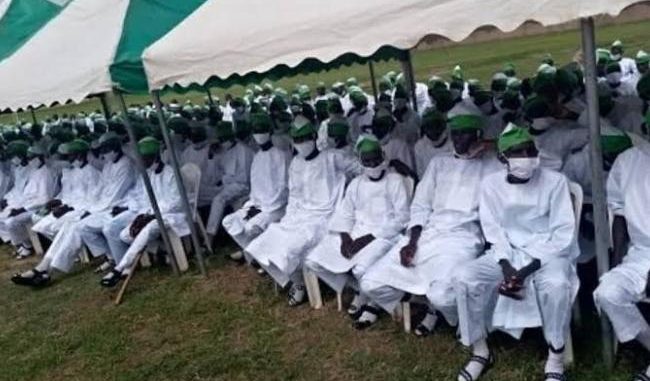
The concerns come barely two weeks after the Borno State government reintegrated 720 ‘repentant’ insurgents, alongside 992 spouses and 2,050 children, into various communities under its “Borno Model” deradicalisation and rehabilitation programme.

The beneficiaries were among former insurgents who surrendered to security forces and subsequently underwent rehabilitation at the Hajj Camp in Maiduguri before being formally returned to society.

Speaking during the reintegration ceremony, the Special Adviser to Governor Babagana Zulum on Security and member of the state’s Deradicalisation, Rehabilitation and Reintegration Committee, retired Brigadier General Abdullahi Ishaq, described the programme as a critical component of Borno’s non-kinetic strategy against insurgency.

He said the initiative, which began in July 2021, was founded on forgiveness, rehabilitation and community acceptance of former insurgents willing to renounce violence.

Advertisement

According to Ishaq, more than 350,000 individuals have reportedly left insurgent camps and surrendered since the programme commenced, while a total of 9,680 persons have been reintegrated through nine batches.

The official maintained that those processed through the programme underwent vocational training, religious and behavioural reorientation, counselling and skills acquisition before being returned to their communities.

However, the programme has remained controversial, with critics questioning whether former insurgents can be fully trusted and whether adequate safeguards exist to prevent them from returning to extremist activities.

The latest concerns raised by soldiers suggest that those reservations persist even among security personnel directly engaged in counter-insurgency operations across the North-East.

Advertisement

Efforts to obtain a reaction from the Nigerian Army were unsuccessful as of the time of filing this report.

Several calls placed to the Director of Army Public Relations, Colonel Appolonia Anele, went unanswered. A text message seeking the Army’s response to the allegations was also sent to her and successfully delivered, but she had not responded at the time of filing.

Sahara Reporters
Advertisement
Continue Reading
Advertisement

News

Friend Reveals Mary Habila’s Final Moments

Published

on

By

ADVERTISEMENT
Zoom Ad
ADVERTISEMENT
Zoom Ad

The circumstances surrounding the death of Mary Habila, a nurse attached to the David Umahi Federal University of Medical Sciences (DUFUS) and on secondment to the Federal Ministry of Works, have become clearer following a sworn statement by her colleague and close friend, Anita Baaki.

Baaki, a physiotherapist from Benue State, said she was among members of staff who travelled from Abuja to Ebonyi State on June 24, 2026, for official duties under the Minister of Works, David Umahi.

According to her affidavit filed before the Ebonyi State High Court, the staff members were accommodated in separate but adjoining rooms in a staff chalet located within the minister’s country home in Uburu, Ohaozara Local Government Area.

She clarified that the building was designated for staff members and associates, not for the minister’s personal residence.

Advertisement

On the evening of June 26, Habila returned after having her hair done and stopped by Baaki’s room to show her the new hairstyle.

The two chatted and joked before Habila said she was tired and intended to take a shower before going to bed.

“Mary told me she was tired and wanted to take a shower before sleeping. That was the last time I saw her alive,” Baaki stated.

The following morning, Baaki became concerned when Habila did not come out as usual. Repeated phone calls went unanswered, prompting her to knock on Habila’s door. Finding it locked from the inside and receiving no response, she alerted a domestic staff member to search the premises.

Advertisement

When Habila could not be found elsewhere, other staff members were informed, and the room was forcibly opened. She was discovered lying unconscious on the floor near the door.

She was immediately taken to the David Umahi Federal University Teaching Hospital, where doctors confirmed that she was dead on arrival.

In her affidavit, Baaki stated that her testimony was given voluntarily and without coercion, emphasizing that she was making the statement solely for official and investigative purposes.

Advertisement
Continue Reading

News

Umahi: NSP Disowns Mary Habila as Physiotherapist

Published

on

By

ADVERTISEMENT
Zoom Ad
ADVERTISEMENT
Zoom Ad

The Nigeria Society of Physiotherapy (NSP) has declared that the late Mary Habila, whose death has generated widespread public attention, was not a registered physiotherapist, distancing the profession from claims that she belonged to its ranks.

The society made the clarification in a statement issued on Thursday by its Public Relations Team after conducting what it described as a verification of Habila’s credentials through the relevant regulatory authorities.

According to the NSP, a search of the official register of licensed physiotherapists in Nigeria showed that the name “Mary Habila” does not appear on its database.

“Following verification through the appropriate regulatory channels, the name ‘Mary Habila,’ as stated, does not appear on the database of registered physiotherapists,” the statement read.

Advertisement

The clarification comes amid public discussions surrounding the death of Habila, who died on June 27, 2026, in Ebonyi State while serving in the office of the Minister of Works, Senator David Umahi. She had been widely identified in several reports as a physiotherapist.

The professional body stressed that membership of regulated professions must be established through official records rather than assumptions or public descriptions.

It warned that public officials and other stakeholders have a responsibility to verify professional credentials before making public statements capable of misleading Nigerians.

“The Nigeria Society of Physiotherapy has consistently maintained that professional identity is not a matter of assumption or public perception; it is a matter of verifiable fact. Where questions arise, they should be resolved through the appropriate regulatory processes, not through speculation or unverified claims,” the society stated.

Advertisement

The NSP said its clarification was intended to protect the integrity of the physiotherapy profession and reinforce the importance of relying on official regulatory records when identifying professionals.

It added that the incident should serve as a reminder that qualifications and professional identities must always be accurately verified and represented.

Despite distancing itself from the claims about Habila’s professional status, the society expressed sympathy to her family over her death.

“Finally, while it is important to establish the facts, we must not lose sight of the human tragedy at the heart of this matter. We extend our sincere condolences to the family, friends and loved ones of the deceased, and pray that her soul rests in perfect peace. May they find strength and comfort during this difficult time,” the statement added.

Advertisement
Continue Reading

News

Ghana Moves to Ban TV Stations Over Broadcast of Nollywood Movies

Published

on

By

ADVERTISEMENT
Zoom Ad
ADVERTISEMENT
Zoom Ad

Ghana’s National Film Authority has announced plans to crack down on television stations broadcasting Nollywood films without authorisation, with the Deputy CEO revealing that all broadcast licenses in the country could be revoked and reissued under stricter terms by 2027.

James Gardiner, a Ghanaian actor and Deputy CEO of the NFA, made the announcement during a conversation with Nigerian filmmaker Uchenna Mbunabo, who had confronted him over the widespread theft of Nollywood content by Ghanaian television stations.

Mbunabo accused the stations of downloading Nigerian films directly from YouTube and airing them on national television without permission or payment.

“I noticed that Ghanaian TV stations, the way they are stealing our films and showing them for free with impunity. Is it legalised in your country for TV stations to go on YouTube, download people’s sweat and show it for free?” he asked.

Advertisement

Gardiner confirmed the practice was illegal and said the NFA had been working with Ghana’s Ministry of Communications, the National Communications Authority, and the National Media Commission to address it.

“We’re trying to make law to revoke all licenses and all of them will now come to apply afresh,” he said, adding that the process should be completed by 2027.

He acknowledged that enforcement remained difficult, particularly with the rise of digital stations operating from outside Ghana without physical offices in the country.

Mbunabo’s complaint is not an isolated one. Several high-profile Nigerian filmmakers and actresses have previously called out Ghanaian television stations over the same issue.

Advertisement

Ademoye had taken to social media to express frustration after discovering her films were being broadcast on Ghanaian stations without her knowledge or consent.

Oboli similarly called out the practice publicly, describing it as a direct attack on the livelihoods of Nigerian creatives.

Mercy Johnson and Ruth Kadiri have also voiced similar complaints, with Kadiri noting that filmmakers invest heavily in production only to watch their work distributed freely across borders without any returns.

Nigeria’s film industry continues to expand in terms of output, but filmmakers have long complained that widespread piracy, both at home and across the continent, significantly undermines their earnings.

Advertisement

Gardiner’s commitment to license reform represents the most concrete response from Ghanaian authorities to date, though filmmakers will be watching closely to see whether the 2027 deadline holds.

Continue Reading

Trending

Copyright © 2024 Naija Blitz News