Entertainment
Davido releases first 2026 single, ‘I Know Who I Be’
- /home/naijuinz/public_html/wp-content/plugins/mvp-social-buttons/mvp-social-buttons.php on line 27
https://naijablitznews.com/wp-content/uploads/2025/02/davido-1.jpg&description=Davido releases first 2026 single, ‘I Know Who I Be’', 'pinterestShare', 'width=750,height=350'); return false;" title="Pin This Post">
- Share
- Tweet /home/naijuinz/public_html/wp-content/plugins/mvp-social-buttons/mvp-social-buttons.php on line 72
https://naijablitznews.com/wp-content/uploads/2025/02/davido-1.jpg&description=Davido releases first 2026 single, ‘I Know Who I Be’', 'pinterestShare', 'width=750,height=350'); return false;" title="Pin This Post">
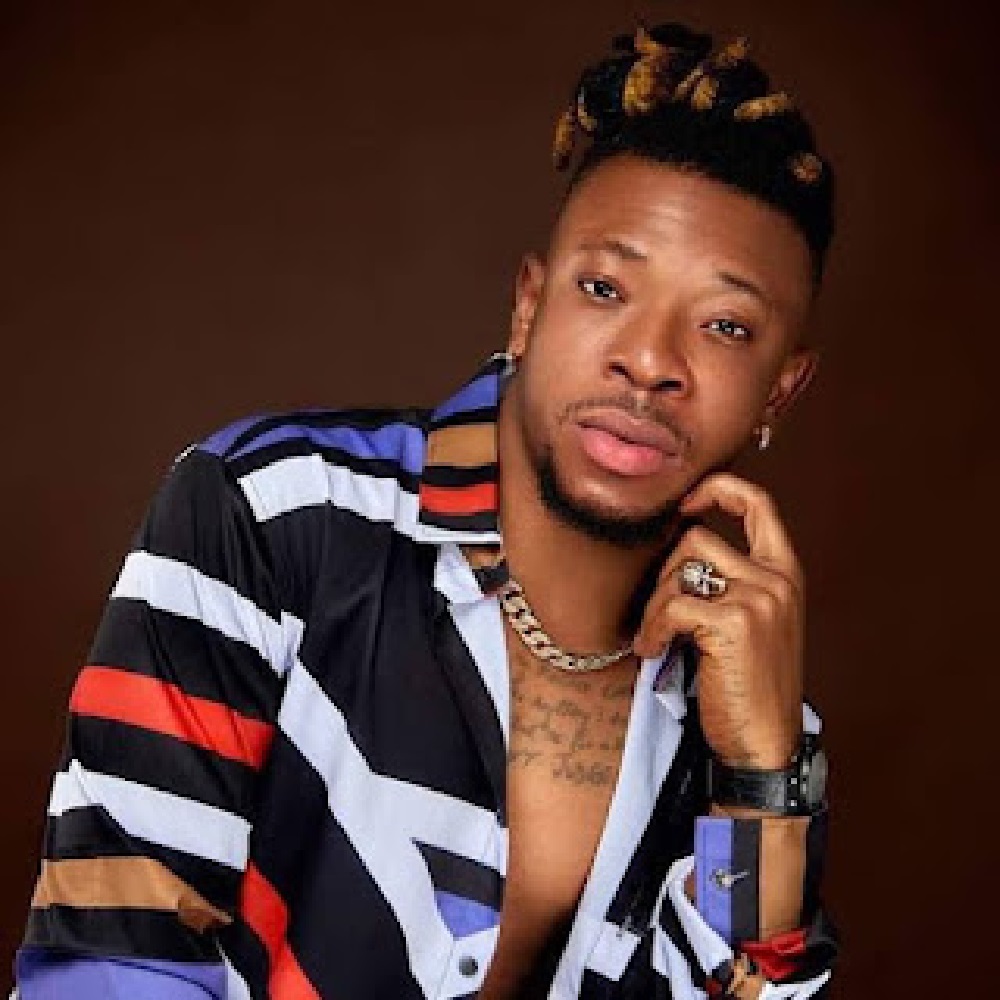
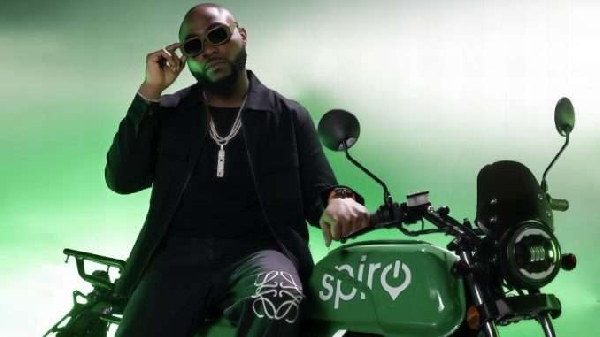
Nigerian Afrobeats star David Adeleke, popularly known as Davido, has kicked off 2026 with the release of his new single, I Know Who I Be, marking his first solo offering of the year.
The song, released on Friday, features South African producer Jazzwrld and artiste GL_CeeJay, making it Davido’s first recorded collaboration with both acts. The track is now available across major streaming platforms, including Spotify, Apple Music and YouTube Music.
Davido announced the release on his social media pages, where he shared the artwork and clips from the accompanying music video with fans.

Produced with an energetic three-step sound, “I Know Who I Be” blends Afrobeats with South African influences, reflecting the growing musical exchange between artists from both countries. The collaboration also highlights Davido’s continued interest in working with emerging talents across Africa.
The single arrives with a cinematic music video directed by Dammy Twitch and filmed in Nigeria. Rather than focusing only on performance scenes, the visual follows the story of a young man determined to pursue a career in music despite the challenges along the way.
As the storyline unfolds, it gradually mirrors Davido’s own rise from an aspiring artiste to one of Africa’s biggest music exports. The fictional narrative eventually gives way to real life moments, with the singer bringing several people who have played key roles in his career into the spotlight.
One of the video’s standout scenes features Davido and members of his inner circle dressed in black suits against a monochrome backdrop. Among those who appear are his longtime manager, Asa Asika, creative director Black Tycoone, trusted associate Lati and celebrity stylist Hollyandroo.
The video also features appearances by Nigerian artistes Mayorkun and Peruzzi, both of whom were formerly signed to Davido Music Worldwide, as well as rapper Zlatan. Their inclusion reinforces the video’s central message of loyalty, friendship and the relationships that have shaped Davido’s career over the years.
Instead of centring on luxury or spectacle, the visual pays tribute to the people behind Davido’s success, celebrating the support system that has remained with him throughout his journey in the music industry.
The release marks Davido’s return with new music after a relatively quiet start to the year and follows the success of his recent projects, which have further strengthened his position as one of Africa’s most influential artistes.
“I Know Who I Be” by Davido not only opens a new chapter in his 2026 catalogue but also delivers a personal statement on identity, resilience and the importance of the community that has stood beside him throughout his career.
Entertainment
Nollywood Actor Joseph Momodu Joins US Army
Nollywood actor Joseph Momodu has announced his enlistment into the United States Army, describing it as the fulfilment of a personal dream and a tribute to his late father, who served in the Nigeria Police Force.
The actor disclosed this in an Instagram post on Friday, where he reflected on the physical and emotional demands of his military training.
According to Momodu, the journey tested his resilience, pushing him through months of rigorous training and isolation.
“From inception, I have always believed in achievements earned through merit, which is why I constantly push myself beyond limits.
“This particular one was forged through tears, fear of failure, resilience, endless days, short nights, fatigue, rain, and the scorching sun,” he wrote.
He added that there were moments he questioned his decision but remained focused on completing the programme.
“There were moments of doubt and times I questioned myself, ‘who send me message sef’? But I never lost sight of the finish line.
“We trained tirelessly, were broken down and rebuilt. I went to sleep a civilian and woke up a soldier.
“Ten weeks of being incommunicado. Ten weeks of learning to find comfort in discomfort.”
Momodu revealed that he chose April 12, 2026, to honour the memory of his late father, who died 20 years ago, by continuing the family’s service tradition.
“On April 12, 2026, I honored my late father in a historic way. Twenty years after his passing, I picked up the baton where he left off in the Nigerian Police Force and carried it forward by getting enlisted into the United States Army,” he said.
The actor announced that he had officially graduated from Basic Combat Training and now serves as Specialist (SPC) J.A. Momodu with the 1st Platoon, Charlie Company, 3-10, 3rd Battalion, 10th Infantry Regiment, Fort Leonard Wood, Missouri.
He dedicated the achievement to God, his late father and his family.
“I dedicate this achievement first to God Almighty for the grace to pass my ASVAB on the first attempt and successfully complete Basic Combat Training. Secondly, to my late father, whose legacy I proudly uphold. And finally, to the Royal Family of Oba Momodu II, the Avyuele Clan, Agbede, Etsako West, Edo State,” he noted.
Momodu also expressed appreciation to those who supported him throughout the process, including his social media manager and the US Army Recruiting Station in Burbank, California.
“This chapter is written. The next one begins now,” he added.
Entertainment
Court Fixes September 29 For Verdict In Suit Seeking Fresh Police Probe Into Mohbad’s Death
Justice James Omotosho of the Federal High Court, Abuja, has fixed September 29, 2026, for judgment in a suit seeking to compel the Inspector-General of Police (IGP) to reopen investigations into the death of Nigerian singer Ilerioluwa Aloba, better known as Mohbad.
Justice Omotosho fixed the date after hearing arguments in the matter filed by Break the Silence Foundation, a non-governmental organisation. The suit lists the IGP, the Nigeria Police Force, and the Commissioner of Police, Lagos State Command, as respondents.
At Tuesday’s proceedings, none of the respondents was represented in court when the matter was called.
During the hearing, counsel to the plaintiff, Tunde Falola, adopted all processes filed on behalf of the organisation and urged the court to grant the reliefs sought.
The court also heard an application by one Samson Obaboye, who sought to be joined in the suit as an interested party. Obaboye told the court that he supported calls for truth, transparency, accountability, and justice regarding the circumstances surrounding Mohbad’s death and wished to place relevant facts before the court.
However, Justice Omotosho dismissed the application, holding that the applicant failed to establish sufficient legal interest in the case to warrant his joinder.
The court had earlier granted leave to the plaintiff to commence the action through an ex parte application seeking judicial review and an order of mandamus compelling the police authorities to conduct a fresh investigation into the singer’s death.
Speaking to journalists after the proceedings, Falola said the organisation approached the court because it was dissatisfied with the outcome of the earlier police investigation, arguing that several critical aspects and possible leads were not adequately explored.
According to him, the organisation is particularly concerned about individuals who were reportedly among the last people seen with the deceased, insisting that their roles require further scrutiny.
“The circumstances surrounding his death remain mysterious and deserve public attention,” he said.
“As a human rights organisation seeking justice, we believe the police should reopen the investigation,” Falola said, describing the suit as a mandamus proceeding aimed at compelling the police to revisit the investigation into the cause of Mohbad’s death.
Commenting on the failed joinder application, Falola argued that the applicant had not demonstrated any direct interest in the case.
He added that the applicant did not establish that he was a police officer, a party to the suit, or someone directly connected to the proceedings.
Falola further argued that if every Nigerian were allowed to join the matter without demonstrating a legal interest, it would amount to an abuse of court process.
Mohbad died on September 12, 2023, sparking widespread public outrage and demands for accountability over the circumstances surrounding his death.
The singer was buried the following day, but his body was exhumed on September 21, 2023, for an autopsy aimed at determining the cause of death.
Nearly three years after his passing, controversy continues to surround the case, delaying the final interment of his remains.
His father, Joseph Aloba, has consistently called for justice and clarity regarding the circumstances of his son’s death.
Entertainment
Baba Fryo Reflects On ‘Denge Pose’, Galala Culture, And Life & Stardom
Before streaming platforms reshaped global music, before international record deals became a benchmark for success, and before Afrobeats stars began selling out venues like the O2 Arena, there was Ajegunle in Lagos—a dense, vibrant neighbourhood where street culture produced some of Nigeria’s most influential musical voices.
Among those voices was Baba Fryo, born Friday Igwe, a musician who didn’t just entertain but chronicled everyday street life through rhythm and lyrics. His 1996 hit “Denge Pose” became a defining anthem of its era, introducing a dance style and cultural expression that spread far beyond Ajegunle.
But behind the success story lies a more complicated reality. While the streets danced to his music, the music industry struggled to protect him. Piracy eroded his earnings, and the commercial rewards of fame fell far short of expectations.
More than two decades later, Baba Fryo reflects on his journey—the rise, the setbacks, and his continued resilience—in a conversation with TheCable Lifestyle’s Testimony Adebisi.
Explaining the origin of his stage name, Baba Fryo traces it back to everyday life in Ajegunle.
“In Ajegunle in those days, anyone who bears Friday, you’d call him Fryo. You abbreviate the name,” he said, describing how community slang shaped his identity.
Baba Fryo also revisited the era when Galala music and dance dominated the streets, clarifying common misconceptions about its origins and evolution.
According to him, Galala is primarily a dance style, not a genre of music in itself. He credited dancer and performer Daddy Showkey with popularising the movement.
“Galala is a dance. That dance was created by Daddy Showkey,” he explained. “When Father U-Turn released his songs, he said his songs were Galala, but Galala is a dance.”
He added that several street dance styles existed at the time, including “Tear Am,” “Swo,” and “Konto,” all of which influenced performances and music expression in the community.
Baba Fryo noted that his own sound evolved differently from his peers, blending influences rather than strictly aligning with one style.
“For my own style of music, I would say I just chose to create different kinds of music,” he said. “Mine is an Afro Reggae beat because my song has been mixed with Reggae music and Afro music.”
Reflecting on the broader music scene in Ajegunle during his rise, Baba Fryo highlighted the trio that helped define the era: himself, Daddy Fresh, and Daddy Showkey. Each artist, he said, developed a distinct identity while contributing to a shared cultural movement that helped bring street music into national consciousness.
Though the sounds differed—ranging from reggae-infused rhythms to highlife-inspired influences—the impact was collective: a new wave of Nigerian street music that shaped the foundation for later generations.
While “Denge Pose” remains a cultural landmark, Baba Fryo’s story also reflects the challenges faced by many early Nigerian music pioneers, particularly issues of piracy and lack of industry structure at the time.
Yet despite financial setbacks and shifting industry dynamics, his influence endures in Nigeria’s evolving music landscape, where street-inspired sounds have become a global export.
Over twenty years after his breakout moment, Baba Fryo’s story is not just one of fame, but of endurance—an artist still standing, still reflecting, and still part of the cultural conversation.
-
News23 hours agoCourt defers hearing of appeals by ADC, four others over parties deregistration
-
Metro23 hours agoSuspects: Why we murdered Ogun Broadcaster
-
Foreign23 hours agoDeath Toll From Venezuela Quakes Jumps To 188, Over 1,500 Injured
-
Politics23 hours agoTinubu Administration Cannot Be Trusted With State Police, Says PRP
-
News15 hours agoFederal High Court Sets Aside Order Compelling INEC to Register NDC, Orders Fresh Hearing
-
Sports23 hours agoWAFCON: Plumptre clears air on dumping Super Falcons over demands from NFF officials
-
News23 hours agoAgain, Dangote Refinery reduces fuel price
-
Metro22 hours agoTwo men to die by hanging over abduction of NYSC staff