Connect with us

Economy

NCC urges students to protect telecom infrastructure

Published

on

ADVERTISEMENT
Zoom Ad
ADVERTISEMENT
Zoom Ad

The Nigerian Communications Commission (NCC) has called on Nigerian students to actively protect telecommunications infrastructure across the country, describing such facilities as critical national assets that support education, innovation, economic growth and digital connectivity.


The Executive Vice Chairman (EVC) of the Commission, Dr Aminu Maida, made the call during a courtesy and familiarisation visit by the newly elected leadership of the National Association of Nigerian Students (NANS) to the Commission’s Head Office in Abuja.

The EVC, who was represented by the Director, Public Affairs Department, Nnenna Ukoha, congratulated the newly elected NANS President, Comrade Akinteye Babatunde, and members of the association’s executive council on their emergence while commending the smooth transition in the leadership of the student body.

Maida noted that the longstanding relationship between the NCC and NANS has continued to flourish because of mutual respect, dialogue and constructive engagement, and expressed confidence that the current leadership would build on the achievements of its predecessors.

Advertisement

The EVC encouraged the student body to remain actively involved in the Commission’s stakeholder engagement processes, particularly public consultations on regulatory and consumer-related initiatives, to ensure that the interests and perspectives of Nigerian students are adequately represented in policy development.

Speaking on challenges facing the telecommunications industry, Maida identified vandalism of telecommunications facilities, theft of fibre optic cables and network equipment, destruction of infrastructure, and right-of-way challenges as major factors affecting service delivery across the country.

He urged NANS to support ongoing awareness efforts by sensitising students on the importance of safeguarding telecommunications facilities located within and outside educational institutions.

The EVC also highlighted several initiatives being implemented by the Commission to advance digital inclusion and create opportunities for young Nigerians. These include the deployment of digital infrastructure through the Universal Service Provision Fund (USPF), the establishment of Digital Parks in tertiary institutions across the country, and ongoing efforts to support digital learning and innovation.

Advertisement

On consumer protection, Maida reiterated the NCC’s commitment to ensuring adequate protection of consumers under the regulatory framework while encouraging students to utilise consumer education resources available on the Commission’s website to better understand data management, consumer rights, and complaint resolution mechanisms.

Earlier, the President of NANS, Comrade Akinteye, expressed appreciation to the NCC for maintaining a productive and mutually beneficial relationship with the student body over the years, and commended the Commission for its openness to strengthening engagement between the Commission and the student body through dialogue and mutual understanding.

He acknowledged the role of the NCC in fostering a culture of dialogue and stakeholder engagement, noting that the Commission’s approach has continued to encourage the student body to pursue peaceful and responsible advocacy on national issues.
Advertisement
Continue Reading
Advertisement

Economy

Dangote breaks ground on $17bn Kenya refinery

Published

on

By

ADVERTISEMENT
Zoom Ad
ADVERTISEMENT
Zoom Ad

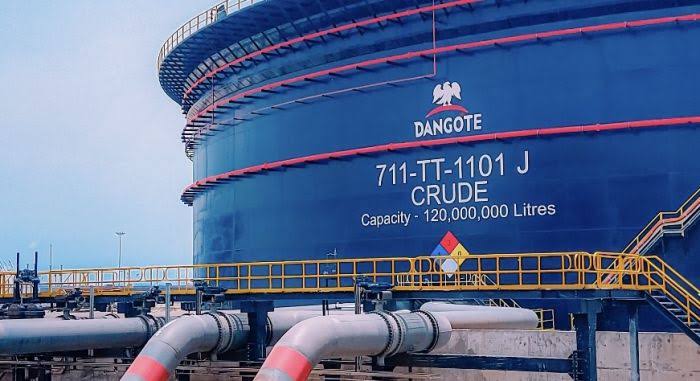
Dangote Industries Limited has commenced preliminary works on its proposed $17bn, 700,000-barrels-per-day refinery in Kenya, marking the first major step towards what is expected to become East Africa’s largest refining project.

The company said the project has advanced beyond the planning stage, with the site already selected, soil tests ongoing and engineering and design work underway ahead of construction.

According to Reuters, the refinery, which will be located on Lamu Island off the Kenyan coast, is expected to take about three years to complete and will supply refined petroleum products to Kenya and neighbouring countries, reducing East Africa’s dependence on imported fuels.

The development comes as Bloomberg reported on Tuesday that President of the Dangote Group, Aliko Dangote, plans to build the refinery at an estimated cost of up to $17bn as part of efforts to expand his refining empire into East Africa.

Advertisement

Citing a spokesman for Dangote Industries Ltd., Bloomberg reported that the proposed refinery would replicate the company’s refinery in Lagos and process about 700,000 barrels of crude oil per day when completed.

The report read, “A new mega-refinery to be built at the Kenyan coast by Africa’s richest person will cost as much as $17bn, a spokesman for Dangote Industries Ltd. has confirmed.

“Billionaire Aliko Dangote personally pledged to the leaders of Kenya and Uganda that he would set up a replica of his 700,000-barrel-a-day refinery outside Lagos in East Africa. The refinery would take about five years to build.”

According to the report, Dangote personally assured the Presidents of Kenya and Uganda that he would establish the refinery in East Africa. The report recalled that Kenyan President William Ruto announced in May that Dangote would commence construction of the refinery this year.

Advertisement

Speaking to Reuters, Dangote Industries’ Vice President for Oil and Gas, Devakumar Edwin, said the company had made significant progress on the project. “The site has been selected, soil tests are underway, and design and engineering work has commenced. Kenya was the choice from the beginning,” he told Reuters.

According to Bloomberg, Dangote said the coastal town of Lamu in southeastern Kenya was selected as the preferred location “for commercial and technical reasons,” although he did not provide further details.

The report added that Tanzania had initially been considered as a possible location for the refinery before Kenya emerged as the preferred destination.

The project represents Dangote Group’s biggest refining investment outside Nigeria and forms part of the company’s ambition to expand refining capacity across Africa following the commencement of operations at its 650,000-barrels-per-day refinery in Lagos.

Advertisement

Devakumar disclosed that the refinery would be financed through a combination of internally generated cash, bonds, and proceeds from the company’s planned initial public offering.

He, however, declined to state the exact cost of the project, saying it would be comparable to that of the Lagos refinery. The Lagos refinery, built by Aliko Dangote, eventually cost more than $20bn before commencing operations in 2024.

Reuters reported that the project was initially estimated at about $9bn in 2013, but costs escalated following the relocation of the site, engineering challenges, currency weakness, the COVID-19 pandemic and global inflation.

The investment comes as Dangote is simultaneously pursuing another ambitious expansion programme in Nigeria, where the capacity of the Lagos refinery is being doubled from 700,000 barrels per day to 1.4 million barrels per day by 2028. Once completed, the Nigerian complex is expected to become one of the world’s largest refining facilities.

Advertisement

Dangote Industries Limited has also unveiled plans to increase its combined refining capacity to 2.1 million barrels per day across Nigeria and Kenya as part of its long-term strategy to expand its footprint across Africa.

Edwin disclosed this during a recent visit by a delegation from the Republic of the Congo’s national oil company, Société Nationale des Pétroles du Congo, to the Dangote Petroleum Refinery in Lagos.

He said the expansion would raise the group’s total refining capacity to 2.1 million barrels per day, comprising 1.4 million barrels per day in Nigeria and the planned 700,000-barrels-per-day refining complex in Kenya to serve East African markets.

He also disclosed plans by the group to invest an additional $46bn between 2026 and 2028 across its refining, cement and fertiliser businesses as part of its drive to accelerate industrialisation across Africa.

Advertisement

The proposed Kenyan refinery reflects a growing recognition across Africa that local refining has become increasingly critical to energy security, foreign exchange conservation, and industrial development.

For decades, despite producing millions of barrels of crude oil daily, Africa has remained heavily dependent on imported refined petroleum products because of inadequate refining capacity.

Data show that while Africa contributes about seven per cent of global crude oil production, refining capacity across the continent declined by roughly one-third over the past two decades as ageing refineries suffered years of underinvestment, operational inefficiencies and poor maintenance.

The commissioning of the Dangote refinery has begun to reverse that trend. The refinery reached full operational capacity shortly before the recent Middle East tensions involving Iran, helping Nigeria significantly reduce its dependence on imported petrol and other refined products while improving domestic fuel availability.

Advertisement

Its success has renewed interest among African governments and private investors seeking to replicate the model in other parts of the continent. Beyond Kenya, several countries are now pursuing similar projects to strengthen their domestic refining industries.

In Mozambique, Nigerian businessman Benedict Peters has indicated interest in developing a proposed 200,000-barrel-per-day refinery, while Uganda is advancing plans to construct a 60,000-barrel-per-day refinery to meet domestic demand and supply neighbouring markets in Kenya and Tanzania.

According to the African Petroleum Producers’ Organisation, Africa currently exports about three-quarters of the crude oil it produces while importing approximately 70 per cent of the refined petroleum products consumed across the continent.

This imbalance has continued to expose African economies to volatile international fuel prices, high transportation costs, and foreign exchange pressures.

Advertisement

The proposed Kenyan refinery is therefore expected not only to strengthen East Africa’s energy security but also to deepen regional trade in refined petroleum products, reduce import dependence and stimulate industrialisation across the region.

Africa possesses abundant crude oil reserves but has historically lacked sufficient refining infrastructure to process its production locally. As a result, many oil-producing countries export crude oil and import expensive refined petroleum products, exposing their economies to global supply disruptions and price volatility.

The commissioning of the 650,000-barrel-per-day Dangote Petroleum Refinery in Nigeria marked a major shift in the continent’s refining landscape, boosting local fuel production and encouraging governments across Africa to prioritise investments in domestic refining capacity.

The proposed Kenyan refinery represents one of the continent’s most ambitious downstream projects and could significantly reshape fuel supply dynamics in East Africa while advancing the African Union’s broader agenda of industrialisation and regional energy integration.

Advertisement
Continue Reading

Economy

UBA Appoints New Chairman As Tony Elumelu Set To Retire

Published

on

By

ADVERTISEMENT
Zoom Ad
ADVERTISEMENT
Zoom Ad

United Bank for Africa (UBA) Plc has announced that its Group Chairman, Tony Elumelu, will retire from the bank’s Board of Directors on August 21, 2026.

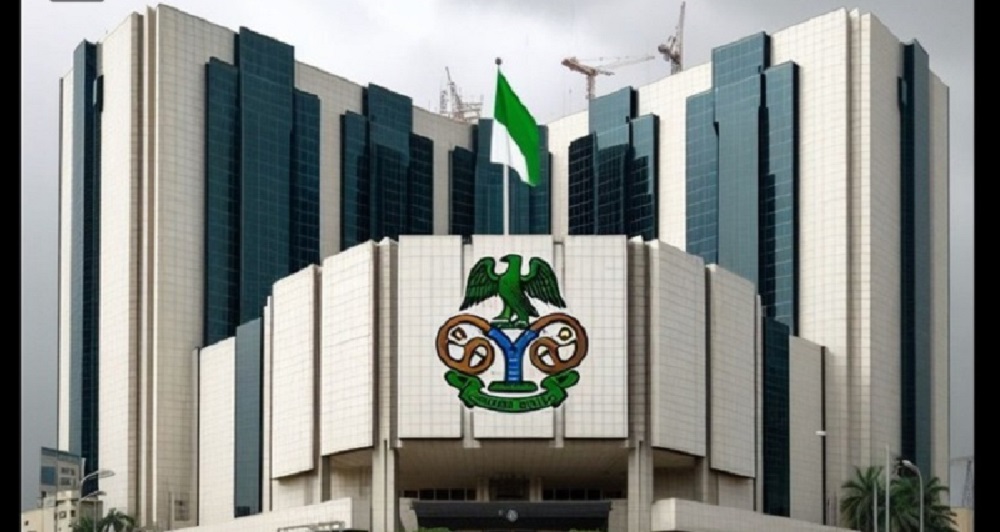
The bank disclosed this on Monday after its board meeting, explaining that the decision followed the completion of the maximum 12-year tenure for non-executive directors as prescribed by the Central Bank of Nigeria (CBN).

UBA also announced that Emmanuel Nnorom, a current non-executive director on the board, will succeed Elumelu as Group Chairman.

Nnorom’s appointment will take effect on the same day Elumelu retires.

Advertisement

In a statement issued after the meeting, the bank commended Elumelu for what it described as his visionary leadership and contribution to the growth of the UBA Group.

“The Board places on record its profound appreciation to Elumelu for his visionary leadership and exceptional contribution to the strategic vision and institutional strength of the UBA Group,” the statement read.

The bank said under Elumelu’s chairmanship, UBA strengthened its pan-African expansion strategy and now operates in 20 African countries, with presence in four global financial centres.

It added that the bank currently serves more than 50 million customers across its network.

Advertisement
Continue Reading

Economy

NCC, DBI unveil plan to boost Nigeria’s digital skills capacity

Published

on

By

ADVERTISEMENT
Zoom Ad
ADVERTISEMENT
Zoom Ad

The Nigerian Communications Commission (NCC) and its training arm, the Digital Bridge Institute (DBI), have unveiled plans to reposition the institute as a leading centre for digital skills development, research, innovation and policy to support Nigeria’s digital economy.

The initiative was announced by the President and Chief Executive Officer of DBI, Mr. David Daser, following the inaugural meeting of the institute’s newly constituted Interim Governing Board, chaired by Princess Oforitsenere Emiko, at the institute’s headquarters in Abuja.

Daser said the meeting marked the beginning of a new phase in the institute’s transformation aimed at strengthening its role in digital capacity development.

According to him, the renewed vision, backed by the Governing Board and the continued support of the NCC, is designed to equip Nigerians with the skills needed to thrive in the evolving digital economy.

Advertisement

He said the inauguration of the board represents another milestone in efforts to reposition DBI as a leading institution for digital skills acquisition, research, innovation and policy development.

Daser expressed confidence that collaboration with the board, including members Engr. Abraham Oshadami and Ms. Rimini Makama, would accelerate the institute’s transformation agenda.

He added that closer cooperation between the Governing Board, DBI management and the NCC would enhance the institute’s capacity to deliver quality digital skills training and contribute to Nigeria’s digital transformation goals.

“The future is digital, and we remain committed to ensuring Nigeria is not just a participant but a leader in shaping it,” Daser said.

Advertisement

The Digital Bridge Institute, the training arm of the NCC, has continued to expand its programmes in digital skills development, emerging technologies, innovation and capacity building to help bridge Nigeria’s digital skills gap and support the country’s transition to a knowledge-driven economy.

Continue Reading

Trending

Copyright © 2024 Naija Blitz News