

News
How Speaker Abbas applied legislative wisdom to stop move by Reps to summon President
- /home/naijuinz/public_html/wp-content/plugins/mvp-social-buttons/mvp-social-buttons.php on line 27
https://naijablitznews.com/wp-content/uploads/2026/07/Screenshot_20260709_105324_com_hihonor_photos_SlotAlbumActivity.jpg&description=How Speaker Abbas applied legislative wisdom to stop move by Reps to summon President', 'pinterestShare', 'width=750,height=350'); return false;" title="Pin This Post">
- Share
- Tweet /home/naijuinz/public_html/wp-content/plugins/mvp-social-buttons/mvp-social-buttons.php on line 72
https://naijablitznews.com/wp-content/uploads/2026/07/Screenshot_20260709_105324_com_hihonor_photos_SlotAlbumActivity.jpg&description=How Speaker Abbas applied legislative wisdom to stop move by Reps to summon President', 'pinterestShare', 'width=750,height=350'); return false;" title="Pin This Post">
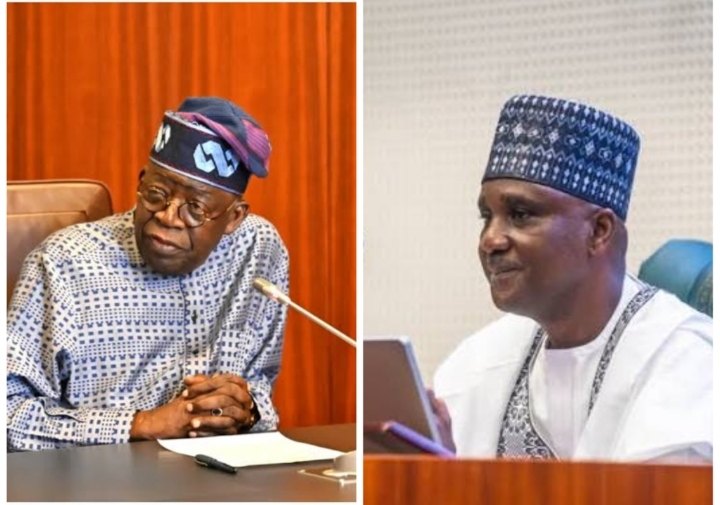
The synergy between President Bola Ahmed Tinubu and Members of the National Assembly may have collapsed as majority Members of the House of Representatives, on Wednesday insisted that the President and his economic team must appear before the Parliament.
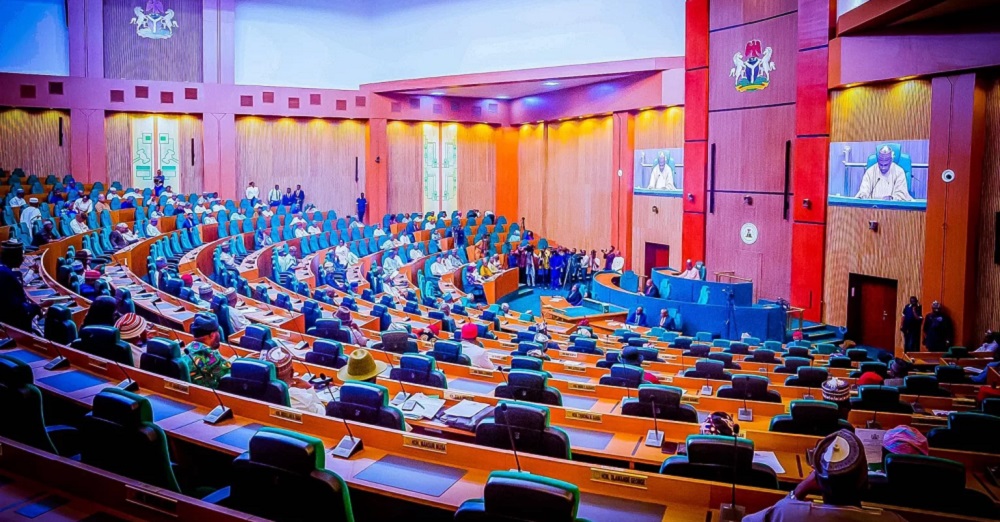
The motion which was predicated upon the inability of the executive to fund the 2025 budget, despite the appropriation and approvals from the National Assembly, created a serious tension on the floor of the House and divided the Lawmakers, with majority, including Members of the ruling party, supporting the invitation of the President to the Parliament.

The motion which was sponsored by the Member representing Aba North/Aba South Federal Constituency of Abia State, Hon. Alex Ikwechegh, decried the poor funding of appropriated budgets and persistent delays in the release of capital funds to Ministries, Departments and Agencies.
This came on the heels of a Constitutional Point of Order raised by the Member representing Okpe/Sapele/Uvwie Federal Constituency of Delta State, Hon. Benedict Etanabene, who informed the House that he had seen a circular from the Office of the Accountant-General of the Federation announcing the suspension of funding for zonal intervention projects pending fresh verification requirements.
The debate quickly divided the chamber, with lawmakers across party lines expressing frustration over what they described as the slow implementation of projects approved by the National Assembly.
While the motion enjoyed overwhelming support, attempts by some Members to oppose aspects of it were drowned out by loud shouts and protests from their colleagues, forcing the Speaker to repeatedly call for order.
Moving the substantive motion titled, “Urgent need to address the poor funding of appropriated budgets and delayed releases to MDAs as revealed during the 2026 budget defence sessions,” Ikwechegh argued that the credibility of the appropriation process depends not only on the passage of the budget but also on the timely release and utilisation of funds.
He said, “The powers of appropriation in the National Assembly, and the credibility of the budget rests not only on the size of the figures appropriated, but on the fidelity, timeliness with which appropriation funds are released, cash-backed, and utilized for ministries, departments, and agencies.
“The House also notes that during the 2026 budget defence sessions, honourable Ministers and heads of MDAs disclosed deeply troubling levels of funding of 2025 budget, including sectors that recorded zero capital releases for the entire fiscal year, and others that received only a token, a fraction of their appropriated capital votes.
“The House is aware that these disclosures are consistent with repeated protests staged in 2025 and early 2026 by indigenous contractors of Nigeria that have invested heavily to do business with the Nigerian government at the Federal Ministry of Finance and at the gates of the National Assembly; on one occasion, disrupting plenary sittings because due to unpaid certificates for completed and verified projects with many contractors unable to service bank loans obtained to execute government projects.”
Ikwechegh recalled that President Tinubu had, at a Federal Executive Council meeting on December 10, 2025, directed the immediate settlement of verified contractor liabilities estimated at about N1.5tn and approved the establishment of an inter-ministerial committee to reconcile records and facilitate payment.
According to him, the House is also aware that His Excellency President Bola Ahmed Tinubu at the Federal Executive Council of 10th December, 2025 expressed grave displeasure at the backlog, directed the immediate settlement of verified contractor liabilities of about N1.5tn and constituted an inter-Ministerial Committee to harmonise records and deliver a lasting funding solution, declaring his readiness of the government to even borrow when necessary to settled verified obligations.
“The House is further aware that directive of the National Assembly approved the borrowing in excess of N1tn specifically to finance the settlement of outstanding obligations on completed and verified capital projects, in addition to dedicated provisions in the 2026 Appropriation Act for contractor liabilities, while the Honourable Minister for Finance have announced the clearance of substantial sums announcements, which contractors dispute as partial announcements.”
He expressed concern that despite the presidential directive and legislative approvals, the release of funds to MDAs had remained slow.
“The House is concerned that notwithstanding the clear directive of the President, the legislative approvals and the ministerial assurances to MDAs remain slow, if I may say unexistent, stalling critical projects, escalating contract costs, exposing contractors to insolvency, and rising non-performing loans and eroding public trust in the budget of the Federal Republic of Nigeria, approved by this parliament.”
The Lawmaker also criticised a Treasury circular dated June 29, 2026, reportedly issued by the Office of the Accountant-General of the Federation, which requires a Certificate of Verification and Compliance from the Federal Ministry of Special Duties and Intergovernmental Affairs before payments can be made for constituency projects.
He said, “The House is disturbed by recent newspaper reportage of a federal treasury circular dated 29th June, 2026 issued by the Office of the Accountant General of the Federation, halting payments for zonal intervention and constituency projects, unless a certificate of verification and compliance is first obtained from the Federal Ministry of Special Duties and Intergovernmental Affairs, a directive which however well-intentioned, introduces yet another layer of bureaucratic bottlenecks at the very moment Mr President has demanded speed and risks turning back the hands of the clock by subjecting duly appropriated, procured, and executed projects to further delay.”
He therefore, prayed the House to urge the President, “as a father of the nation, to make out time, since we have invited Ministers, invited Security Chiefs, invited different members of the Economic Council to come here and explain to us why the budget is not being implemented.”
Earlier, Etanabene had urged the House to invoke its constitutional oversight powers by inviting President Tinubu and members of his economic team to explain the rationale behind the reported suspension of constituency project funding.
Citing Sections 4, 88 and 89 of the 1999 Constitution (as amended), he argued that the legislature had a responsibility to demand accountability over the implementation of budgets it had approved.
He said, “I wish, Mr. Speaker, that the Constitution be tested. I want to urge this House to agree that we summon Mr President of the Federal Republic of Nigeria together with his financial team to please come to this House in line with the provision of the Constitution to brief Nigerians exactly what is happening, because the stories are not complimentary at all.
“We cannot explain to the constituents what is happening. Today, we collect money. We will not be able to give a proper explanation for it. The budgets are not being implemented. Presently, in Nigeria today, we are implementing 2024, 2025 and 2026 budgets running concurrently. This is not in the best interest of everybody.
“So, Mr Speaker, I wish to move the motion that this House invite Mr. President to come and explain and make us know the need for this circular that has been released.”
However, the Speaker, Tajudeen Abbas, ruled that the aspect of the debate seeking to summon the President could not be adopted, describing such a move as inconsistent with parliamentary practice.
According to the Speaker, “the issue of summoning the President as included in the debate of Hon Ikwechegh cannot be adopted by the House,” noting that “such action is unparliamentary.”
Despite the effort of Speaker Tajudeen Abbas to save the day, the Lawmakers appeared agitated and resolute to revolt against the President.
Some of them who got the return tickets to contest the 2027 elections feel they may not have anything on ground to campaign with, as the Zonal Intervention Projects appear suspended; while those who lost their tickets feel it was because of non implementation of constituency projects that accounted largely for their lost.
News
Reps Weigh Funding Reform for South-South Commission as Oil Regulators, Industry Raise Fresh Concerns
By Gloria Ikibah
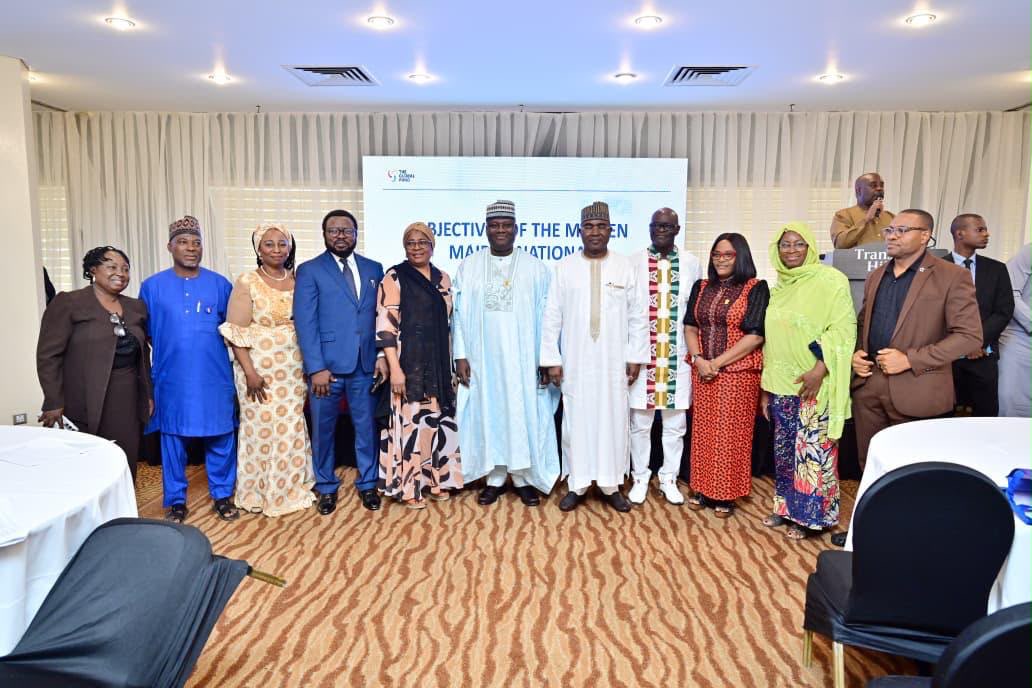
The House of Representatives has intensified consultations on a proposed amendment to the South-South Development Commission (Establishment) Act, 2025, seeking stakeholders’ input on plans to strengthen the Commission’s funding base while balancing the interests of government, host communities and the petroleum industry.
At the resumed public hearing on Wednesday, the House Committee on the South-South Development Commission engaged government agencies, petroleum regulators, oil producers and other stakeholders on the proposed legislation, which seeks to expand the Commission’s funding sources to accelerate development across the oil-rich region.
Committee Chairman, Rep. Julius Pondi, explained that the hearing was reconvened after several critical stakeholders were unable to attend the earlier session held on July 8 because they were participating in the Nigerian Oil and Gas (NOG) Conference.
According to him, “the committee considered it necessary to provide all relevant stakeholders with an opportunity to contribute to a bill with far-reaching implications for the region and the petroleum sector”.
Pondi reaffirmed the commitment of the House to an “open and participatory legislative process”, noting that public hearings remain essential in ensuring that laws reflect the views of government institutions, industry operators, professional bodies, civil society organisations and host communities.
He said the amendment was designed to strengthen the Commission’s financial capacity to fulfil its mandate of promoting sustainable development in the South-South.
According to him, despite serving as the nation’s economic backbone through petroleum production, maritime commerce and industrial activities, the region continues to grapple with inadequate infrastructure, environmental degradation and persistent socio-economic challenges.
“We are particularly interested in receiving constructive contributions on the proposed funding framework, its sustainability, its implications for government and industry, as well as alternative proposals that can further strengthen the objectives of the legislation,” Pondi said.
The Nigerian Upstream Petroleum Regulatory Commission (NUPRC) expressed support for a transparent and sustainable funding framework for the Commission but raised concerns over the proposal requiring oil and gas companies operating in the South-South to contribute three per cent of their total annual budgets.
Presenting the Commission’s position, Chief Executive Officer, Mrs Oritsemeyiwa Eyesan, represented by the Head of Regulations and Statutory Compliance, Kingsley Chikwendu, argued that the phrase “total annual budget” remained undefined in the bill, creating uncertainty over how the levy would be assessed and implemented.
He warned that the proposal, if retained in its current form, could effectively introduce another expenditure-based levy payable regardless of profitability, production levels or the financial position of affected companies.
Chikwendu noted that upstream operators already shoulder multiple statutory obligations, including royalties, petroleum taxes, contributions to the Niger Delta Development Commission (NDDC), Host Community Development Trust Funds under the Petroleum Industry Act (PIA), the Nigerian Content Development Fund, environmental remediation commitments and abandonment funds.
He urged lawmakers to carefully evaluate the likely impact of the proposed levy on investment decisions, production costs and the competitiveness of Nigeria’s upstream petroleum sector before reaching a final decision.
The Nigerian Midstream and Downstream Petroleum Regulatory Authority (NMDPRA) also advised the committee to ensure that any additional funding mechanism aligns with the fiscal philosophy and investment objectives of the Petroleum Industry Act, 2021.
Representing the Authority, Senior Manager Ahmed Laido said any new financial obligation should strengthen investor confidence, provide regulatory certainty, encourage long-term investment and support the Federal Government’s ease-of-doing-business reforms.
He stressed that lawmakers should consider the wider economic implications of the proposal to ensure the Commission’s funding objectives do not undermine the competitiveness and sustainability of the petroleum industry.
The Oil Producers Trade Section (OPTS) of the Lagos Chamber of Commerce and Industry similarly cautioned against introducing another statutory levy on operators.
Chairman of OPTS, Bala Wudiri said oil and gas companies were already making substantial statutory contributions under existing laws, including payments to the NDDC and the Host Community Development Trust Fund.
He cautioned that imposing an additional three per cent contribution could increase the financial burden on operators, duplicate existing obligations and reduce Nigeria’s attractiveness as an investment destination.
Wudiri urged the committee to provide greater clarity on the proposed funding mechanism and adopt a balanced approach that would strengthen the South-South Development Commission without discouraging investment or creating overlapping statutory obligations.
The hearing highlighted broad support for improving development across the South-South, even as stakeholders differed on the most appropriate funding model.
Participants agreed that the Commission requires adequate resources to deliver critical infrastructure and development projects but urged lawmakers to ensure that any new funding framework preserves a stable, competitive and investment-friendly environment for Nigeria’s petroleum industry.
The committee is expected to review all memoranda and submissions before presenting its recommendations to the House of Representatives for further legislative consideration.
News
Many feared killed as Boko Haram insurgents crush ISWAP in fierce Lake Chad battle
A fresh clash between rival terrorist groups, Jama’atu Ahlis Sunna Lidda’awati wal-Jihad, JAS, and the Islamic State West Africa Province, ISWAP, has reportedly left dozens of fighters dead in parts of the Lake Chad Islands, raising renewed security concerns across Nigeria’s North-East.
The development was reported by security analyst Zagazola Makama.
According to the report, the fighting erupted around Mangari and Tumbun Allura after both factions engaged in a fierce battle over control of strategic locations within the Lake Chad basin.
Makama reported that JAS fighters gained the upper hand during the confrontation, allegedly killing dozens of ISWAP fighters before seizing two boats belonging to the rival group and retreating to their stronghold at Kurnawa.
The report noted that the boats are considered critical assets because they are used to transport fighters, weapons, food supplies and other logistics across the Lake Chad waterways.
“The reported seizure of the boats is considered significant, as watercraft remain a critical means of transportation for fighters, weapons, food supplies and other logistics across the difficult terrain of the Lake Chad waterways,” the report stated.
According to intelligence sources quoted in the report, troops deployed in Mallam Fatori, Baga, Cross Kauwa, Kukawa and other communities around the Lake Chad axis have been placed on heightened alert amid fears that fleeing ISWAP fighters could disperse into nearby areas.
Makama added that security assessments warned the confrontation could increase the risk of isolated attacks, improvised explosive device, IED, ambushes and retaliatory assaults as surviving fighters attempt to regroup.
The report further stated that military authorities are considering intensified offensive operations, including increased patrols and enhanced intelligence, surveillance and reconnaissance activities, to prevent fleeing insurgents from reorganising.
News
PFIPC Probe: Head of Civil Service finally admits due diligence failed, accepts responsibility
The Head of the Civil Service of the Federation, Mrs. Didi Esther Walson-Jack, has confirmed that due diligence was not thoroughly carried out in the process that led to the recognition of the purported Presidential Foreign Intervention Promotion Council.
She accepted responsibility for the lapse, saying her office relied on documents that appeared authentic without subjecting them to sufficient verification.
Walson-Jack made the admission while appearing before the House of Representatives ad hoc committee investigating the alleged operation of the purported council.
She told lawmakers that her office had no reason to doubt the documents at the time because they bore the State House logo and what appeared to be a familiar signature.
However, the HoSF said subsequent comparisons with genuine State House correspondence, backed by police forensic findings, confirmed that the signatures were different.
She, however, assured the committee that her office would review its internal verification procedures to make them more robust and fraud-proof.
Meanwhile, the Inspector-General of Police, Tunji Disu, has told the committee that the self-acclaimed Director-General of the purported council, Mr. Adeniyi Adeyemi, could not appear before the lawmakers due to a subsisting court order.
Disu, who was represented by Deputy Commissioner of Police Olufemi Akinola, said Adeyemi could only appear upon an order of a court of competent jurisdiction.
Following the submission, the committee adjourned further sitting on the matter until next week.
-
Metro16 hours agoNavy Arrests Vessel With 650 Metric Tonnes Of Stolen Crude
-
News16 hours agoTinubu Meets New NBA Chair, Badejo-Okusanya
-
Metro16 hours agoGunmen Kill Serving Army Colonel In Abuja, Injure Wife, Two Others
-
Politics16 hours agoOsun 2026: Accord Is Like Keke Napep Facing Trailer – APC Mocks Adeleke
-
Sports16 hours agoSuper Falcons Receive Rewards For Historic WAFCON 2024 Triumph
-
Sports16 hours agoWAFCON 2026: NSC Announces $5,000-per-goal Incentive For Super Falcons
-
News15 hours agoFG lists 7 mistakes to avoid when applying for government jobs
-
News15 hours agoOsun 2026: INEC configures 4,427 BVAS, dismisses stolen PVC fears