

Connect with us

News

Reps Demand Tougher Crackdown on Human Trafficking, Better Care for Rescued Nigerians

Published

on

ADVERTISEMENT
Zoom Ad
ADVERTISEMENT
Zoom Ad

By Gloria Ikibah

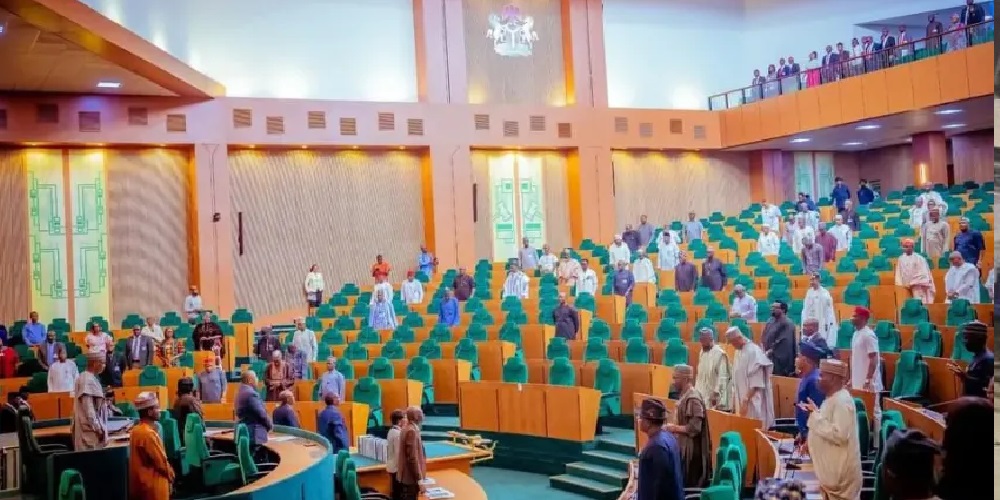
The House of Representatives has called for a more robust national response to human trafficking, urging stronger collaboration among government agencies, international organisations and civil society groups to ensure that trafficked Nigerians rescued from Mali and other West African countries receive adequate support upon their return.

Lawmakers made the call on Wednesday during a high-level stakeholders’ technical meeting on human trafficking organised by the House Committee on Humanitarian Services in Abuja.

Chair of the committee, Rep. Tolulope Akande-Sadipe, said Nigeria must move beyond simply repatriating victims by putting in place effective rehabilitation and reintegration programmes that will help survivors rebuild their lives and reduce the risk of re-trafficking.

Advertisement

She expressed concern that thousands of Nigerians, particularly women, children and young people, continue to fall prey to traffickers operating across West Africa, where they are subjected to forced labour, sexual exploitation and other forms of modern slavery.

According to her, many victims suffer abuse, exploitation and deprivation before becoming stranded in foreign countries without legal protection or access to essential services.

“Behind every statistic is a human story. Trafficking is not merely a migration issue; it is a grave violation of human rights and an assault on human dignity that demands a coordinated national response,” Akande-Sadipe said.

She noted that recent interventions by the Federal Government, including the evacuation of vulnerable Nigerians from South Africa and the Memorandum of Understanding between Nigeria and Ethiopia on the transfer and management of Nigerian prisoners, underscored the value of diplomatic engagement and inter-agency cooperation in protecting citizens abroad.

Advertisement

Akande-Sadipe stressed that successful reintegration should go beyond returning victims to Nigeria, saying survivors require physical and mental healthcare, psychosocial support, legal assistance, education, vocational training, family reunification and sustainable economic opportunities.

She assured stakeholders that the House will continue to provide the legislative backing, policy direction and oversight required to strengthen humanitarian response systems, improve institutional coordination and ensure adequate funding for agencies responsible for protecting vulnerable Nigerians.

The lawmaker urged participants to produce practical recommendations that would strengthen Nigeria’s anti-trafficking framework in line with the internationally recognised pillars of prevention, protection, prosecution and partnerships.

Meanwhile, the National Council of Child Rights Advocates, Nigeria (NACCRAN), presented what it described as troubling findings from an 11-month fact-finding mission in Mali, alleging irregularities in the rescue and repatriation of trafficked Nigerian girls.

Advertisement

Presenting the organisation’s report, NACCRAN’s Operations Consultant on Diaspora Issues, Prince Adefioye Gbolagade Simeon, alleged that investigations uncovered a lack of transparency in repatriation processes, poor documentation of Nigerian migrants and abuse of rescued victims.

He further alleged that some officials at the Nigerian Embassy in Mali, working alongside certain Nigerians resident in the country, engaged in questionable practices during the rescue and repatriation of trafficked persons.

According to Simeon, some rescued girls were allegedly kept at the embassy for prolonged periods while awaiting repatriation through the International Organization for Migration (IOM), despite funds reportedly being collected to facilitate their return to Nigeria.

He also claimed that several victims reported suffering physical and emotional abuse after refusing to engage in prostitution, while many Nigerian migrants paid between 10,000 and 15,000 CFA francs for identification cards that were allegedly not recognised at border checkpoints.

Advertisement

Simeon accused some embassy officials and their collaborators of exploiting vulnerable Nigerians and intimidating humanitarian workers who attempted to expose the alleged misconduct.

He disclosed that petitions had previously been submitted to the Federal Ministry of Foreign Affairs, the Federal Ministry of Justice, the National Human Rights Commission, the Office of the Senate President and relevant committees of the National Assembly, but alleged that many of the issues raised had yet to be addressed.

However, he commended the House Committee on Humanitarian Services for intervening in the matter.

According to him, the committee’s engagement prompted the Federal Ministry of Foreign Affairs to deploy a fact-finding team to Mali in July 2025.

Advertisement

He added that, with the committee’s support, NACCRAN successfully repatriated more than 10 underage Nigerian girls between September and December 2025, with several victims handed over to the National Agency for the Prohibition of Trafficking in Persons (NAPTIP) before being reunited with their families.

Simeon called on the committee to investigate the management of repatriation activities at the Nigerian Embassy in Mali, strengthen coordination between the Ministry of Foreign Affairs, NAPTIP, security agencies and civil society organisations, and develop a comprehensive policy framework to protect Nigerian girls and women from trafficking across West Africa.

He also appealed for official authorisation and letters of introduction to enable NACCRAN to continue its humanitarian rescue operations in Mali and other West African countries.

The meeting brought together lawmakers, representatives of government ministries, development partners, diplomatic missions, security agencies, international organisations and humanitarian experts to explore stronger strategies for tackling human trafficking and improving protection for vulnerable Nigerians overseas.

Advertisement
Continue Reading
Advertisement

News

Gov. Soludo reveals Obi, Obiano accumulated debts still hanging on Anambra

Published

on

ADVERTISEMENT
Zoom Ad
ADVERTISEMENT
Zoom Ad

The Anambra State Government has said it is still servicing loans inherited from the administrations of former governors Peter Obi and Willie Obiano, even as it maintains that Governor Chukwuma Soludo has not borrowed from any commercial bank since assuming office.

The Commissioner for Finance, Izuchukwu Okafor, said the state’s debt burden had fallen by more than 83 per cent under Soludo, with the administration also clearing several inherited domestic obligations.

Okafor disclosed this during a Ndi Anambra podcast uploaded by Anambra State New Media on Monday while explaining the state’s finances and debt position.

He said repayments on loans secured by previous administrations continued to be deducted from Anambra’s allocation through the Federation Account Allocation Committee, including obligations dating back to the Obi and Obiano administrations.

Advertisement

“Yes, every month during our FAC meetings, and when you see the schedule of FAC, you will notice there were substantial, significant deductions from our own FAC because of loans previously borrowed by previous administrations,” Okafor said.

“These loans were borrowed, you know, during the time of, even, not the immediate predecessor, even during the time of Peter Obi and Willie Obiano, His Excellency, the past governors,” he said.

According to the commissioner, the Soludo administration had focused on managing the inherited obligations while avoiding new commercial borrowing.

“It’s on record, you know, that this administration has not borrowed a kobo from any commercial bank since the inception of this administration,” he said.

Advertisement

Okafor said the government had also settled a number of legacy liabilities, including unpaid contracts, gratuity and pension arrears, bringing the state’s domestic debt close to zero.

“But I will give you an example for our domestic debt, the control, the legacy, what we call legacy debts, you know, the contracts that were not paid, not owing, the gratuity arrears, pension arrears, we’ve been able to clear all that,” he said.

He added, “In terms of, so, our domestic debt as of today is near-zero balance.”

The commissioner attributed the reduction in the overall debt burden to repayments made by the administration, saying several inherited loans had already been settled.

Advertisement

“But I will also say that Mr Governor has not borrowed a penny. We have been able to manage the debt, the state debt, very well, that we have brought it down by more than 83 per cent as of today. I’ve been able to repay back most of these loans,” he said.

External obligations, however, remain part of the state’s financial commitments. Okafor explained that repayments on some foreign-denominated loans are deducted from the state’s federal allocation under the terms attached to the facilities.

“But following as well, external debts, which is foreign loan-denominated debts, when you look at it, because there are some covenants around the period it will take to pay off these loans, particularly deducted as such when we are doing FAC,” he said.

“Before they limit Anambra’s own allocation, they will deduct it as such, because most of them, World Bank loans and other loans, they committed.”

Advertisement

Okafor also disclosed that the state had recently fully repaid one of its debts.

“There is one debt that we recently paid off, CAGS,” he said.

He said the reduction in inherited liabilities had given the government more room to finance other priorities.

“So, in a nutshell, I’ve been able to, you know, create more fiscal space for Anambra State,” Okafor said.

Advertisement

He added, “This administration has been able to create more by paying off, you know, backlog of numerous debts inherited from previous governments, starting from the time of Peter Obi.”

Continue Reading

News

Sad: Nine passengers killed as gunmen open fire on bus in Plateau

Published

on

ADVERTISEMENT
Zoom Ad
ADVERTISEMENT
Zoom Ad

No fewer than nine passengers were killed when gunmen opened fire on a commercial bus at Dungus Junction in Kuru community, Jos South Local Government Area of Plateau State.

Residents told journalists that the incident occurred when the bus driver parked to allow some passengers alight at the junction.

According to Daily Trust the bus which was heading to Jos was stained with blood and riddled with bullets.

Lawan Suleiman, a neighbor and teacher of one of the victims, confirmed the incident, adding that the attack occurred while the bus was stopped at the junction.

Advertisement

He said, “The driver is Ibrahim and he was my student. Three of them are from our community here in Bukuru. Their bodies have been deposited at the hospital. But relatives are preparing to collect them for burial.”

Spokesman of the Berom Youth Moulders, BYM, Rwang Tengwong, also confirmed the incident saying the victims were passengers travelling to Jos when the attackers opened fire on their vehicle.

“The incident happened around 9.40p.m. The victims were all passengers travelling to Jos when the terrorists opened fire on the vehicle. Among those killed was a member of Operation Rainbow. It is a very sad development and we lament the loss of lives.”

According to him, some of the passengers sustained gunshot wounds and were rushed to hospitals, where some later died.

Advertisement

Plateau state police command is yet to issue a statement regarding the incident as of press. (Daily Trust)

Continue Reading

News

Over 600 senior lecturers back Tinubu, ASUU disowns approval

Published

on

ADVERTISEMENT
Zoom Ad
ADVERTISEMENT
Zoom Ad

More than 600 senior lecturers from public universities across Northern Nigeria have declared their support for President Bola Tinubu’s bid to secure another term in the 2027 presidential election.

As reported by DAILY TRUST, the lecturers made their position known at a stakeholders’ meeting in Kaduna convened by the Special Adviser to the President on Political Matters, Ibrahim Masari, to discuss the administration’s performance and the country’s political direction ahead of the next general election.

The meeting, held at the Umaru Musa Yar’Adua Centre, attracted several northern political leaders, including Kaduna State Governor Uba Sani, Zamfara Governor Dauda Lawal, Yobe Governor Mai Mala Buni, Borno Governor Babagana Zulum and Gombe Governor Inuwa Yahaya.

The Minister of Defence, Bello Matawalle, Minister of Housing, Muttaqha Rabe Darma, and former Katsina State Governor, Aminu Bello Masari, were also among those who attended the engagement.

Advertisement

Presenting the communiqué, the Vice Chancellor of Kaduna State University, Prof Abdullahi Ibrahim Musa, said the academics assessed Tinubu’s administration since May 2023, including its handling of the economy, security, education, infrastructure and social development.

According to the lecturers, although some government reforms had increased the economic burden on Nigerians through higher living and transportation costs, the measures had also improved government revenue and public finances. They further cited developments in education funding, agriculture, infrastructure, business support and the digital economy.

The academics subsequently resolved to support Tinubu’s re-election but cautioned that their backing was not an unconditional endorsement.

They called on the Federal Government to urgently address food and transport costs, unemployment and insecurity, while strengthening investment in education, healthcare, agriculture, electricity, roads and other infrastructure in the North.

Advertisement

However, the Academic Staff Union of Universities distanced itself from the declaration, with its President, Prof Chris Piwuna, insisting that ASUU remains politically neutral.

Piwuna said individual lecturers were free to support any political party or candidate of their choice, but stressed that such decisions must not be attributed to the union.

“We have never, and we will never endorse any political party candidate. Nobody should drag us into such things,” the ASUU president said.

The endorsement came as political consultations intensify ahead of the 2027 presidential election, with the Tinubu camp seeking the backing of influential groups across Northern Nigeria.

Advertisement
Continue Reading

Trending

Copyright © 2024 Naija Blitz News