Connect with us

News

Photos: FG ready to dismantle drug cartels, promoting Nigerians’ wellbeing – SGF Akume

Published

on

ADVERTISEMENT
Zoom Ad
ADVERTISEMENT
Zoom Ad

. Substance use summit convened to mobilise National Action Plan against drug scourge, says Marwa


. UNODC, Health Ministry seek translation of commitment into practical, measurable action

The Federal Government has reaffirmed its commitment to every initiative aimed at preventing illicit drug use, dismantling trafficking networks, expanding access to treatment and rehabilitation, and promoting the wellbeing of all Nigerians.
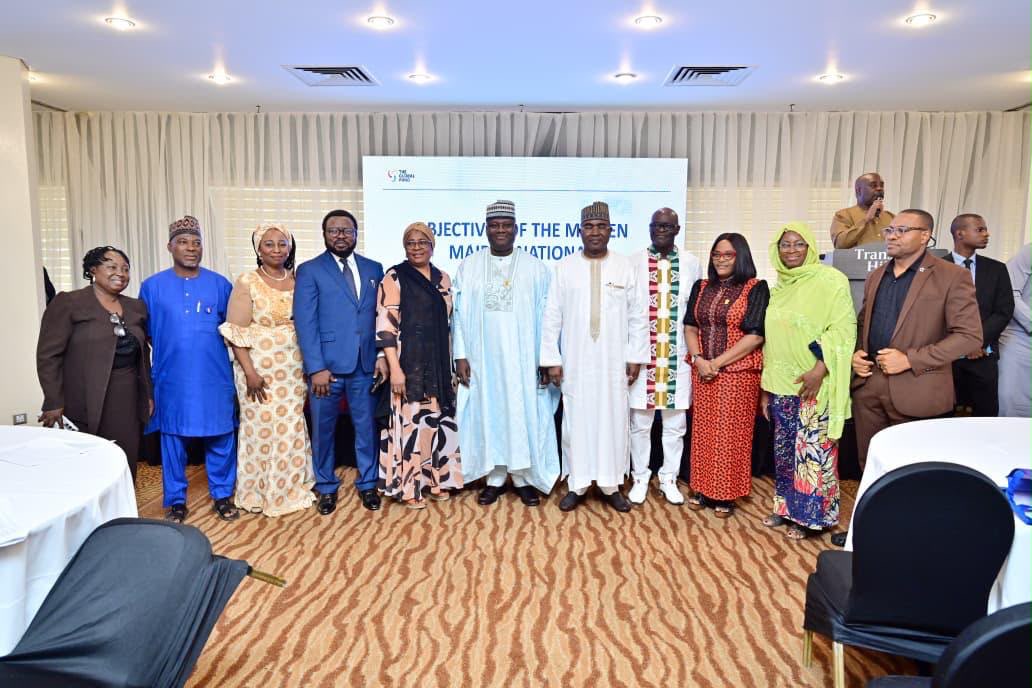
Justifying the government’s stance on the drug scourge, the SGF who was represented by the Permanent Secretary General Services (OSGF) Dr. Adamu Ibrahim Kana, stated that no nation will fold its hands while its youths are under the threat of substance abuse. According to him, “No nation can achieve sustainable development when its young population is threatened by drug abuse and addiction. No society can attain lasting peace and prosperity when criminal networks engaged in illicit trafficking continue to undermine its institutions and exploit its vulnerabilities. This much we know, and this much must guide our resolve. This summit, therefore, presents a timely opportunity for us to renew our collective commitment, deepen our partnerships and chart a clear, coordinated pathway towards a healthier, safer and more resilient Nigeria.

“Let me assure you that the administration of President Bola Ahmed Tinubu remains firmly committed to the health, safety and wellbeing of every Nigerian. Under the Renewed Hope Agenda, we are building resilient communities, promoting mental health, empowering our young people and strengthening the institutions that must confront these emerging social challenges.” He commended the initiative by the NDLEA, Ministry of Health and UNODC to convene the summit.
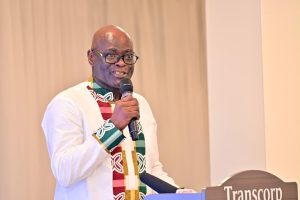
In his welcome address at the ceremony, Chairman/Chief Executive Officer of NDLEA, Brig Gen Mohamed Buba Marwa (rtd) stated that the summit was convened as a national platform for reflection, dialogue and collective action on the growing burden of drug use and substance use disorders, coming on the heels of a weeklong world drug day programme dedicated to raising awareness, deepening understanding and renewing stakeholders’ resolve, adding that such intensity “testifies to our shared commitment to confronting Nigeria’s evolving drug situation through coordinated, evidence-based and innovative action.”

He noted that despite the efforts and successes recorded in recent years by NDLEA in drug supply and drug demand reduction, it has become increasingly clear that no single institution can successfully confront the drug problem in isolation. “The scale of this challenge demands a whole-of-government and whole-of-society response, one that mobilises every stakeholder: government institutions, communities, families, development partners, the private sector, religious and traditional leaders, civil society and the media.
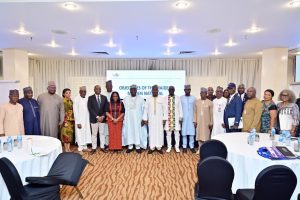
“This Summit is therefore both timely and necessary. It aligns with the global call to confront persisting drug challenges with innovative, collaborative responses, and it offers us a unique opportunity to build consensus around a coordinated National Action Plan, one that strengthens prevention, treatment, rehabilitation, data collection, policy implementation and community resilience”, he added.

“Over the years, the National Drug Law Enforcement Agency has remained steadfast in its mandate to combat this menace through a balanced and comprehensive approach. On the supply reduction front, the Agency has recorded significant successes in drug seizures, arrests, convictions and the dismantling of trafficking networks. Our operational feats in the last 18 months alone speak to this: a total of 29,262 arrests leading to the seizure of 5,305,484.88 kilograms of assorted illicit drugs valued at over N1.5 Trillion and the conviction of 5,225 offenders.
“Equally important have been our demand reduction efforts. Through the War Against Drug Abuse (WADA) campaign, we have sustained nationwide awareness initiatives across communities, schools and institutions. We have broadened access to counselling, treatment and rehabilitation services, while advancing preventive interventions such as our school-based Non-Punitive Drug Testing Policy. Within the same period of 18 months, we have conducted 6,645 drug use prevention focused sensitization and awareness creation programmes in schools, worship centres, work places, markets, motor parks and communities, and correctional facilities, among others, equipping nearly five million Nigerians with the life skills to resist drug abuse. Equally significant is the counselling, treatment and rehabilitation of 13,508 drug users across our 31 rehab centres spread all over the country.

“Worthy of particular note, too, is the launch of the Alternative Development Initiative for cannabis sativa growers, designed to support their transition from illicit cultivation to cash crop production and other sustainable livelihoods.” He expressed confidence that through partnership, shared responsibility and sustained commitment, Nigeria can significantly reduce the burden of drug use and build a healthier, safer and more prosperous nation.

Advertisement

In his remark, Minister of Health and Social Welfare, Prof. Ali Pate urged that the summit must not end as a talk shop. “The measure of this summit will not be the communique. It will be the number of young people who choose not to start drugs. It will be the number of patients who sleep without pain. It will be the number of families restored. The Federal Ministry of Health stands ready to lead, to coordinate, to collaborate and to deliver.”

Also speaking, the Country Representative, United Nations Office on Drugs and Crime (UNODC), Mr. Cheikh Toure represented by Dr. Akanidomo Ibanga commended the strong collaboration across ministries, agencies, civil society, the private sector, and development partners, adding that the gathering was a powerful demonstration of Nigeria’s commitment to addressing the drug challenge in a coordinated and forward-looking manner.

According to him, “As the United Nations, we stand here today not as individual agencies, but as one system—united in our support to Nigeria. The UN family is working collectively to support a comprehensive, balanced, and evidence-based response. We meet at a critical time. The scale and evolving nature of drug use in Nigeria—marked by emerging substances and shifting patterns—require us to act with urgency, but also with clarity and purpose. Beyond the numbers are lives, communities, and futures that depend on the strength of our response. This summit is therefore more than a convening. It is a moment of alignment. A moment to reaffirm our shared commitment to the National Drug Control Master Plan and to translate that commitment into practical, measurable action.”

The summit is being attended by relevant ministries, departments and agencies of government; development partners; the military and security agencies; NGOs, and civil society organisations, among others.

Advertisement
Continue Reading
Advertisement

News

Photos: 70% Of FCT Projects We Completed Were Abandoned For 16 Years, Wike

Published

on

ADVERTISEMENT
Zoom Ad
ADVERTISEMENT
Zoom Ad

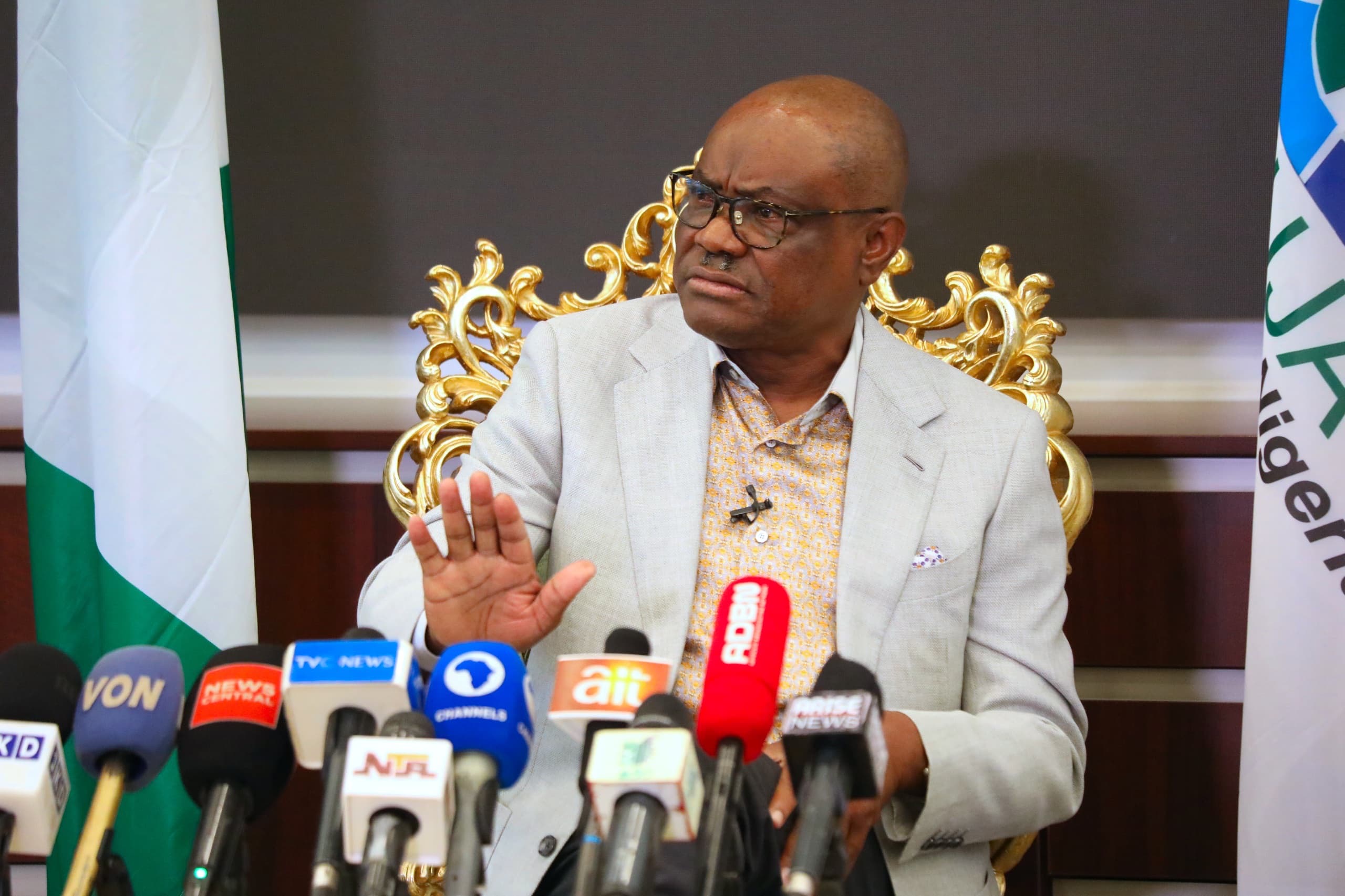
Minister of the Federal Capital Territory (FCT), Barr. Nyesom Wike, has revealed that about 70 per cent of the projects completed by the FCT Administration under President Bola Ahmed Tinubu were abandoned contracts awarded 15 to 16 years ago.

Wike said the projects were revived and completed in line with Tinubu’s directive that no viable government project should be abandoned.

Speaking during his monthly media chat on Thursday in Abuja, the minister said the administration deliberately focused on inherited projects before embarking on new ones.

According to him, allowing the projects to remain abandoned would have denied residents the benefits of critical infrastructure and wasted public resources.

“The President said we can’t abandon old projects. While we cannot abandon old projects, we must also carry out new ones.

“I can tell you that about 60 per cent of the projects we have executed in the last three years were projects awarded 15 to 16 years ago but abandoned.

“If we had allowed that, people would still be asking questions about those abandoned projects. So, we first made sure they were completed, and we have achieved that with not less than 70 per cent of them,” Wike said.

The minister stressed that while inherited projects were being completed, the FCT Administration also initiated new road and infrastructure projects across Abuja and the satellite towns.

Advertisement

He attributed the pace of development in the nation’s capital to President Tinubu’s support, particularly the decision to remove the FCT Administration from the Treasury Single Account (TSA), which, according to him, made funds readily available for infrastructure development.

Wike maintained that the administration would continue executing projects aimed at improving transportation, opening up new districts and enhancing the quality of life for residents of the Federal Capital Territory.

Continue Reading

News

READ Wike’s words on marble at his media parley

Published

on

ADVERTISEMENT
Zoom Ad
ADVERTISEMENT
Zoom Ad

#WikeMediaChat
#WikeSpeaks

Continue Reading

News

How Speaker Abbas applied legislative wisdom to stop move by Reps to summon President

Published

on

ADVERTISEMENT
Zoom Ad
ADVERTISEMENT
Zoom Ad


The synergy between President Bola Ahmed Tinubu and Members of the National Assembly may have collapsed as majority Members of the House of Representatives, on Wednesday insisted that the President and his economic team must appear before the Parliament.

The motion which was predicated upon the inability of the executive to fund the 2025 budget, despite the appropriation and approvals from the National Assembly, created a serious tension on the floor of the House and divided the Lawmakers, with majority, including Members of the ruling party, supporting the invitation of the President to the Parliament.

The motion which was sponsored by the Member representing Aba North/Aba South Federal Constituency of Abia State, Hon. Alex Ikwechegh, decried the poor funding of appropriated budgets and persistent delays in the release of capital funds to Ministries, Departments and Agencies.

Advertisement

This came on the heels of a Constitutional Point of Order raised by the Member representing Okpe/Sapele/Uvwie Federal Constituency of Delta State, Hon. Benedict Etanabene, who informed the House that he had seen a circular from the Office of the Accountant-General of the Federation announcing the suspension of funding for zonal intervention projects pending fresh verification requirements.

The debate quickly divided the chamber, with lawmakers across party lines expressing frustration over what they described as the slow implementation of projects approved by the National Assembly.

While the motion enjoyed overwhelming support, attempts by some Members to oppose aspects of it were drowned out by loud shouts and protests from their colleagues, forcing the Speaker to repeatedly call for order.

Moving the substantive motion titled, “Urgent need to address the poor funding of appropriated budgets and delayed releases to MDAs as revealed during the 2026 budget defence sessions,” Ikwechegh argued that the credibility of the appropriation process depends not only on the passage of the budget but also on the timely release and utilisation of funds.

Advertisement

He said, “The powers of appropriation in the National Assembly, and the credibility of the budget rests not only on the size of the figures appropriated, but on the fidelity, timeliness with which appropriation funds are released, cash-backed, and utilized for ministries, departments, and agencies.

“The House also notes that during the 2026 budget defence sessions, honourable Ministers and heads of MDAs disclosed deeply troubling levels of funding of 2025 budget, including sectors that recorded zero capital releases for the entire fiscal year, and others that received only a token, a fraction of their appropriated capital votes.

“The House is aware that these disclosures are consistent with repeated protests staged in 2025 and early 2026 by indigenous contractors of Nigeria that have invested heavily to do business with the Nigerian government at the Federal Ministry of Finance and at the gates of the National Assembly; on one occasion, disrupting plenary sittings because due to unpaid certificates for completed and verified projects with many contractors unable to service bank loans obtained to execute government projects.”

Ikwechegh recalled that President Tinubu had, at a Federal Executive Council meeting on December 10, 2025, directed the immediate settlement of verified contractor liabilities estimated at about N1.5tn and approved the establishment of an inter-ministerial committee to reconcile records and facilitate payment.

Advertisement

According to him, the House is also aware that His Excellency President Bola Ahmed Tinubu at the Federal Executive Council of 10th December, 2025 expressed grave displeasure at the backlog, directed the immediate settlement of verified contractor liabilities of about N1.5tn and constituted an inter-Ministerial Committee to harmonise records and deliver a lasting funding solution, declaring his readiness of the government to even borrow when necessary to settled verified obligations.

“The House is further aware that directive of the National Assembly approved the borrowing in excess of N1tn specifically to finance the settlement of outstanding obligations on completed and verified capital projects, in addition to dedicated provisions in the 2026 Appropriation Act for contractor liabilities, while the Honourable Minister for Finance have announced the clearance of substantial sums announcements, which contractors dispute as partial announcements.”

He expressed concern that despite the presidential directive and legislative approvals, the release of funds to MDAs had remained slow.

“The House is concerned that notwithstanding the clear directive of the President, the legislative approvals and the ministerial assurances to MDAs remain slow, if I may say unexistent, stalling critical projects, escalating contract costs, exposing contractors to insolvency, and rising non-performing loans and eroding public trust in the budget of the Federal Republic of Nigeria, approved by this parliament.”

Advertisement

The Lawmaker also criticised a Treasury circular dated June 29, 2026, reportedly issued by the Office of the Accountant-General of the Federation, which requires a Certificate of Verification and Compliance from the Federal Ministry of Special Duties and Intergovernmental Affairs before payments can be made for constituency projects.

He said, “The House is disturbed by recent newspaper reportage of a federal treasury circular dated 29th June, 2026 issued by the Office of the Accountant General of the Federation, halting payments for zonal intervention and constituency projects, unless a certificate of verification and compliance is first obtained from the Federal Ministry of Special Duties and Intergovernmental Affairs, a directive which however well-intentioned, introduces yet another layer of bureaucratic bottlenecks at the very moment Mr President has demanded speed and risks turning back the hands of the clock by subjecting duly appropriated, procured, and executed projects to further delay.”

He therefore, prayed the House to urge the President, “as a father of the nation, to make out time, since we have invited Ministers, invited Security Chiefs, invited different members of the Economic Council to come here and explain to us why the budget is not being implemented.”

Earlier, Etanabene had urged the House to invoke its constitutional oversight powers by inviting President Tinubu and members of his economic team to explain the rationale behind the reported suspension of constituency project funding.

Advertisement

Citing Sections 4, 88 and 89 of the 1999 Constitution (as amended), he argued that the legislature had a responsibility to demand accountability over the implementation of budgets it had approved.

He said, “I wish, Mr. Speaker, that the Constitution be tested. I want to urge this House to agree that we summon Mr President of the Federal Republic of Nigeria together with his financial team to please come to this House in line with the provision of the Constitution to brief Nigerians exactly what is happening, because the stories are not complimentary at all.

“We cannot explain to the constituents what is happening. Today, we collect money. We will not be able to give a proper explanation for it. The budgets are not being implemented. Presently, in Nigeria today, we are implementing 2024, 2025 and 2026 budgets running concurrently. This is not in the best interest of everybody.

“So, Mr Speaker, I wish to move the motion that this House invite Mr. President to come and explain and make us know the need for this circular that has been released.”

Advertisement

However, the Speaker, Tajudeen Abbas, ruled that the aspect of the debate seeking to summon the President could not be adopted, describing such a move as inconsistent with parliamentary practice.

According to the Speaker, “the issue of summoning the President as included in the debate of Hon Ikwechegh cannot be adopted by the House,” noting that “such action is unparliamentary.”

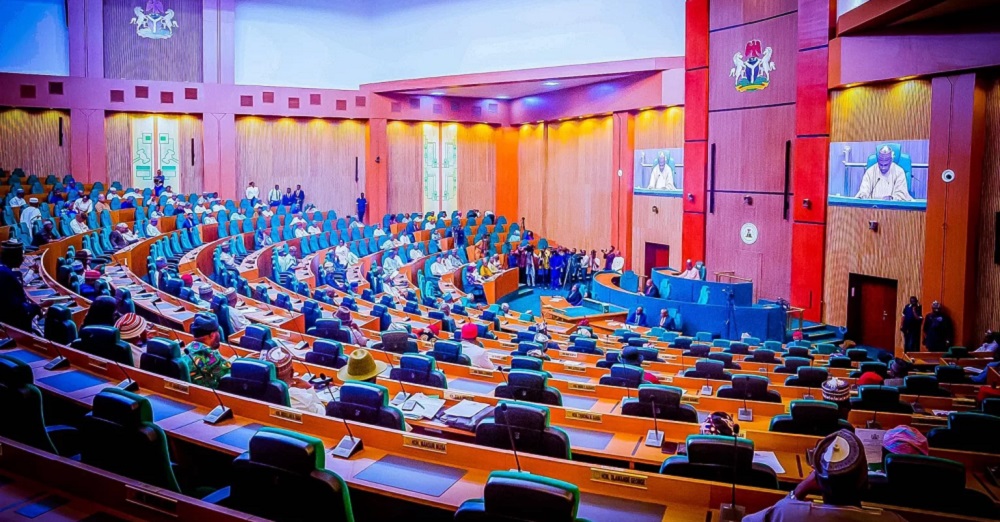
Despite the effort of Speaker Tajudeen Abbas to save the day, the Lawmakers appeared agitated and resolute to revolt against the President.

Some of them who got the return tickets to contest the 2027 elections feel they may not have anything on ground to campaign with, as the Zonal Intervention Projects appear suspended; while those who lost their tickets feel it was because of non implementation of constituency projects that accounted largely for their lost.

Advertisement
Continue Reading

Trending

Copyright © 2024 Naija Blitz News