News
NRS issues deadline for e-invoicing compliance




Nigeria Revenue Service (NRS) has set a July 31 deadline for all large taxpayers to fully adopt the national e-invoicing and electronic fiscal system (EFS).
This follows a public notice issued by NRS on February 17, 2026, on the implementation timeline and the mandatory adoption of the national e-invoicing and EFS, otherwise known as the Merchant Buyer Solution (MBS).
The public notice, signed by the NRS Chairman, Zacch Adedeji, informed all large taxpayers of the need to complete onboarding, integration, and testing, and to commence invoice transmission to the NRS e-invoicing platform in accordance with the prescribed implementation framework.
The Special Adviser on Media to the chairman, Dare Adekanmbi, in a statement yesterday, said NRS has already commenced compliance monitoring activities to assess the level of adherence to the e-invoicing mandate among large taxpayers.
“Consequently, any defaulting member may be subjected to appropriate regulatory and enforcement actions in accordance with the provisions of the relevant tax laws and regulations.
“Affected taxpayers are, therefore, advised to urgently conclude all outstanding onboarding and integration activities and commence invoice transmission before the compliance deadline.
“The NRS appreciates the cooperation of taxpayers and remains committed to providing the necessary support to ensure the successful implementation of the national e-invoicing regime,” the notice said.
Large taxpayers are companies with a gross turnover of N5 billion and above. As of the first quarter of this year, over 1,000 companies had complied.
Compliance with the e-invoicing and Electronic Fiscal System requires completing onboarding on the NRS Merchant Buyer Solution (MBS) and successfully integrating taxpayer systems through approved Access Point Providers (APPs) and/or Systems Integrators (SIs).
Others are completion of all required validation and testing activities; active transmission of invoices to the NRS e-invoicing platform in line with approved standards and guidelines; and ensuring the receipt of only compliant e-invoices with a valid Invoice Reference Number (RIN) from suppliers.
MEANWHILE, ActionAid Nigeria’s General Assembly and Board of Directors have called on the Federal Government and National Assembly to review the tax’s impact on small businesses.
They also called on them to provide relief or phased timelines where needed, and ensure that the revenue it generates is clearly tracked and spent specifically on primary healthcare in underserved communities, rather than absorbed into general government spending.
The Board of Directors noted this at its Annual General Meeting on Saturday.
They said Nigeria’s external reserves had grown to about $51.5 billion as reported, but that total public debt has also increased to N156.28 trillion.
They said with $11.6 billion set aside for debt servicing in 2026 alone, more than Nigeria spends on education, health, and agriculture combined.
ActionAid said most recently, the World Bank warned that despite recent reforms, 79% of Nigerians remain poor or vulnerable to falling into poverty.
They said the National Bureau of Statistics also reported a June headline inflation rate of 15.91 per cent, as food prices continue to rise, petrol sells above N1,100 per litre, transport remained high, and the N70,000 minimum wage cannot sustain a family anywhere in the country.
They said the recent reductions in the ex-depot price of petrol by the Dangote Refinery have not provided sufficient relief, as petrol still sells above N1,100 per litre, increasing transport and food costs.
They called on civil society organisations, the media, faith communities, and all Nigerians to continue to speak up.
They urged them to hold the government accountable and stand with the families whose children are still waiting to come home.
“ActionAid Nigeria remains committed to standing with people living in poverty and exclusion, to pursuing social justice and gender equality, and to ensuring that Nigeria’s development does not leave the most vulnerable behind,” they said.


By Prosper Olayiwola
A House of Assembly Candidate for Ikole Constituency 1 on the platform of the African Democratic Congress, ADC, Kayode Arewa Sanni, has called on his constituents, party members and supporters to unite ahead of the 2027 general elections.
Arewa Sanni made the call in Ikole-Ekiti while addressing party faithful and supporters at a stakeholders’ meeting convened to strengthen grassroots mobilisation in the constituency.
He said the 2027 elections present a defining moment for the people of Ikole Constituency 1 to chart a new course of inclusive representation, people-oriented legislation and accelerated development.
The candidate noted that disunity among party members and supporters remains the greatest obstacle to victory, stressing that only a united front can dislodge entrenched interests and deliver the dividends of democracy to the people.
“I appeal to all our party leaders, members, supporters and well-wishers across Ikole Constituency 1 to put aside personal differences and work together as one family. Our strength lies in our unity,” he said.
Arewa Sanni said his candidacy was driven by a desire to give Ikole Constituency 1 a vibrant and responsive voice in the Ekiti State House of Assembly, with focus on youth empowerment, education, healthcare and rural infrastructure.
He assured constituents that if given the mandate, he would prioritise quality representation and ensure that government presence is felt in all communities within the constituency.
He also called on supporters of the ADC across Ekiti State to rally behind the party’s vision of good governance, transparency and accountability as preparations for the 2027 polls gather momentum.
The aspirant expressed confidence that with unity, commitment and collective effort, the ADC would emerge victorious in Ikole Constituency 1 and other constituencies across the state.

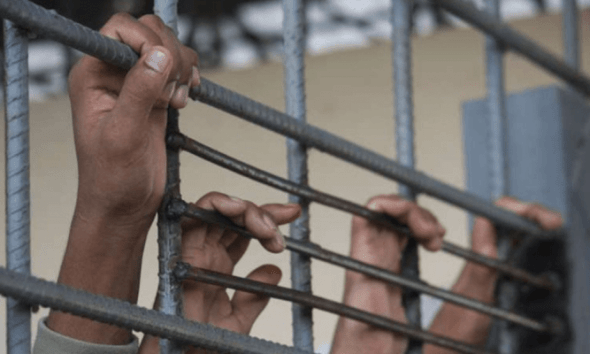
No fewer than six inmates have died within one week following a suspected cholera outbreak at the Kurmawa Maximum Prison in Kano State.
Amnesty International raised the alarm in a post on its official Facebook page, calling on authorities to immediately declare an emergency at the correctional facility.
Amnesty said several other inmates were currently receiving treatment, warning that the death toll could be higher as the suspected disease continues to spread among prisoners.
It urged the authorities to immediately transfer critically ill inmates to hospitals for proper medical attention to prevent further deaths.
The organisation warned that failure to urgently intervene could amount to arbitrary deprivation of life, which it described as a serious human rights violation under international law.
Amnesty also expressed concern over the broader conditions in Nigerian correctional facilities, particularly the prolonged detention of inmates awaiting trial.
According to the organisation, detainees without financial means face greater difficulty having their rights protected, with some spending years in custody without being convicted of any crime.
It further said many inmates were being held in overcrowded and unhygienic cells without adequate food and healthcare.
Amnesty called for urgent reforms to improve conditions in Nigerian correctional facilities and ensure compliance with international best practices.

Popular media personality and self-acclaimed relationship expert, Blessing Okoro, popularly known as Blessing CEO, has reportedly lost her second son while remanded in custody.
The development was confirmed in an online appeal by Amira Agiye, head of the Isaamira Love Foundation, who spoke on Okoro’s behalf to request public financial assistance.
She said, “It is sad to announce to you all that Blessing CEO just lost her second son. My name is Amira Agiye.
“I’m here to appeal on behalf of Blessing CEO, who is currently in custody. I understand that people might have different opinions about her and the circumstances surrounding her case.
“And like every one of us, she deserves compassion and an opportunity for redemption.
She needs N20 million to meet the bail requirements. She also needs N36 million to pay the people she owes who brought the case against her.
“Please, Nigerians, let’s forgive her for the sake of that boy who is still in the mortuary. With Blessing’s full consent and authorisation, I’m appealing to all Nigerians to help donate so we can help her out of this situation.”
Also speaking in a voice conversation played by Amira, Blessing, CEO, said, “My second son, Bryan, was full of life. While in custody, I lost Bryan.
I pray this turns out positive so I can leave this place, pick up the pieces of my life and pay my respects to him.”
Recall that the self-acclaimed relationship expert was remanded in Kirikiri Prison over an N69.15 million property fraud trial.
She was granted N20 million bail in July 2026, with two sureties in like sum, and each surety was required to provide three years’ proof of deposits valued at N20 million.
Following her inability to meet the bail conditions, Blessing CEO, remains in prison facility two months after she was granted bail.

House of Assembly Candidate, Sanni Urges Unity Among Ekiti ADC Members

Between Governor Soludo and Peter Obi: The Truth in Between

Six inmates die in one week amid suspected cholera outbreak in Kano prison


-

 News19 hours ago
How AI Could Cause the catastrophic death of a Billion people — Billionaire Bill Gates Warns
-

 Sports18 hours ago
AFCON Qualifier: Nigeria Defeats Madagascar
-
 News19 hours ago
Police Arrest Officer Who Said Igbo Man Can Never Be President
-

 News19 hours ago
Pastor Adeboye Welcomes 105 Nigerians Repatriated From South Africa
-

 News18 hours ago
Anambra: Peter Obi left $155m in three banks — Otti
-
 Politics8 hours ago
Before dreaming of Aso Villa, APM should first find its feet-Ali Campaign Organization