

Connect with us

News

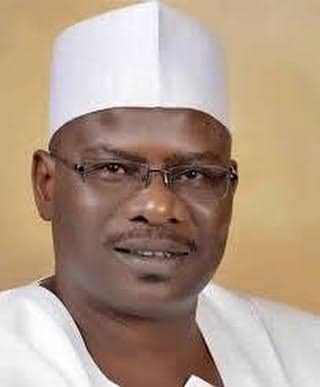
Ali Ndume: A Willing Shield In Borno’s Terror War Zone

Published

on

ADVERTISEMENT
Zoom Ad
ADVERTISEMENT
Zoom Ad

By Chris Ochayi

In the early hours of a Monday in July, residents of Ngoshe, a border community in Borno South, woke to gunfire. By dusk, families were counting the missing. Within 48 hours, the familiar blame cycle began again: social media posts, press statements, and then, an accusation that has followed Senator Ali Ndume for years, that he was somehow involved in paying ransom, or playing middleman between terrorists and government.

This time, the claim came from Samaila Kaigama, President of the Borno South Youth Alliance.

Ndume’s response on Channels Television’s Politics Today on Friday was blunt: “I have said it before. In my entire life, I have never seen N1 billion in cash, let alone N5 billion.” He called the allegation “dangerous and baseless.”

Advertisement

But to understand why such claims sting, and why they keep coming, you have to go back 15 years. You have to go to Gwoza, Chibok, Damboa, and the dozens of villages in Borno South that have lived in the shadow of Boko Haram and now ISWAP.

Because if there is one public figure in Nigeria who has consistently put his name, his office, and at times his life, on the line to speak for those communities, it is Senator Ali Ndume.

This is not a story about one denial. It is a chronicle of a man who has spent more than a decade trying to protect 9 local governments from an insurgency that has killed over 35,000 people and displaced more than 2 million.

Long before Boko Haram became a household name, Ndume was already raising the alarm.

Advertisement

Elected to the House of Representatives in 2003 and later Senator for Borno South in 2011, he was among the first lawmakers to publicly warn that the sect was not just a “Yusufiya problem” confined to Maiduguri.

In Senate plenary and in interviews, he argued that the military approach alone would fail without intelligence, community engagement, and development in the Lake Chad basin.

In 2013, when the Federal Government declared a state of emergency in Borno, Yobe and Adamawa, Ndume backed it, but also pushed for civilian protection protocols. His argument was simple: soldiers can clear territory, but only communities can hold it.

That position would later put him in direct conflict with the insurgents. In 2014, Boko Haram overran Gwoza, declared it part of a caliphate, and placed Ndume’s name on a list of “apostate” politicians to be targeted. His hometown of Gwoza was under terrorist control for months.

Advertisement

Borno South is not a monolith. It is 9 LGAs: Biu, Bayo, Chibok, Damboa, Gwoza, Hawul, Kwaya Kusar, Shani, and Askira-Uba. Six of them share borders with Cameroon, Chad, and Niger. That geography made it the perfect corridor for Boko Haram and later ISWAP.

From 2014 to 2017, the story in Borno South was abduction and displacement:
Chibok, April 2014, 276 schoolgirls kidnapped. Ndume was the first senator to visit the town after the abduction, despite military warnings. He pushed for a dedicated rescue task force and for families to be given a direct line to the Presidency.

Gwoza, 2014-2015, Overrun and renamed. Ndume coordinated with the Civilian JTF and IDP leaders to document deaths and missing persons. He used his office to lobby for Gwoza to be prioritized in the military counter-offensive of early 2015.

Damboa and Askira-Uba: Repeated attacks between 2016 and 2019. Ndume consistently raised them on the Senate floor, often against the advice of party leaders who preferred “quiet diplomacy.”

Advertisement

A 2016 report by an NGO working in IDP camps noted that Ndume’s office was one of three in Borno that maintained a weekly call-in line for communities to report attacks. The line was not for politics. It was for coordinates, casualty figures, and urgent evacuation requests.

What makes Ndume different from many of his colleagues is that he refused to go silent.

Between 2015 and 2023, Senate records show he sponsored or co-sponsored over 18 motions directly related to insecurity in the Northeast. Some of the most cited:
1. 2016: Motion on the resurgence of Boko Haram attacks in Borno South and the need for enhanced surveillance on border communities.
2018: Motion urging the FG to equip the Civilian JTF and hunters with better communication gadgets after an ISWAP attack in Rann.

2020: Motion on the killing of farmers in Zabarmari, where he argued that the problem was not just terrorists but the collapse of rural livelihoods.

Advertisement

2022: Motion on ISWAP’s use of drones and IEDs in the Mandara Mountains, calling for air interdiction.

In each case, his strategy was the same: drag the issue to public space. “If we don’t talk about it, Abuja will forget Ngoshe exists,” he told a town hall in Biu in 2021.

That approach earned him enemies in high places. It also earned him trust in villages where government presence was limited to the sound of gunfire.

Ndume’s defense of Borno South has not been limited to security motions. He has argued repeatedly that terrorism thrives where there is no economy.

Advertisement

Through constituency projects and advocacy, his office has:
Facilitated the return of IDPs* to Biu, Hawul, and Shani by lobbying NEMA and SEMA for housing materials and farm inputs.

Pushed for the reopening of the Biu-Damboa-Maiduguri road*, a critical trade route repeatedly targeted by IEDs. In 2022 he personally led a convoy of journalists on the road to prove it was passable.
– *Supported vocational training* for over 3,000 youths in Borno South, with a focus on ex-IDPs and orphans, to reduce recruitment into armed groups.

In 2020, when ISWAP began targeting fishermen in Lake Chad, Ndume moved a motion calling for a joint MNJTF operation to reclaim fishing grounds. His point: “You cannot defeat an ideology on an empty stomach.”

The latest accusation, that Ndume received ransom or acted as middleman is not new. Similar claims surfaced in 2017 during the Dapchi negotiations and again in 2020 after an attack in Auno.

Advertisement

Security analysts who have tracked Borno politics say the pattern is familiar. When a community is attacked and government response is slow, local actors look for someone to blame. As the most visible federal representative from Borno South, Ndume becomes the target.

“He is accessible,” said a civil society leader in Maiduguri who asked not to be named. “People can call his line. So when things go wrong, they assume he knows something. But the truth is, he has been shouting for help louder than anyone.”

On Politics Today, Ndume challenged his accusers to provide proof. “Bring evidence. I have spent my life in public service. My record is there. I have buried constituents. I have visited IDP camps when it was dangerous. I will not now turn around and collect money from the people who killed them.”

In Biu last month, a group of women who run a cooperative for widows of Boko Haram victims described Ndume as “the man who comes even when there is no camera.”

Advertisement

In Gwoza, a youth leader recalled how Ndume’s office helped transport 200 students who fled the 2014 school closures to write WAEC in Biu.

Even critics admit his presence. A local government chairman in Askira-Uba, who disagrees with Ndume politically, said: “Whether you like him or not, when there is an attack at 2am, his number is the one people share on WhatsApp.”

That visibility has come at a price. Ndume has survived at least two assassination attempts linked to insurgents. His convoy has been attacked. In 2015, the Senate suspended him for six months after he accused the leadership of padding the budget a move many in Borno interpreted as punishment for being too vocal on security spending.

Through it all, he has refused security details that would keep him in Abuja. He spends an average of 15 days every month in Borno South, according to his aides.

Advertisement

The war in Borno is not over. ISWAP still operates in the Mandara Mountains. Boko Haram factions still lay IEDs. And every attack produces grief, anger, and the search for someone to hold responsible.

In that environment, allegations are easy. Proof is hard.

Senator Ali Ndume’s record over the last 14 years is public: Senate motions, visits to attacked communities, advocacy for IDPs, and constant pressure on the military and federal government to do more for Borno South.

You can disagree with his politics. You can disagree with his style. But to claim that the man who has spent his career trying to get troops, food, and attention to Ngoshe, Chibok, and Gwoza is now working with the people who burn them requires evidence that has not been presented.

Advertisement

As he put it on Friday: “My people are suffering. Don’t add lies to their pain.”

For the people of Borno South, the war is not about press releases. It is about whether the next convoy gets through, whether the next harvest is safe, and whether their children can go to school without fear.

In that fight, Senator Ali Ndume has chosen to stand in front, not behind.

Chris Ochayi, an Abuja based journalist could be reached on [email protected]
Advertisement
Continue Reading
Advertisement

News

NGF Inaugurates State Procurement DGs Forum, BPP Boss Hailed for Reform Drive

Published

on

ADVERTISEMENT
Zoom Ad
ADVERTISEMENT
Zoom Ad

The Nigeria Governors’ Forum (NGF) has inaugurated the Forum of State Directors-General of Public Procurement, with stakeholders describing the initiative as a major step towards strengthening transparency, accountability and efficiency in public spending across Nigeria.

The inauguration was held on Tuesday at the NGF Secretariat in Abuja and brought together Directors-General of the Bureau of Public Procurement (BPP), or their equivalents, from the 36 states and the Federal Capital Territory.

Development partners and other stakeholders in the procurement sector also attended the event.

Speaking at the ceremony, the Director-General of the NGF, Abdulallateef Shittu, said the inauguration came at a critical time when the country was seeking to recalibrate its economic architecture.

Shittu stressed the enormous responsibility before state procurement authorities, noting that public procurement plays a critical role in budget implementation and the delivery of government projects at all levels.

He urged members of the forum to uphold professionalism, transparency and efficiency in the discharge of their responsibilities.

Advertisement

The Director-General of the federal BPP, Adebowale Adedokun, said President Bola Ahmed Tinubu was aware of the inauguration of the Committee of Practice of Public Procurement and had given his support to the initiative.

According to him, the initiative aligns with the administration’s Renewed Hope Agenda and its commitment to improving living standards and reducing poverty.

Adedokun described the inauguration as a significant development in Nigeria’s procurement history, saying an effective and transparent procurement system could attract foreign direct investment, boost GDP and stimulate the growth of domestic industries.

He urged members of the forum to strictly adhere to due process, fairness and transparency in the implementation of public projects.

Advertisement

ADSC, DDI Commend BPP Leadership

In a goodwill message, Dr Osahanze Idahosa, who represented the President/CEO of the Africa Development Studies Centre (ADSC) and Douglas Development Institute (DDI), commended Adedokun for creating an enabling environment for collaboration and capacity development in the procurement sector.

Idahosa said Adedokun’s openness to partnerships had enabled ADSC and DDI to contribute to efforts aimed at strengthening Nigeria’s procurement systems at the federal level.

He described the inauguration as significant not only to the forum but also to the broader public procurement reform agenda, particularly at the subnational level.

Advertisement

“Subnational procurement systems are where policy meets people, where transparency and value for money either take root or falter,” Idahosa said.

He urged the new leadership of the forum to deepen accountability, efficiency, professionalism and transparency in public procurement across the states.

According to him, ADSC and DDI have supported procurement transformation through capacity-building programmes, study exchanges and institutional development initiatives aimed at modernising public spending.

Idahosa also recalled a study exchange to South Africa involving one of the forum’s members, saying the experience underscored the need to extend procurement reforms achieved at the federal level to the states.

Advertisement

He said public procurement was too important to governance to be left to isolated efforts, stressing the need for collective commitment across federal and subnational institutions.

He further noted that public procurement accounts for an estimated 15 to 30 per cent of GDP and is linked to between 50 and 60 per cent of leakages in public financial management.

ADSC and DDI congratulated the new leadership and pledged continued support through training, research, knowledge-sharing platforms and international study exchanges.

New Chairman Promises Collective Leadership

Advertisement

In his acceptance speech, the newly elected Chairman of the forum, Ehimoni Ibiyomi, described his appointment as the beginning great of things.

“Today is not simply another meeting or gathering of procurement regulators. It represents the beginning of a new institutional chapter in our collective efforts to strengthen public procurement administration, regulation and professional practice at the sub-national level in Nigeria.I am deeply grateful to my colleagues for the confidence reposed in me and for the opportunity to serve as Chairman of this Forum.I accept this responsibility with full recognition that the office is not about an individual. It is about collective leadership, institutional cooperation and a shared commitment to improving the quality of public procurement across our States.

APPRECIATION TO THE NIGERIAN GOVERNORS’ FORUMLet me begin by expressing our profound appreciation to the leadership and Management of the Nigerian Governors’ Forum Secretariat for providing the platform for the formal inauguration and recognition of this Forum.

“This gesture is significant.For the Forum to function effectively, there must be a structured relationship between the institutions responsible for procurement regulation and the political leadership of the States.

Advertisement

“The Nigerian Governors’ Forum provides an important national platform through which the collective interests of State Governments can be discussed and advanced.

The recognition of our Forum within this broader institutional environment therefore creates an opportunity for procurement to receive the level of strategic attention it deserves in the governance and development agenda of our States.We are particularly grateful for the confidence demonstrated through this engagement, and we assure the Nigerian Governors’ Forum that we will justify this confidence through professionalism, responsibility, transparency and measurable results.

APPRECIATION TO THE FEDERAL BUREAU OF PUBLIC PROCUREMENT

“I also wish to acknowledge the presence and support of the Federal Bureau of Public Procurement.

Advertisement

The Federal BPP has a critical role in Nigeria’s public procurement architecture, and the relationship between the Federal BPP and State Procurement Regulatory Authorities must be one of partnership, knowledge exchange, coordination and mutual institutional respect.Our Forum does not seek to duplicate or compete with the Federal BPP.Rather, we seek to complement the national procurement reform agenda by strengthening the sub-national procurement institutions and ensuring that the experiences, innovations and challenges of the States are effectively brought into national conversations on procurement reform.We look forward to a closer and more structured relationship with the Federal BPP in the areas of technical support, capacity building, professional development, regulatory knowledge sharing, research, standardization and procurement reform.APPRECIATION TO THE WORLD BANK AND DEVELOPMENT PARTNERS

“Our appreciation also goes to the World Bank, particularly the team working under SPESSE, for its continued commitment to strengthening public procurement systems and professional capacity in Nigeria.

“The establishment and formal recognition of this Forum comes at a time when procurement is increasingly being recognized not merely as an administrative function, but as a critical instrument for achieving fiscal responsibility, value for money, infrastructure development, service delivery and sustainable economic development.We therefore see development partners not merely as sources of funding, but as strategic partners in institutional development, knowledge transfer, innovation, research, capacity building and sustainable reforms.

“As a Forum, we are prepared to develop practical programmes that can attract technical assistance and partnership from the World Bank and other development partners.We would particularly welcome collaboration in areas such as:professionalization of State procurement institutions;continuous capacity development for procurement officers;sustainable and socially responsible procurement;digital procurement and procurement data management;procurement performance measurement;development of procurement policies and guidelines;institutional strengthening;research and knowledge development; andpeer learning and exchange programmes.

Advertisement

APPRECIATION TO OTHER INSTITUTIONAL PARTNERS

“I equally acknowledge the presence and interest of the African Development Study Center, the Association of Procurement Professionals of Nigeria, the Corporate Affairs Commission, and other invited institutions and stakeholders.Their presence demonstrates a fundamental reality: public procurement cannot be successfully reformed in isolation.Procurement intersects with corporate governance, business registration and compliance, professional standards, research, finance, technology, infrastructure development and broader public-sector reform.

“For this reason, our Forum intends to pursue strategic partnerships with relevant institutions and organizations whose mandates can contribute to improving the quality and effectiveness of public procurement across the States.

THE VISION OF THE FORUM Distinguished ladies and gentlemen,As we commence this new chapter, we must be clear about what we want this Forum to become.Our vision is to build a strong, professional, collaborative and nationally recognized platform for the Heads of State Public Procurement Regulatory Authorities, capable of contributing meaningfully to procurement reform and good governance in Nigeria.

Advertisement

“We want a Forum that does not merely meet, but delivers”, he added.

Continue Reading

News

Benue Govt Denies Knowledge Of Peter Obi’s Visit, Reacts To Convoy Attack

Published

on

ADVERTISEMENT
Zoom Ad
ADVERTISEMENT
Zoom Ad


The Benue State Government has denied prior knowledge of Peter Obi’s visit to the state, following reports that youths blocked the presidential candidate’s convoy on Tuesday.

Obi, the presidential candidate of the Nigeria Democratic Congress (NDC), was reportedly stopped by youths at Gyado Villa along the Gboko Road while travelling to Yelewata.

The former Anambra State governor was in Benue to meet families affected by the deadly June 2025 attack in Yelewata, in which several people were killed.

Advertisement

His visit was aimed at commiserating with bereaved families and assessing the situation in the affected community.

Reacting to the incident, Kula Tersoo, Chief Press Secretary to Governor Hyacinth Alia, said the state government was not informed about Obi’s arrival.

Tersoo said the government would have responded more promptly to the incident if it had been notified ahead of the visit.

He also questioned the security arrangements surrounding Obi, arguing that a presidential candidate and former governor should have adequate protection from federal security agencies.

Advertisement

According to him, the security authorities in the state should also have been informed of Obi’s movement so appropriate protection could be provided during his visit.

The governor’s aide further dismissed claims that the youths who blocked Obi’s convoy were acting on behalf of the state government.

He said the Alia administration does not engage thugs and had no reason to view Obi as a threat.

“We are not aware of his coming to the state, and if it were security agents that stopped him, it would have been easy for us to find out what happened,” Tersoo said.

Advertisement

“As presidential candidate of a party and former governor, he is a property of the federal government and ought to have been given security.

“Where are those security agents around him? If he is going to any state, the security of the host state should know so as to provide security for him.

“We were surprised that youths would stop someone. Youths cannot do anything on behalf of government. Our government doesn’t patronise thugs, and in any case, Obi is not a threat to the governor.

“We are not aware that Obi is coming to Benue. I am hearing it from you.”

Advertisement
Continue Reading

News

Troops Crush Boko Haram Ambush, Destroy Terrorist Hideouts in Borno

Published

on

ADVERTISEMENT
Zoom Ad
ADVERTISEMENT
Zoom Ad

Troops of Operation Hadin Kai have foiled an ambush by suspected Boko Haram terrorists and destroyed several makeshift camps in Biu Local Government Area of Borno State.

The operation took place on Monday, September 7, along the Buni Gari-Buratai axis, where troops of the 27 Task Force Brigade, Sector 2, encountered the terrorists during a routine patrol.

Acting Military Information Officer, Headquarters Joint Task Force North East, Capt. Mohammed Goni, disclosed this in a statement.

Goni said the troops responded swiftly to the ambush, forcing the terrorists to retreat in disarray.

Advertisement

Reinforcements were subsequently deployed to secure the area, clear the ambush site and search the surrounding terrain.

The operation led to the discovery and destruction of several makeshift camps believed to have been used as temporary hideouts and staging points by the terrorists.

The troops also recovered a motorcycle, bicycles, a magazine, ammunition and rocket-propelled grenade bombs.

No soldier was killed or injured in the encounter, although some military vehicles were damaged during the engagement.

Advertisement

Despite the damage, the troops remained operational and successfully completed the mission, Goni said.

He described the operation as another demonstration of the military’s determination to deny terrorist groups freedom of movement and disrupt their activities across the North-East.

Goni, however, said the security situation in the area remained calm but unpredictable, with troops sustaining aggressive patrols and coordinated operations.

He urged residents to remain vigilant and promptly report suspicious persons, movements or activities to security agencies.

Advertisement

According to him, timely information from residents remains critical to detecting, disrupting and neutralising terrorist activities across the theatre.

Continue Reading

Trending

Copyright © 2024 Naija Blitz News