Connect with us

News

U.S. Judge Sets New Deadline For Release Of Records On Allegations Linking Tinubu To Drug Trafficking

Published

on

ADVERTISEMENT
Zoom Ad
ADVERTISEMENT
Zoom Ad

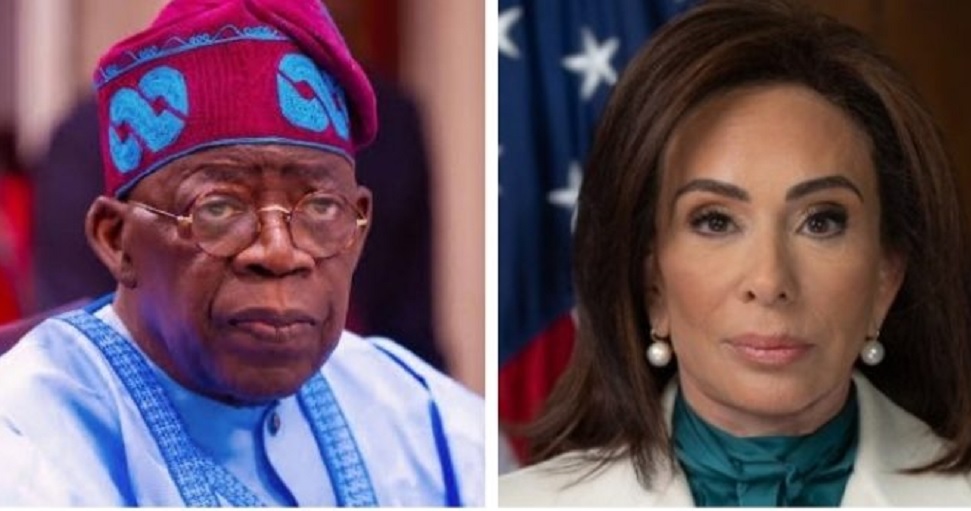
A United States federal prosecutor appointed by President Donald Trump has reportedly initiated proceedings to comply with a court order directing the release of records held by the U.S. Department of Justice (DOJ), Federal Bureau of Investigation (FBI) and Drug Enforcement Administration (DEA) on allegations linking Nigeria’s President Bola Tinubu to drug trafficking.


According to a United States-based policy advisory and lobbying firm retained by former Vice President Atiku Abubakar, Von Batten-Montague-York, Jeanine Pirro, the U.S. Attorney for the District of Columbia, has asked the federal court for an additional 10 days to comply with the order requiring the release of the documents.

However, U.S. District Judge Beryl Howell granted only a four-day extension, setting August 21 as the new deadline, the firm added.

Judge Howell was said to have noted that the case had already been pending for more than three years, signalling the court’s unwillingness to allow further delays in the release of the records.

Advertisement

The lobbying firm, which has been pushing for the release of the documents, welcomed the renewed action by the U.S. Attorney’s Office and the DOJ.

The firm expressed appreciation to Pirro and the Justice Department for taking steps towards complying with the court’s directives, while arguing that the records should now be made public without further delay.

The records being sought are reportedly connected to allegations and investigations concerning Tinubu and alleged drug-trafficking activities.

Tinubu has previously denied wrongdoing and has rejected allegations linking him to drug trafficking.

Advertisement

The latest development comes amid renewed scrutiny of Tinubu’s past and his dealings with U.S. authorities, as well as continued calls for the release of government records relating to investigations involving the Nigerian president.

Those pushing for disclosure also referenced Trump’s previous comments about U.S.-Nigeria relations, arguing that Washington’s strategic interests with Nigeria should not prevent scrutiny of allegations against Nigerian officials.

“Shared interests with Nigeria do not mean supporting an alleged drug trafficker,” the campaigners said, insisting that the documents should be released once the court-ordered deadline expires.

With the 2027 general elections approaching, and Tinubu seeking re-election, the development will heighten political controversy in Nigeria, where Tinubu’s political opponents have repeatedly raised questions about his past and alleged links to drug-related investigations in the United States.

Advertisement

SaharaReporters had previously reported how President Tinubu’s $460,000 asset forfeiture was linked to a 1990s United States federal investigation into a Chicago-based heroin trafficking ring. The link stems directly from U.S. court documents and affidavits from the Internal Revenue Service (IRS) and the Federal Bureau of Investigation (FBI), which detailed how funds in bank accounts controlled by Tinubu were tied to narcotics proceeds.

The U.S. government targeted a narcotics ring operated by Chicago-based drug kingpins Adegboyega Mueez Akande and Abiodun Agbele.

The network was actively involved in trafficking white heroin into the state of Illinois between 1988 and 1991.

IRS Special Agent Kevin Moss established that funds generated from this drug ring were systematically deposited into multiple U.S. bank accounts opened and controlled by Tinubu.

Advertisement

In January 1992, U.S. authorities obtained a court order to freeze accounts holding more than $1.4 million linked to Tinubu. The investigation revealed that the massive sums in these accounts did not align with Tinubu’s reported legitimate income at the time.

When investigators interviewed representatives from Mobil Oil Nigeria, where Tinubu worked as a treasurer, the company stated that under no circumstances would an employee be permitted to hold corporate funds in private accounts, nor did they own accounts in those specific Chicago suburbs.

To resolve the case, an out-of-court agreement was reached on September 15, 1993, before Judge John A. Nordberg. On October 4, 1993, the U.S. District Court for the Northern District of Illinois ordered that $460,000 held in account 263226700 at First Heritage Bank in the name of Bola Tinubu be forfeited to the U.S. government.

The court explicitly decreed that these specific funds represented proceeds of narcotics trafficking or were involved in financial transactions violating money laundering laws under federal statutes 21 U.S.C. § 881(a)(6) and 18 U.S.C. § 981. The remaining funds, over $1 million, were released back to the family.

Advertisement

Tinubu’s legal team, political allies, and subsequent rulings by the Nigerian Presidential Election Petition Court have consistently maintained his innocence, noting that the case was an in rem civil forfeiture proceeding, meaning the lawsuit was filed against the money itself, not against Tinubu as an individual.

They also argued that Tinubu was never arrested, arraigned, indicted, or criminally convicted for a drug offence in the United States.

Continue Reading
Advertisement

News

Davido vows not to apologize posting Okpebolo’s ‘fine’ WAEC results

Published

on

By

ADVERTISEMENT
Zoom Ad
ADVERTISEMENT
Zoom Ad

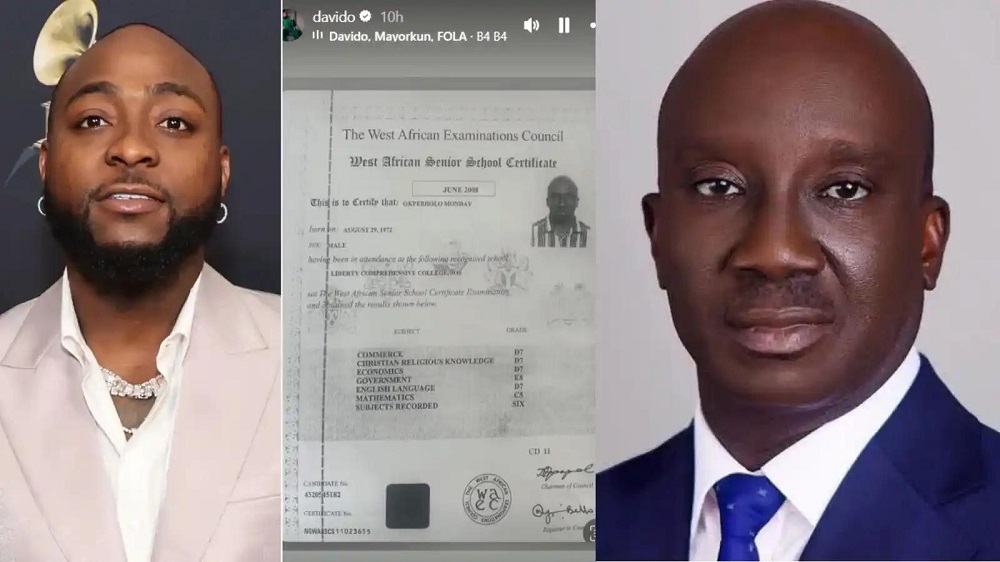
Afrobeats singer David Adeleke, popularly known as Davido, has explained why he would not apologise to Edo Governor, Monday Okpebholo, over his social media post displaying the governor’s alleged West African Examinations Council result.

According to him, he did nothing wrong by sharing the result, insisting that he was only informing Edo residents about what he described as their governor’s academic record.

The singer stated this in an exclusive interview with News Central on Tuesday in Osun.

He said, “I’m not going to apologise. I didn’t do anything wrong. I was just telling people of the state the results their governor has.”

Advertisement

The controversy followed comments by Okpebholo during political activities ahead of the August 15 Osun State governorship election, in which he criticised Osun State Governor, Ademola Adeleke.

Okpebholo had mocked Adeleke over his dancing, questioning his leadership style while campaigning for the All Progressives Congress governorship candidate, Bola Oyebamiji, popularly known as AMBO.

He said, “Before somebody signs paper, he will dance. Are you not tired? For four years, this man has been dancing. Before he takes breakfast, before he drinks tea, he will dance.”

In response, Davido, who is Adeleke’s nephew and had actively campaigned for his uncle, shared what appeared to be Okpebholo’s WAEC result on his Instagram Story on Friday.

Advertisement

The post, which had no caption, generated reactions on social media, with a commentator, Tugbiyele, describing the publication as inappropriate and disrespectful and calling on Davido to apologise.

However, reacting to the call, Davido defended his action and criticised Okpebholo for travelling to Osun to comment on his uncle.

He said, “Yes, and you came, you left your state, you came to another state. You came in and then started talking that my uncle is a dancer; he is not serious.

“The road to your Government House is not done. My uncle is not serious. First of all, you were not even elected; you were selected.”

Advertisement

Davido further questioned Okpebholo’s understanding of electoral victory, saying, “You don’t know what it means to win an election. That’s why you could go there and talk.”

The singer also criticised the governor over his comments about Adeleke and said he sympathised with Okpebholo’s children.

He said, “I feel so bad for his kids. Because you see what my dad is doing. Do you understand? Yeah, you’re abusing a sitting governor in his own state.”

Davido also mocked Okpebholo over his alleged stay in a hotel, saying, “A whole governor staying in a hotel, walking around like…”

Advertisement

He warned the Edo governor that Adeleke would respond politically when the time came.

He said, “In fact, finish your three years, we’ll visit you when it’s time for you to get re-elected.”

Tugbiyele, in a video originally posted on Facebook, had appealed to Davido to apologise to Okpebholo, arguing that the singer should not have personally responded to the governor’s comments about Adeleke.

He said, “I watched a video when Governor Okpebholo called the governor of my state, Adeleke, the dancing governor. And the governor’s relation, David Adeleke, replied by publishing the WAEC Secondary School leaving result of Governor Okpebholo, the governor of Edo State.”

Advertisement

Tugbiyele said that although the alleged result might not have been impressive, it should not have been used to ridicule the governor.

He said, “The result is not good enough, but it’s possible. The governor did a resit. We are not aware of that, but I think Davido, David Adeleke’s publication is inappropriate.”

He argued that Adeleke could have responded to his Edo counterpart through official channels rather than allowing Davido to engage in the exchange.

Tugbiyele concluded with a direct appeal to Davido, saying, “Davido, David Adeleke, please, as a proper Yoruba, please apologise to Governor Okpebholo. God bless you, David. God bless Nigeria.”

Advertisement
Continue Reading

News

UK Parents Accuse Cyprus IVF Clinics Of Using Wrong Sperm, Egg Donors

Published

on

By

ADVERTISEMENT
Zoom Ad
ADVERTISEMENT
Zoom Ad

At least 30 children, most of them British, are feared to have been conceived through IVF treatment in northern Cyprus using sperm or egg donors different from those selected by their parents.

The cases were uncovered by a BBC investigation involving families who say they carefully chose anonymous donors based on factors including medical history, appearance, personality, education and interests.

However, the parents later became concerned that the donors they had selected were not used during their fertility treatment.

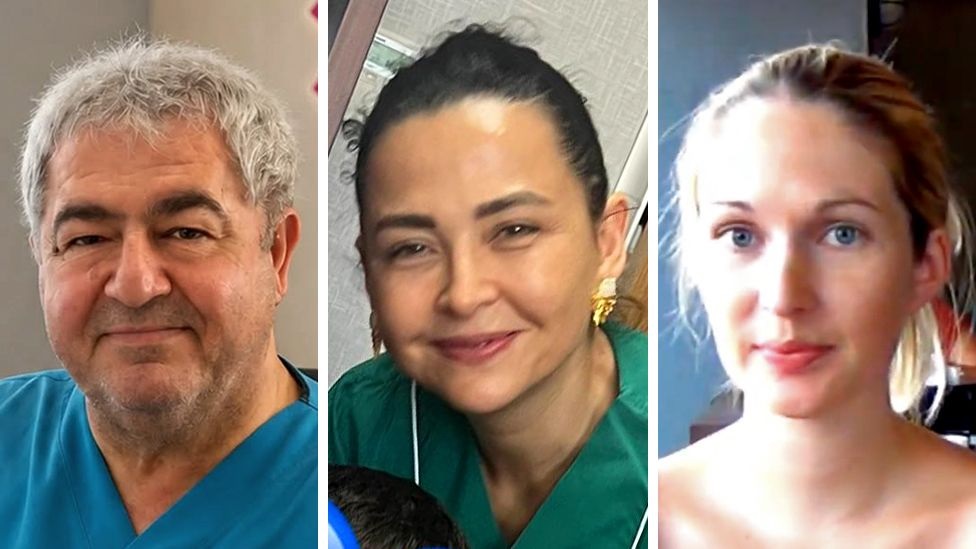
Half of the 30 children were born following treatment at the Dogus IVF Centre, where several members of staff were involved in the care of affected patients.

Advertisement

The families’ concerns have raised questions about the regulation of fertility clinics in northern Cyprus, a territory recognised internationally only by Turkey and outside the European Union’s regulatory framework.

Clinics in the territory have become popular among British patients seeking IVF treatment because of lower costs, high advertised success rates and access to a wide range of sperm and egg donors.

One mother, identified as Rachel, said she was “absolutely scandalised” after discovering that the sperm donor she had selected for her treatment at Dogus may not have been used.

Rachel underwent treatment at the clinic in 2012 and selected an anonymous Danish sperm donor through Cryos International, the world’s largest sperm bank.

Advertisement

She said she chose the donor because his profile indicated that he would be willing for any biological children to contact him once they turned 18.

But after her son Jonah was born, Rachel became concerned that he did not resemble the donor described in the profile.

She said she repeatedly asked the clinic for medical documentation confirming that the donor’s sperm had been used, but never received the information she wanted.

Thirteen years later, DNA testing carried out by Rachel and Jonah indicated that he was biologically related to her but did not have the genetic ancestry expected from the Danish donor she had selected.

Advertisement

The BBC contacted Cryos International, which said it had no record of supplying sperm to Dogus for Rachel’s treatment.

The revelation has left Rachel concerned that her son may have been deprived of the opportunity to identify and contact his biological donor in the future.

“I wouldn’t be surprised if there are genetic siblings out there,” she said.

At least 11 of the 30 children identified by the BBC have undergone commercial DNA testing. The results indicate that they have genetic ancestry from Turkey or surrounding regions, raising further questions about whether the donors selected by their parents were used.

Advertisement

Most of the children who have taken DNA tests were conceived through IVF at Dogus between 2012 and 2024.

Fertility experts consulted by the BBC said the number of cases was highly unusual.

The British Fertility Society said the apparent use of incorrect donors on multiple occasions could indicate “negligence” or “deception” and suggested that the issue could reflect a systemic problem rather than the actions of a single doctor or clinic.

Several staff members have been linked to the cases at Dogus.

Advertisement

Dr Sevket Alpturk, the clinic’s owner and responsible manager, treated the parents of six children whose families have told the BBC they suspect the wrong donors were used.

The BBC approached Alpturk with the allegations, but he did not respond.

Dr Firdevs Uguz Tip treated nine of the other children linked to Dogus. She has denied misleading patients and said Alpturk was responsible for signing off procedures at the clinic.

Firdevs later worked at other clinics, including Miracle IVF, which she currently runs. Nine additional cases identified by the BBC involved patients treated by her after she left Dogus in 2015.

Advertisement

She said her clinic has complied with the law and that patients sign consent forms explaining how donors are selected.

However, several parents told the BBC they were not properly informed about the donor arrangements.

Patient co-ordinator Julie Hodson, who was a main point of contact for many British patients at Dogus, has also been linked to several of the cases.

Emails seen by the BBC show Hodson telling patients that Firdevs would arrange orders for sperm from Cryos.

Advertisement

Firdevs disputes this, saying the procurement of sperm was not part of her responsibilities and that she did not know patients were being told otherwise.

The BBC contacted Hodson about the allegations, including claims that she failed to place or pass on donor requests, but she did not respond.

Cryos International said it was shocked by the number of families who could have been affected.

The sperm bank told the BBC that it had blacklisted Dogus in 2016 after concerns that the clinic had failed to order Cryos sperm for a patient despite telling the patient that it would.

Advertisement

Cryos has since suspended its relationship with Firdevs and Miracle IVF while an investigation by the northern Cyprus authorities continues.

The territory’s Ministry of Health said earlier this year that it had launched an official investigation into the allegations. However, the ministry has not responded to repeated requests from the BBC for an update.

Firdevs has said she was cleared of breaking any laws, although the BBC has been unable to independently verify that claim with the Ministry of Health.

The UK Foreign Office has also updated its travel advice, warning that fertility treatment in northern Cyprus carries risks because of the lack of regulation and advising people seeking treatment there to conduct thorough research.

Advertisement

The allegations have left affected families facing uncertainty over their children’s biological origins and potential genetic medical histories.

Laura Bridgens, founder of Donor Conceived UK, described the reports as deeply troubling and said donor-conceived people have a fundamental right to know the truth about their origins.

For families such as Rachel’s, the issue goes beyond the circumstances of their children’s conception.

Rachel said she loves her son and that the discovery does not change their relationship, but she remains upset that Jonah may have lost the opportunity to know his biological donor.

Advertisement

“Even so, what happened is not OK,” she said. “It’s a huge deal and could have been absolutely traumatising for him.”

The investigation has raised questions about how many other families could have been affected and whether authorities will be able to establish how the alleged donor mix-ups occurred.

Continue Reading

News

Pastor queries Tonto Dikeh for setting up church

Published

on

By

ADVERTISEMENT
Zoom Ad
ADVERTISEMENT
Zoom Ad

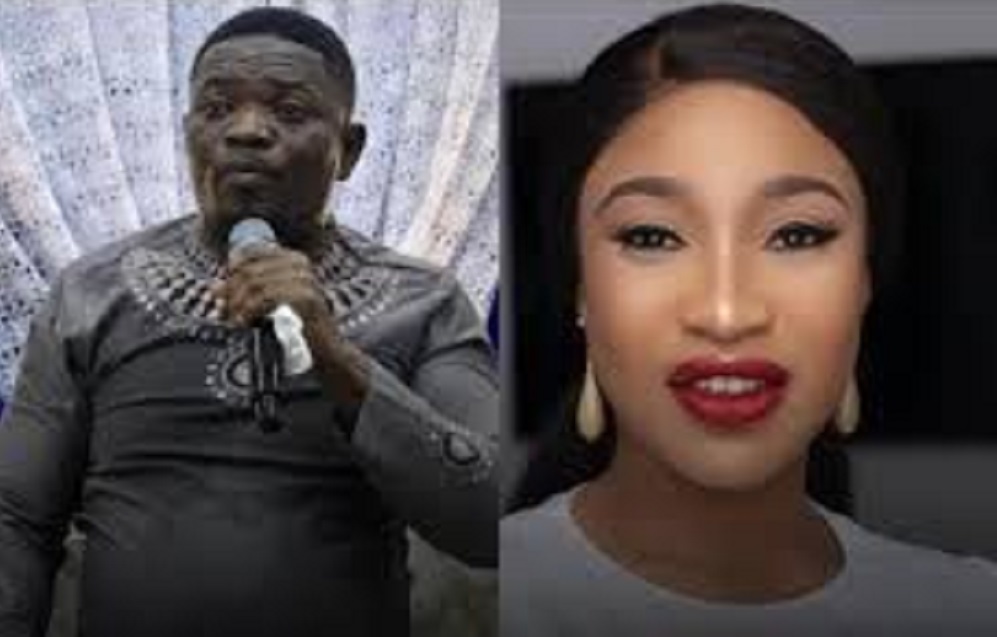
Nigerian pastor, Pastor Andrew Emajere of COGA Ministries has questioned former Nollywood actress and evangelist Tonto Dikeh’s decision to establish a new prayer ministry in Abuja.

The pastor raised concerns about the growing number of people venturing into christian ministry, questioning the process through which individuals become church leaders.

Reacting to Tonto Dikeh’s new prayer ministry, Emajere asked, “What does Tonto Dikeh know in the spiritual world that convinced her to open a prayer ministry? She built a church worth of 300 million, how did we arrive here?”

He argued that there should be stricter screening for people who want to establish churches.

Advertisement

“If I become president, before you can open a church you must pass through screening. Christianity has now turned [into] something else.”

Emajere also compared the situation with Islam, questioning whether similar developments would be accepted within the religion.

“Have you seen a woman open mosque and call herself a female Imam or Alfa? People don’t take Christianity serious in this country,” he said.

The pastor further questioned Tonto Dikeh’s transition from entertainment to Christian ministry, asking.

Advertisement

“Which day did she repent in Pastor Jerry Eze’s church that she is already a General Overseer? How did we arrive here?”

He also expressed concern about the role of public figures in Christian ministry.

“A woman that has not handled her kitchen duties finish, you went ahead to put them in Christianity, why won’t confusion come in?” He asked.

Advertisement
Continue Reading

Trending

Copyright © 2024 Naija Blitz News