Connect with us

News

‘Vote for My Husband in 2027’ — Remi Tinubu Appeals to South-East Voters

Published

on

ADVERTISEMENT
Zoom Ad
ADVERTISEMENT
Zoom Ad

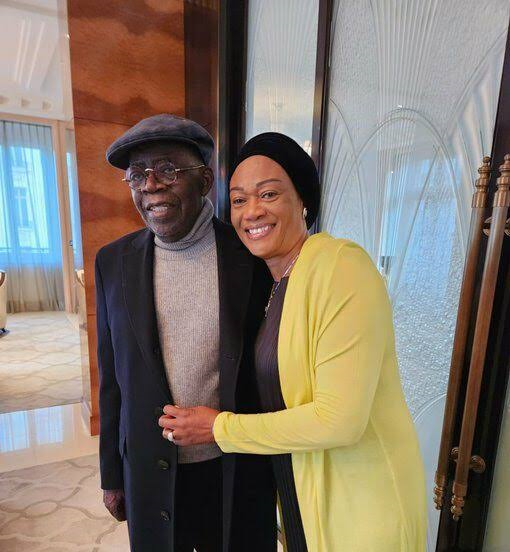
Nigeria’s First Lady, Senator Oluremi Tinubu, has appealed to voters in the South-East to support President Bola Ahmed Tinubu’s bid for re-election in the 2027 presidential election.


The First Lady made the appeal in Owerri, Imo State, during an official visit to distribute empowerment items to women as part of the Federal Government’s efforts to promote women’s economic participation.

Addressing beneficiaries and residents, Oluremi Tinubu urged the people of the South-East to support her husband’s administration, promising that the government would continue working to improve the lives of Nigerians.

«“Make una vote for Mr President, we go work for una and Nigeria go better. I want to enjoy Nigeria at old age, so I will work for Nigeria, for my old age,” she said.»

Advertisement

The empowerment programme is being implemented through the Office of the Senior Special Assistant to the President on Sustainable Development Goals and is expected to reach 18,500 women across Nigeria.

Under the initiative, 500 women in each of the five South-East states are expected to receive business-support equipment, including generators, industrial grinding machines, gas cylinders and ovens.

In Imo State, Governor Hope Uzodimma expanded the programme by providing additional empowerment items for 2,000 women, bringing the total number of beneficiaries in the state to 2,500.

Following the governor’s intervention, the First Lady announced an additional ₦100,000 cash support for each beneficiary.

Advertisement

She said the initiative was consistent with President Tinubu’s economic development agenda, particularly efforts aimed at empowering women and promoting sustainable livelihoods.

“Recognising the typical role women play in nation building, this is in line with the agenda of Mr President, Bola Ahmed Tinubu, which prioritises economic growth and sustainable development for all Nigerians, particularly women,” she said.

Oluremi Tinubu urged the beneficiaries to invest the equipment and financial support wisely, stressing that the intervention was intended to help women expand their businesses, improve household income and build more secure futures for their families.

“Let it serve as a foundation for creating a better life for you and your family,” she added.

Advertisement

The appeal comes as political parties and major political figures begin positioning themselves ahead of the 2027 general elections, with the South-East expected to remain an important battleground in the presidential contest.

Continue Reading
Advertisement

News

Court Grants 67-Year-Old UK-Based Nigerian Woman N150m Bail Over Alleged 13kg Cocaine Shipment

Published

on

ADVERTISEMENT
Zoom Ad
ADVERTISEMENT
Zoom Ad

A Federal High Court sitting in Lagos has granted ₦150 million bail to 67-year-old UK-based Nigerian, Mrs Mary Yetunde Barek, who is standing trial over the alleged trafficking of 13 kilogrammes of cocaine to the United Kingdom.

Justice Friday Ogazi granted the defendant bail with two sureties in the same sum, subject to stringent conditions.

The court ordered that both sureties must reside within its jurisdiction and own landed property valued at not less than ₦150 million. They are also required to provide evidence of ownership of the properties and proof of tax payments for the past three years.

Barek, who ordinarily resides in the United Kingdom, was further directed to surrender her British international passport to the court and remain in Nigeria throughout the trial. She must also obtain the court’s permission before travelling outside the country.

Advertisement

The case stems from an alleged cocaine shipment intercepted at the Murtala Muhammed International Airport, Lagos, on June 28, 2026.

The National Drug Law Enforcement Agency (NDLEA) alleged that Barek was arrested during the outward clearance of passengers travelling on a Virgin Atlantic flight from Terminal 2 of the airport in Ikeja.

According to the prosecution, the 13kg consignment of cocaine was allegedly concealed and disguised as plantain in an attempt to facilitate its transportation to the UK.

The NDLEA further alleged that Barek transported the prohibited substance from her residence on Alhaji Azeez Ajanaku Street, Okota, Lagos, to the airport for onward export.

Advertisement

She was subsequently arraigned before the Federal High Court in August and pleaded not guilty to the charges.

The prosecution said the alleged offence contravened Section 11(b) of the National Drug Law Enforcement Agency Act, a provision dealing with unlawful dealing in and trafficking of controlled narcotic substances.

During the bail proceedings, the prosecution opposed the application, while Barek’s lawyer urged the court to consider her age and reported health condition in granting her temporary freedom pending trial.

After considering the arguments, Justice Ogazi granted bail but imposed strict conditions designed to ensure that the defendant remains available for trial.

Advertisement

The court specifically ordered that she must not leave Nigeria without its prior permission.

The allegations against Barek remain unproven, as she has pleaded not guilty and is presumed innocent until proven guilty by the court.

Continue Reading

News

NCC Moves to Block Unapproved Phones From Nigerian Networks — What Users Must Know

Published

on

ADVERTISEMENT
Zoom Ad
ADVERTISEMENT
Zoom Ad

The Nigerian Communications Commission (NCC) is moving to strengthen the identification of mobile phones and other SIM-enabled devices operating on Nigerian telecommunications networks, a development that could eventually see unapproved or illegally imported devices blocked from accessing local networks.

The initiative is aimed at establishing a central system for identifying and authenticating mobile devices in Nigeria, with the International Mobile Equipment Identity (IMEI) serving as a key identifier.

What does the NCC’s move mean for phone users?

In simple terms, the NCC wants to establish whether devices connected to Nigerian networks are genuine, properly approved and legally introduced into the Nigerian market.

Advertisement

Every mobile phone has a unique IMEI number — essentially a digital identity that distinguishes one device from another.

Under the proposed system, information linked to devices, including their IMEI numbers, can be used to identify, authenticate and manage phones and other SIM-enabled equipment operating on Nigerian networks.

Will your phone suddenly stop working?

Not necessarily.

Advertisement

The development does not mean that every existing phone in Nigeria will immediately be disconnected from mobile networks.

The initial focus is expected to involve manufacturers, importers, dealers and devices entering or already circulating in the Nigerian market.

However, as the device identification system becomes fully operational, phones that fail approval requirements or are found to have been illegally imported could potentially be restricted from accessing Nigerian mobile networks.

What about fairly used phones?

Advertisement

People who buy fairly used or imported phones will need to exercise greater caution.

A cheap price does not necessarily mean a good deal. A device with an invalid, altered or questionable IMEI, or one reported as stolen, could face connectivity problems if it is eventually identified and blocked.

Buyers are therefore advised to purchase devices from reputable sellers and check the phone’s identity and condition before completing a transaction.

Can the NCC access your WhatsApp messages and photos?

Advertisement

No.

The device identification system is designed to identify and authenticate mobile devices. It does not, by itself, give NCC officials access to a user’s WhatsApp conversations, photographs, videos, contacts or other personal content stored on the phone.

Could the system help fight phone theft?

Yes.

Advertisement

One potential benefit is improved identification and blocking of stolen devices.

Because an IMEI is tied to the device rather than the SIM card, changing the SIM in a stolen phone does not change its IMEI. If the device is reported and subsequently blocked, inserting another SIM card would not necessarily restore its access to Nigerian mobile networks.

What should phone buyers do now?

Consumers should:

Advertisement

– Buy phones from trusted and reputable dealers.
– Be cautious when purchasing unusually cheap imported devices.
– Check the device’s IMEI before buying.
– Avoid phones with signs of IMEI tampering.
– Keep purchase receipts and other proof of ownership where possible.
– Be particularly careful when buying fairly used phones from unknown sources.

Bottom line

The NCC’s device-management initiative is essentially about giving mobile devices a verifiable digital identity on Nigerian networks.

For ordinary phone users, there is no need for immediate panic. However, as the system develops, buying genuine, properly approved devices from reliable sources could become increasingly important.

Advertisement

The message is straightforward: know the phone you are buying, verify its identity and avoid questionable devices.

Continue Reading

News

Oil Prices Soar Above $100 as Middle East Tensions Raise Fresh Global Supply Fears

Published

on

ADVERTISEMENT
Zoom Ad
ADVERTISEMENT
Zoom Ad

Global crude oil prices have surged above $100 per barrel, hitting their highest level since July as escalating military tensions in the Middle East trigger renewed concerns over disruptions to global energy supplies.

Brent crude jumped 2.8 per cent on Wednesday, breaking above the $100 mark, while US West Texas Intermediate (WTI) climbed 2.9 per cent to $95.70 per barrel.

The latest rally extends a dramatic rise in oil prices, with both major benchmarks now up by more than 60 per cent since the beginning of the year, increasing the risk of higher fuel, transportation and production costs worldwide.

The surge followed a fresh escalation in the Middle East, after US Central Command reportedly confirmed strikes involving four Iranian oil tankers in the Gulf of Oman and another vessel near Kharg Island, one of Iran’s major oil export centres.

Advertisement

The developments came amid reports of attempted missile attacks on a US Navy warship, further raising fears that the conflict could spread to critical energy and shipping routes.

Tensions have also intensified following reported attacks by Iran-backed Houthi forces on Saudi Arabian oil and energy infrastructure.

Strait of Hormuz in Focus

Markets are paying particular attention to the Strait of Hormuz, one of the world’s most important oil shipping routes. Any prolonged disruption in the area could significantly affect the movement of crude and refined petroleum products to international markets.

Advertisement

Tanker movements in the region have already faced growing uncertainty, contributing to higher freight and fuel costs and adding to concerns about the stability of global supply chains.

The impact is increasingly being felt by consumers. In the United States, average petrol prices rose by 7.3 cents per gallon on Wednesday to $4.22, according to AAA data—the biggest single-day increase since May.

Average diesel prices also climbed to a record $5.94 per gallon, raising concerns that higher transportation costs could feed into the prices of goods and services.

“The combination of expensive diesel, jet fuel, bunker fuel and natural gas is particularly uncomfortable for consumers around the world, who see their disposable income shrinking,” said Ole Hansen, head of commodity strategy at Saxo Bank.

Advertisement

Markets Brace for More Volatility

The oil rally has also unsettled global financial markets, with the S&P 500 falling 0.3 per cent on Wednesday as investors assessed the potential economic consequences of a prolonged energy shock.

US government bond yields also moved higher as markets weighed the possibility that sustained increases in energy prices could reignite inflation and complicate decisions by central banks on interest rates.

For now, investors and energy traders are closely watching developments across the Middle East, particularly around the Strait of Hormuz.

Advertisement

Any further escalation could push crude prices even higher, while a reduction in tensions or restoration of normal shipping activity could ease some of the pressure.

The latest surge, however, underscores how quickly geopolitical instability can translate into higher energy costs—and why the security of major oil-producing regions and shipping routes remains critical to the global economy.

Continue Reading

Trending

Copyright © 2024 Naija Blitz News