
News
Delta’s ADC guber candidate Unuafe unveils 14-point Blueprint to Transform Delta into Africa’s Leading Sub-National Economy

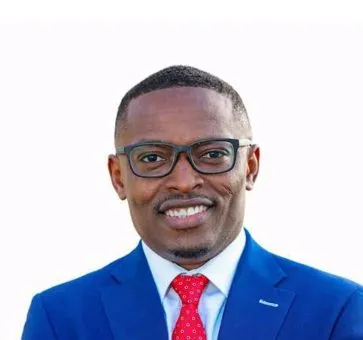


The governorship candidate of the African Democratic Congress (ADC) in Delta State, Dr. Emmanuel Usiwoghene Unuafe, a Project Management professor at Arden University, Coventry, UK, has unveiled an ambitious 14-point development agenda aimed at transforming the state into what he described as Africa’s leading sub-national economy between 2027 and 2035.
Unuafe, whose campaign slogan is “For A New Delta,” said his administration would deploy the state’s oil wealth to drive investments in agriculture, industrialisation, infrastructure, digital technology, housing and human capital development rather than relying solely on federal revenue.
According to a campaign document released by the candidate, his vision is “to transform Delta State into Africa’s leading sub-national economy – a globally competitive, technology-driven, industrialised and prosperous state where every citizen has the opportunity to thrive, every community is connected, and every family enjoys security, dignity and a better quality of life.”
The campaign document, which features Unuafe alongside his running mate, Kenneth Gbandi, states that “oil money must build farms, factories, skills, roads, ports, power, housing and digital jobs,” underscoring the campaign’s emphasis on economic diversification and job creation.
Unuafe said his administration would prioritise the complete digitisation of government operations to improve transparency, efficiency and accountability. He pledged to establish a unified digital platform for revenue collection, budgeting, procurement, licensing, taxation and land administration while engaging digitally-savvy young professionals to build and manage the systems.
On agriculture, the ADC candidate promised to reduce Delta’s dependence on oil by investing heavily in mechanised farming, agro-processing and agribusiness. He said the goal would be to improve food security, lower food prices, create rural employment and boost agricultural exports.
The health sector, according to the blueprint, would receive significant investment through the establishment of functional primary healthcare centres in every ward, the upgrade of hospitals with modern equipment, digitise health records and the recruitment of more healthcare professionals.
Unuafe also pledged major investments in infrastructure, including rural farm-to-market roads, improved urban road networks, modern traffic management systems and the development of rail networks linking the state’s three senatorial districts through partnerships with private investors.
On security, he proposed the deployment of community-based CCTV surveillance systems, technology-driven crime prevention measures and faster emergency response mechanisms, while stressing that “no individual, regardless of status, will be above the law.”
The development plan also outlines a diversified energy strategy based on gas, solar, wind and waste-to-energy projects, alongside the transition of public institutions to alternative energy sources.
To boost industrialisation, Unuafe said his administration would work with the Federal Government and private investors to revive key industrial assets, including Delta Steel Company, Delta Glass Company, Asaba Textile Mill, Koko Port, rubber manufacturing facilities and agro-processing hubs.
The ADC candidate further promised reforms in education by equipping schools with internet connectivity, digital learning tools, modern laboratories and well-trained teachers, while integrating coding, artificial intelligence, robotics and digital entrepreneurship into secondary school curricula.
His vision also includes expanding broadband infrastructure, establishing ICT innovation centres and revitalising technical colleges to equip young people with globally competitive digital skills.
The blueprint outlines programmes to support women through grants, business development services, vocational training and access to finance, while proposing urban renewal projects, improved waste management, environmental sanitation, tree planting and modern drainage systems to create cleaner and more liveable communities.
In the areas of culture and tourism, Unuafe promised to restore historical landmarks, develop riverine tourism, improve tourism infrastructure and promote cultural festivals and recreational facilities.
He also pledged to establish sports academies across the state’s three senatorial districts, organise annual sporting competitions and create pathways for youth development through sports.
For vulnerable groups, the plan proposes monthly stipends and free healthcare for senior citizens, free public transport for the elderly, legislation to establish care homes and maternity support initiatives for first-time mothers.
Describing the blueprint as more than a political manifesto, Unuafe said it represents “a vision for building a Delta State where innovation drives government, agriculture feeds the nation, industries create jobs, infrastructure connects communities, technology empowers young people, and prosperity is shared by all.
“Our mission is clear: to transform Delta State from a resource-rich state into a knowledge-driven, industrialised, globally competitive economic powerhouse where every citizen has the opportunity to succeed. The Delta Renaissance begins now.”

By Gloria Ikibah
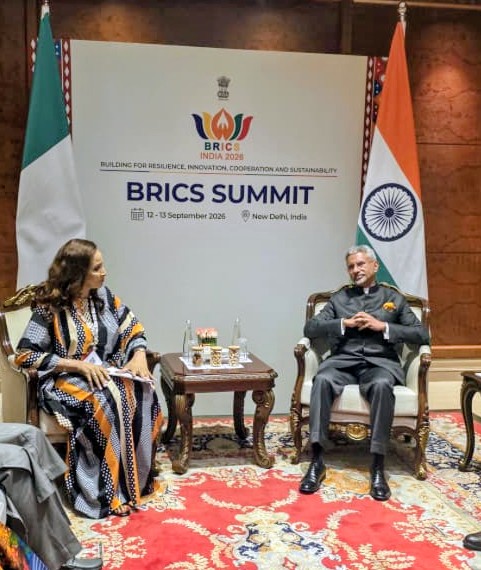
Nigeria and India have reaffirmed their commitment to deepening bilateral relations, with trade, consular matters, education and cultural cooperation taking centre stage during talks between their foreign ministers in New Delhi.
Nigeria’s Minister of Foreign Affairs, Ambassador Bianca Odumegwu-Ojukwu, held bilateral discussions with India’s External Affairs Minister, Dr S. Jaishankar, on the sidelines of the 18th BRICS Leaders’ Summit hosted by India.
The summit is being held under the theme, “Building Resilience, Innovation, Cooperation and Sustainability.”
In a statement issued on Sunday, the minister’s Special Assistant on Communication and New Media, Dr Magnus Eze, said the welfare of Nigerians living in India was among the major issues discussed by the two ministers.
A key concern was the situation of Nigerians who have overstayed their visas. Odumegwu-Ojukwu appealed to the Indian authorities for an extension of the existing amnesty arrangement to allow affected Nigerians to return home voluntarily without facing penalties.
The ministers also discussed the possibility of concluding a bilateral Memorandum of Understanding on the Transfer of Sentenced Persons.
The proposed agreement would establish a framework for the humane and orderly transfer of eligible prisoners between Nigeria and India.
On economic relations, the two sides examined opportunities for increasing trade and investment, while stressing the importance of building stronger and mutually beneficial economic partnerships.
Education and cultural exchanges also featured in the discussions, with both countries recognising the sectors as important tools for strengthening people-to-people relations.
Greater cooperation in these areas, the statement said, is expected to promote mutual understanding while creating more opportunities for citizens of Nigeria and India.
The meeting formed part of Nigeria’s efforts to use its participation in the BRICS platform to strengthen bilateral partnerships, attract greater economic opportunities and advance South-South cooperation.
Nigeria’s engagement with India comes as both countries seek to broaden their areas of cooperation beyond traditional diplomatic relations, particularly in trade, investment, education and people-to-people exchanges.

By Gloria Ikibah
Nigeria is seeking to tap into India’s experience in technology and youth engagement as Vice-President Kashim Shettima leads the country’s delegation to the 18th BRICS Summit in New Delhi.
Vice President Shettima is representing President Bola Tinubu at the summit, where Nigeria is expected to pursue opportunities in trade, investment, agriculture, technology, manufacturing and industrial development.
The high-level Nigerian delegation includes the Minister of Foreign Affairs, Ambassador Bianca Odumegwu-Ojukwu; Minister of Industry, Trade and Investment, Jumoke Oduwole; Minister of Communications, Innovation and Digital Economy, Bosun Tijani; and Minister of Environment, Balarabe Lawal.
Nigeria became a BRICS partner country in January 2025 and has since used the platform to strengthen South-South cooperation and expand economic and diplomatic relations with major emerging economies.
A major focus of Nigeria’s engagement at the summit will be India’s progress in technology, artificial intelligence and the digital economy, particularly its approach to harnessing its large youthful population.
Odumegwu-Ojukwu said India’s experience offered important lessons for Nigeria, especially in agriculture, the digital economy, artificial intelligence and the participation of women in the technology sector.
She said Nigeria was determined to learn from India’s expertise and its “greatest strength” in engaging young people to promote innovation, economic growth and inclusive development.
The minister stressed that India’s ability to deploy technology while creating opportunities for its youthful population could provide useful ideas for Nigeria as it seeks to expand its digital economy and create more opportunities for its young people.
Beyond technology and youth development, Nigeria is expected to use its participation in the BRICS Summit to strengthen economic ties with India and other emerging economies.
The country will also seek to attract investment and expand cooperation in agriculture, manufacturing and industrial development as it explores ways of turning its BRICS partnership into tangible economic opportunities.
Nigeria’s participation underscores the Federal Government’s broader push to deepen engagement with emerging economies and strengthen partnerships capable of supporting technology-driven growth and sustainable development.

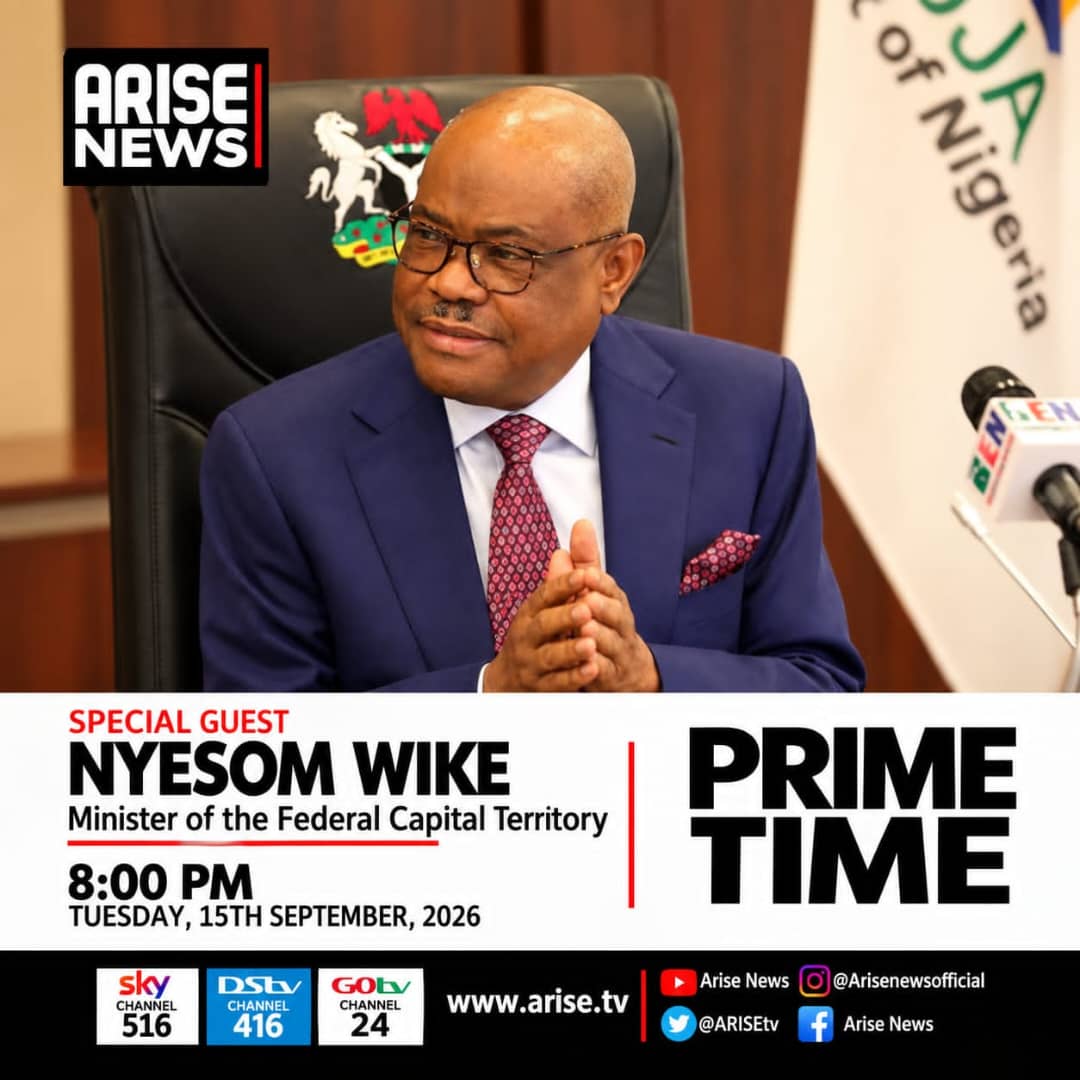
The Minister of the Federal Capital Territory (FCT), Barr. Nyesom Wike, has said President Bola Ahmed Tinubu is fully aware of his “Rainbow Coalition” and all his political activities.
Wike made the declaration on Tuesday night while speaking on Arise News Prime Time.
“There is nothing that I do that I don’t tell Mr. President,” he stated.
The FCT Minister said he was mobilizing support across party lines for the reelection of President Tinubu in 2027 under what he termed a “Rainbow Coalition.”
He has consistently maintained that his support is solely for the President, and not for the All Progressives Congress (APC), as a party.
Wike, a chieftain of the Peoples Democratic Party, (PDP), said his actions are not done in secret, stressing that the President is carried along at all times.
Wike also said he is not answerable to governors elected on the platform of the APC.
“I’m not answerable to APC governors.
“If people fail to learn from other people, they don’t grow. I took 31 days to commission projects in the FCT and they are not happy,” he added.
Turning to the Governor of Imo State, Hope Uzodimma, Wike said: “Hope Uzodimma should be lucky that I’m not in the APC. Hope fears for nothing.
“When I look at the APC governors who held the press conference, I see some people who are smart but politically lazy. Hope Uzodinma was the governor of Imo State, yet President Tinubu could not secure 10% of the votes there.
“Hope in his own state, Imo state, he was Governor. President Tinubu didn’t get 10% votes in the 2023 elections, but he took two senators and Labour Party took one senator. Is he saying Imo people were confused, or were they not confused?
“The governors of Osun, Anambra and Abia States are supporting the President reelection. Won’t they still support the candidates of their parties in other elections? So where is the confusion?”
Speaking about Rivers State, the Minister said; Becauseof our rainbow coalition, we no longer have Rivers of blood. There is no litigation on party candidates in Rivers State, unlike Imo State.”
When asked where else in the South-South the President can win, the Minister replied: “That can happen in Bayelsa State. The whole PDP there is working for the President. The founder of the NDC is not the founder of Bayelsa.”
“As I sit here today, I will tell you that the President will win in the FCT,” he added.

Nigeria-India Deepen Ties as Trade, Consular Issues Dominate BRICS Talks

Nigeria Eyes India’s Tech Edge, Youth Power at BRICS Summit

Wike: Tinubu privy to my rainbow coalition, says I’m not answerable to APC governors




-
 News18 hours ago
I’Ve Nothing To Hide, Nothing To Fear – Senator Buba On Banditry Allegations
-

 Economy18 hours ago
Dangote Refinery IPO Rush Overwhelms Two Investment Sites
-

 News18 hours ago
UCH Ibadan Emerges As Nigeria’s Top Health Institution In 2026
-

 News18 hours ago
I Don’t Want To Be Called The Richest Man In Africa — Dangote
-

 News13 hours ago
Karu Residents Hail Tinubu, Wike As Road Project Ends Years Of Traffic, Flooding Woes(Photos)
-
 Metro18 hours ago
Kidnappers Abandon Victim, Flee At Police Checkpoint In Anambra