
News
Nigeria-Ghana Join Forces to Push Back Against Rising Afrophobic Attacks in Africa

- /home/naijuinz/public_html/wp-content/plugins/mvp-social-buttons/mvp-social-buttons.php on line 27
https://naijablitznews.com/wp-content/uploads/2026/07/IMG-20260718-WA0007-1000x600.jpg&description=Nigeria-Ghana Join Forces to Push Back Against Rising Afrophobic Attacks in Africa', 'pinterestShare', 'width=750,height=350'); return false;" title="Pin This Post">
- Share
- Tweet /home/naijuinz/public_html/wp-content/plugins/mvp-social-buttons/mvp-social-buttons.php on line 72
https://naijablitznews.com/wp-content/uploads/2026/07/IMG-20260718-WA0007-1000x600.jpg&description=Nigeria-Ghana Join Forces to Push Back Against Rising Afrophobic Attacks in Africa', 'pinterestShare', 'width=750,height=350'); return false;" title="Pin This Post">


By Gloria Ikibah
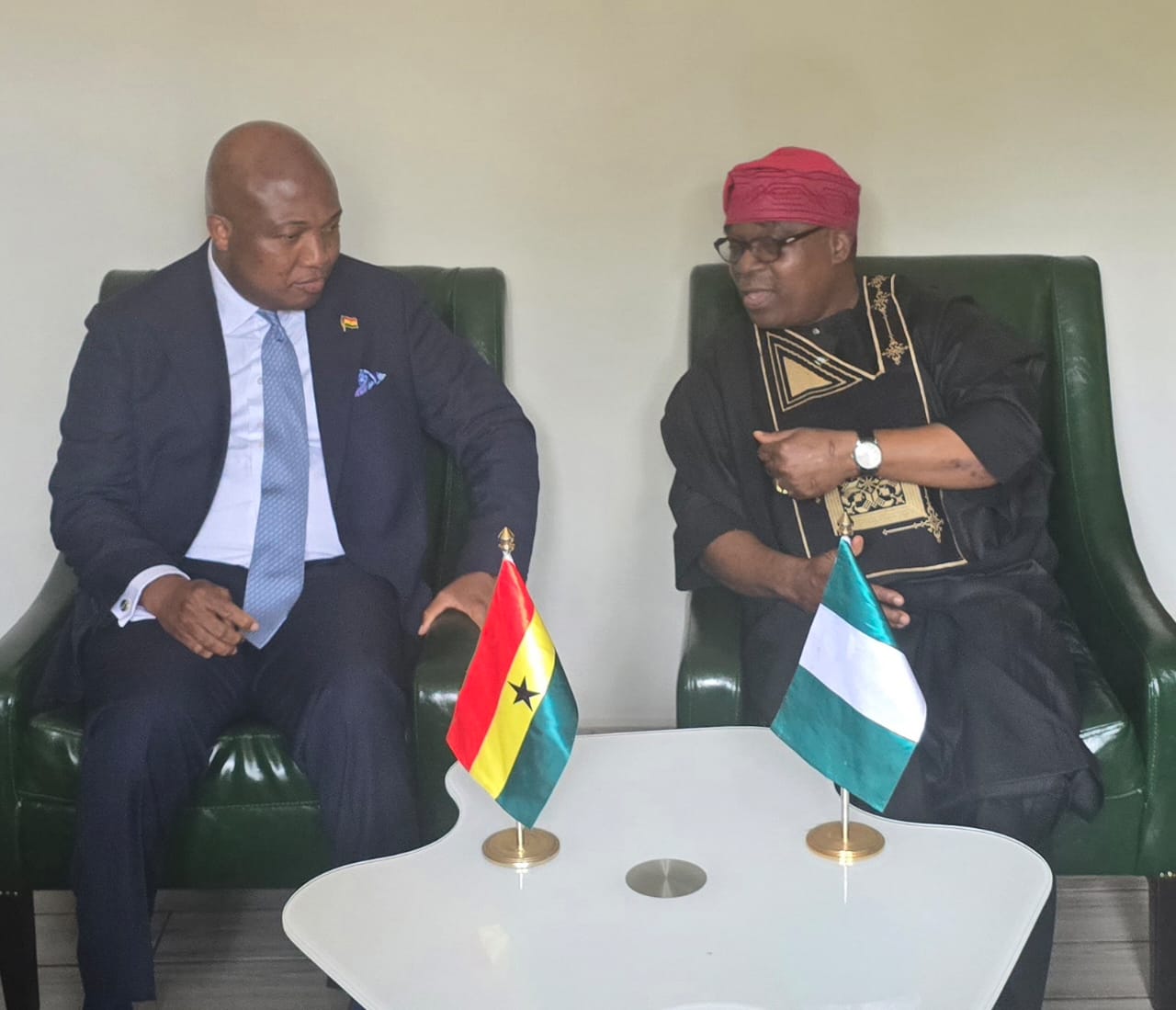
Nigeria and Ghana have agreed to strengthen cooperation in tackling the growing wave of Afrophobic protests and attacks against African nationals across the continent, with both countries pledging to push the issue onto the agenda of the next African Union Summit.
The commitment followed a bilateral meeting between Nigeria’s Minister of State for Foreign Affairs, Ambassador Sola Enikanolaiye, and Ghana’s Minister of Foreign Affairs, Hon. Samuel Okudzeto Ablakwa, on the sidelines of the ECOWAS Mid-Year Summit in Freetown, Sierra Leone.
During the meeting, Ambassador Enikanolaiye commended the longstanding relationship between Nigeria and Ghana, describing both countries as partners with shared values and common aspirations for Africa.
He said, “There is a need for increased collaboration and strategic consultation between our two countries, as well as preventive diplomacy that will enable us to address potential challenges before they escalate.”
The minister also conveyed the goodwill of President Bola Ahmed Tinubu to Ghanaian President John Dramani Mahama and praised Ghana’s leadership in advancing Pan-Africanism and the campaign for reparations for Africans and people of African descent affected by the transatlantic slave trade and colonialism.
He congratulated President Mahama on the adoption of the landmark United Nations resolution on the Transatlantic Slave Trade and the successful hosting of the Next Steps High-Level Conference on reparative justice.
According to him, “Nigeria aligns with and fully supports the decisions of the Conference in the quest for reparative justice for Africans.”
Responding, Ghana’s Foreign Minister congratulated Ambassador Enikanolaiye on his recent appointment and expressed confidence that both countries would continue to strengthen their diplomatic partnership.
He said, “There is a need for continuous collaboration between Nigeria and Ghana, anchored on action-oriented preventive diplomacy achieved through brotherly communication devoid of unnecessary bureaucracy.”
Ablakwa also thanked Nigeria for supporting the landmark UN resolution on the transatlantic slave trade and its continued advocacy for reparative justice.
He highlighted progress already made, including formal apologies issued by the Pope, the Church of England and the Church of Scotland, alongside ongoing efforts by several European countries to return looted artefacts.
The Ghanaian minister further acknowledged Nigeria’s contribution at the recent high-level conference on reparative justice.
He said, “We appreciate the positive impact of the Nigerian delegation, particularly the statement delivered and the commitment expressed by Nigeria in advancing the cause of reparative justice.”
A major focus of the meeting was the recent rise in Afrophobic protests and attacks targeting African nationals, particularly in South Africa.
Both ministers expressed concern that such incidents threaten the ideals of African unity, regional integration and the free movement of people envisioned under the African Union and the African Continental Free Trade Area (AfCFTA).
They jointly condemned xenophobia, Afrophobia and all forms of violence directed at fellow Africans.
The ministers stated that “all forms of xenophobia, Afrophobia, intolerance and violence against fellow Africans are contrary to the shared values of Pan-Africanism and the collective progress of the continent.”
They stressed the need for coordinated continental action to address the root causes of such tensions, safeguard the rights and dignity of African migrants and promote peaceful coexistence across the continent.
The ministers also maintained that while individuals involved in criminal activities should face justice, they should be prosecuted in accordance with the law rather than becoming victims of mob violence.
They emphasised that “criminals among migrant populations must be treated in accordance with the rule of law and not be subjected to violence and mob actions that often target even regular migrants and other law-abiding African citizens.”
As part of their resolutions, both countries agreed to work together to ensure that Afrophobia becomes a priority issue at the next African Union Summit.
They also pledged to engage other member states in advocating stronger African Union mechanisms, including enhanced monitoring systems, early warning structures and preventive diplomacy to prevent future incidents.
The meeting reaffirmed the close ties between Nigeria and Ghana, with both ministers calling on African Union member states to recommit themselves to the principles of Pan-Africanism, mutual respect and the free movement of persons.
They further encouraged sustained public education and dialogue to combat prejudice, strengthen solidarity and promote greater understanding among African communities.
The discussions ended with both countries reaffirming their commitment to working together within ECOWAS, the African Union and other multilateral platforms to build a more peaceful, inclusive and prosperous Africa.

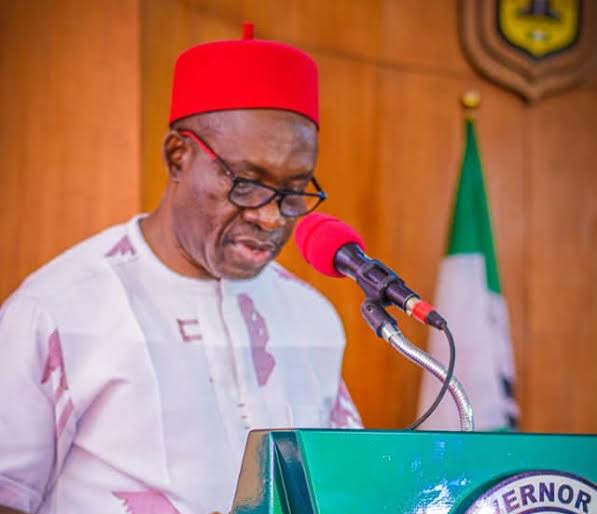
The Anambra State Government has said it is still servicing loans inherited from the administrations of former governors Peter Obi and Willie Obiano, even as it maintains that Governor Chukwuma Soludo has not borrowed from any commercial bank since assuming office.
The Commissioner for Finance, Izuchukwu Okafor, said the state’s debt burden had fallen by more than 83 per cent under Soludo, with the administration also clearing several inherited domestic obligations.
Okafor disclosed this during a Ndi Anambra podcast uploaded by Anambra State New Media on Monday while explaining the state’s finances and debt position.
He said repayments on loans secured by previous administrations continued to be deducted from Anambra’s allocation through the Federation Account Allocation Committee, including obligations dating back to the Obi and Obiano administrations.
“Yes, every month during our FAC meetings, and when you see the schedule of FAC, you will notice there were substantial, significant deductions from our own FAC because of loans previously borrowed by previous administrations,” Okafor said.
“These loans were borrowed, you know, during the time of, even, not the immediate predecessor, even during the time of Peter Obi and Willie Obiano, His Excellency, the past governors,” he said.
According to the commissioner, the Soludo administration had focused on managing the inherited obligations while avoiding new commercial borrowing.
“It’s on record, you know, that this administration has not borrowed a kobo from any commercial bank since the inception of this administration,” he said.
Okafor said the government had also settled a number of legacy liabilities, including unpaid contracts, gratuity and pension arrears, bringing the state’s domestic debt close to zero.
“But I will give you an example for our domestic debt, the control, the legacy, what we call legacy debts, you know, the contracts that were not paid, not owing, the gratuity arrears, pension arrears, we’ve been able to clear all that,” he said.
He added, “In terms of, so, our domestic debt as of today is near-zero balance.”
The commissioner attributed the reduction in the overall debt burden to repayments made by the administration, saying several inherited loans had already been settled.
“But I will also say that Mr Governor has not borrowed a penny. We have been able to manage the debt, the state debt, very well, that we have brought it down by more than 83 per cent as of today. I’ve been able to repay back most of these loans,” he said.
External obligations, however, remain part of the state’s financial commitments. Okafor explained that repayments on some foreign-denominated loans are deducted from the state’s federal allocation under the terms attached to the facilities.
“But following as well, external debts, which is foreign loan-denominated debts, when you look at it, because there are some covenants around the period it will take to pay off these loans, particularly deducted as such when we are doing FAC,” he said.
“Before they limit Anambra’s own allocation, they will deduct it as such, because most of them, World Bank loans and other loans, they committed.”
Okafor also disclosed that the state had recently fully repaid one of its debts.
“There is one debt that we recently paid off, CAGS,” he said.
He said the reduction in inherited liabilities had given the government more room to finance other priorities.
“So, in a nutshell, I’ve been able to, you know, create more fiscal space for Anambra State,” Okafor said.
He added, “This administration has been able to create more by paying off, you know, backlog of numerous debts inherited from previous governments, starting from the time of Peter Obi.”

No fewer than nine passengers were killed when gunmen opened fire on a commercial bus at Dungus Junction in Kuru community, Jos South Local Government Area of Plateau State.
Residents told journalists that the incident occurred when the bus driver parked to allow some passengers alight at the junction.
According to Daily Trust the bus which was heading to Jos was stained with blood and riddled with bullets.
Lawan Suleiman, a neighbor and teacher of one of the victims, confirmed the incident, adding that the attack occurred while the bus was stopped at the junction.
He said, “The driver is Ibrahim and he was my student. Three of them are from our community here in Bukuru. Their bodies have been deposited at the hospital. But relatives are preparing to collect them for burial.”
Spokesman of the Berom Youth Moulders, BYM, Rwang Tengwong, also confirmed the incident saying the victims were passengers travelling to Jos when the attackers opened fire on their vehicle.
“The incident happened around 9.40p.m. The victims were all passengers travelling to Jos when the terrorists opened fire on the vehicle. Among those killed was a member of Operation Rainbow. It is a very sad development and we lament the loss of lives.”
According to him, some of the passengers sustained gunshot wounds and were rushed to hospitals, where some later died.
Plateau state police command is yet to issue a statement regarding the incident as of press. (Daily Trust)
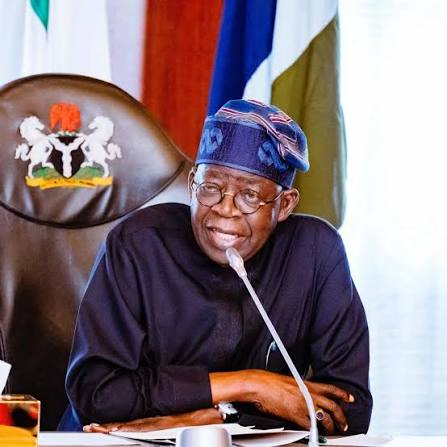
More than 600 senior lecturers from public universities across Northern Nigeria have declared their support for President Bola Tinubu’s bid to secure another term in the 2027 presidential election.
As reported by DAILY TRUST, the lecturers made their position known at a stakeholders’ meeting in Kaduna convened by the Special Adviser to the President on Political Matters, Ibrahim Masari, to discuss the administration’s performance and the country’s political direction ahead of the next general election.
The meeting, held at the Umaru Musa Yar’Adua Centre, attracted several northern political leaders, including Kaduna State Governor Uba Sani, Zamfara Governor Dauda Lawal, Yobe Governor Mai Mala Buni, Borno Governor Babagana Zulum and Gombe Governor Inuwa Yahaya.
The Minister of Defence, Bello Matawalle, Minister of Housing, Muttaqha Rabe Darma, and former Katsina State Governor, Aminu Bello Masari, were also among those who attended the engagement.
Presenting the communiqué, the Vice Chancellor of Kaduna State University, Prof Abdullahi Ibrahim Musa, said the academics assessed Tinubu’s administration since May 2023, including its handling of the economy, security, education, infrastructure and social development.
According to the lecturers, although some government reforms had increased the economic burden on Nigerians through higher living and transportation costs, the measures had also improved government revenue and public finances. They further cited developments in education funding, agriculture, infrastructure, business support and the digital economy.
The academics subsequently resolved to support Tinubu’s re-election but cautioned that their backing was not an unconditional endorsement.
They called on the Federal Government to urgently address food and transport costs, unemployment and insecurity, while strengthening investment in education, healthcare, agriculture, electricity, roads and other infrastructure in the North.
However, the Academic Staff Union of Universities distanced itself from the declaration, with its President, Prof Chris Piwuna, insisting that ASUU remains politically neutral.
Piwuna said individual lecturers were free to support any political party or candidate of their choice, but stressed that such decisions must not be attributed to the union.
“We have never, and we will never endorse any political party candidate. Nobody should drag us into such things,” the ASUU president said.
The endorsement came as political consultations intensify ahead of the 2027 presidential election, with the Tinubu camp seeking the backing of influential groups across Northern Nigeria.

Gov. Soludo reveals Obi, Obiano accumulated debts still hanging on Anambra

Sad: Nine passengers killed as gunmen open fire on bus in Plateau

Over 600 senior lecturers back Tinubu, ASUU disowns approval




-
 News10 hours ago
They Are Permanently Silent – Ortom Challenges Alia To Account For ₦1.2trn FAAC Revenue Since 2023
-
 News23 hours ago
Ex-PDP national chairman Bamanga Tukur laid to rest in Adamawa(Photos)
-

 News23 hours ago
Sad! One Casualty, Four Rescued as Four-Storey Building Collapses in Enugu
-
 News23 hours ago
Break-Up Fears Grip UK as Scotland, Wales, Northern Ireland Leaders Plot New Constitutional Front
-

 Entertainment10 hours ago
Celine Dion Weeps On Stage As She Returns To The Stage After Six Years
-

 News23 hours ago
‘I Don’t Want to Return to Nigeria’ — Chimamanda Adichie Speaks After Son’s Death
-
 News10 hours ago
2027: Why Igbos May Not Vote APC Despite Governors’ Defection — Party Chieftain
-
 News10 hours ago
Army Denies Reports Of Islamic Scholars Abduction In Senator Yariu’s House