
Sports
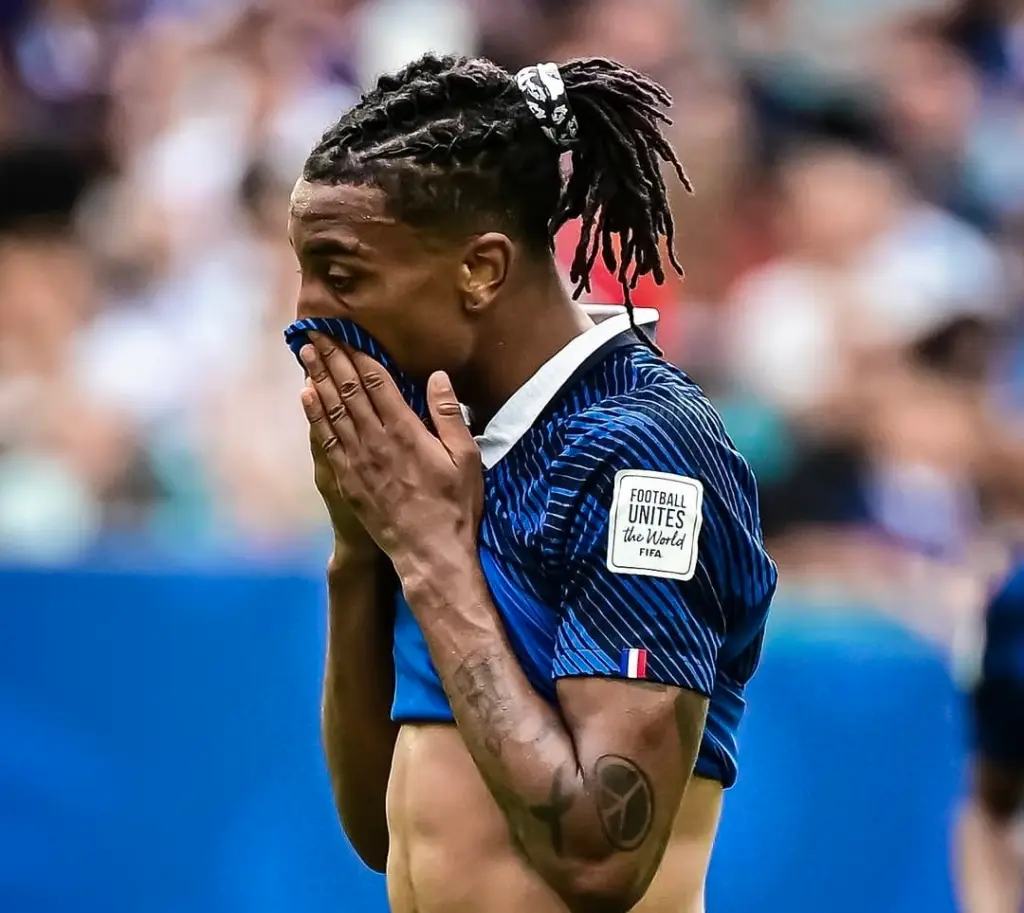
Olise Smashes Pelé’s World Cup Assist Record, Weeps After France’s 6-4 Defeat to England

- /home/naijuinz/public_html/wp-content/plugins/mvp-social-buttons/mvp-social-buttons.php on line 27
https://naijablitznews.com/wp-content/uploads/2026/07/IMG_9326-1000x600.webp&description=Olise Smashes Pelé’s World Cup Assist Record, Weeps After France’s 6-4 Defeat to England', 'pinterestShare', 'width=750,height=350'); return false;" title="Pin This Post">
- Share
- Tweet /home/naijuinz/public_html/wp-content/plugins/mvp-social-buttons/mvp-social-buttons.php on line 72
https://naijablitznews.com/wp-content/uploads/2026/07/IMG_9326-1000x600.webp&description=Olise Smashes Pelé’s World Cup Assist Record, Weeps After France’s 6-4 Defeat to England', 'pinterestShare', 'width=750,height=350'); return false;" title="Pin This Post">


Despite smashing Pele’s record, France winger Michael Olise endured a night of mixed emotions after Les Bleus suffered a dramatic 6-4 defeat to England in a thrilling World Cup encounter.
Despite making history by registering his seventh assist of the tournament to surpass Pelé’s long-standing record of six assists in a single FIFA World Cup campaign, Olise reportedly left the field in tears.
According to reports from L’Equipe, the 24-year-old was seen in tears in the dressing room after the final whistle, blaming himself for missing two clear-cut scoring opportunities during the match.
The report added that France head coach Didier Deschamps consoled the winger, reassuring him after he became overwhelmed by the result and his missed chances.
Olise’s record-breaking seventh assist now stands as the highest ever recorded by a player in a single World Cup edition, eclipsing the mark set by Pelé during Brazil’s victorious 1970 campaign.
While the historic achievement highlights Olise’s outstanding creativity throughout the tournament, the painful defeat to England overshadowed the milestone as France’s World Cup journey came to a heartbreaking end.

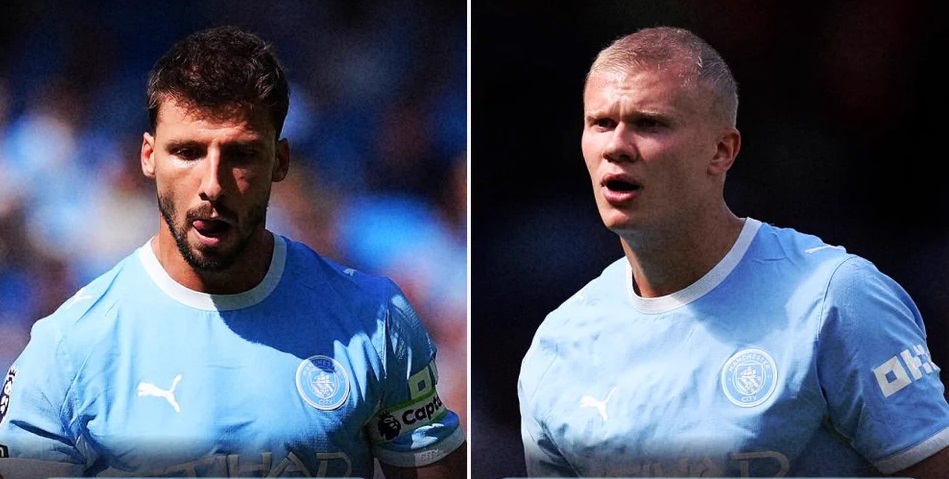
Manchester City have named Ruben Dias as their new captain, with Erling Haaland, Marc Guehi and Gianluigi Donnarumma also included in the club’s leadership group.
Dias takes over from Bernardo Silva, who left City during the summer. The Portugal defender will lead the team, while Haaland, Guehi and Donnarumma will take on additional leadership responsibilities as City continue life under new manager, Enzo Maresca.
The announcement was made by coach Maresca earlier today, September 4, with the four players chosen for their experience and influence within the squad. Maresca previously named Enzo Fernandez as captain during their time together at Chelsea, but Dias will now wear the armband at the Etihad Stadium.
Maresca also spoke about Fernandez’s arrival at City after the Argentina international completed a joint-British record £125 million move from Chelsea on deadline day. He said several City players were keen to see the midfielder join the club because of his winning mentality and experience.
“I know Enzo quite well and I know what he can bring to the team,” Maresca said. “He is a winner, a winner’s mentality and knows how to win [after] the World Cup, Club World Cup.”
The manager added: “I can promise you that in the last four or five days four or five players from the squad were asking if he is coming or not because they want him to be with us.”
Fernandez could make his City debut against newly promoted Coventry City at the Etihad Stadium on Saturday. His transfer formed part of City’s record £458 million spending spree, which also included Elliot Anderson and Ayyoub Bouaddi.
Chelsea manager Xabi Alonso said the club had handled Fernandez’s departure respectfully and was now focused on moving forward.
“In football many things happen. With Enzo we have had conversations and always with respect. What he has done for the club has been great, but now it’s time to move forward,” Alonso said.
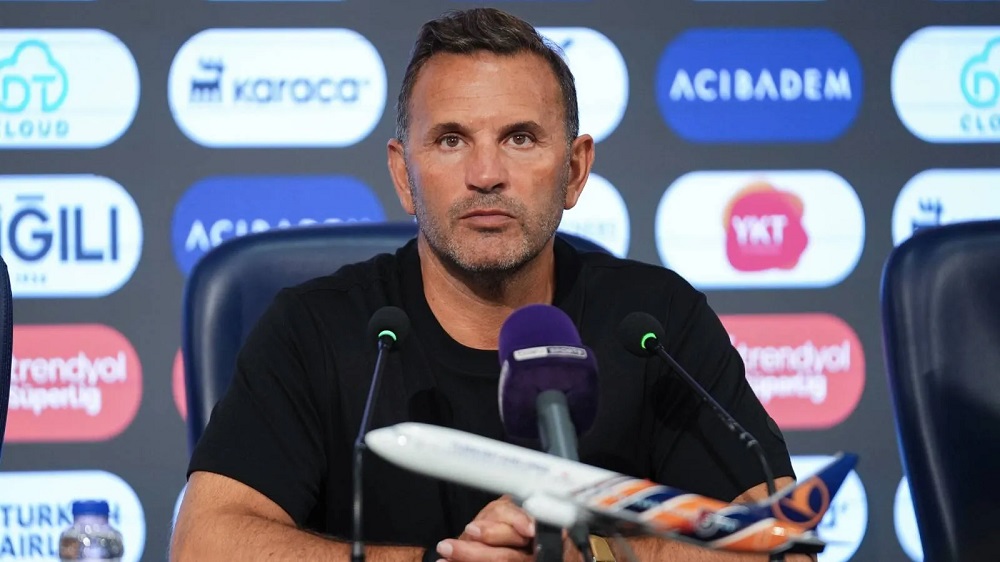
Galatasaray manager, Okan Buruk, has provided the latest injury update on two of his players, Victor Osimhen and Mario Lemina.
Speaking to beIN Sports after Galatasaray defeated Başakşehir 3-2 in the Turkish Super Lig encounter on Friday, Buruk said Lemina and Osimhen sustained a groin injury.
According to him, both players will need to do MRIs, and hopefully, they can be ready for the upcoming Champions League match.
“Lemina had a slight groin pain in training yesterday. Osimhen also felt it today,” Buruk said.
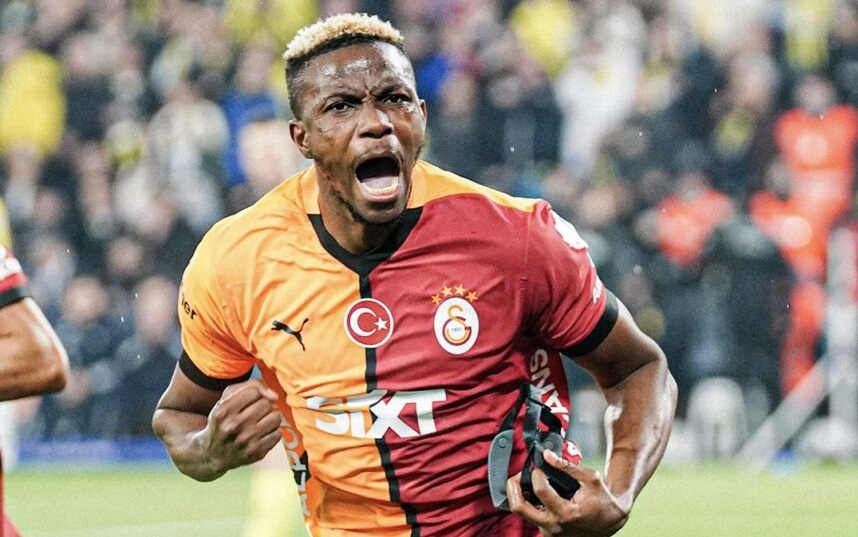
Ex- Sierra Leone international Michael Lahoud has placed Nigerian striker Victor Osimhen among the best three forwards currently playing in Europe.
Lahoud made the assessment while discussing Galatasaray’s prospects in the UEFA Champions League, expressing confidence that the Turkish giants have enough attacking quality to make a strong impression in the competition.
According to the former midfielder, Osimhen’s goalscoring ability, combined with the arrival of Portuguese star Rafael Leao, gives Galatasaray a major attacking advantage as they prepare for their Champions League campaign.
Lahoud argued that Osimhen belongs in the same conversation as some of the biggest names in world football, including England captain Harry Kane and France superstar Kylian Mbappe.
“Galatasaray has arguably the best striker in Europe right now alongside Harry Kane, Kylian Mbappe and Victor Osimhen,” Lahoud said on the CBS Sports Golazo Network.
Lahoud Backs Galatasaray for Champions League Success
The former Sierra Leone international believes Galatasaray’s attacking options could make them one of the teams to watch during the Champions League league phase.
He particularly highlighted the combination of Osimhen and Leao, describing the Portuguese winger as a potential game-changer for the Turkish club.
Lahoud said the presence of Leao could provide Galatasaray with an additional attacking dimension, particularly in matches against some of Europe’s established clubs.
“I stand on business when I say that the numbers don’t lie when it comes to the Champions League. But the fact that Galatasaray have Rafael Leao, I think that becomes a real X factor,” he stated.
Lahoud went as far as predicting that Galatasaray would finish among the top eight teams at the end of the Champions League league phase.
“Galatasaray will finish the Champions League league phase in the top eight this season,” he added.
Osimhen Remains Key to Galatasaray’s Ambitions
Osimhen is expected to play a central role in Galatasaray’s ambitions both domestically and in Europe, with the Nigerian forward having established himself as one of the most dangerous strikers in European football.
His pace, physical strength, movement and ability to score from different situations have made him a major attacking threat, while his Champions League experience is also expected to be valuable to the Turkish champions.
With Leao now providing another major attacking option, Galatasaray will hope their star-studded forward line can help them compete against Europe’s elite.
Lahoud’s prediction will also raise expectations around Osimhen, particularly among Nigerian football fans who will be hoping the Super Eagles striker can continue to deliver at the highest level on the European stage.

Nigeria’s External Reserves Hit $54bn, Highest Since 2008

Atiku’s camp angry as El-Rufai spends 200 days in prison

2Baba’s daughter laments separation of her parents




-

 News13 hours ago
Just in: Massive Explosion Rocks APC Governorship Candidate’s Convoy in Borno as Terrorists Attack
-

 Politics13 hours ago
Lere Olayinka: Some Presidential Candidates Are Not Contesting To Win 2027 Election But To Make An Impression
-

 News13 hours ago
Obi vows to protect 2027 election votes with his life
-

 News13 hours ago
See Dollar to Naira exchange rate today, September 4, 2026
-

 News13 hours ago
Bandits Kill Five, Abduct Several as Sokoto Community Comes Under Fresh Attack
-

 Metro3 hours ago
Protesters storm Katsina streets over rising bandit attacks, urge govt to step up action
-

 News12 hours ago
NERD: UNIBEN, ABU, UNICAL, EKSU, Kwara State Poly Lead Nigeria’s Academic Digitisation Drive as Country crosses 400,000 academic submissions
-
 News12 hours ago
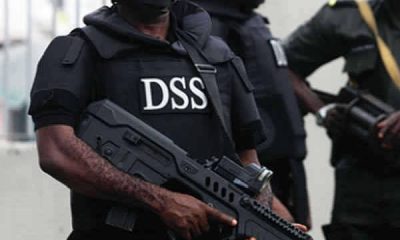
DSS impounds 676 guns, 330,000 rounds of ammunition in anti-crime operations — DG