Connect with us

Foreign

Spain imposes border checks on Italy over migrant dispute

Published

on

ADVERTISEMENT
Zoom Ad
ADVERTISEMENT
Zoom Ad

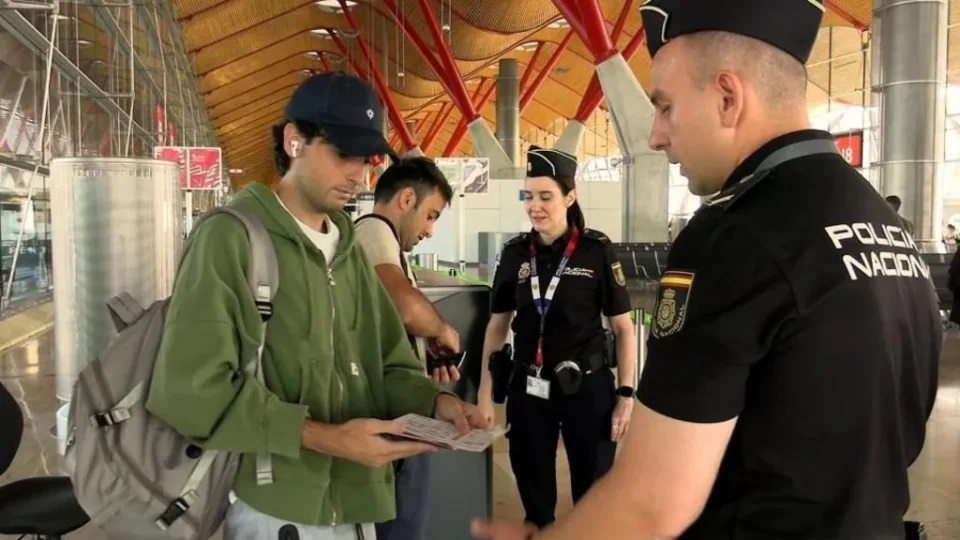
Spain on Saturday started border checks on travellers arriving from Italy, responding to similar measures Rome imposed following an unprecedented migrant rush into the Spanish north African enclave of Ceuta.


“I don’t see a lot of the word ‘diplomacy’ used in these decisions, not by the Italian government, nor by the Spanish government,” said one 36-year-old Italian tourist, Maria Celeste Grillo, who had just flown into Madrid.

She said she had not seen any added checks as she stepped off the plane, but found their implementation “sad”.

Spain announced Friday it would proceed with the heightened controls, citing “persistent irregular migration pressure” facing Italy — deepening a row between the EU partners and NATO allies.

Advertisement

Spain’s left-wing government has complained that Italy’s hard-right government on July 31 unfairly imposed one month of border checks on travellers from Spain — suspending the EU’s Schengen Area visa-free travel arrangements — because of the Ceuta influx.

More than 70,000 migrants had crossed from Morocco into the Ceuta enclave on July 30 and 31, though almost all of them subsequently returned to Morocco within 48 hours.

The inflow alarmed European nations, especially right-wing ones urging tougher rules on irregular migrants. However, rules for Ceuta mean migrants cannot travel onward to continental Europe without passing another layer of border checks.

Spain’s interior ministry said the new checks on incoming travellers from Italy would apply until September 7.

Advertisement

AFP

Continue Reading
Advertisement

Foreign

Court Halts Trump’s White House Ballroom Project, President Kicks

Published

on

By

ADVERTISEMENT
Zoom Ad
ADVERTISEMENT
Zoom Ad

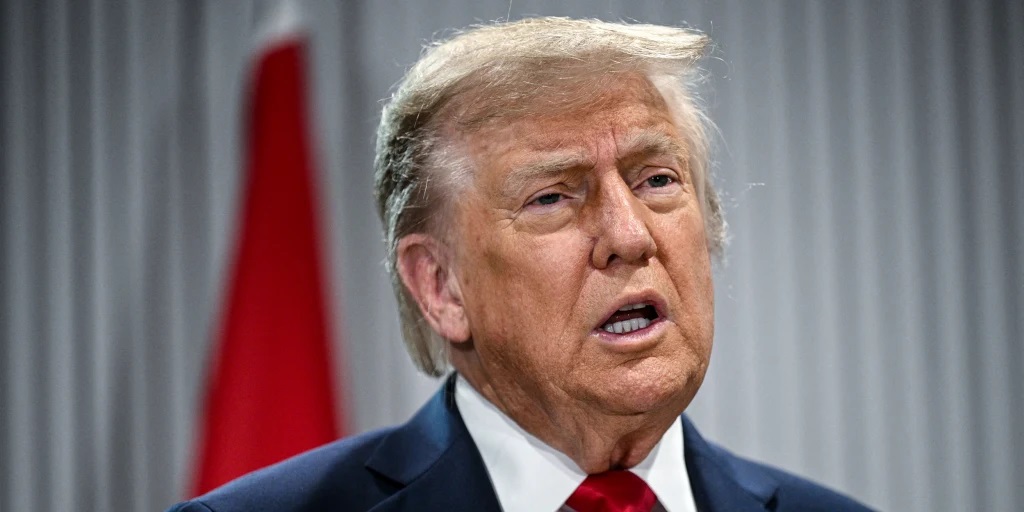
An appeals court on Friday upheld an order halting work on Donald Trump’s proposed White House ballroom, enraging the US leader and setting up another Supreme Court battle over the limits of presidential authority.

The US Court of Appeals for the DC Circuit, which had allowed construction to continue while it considered the case, agreed with a lower court that such a massive White House overhaul required the explicit consent of Congress.

It stayed its own decision for two weeks to give Trump time to ask the Supreme Court to intervene.

The Republican president lashed out after the 2-1 ruling, calling it “horrendous, politically motivated, and unlawful”.

Advertisement

The two majority judges were appointed by Democratic presidents, while the dissenting judge was nominated by Trump himself.

The President vowed in a lengthy social media post to immediately appeal to the Supreme Court.

“This decision, made after much of the work has been done and paid for, is a National Security Threat at the highest level. It is also a National Disgrace,” Trump said in another post on his Truth Social platform on Friday night.

Trump initially touted the construction of the ballroom as necessary to host galas but has since repeatedly pointed to the concurrent addition of an underground military bunker and other security features.

Advertisement

Under the district judge’s initial order, work was to be allowed to continue only on a limited set of structures, including those that were underground.

“This holding has nothing at all to do with whether the proposed ballroom is desirable or not as a matter of policy. This ruling does not even necessarily mean that the Defendants may not ultimately construct the ballroom,” the majority wrote on Friday.

“What it does mean is that the Defendants may not do so during the district court’s expeditious litigation without securing Congress’s authorisation, as the Constitution and laws require.”

Trump, who has repeatedly complained that the White House lacks sufficient space for grand galas such as state dinners, unilaterally ordered construction of the massive ballroom.

Advertisement

Work on the project began last year with the sudden demolition of the White House’s entire historic East Wing.

Since then, photographs have shown significant work on a basement complex, with some concrete walls rising above ground level.

Trump has insisted that the ballroom will be privately financed, but media reports in June showed that significant taxpayer funds were going towards the project, which could cost as much as $600 million.

While the White House initially cited a $200 million price tag for the project, it quickly doubled the estimate to $400 million.

Advertisement

The ballroom is just one of Trump’s pet projects aimed at leaving his mark on Washington by the time he leaves office in 2029, along with a renovation of the Lincoln Memorial Reflecting Pool and other parks, as well as the construction of a gigantic arch.

Several of the projects have similarly faced legal challenges, but the ballroom project would be the first to reach the Supreme Court.

Continue Reading

Foreign

Former US President Joe Biden’s Prostate Cancer Spread To Other Parts Of His Body

Published

on

By

ADVERTISEMENT
Zoom Ad
ADVERTISEMENT
Zoom Ad

Former President Joe Biden’s son Hunter Biden told the BBC on Friday that his father’s cancer is spreading, describing it as “very debilitating” and “painful.”

“It’s really hard,” Hunter Biden told the British broadcaster about his father’s condition in a televised interview. “It’s really sad to watch.”

“I wish he would complain more, because it’s not good. The cancer has spread; it has metastasized into his bones and further.

It’s very painful, and it’s very debilitating in many respects, but he’s still out there, and he’s still doing his thing,” he added.

Advertisement

His remarks come after former first lady Jill Biden told NBC News in June that Joe Biden would live with cancer forever.

“He’s doing OK,” she told “TODAY” show co-host Craig Melvin. “I think if he had just been diagnosed with prostate cancer, that’s one thing because that can be cured, but the fact that it metastasized to his bones, that makes it a whole different story. And so I think Joe will live with cancer till the rest of his life.”

Recall that in May 2025, months after he left office, the former president’s personal office shared that he’d been diagnosed with an aggressive form of prostate cancer.

In September 2025, the Biden family shared that Joe Biden had wrapped up a course of radiation therapy and hormone treatment, though it was unclear whether the former president would require more cancer care.

Advertisement

Last year, Joe Biden’s office also shared that he’d undergone surgery to remove cancerous skin cells.

Speaking to the BBC about his father’s cancer, Hunter Biden was emotional, telling the outlet: “He is our rock.

He has been there for each one of us in a way that is hard for me to even possibly articulate and explain.”

In the interview, Hunter Biden also spoke about the pardon he was granted by his father just before he left office, which applied to any crimes committed from Jan. 1, 2014, through Dec. 1, 2024.

Advertisement

At the time, Hunter Biden was facing federal gun charges and had pleaded guilty to tax evasion charges.

On Friday, Hunter Biden said the pardon was “not fair” but added: “All I know is that I’m grateful that he did it for me.”

“It’s something that is easily criticized, and for good reason,” he said, adding later: “I was the only one in the world that could have gotten what I got from the only person in the world who could give it, my father.”

AFP

Advertisement
Continue Reading

Foreign

STRATEGIC AUTONOMY: NIGERIA’S DOCTRINE FOR SELF-DETERMINATION IN A MULTIPOLAR WORLD

Published

on

ADVERTISEMENT
Zoom Ad
ADVERTISEMENT
Zoom Ad

In an era defined by geopolitical competition, trade wars, sanctions regimes, and shifting alliances, one phrase has migrated from European policy papers to the heart of African diplomacy: “Strategic Autonomy”.

For Nigeria, this is not a new experiment in isolation, nor is it a nostalgic return to Cold War non-alignment. As I outlined in a recent address from the Ministry of Foreign Affairs in Abuja, it is something far more direct and more urgent.

Strategic autonomy is alignment to Nigerian national interest. Once you are clear in what constitutes your national interest, you align with those interests regardless of which party is at the receiving end. That is the foundation. I am aware of scholarly publications that was recently put together by the Nigerian Institute of International Affairs on the subject.

While the Ministry prepares the full concept note charting new fronts in a multi polar world, let me share the preliminary framework guiding Nigeria’s foreign policy under President Bola Ahmed Tinubu.

Advertisement

Our goal is simple: to ensure that Nigeria, and by extension Africa, is not an object of geopolitics, but a subject that defines its own future.

What Strategic Autonomy means for Nigeria and Africa
Strategic autonomy is often misunderstood as withdrawal. It is the opposite. It is engagement on our terms. Today, Nigerian Foreign Policy has shifted. Gone is the era of reactive alignment. The Tinubu 4Ds agenda is anchored on strategies that are clearly designed to bring succor to Nigerians. The deliberate pursuit of Nigeria’s national interest across economic, security, technological, and diplomatic domains, without being locked into any single bloc. Nigeria’s strategic autonomy rests on 5 pillars in a world of continuous alignment. Together, they form the blueprint for how Nigeria engages a world that is no longer unipolar, but contested, transactional, and opportunity-rich.

NATIONAL INTEREST, NIGERIA FIRST 
Alignment to Nigerian national interest is the guiding rule. For Nigeria, Foreign Policy begins at home. Every treaty, partnership, and diplomatic gesture is measured against one question: does it deliver jobs, infrastructure, security, defence and dignity for Nigerians?

This principle was tested in the enforcement of the One China Policy. When diplomatic lines were blurred, the Ministry acted decisively: relocating trade missions from Abuja to Lagos, Nigeria’s commercial hub, and reaffirming that Nigeria speaks with one voice.  There is no room for diplomatic blunder in Nigeria. The message is clear: Nigeria will be a partner, not a pawn. Strategic autonomy means clarity of position first, and flexibility in tactics second.

Advertisement

ECONOMIC DIVERSIFICATION 
AfCFTA + global partnerships like China’s zero-tariff access. Nigeria is done with aid-for-diplomacy. The new model is trade-for-growth. Under President Bola Ahmed Tinubu’s Renewed Hope Agenda, Nigeria is leveraging two levers simultaneously: 

1. Continental integration through the African Continental Free Trade Area, to build regional value chains. 

2. Global partnerships that open markets. China’s zero-tariff policy for eligible Nigerian exports is a case in point, creating new pathways for agriculture, manufacturing, and solid minerals to reach 1.4 billion consumers.

From the Lagos-Calabar coastal transport system to industrial parks in Ogun and Lekki, Chinese, European, and Gulf investments are being steered toward productive sectors. The goal is not dependency, but diversification: more partners, more markets, more Nigerian-made exports.

Advertisement

SECURITY SOVEREIGNTY
African-led, but open to any partner that delivers results. Nigeria’s security doctrine is rooted in the principle that Africans must lead African solutions. ECOWAS, the AU, and regional counter-terrorism frameworks remain central.

But strategic autonomy also means pragmatism. On terrorism, maritime security in the Gulf of Guinea, and cyber threats, Nigeria is open to cooperation with any partner, East or West that brings intelligence, technology, and capacity without conditions that undermine sovereignty. The benchmark is simple: results for Nigerian communities. Partnerships are judged not by ideology, but by impact on the ground.

TECHNOLOGICAL AGENCY 
Build, don’t just buy. Lead in AI and digital infrastructure. The 21st century will be won on data, chips, and talent. Nigeria refuses to be only a consumer. This is the essence of Minister Bosun Tijjani’s reforms in our digital ecosystem.  Through partnerships in 5G, fiber optics, and smart cities, Nigeria is negotiating technology transfer, not just procurement. Engagement with the World Artificial Intelligence Organization and related partnerships signal intent: to move from adoption to authorship.

The aim is to build domestic capacity in AI, fintech, and digital governance, so that Nigerian developers, not just foreign vendors, shape the platforms used daily by 200 million Nigerians. Technological agency is sovereignty in the digital age.

Advertisement

DIPLOMATIC FLEXIBILITY 
Engage all major powers without being locked into one camp. In a multipolar world, alignment is a choice made per issue, not per decade. Nigeria maintains a Comprehensive Strategic Partnership with China on infrastructure and more. It deepens trade and security ties with the US and EU. It expands South-South cooperation with India, Brazil, and the Gulf. It leads on the continent through AfCFTA and AU reform.

This is not non-alignment. It is multi-alignment: engaging all, belonging to none, and extracting maximum value for Nigeria from each relationship. Strategic autonomy is alignment to Nigerian national interests. Nigeria’s 5 Pillars offer more than a foreign policy. They offer a template for mid-sized and emerging powers navigating great power competition. It is a policy of conviction without rigidity. Of partnership without dependence. Of ambition without illusion.

Nigeria will continue to deepen partnerships that deliver infrastructure, jobs, and technology, but always on Nigerian terms. In 2026, the measure of sovereignty is not who you oppose. It is what you are able to build.

We can no longer afford an economy built only on exporting raw materials to one market and importing finished goods from another. The African Continental Free Trade Area gives us the platform to build regional value chains. At the same time, we must diversify globally. This is why we welcome China’s decision to grant zero-tariff treatment to 53 African countries, while we simultaneously deepen trade with the EU, the US, the Gulf, and our neighbors in ECOWAS. No single partner can meet all our development needs, and we will not be dependent on any one.

Advertisement

The primary duty of any government is the protection of its citizens. That principle must guide our security partnerships. African-led solutions through the AU and ECOWAS remain our first choice. But we will not outsource our judgment. We greatly appreciate the US but if any country says he can help me to wipe out terrorism in Nigeria in the next two weeks, will I say because I’m friend to the US I will not agree? No,”. The safety of Nigerians comes first. Strategic autonomy means we evaluate every security offer by one metric: does it deliver peace, security and stability for our people?

In a multipolar world, we must talk to everyone and be forced to choose no one. This is not duplicity. It is maturity. We have demonstrated this in recent weeks. We condemned Afrophobic attacks in South Africa because the dignity of Nigerians abroad is non-negotiable. We pushed the agenda at the recent ECOWAS Summit in Freetown Sierra Leone where President Tinubu’s voice was clear and unambiguous. At the same time, we are preserving and strengthening the Nigeria-South Africa strategic partnership because both countries benefit from trade, investment, and regional leadership. That is strategic autonomy in practice.

The 4D Agenda meets a fragmenting World
The global shifts make this doctrine necessary today.  Today, we have multipolarity. The unipolar moment has passed. Power is diffused across Washington, Beijing, Brussels, New Delhi, Riyadh, and other capitals. Under President Tinubu’s 4D Foreign Policy Agenda: Demography, Development, Diaspora and Democracy — Nigeria’s diplomacy is calibrated to one question: what does this mean for Nigerian citizens? Ideological blocs are secondary to results.

Africa has 60% of the world’s youngest population. By 2050, one in four people on earth will be African.  Nigeria will be the third most populated country in the world by 2050. We cannot allow our future to be scripted by others. We must define our own development model, centered on jobs, skills, and innovation. In this context, some analysts have described our approach as “pragmatism devoid of doctrine.” I disagree.

Advertisement

“I don’t agree with that kind of characterization. Everything foreign policy is about national interest,”.  What we are doing is giving that age-old principle a modern name and structure. We are drawing from our own history. As one of my lecturers at the University used to say, “ non-alignment is alignment to your national interest.” That remains true. Doctrine without delivery is rhetoric. For strategic autonomy to produce tangible benefits, Africa must take deliberate steps.

We must fully implement AfCFTA to unlock a $3.4 trillion single market. That means reducing tariffs, harmonizing standards, and building cross-border infrastructure. We must invest heavily in energy and infrastructure. No factory runs without power. No trade happens without roads, rail, and ports. Strategic autonomy requires industrial power.

Africa must speak with one voice in global forums — at the UN, G20, and WTO. Africa’s 54 countries carry more weight together than separately. It is time to protect and deepen democratic institutions. Autonomy should never be confused with authoritarianism. The legitimacy of our choices comes from the consent of our people.

Let me be clear. Strategic autonomy is not about turning our backs on partners. It is about choosing partners freely. It is the right to trade with anyone, learn from everyone, and be dominated by no one. The world is fragmenting into blocs. Africa’s best option is not to join a bloc, but to become a bloc ourselves — economically integrated, politically coherent, and diplomatically confident.

Advertisement


Written by Ambassador Sola Enikanolaiye,
Minister of State for Foreign Affairs, Federal Republic of Nigeria

Continue Reading

Trending

Copyright © 2024 Naija Blitz News