
News
Peter Obi Reacts As Microsoft Set To Shut Down Operations In Nigeria


- /home/naijuinz/public_html/wp-content/plugins/mvp-social-buttons/mvp-social-buttons.php on line 27
https://naijablitznews.com/wp-content/uploads/2024/05/Peter-Obi-1.jpg&description=Peter Obi Reacts As Microsoft Set To Shut Down Operations In Nigeria', 'pinterestShare', 'width=750,height=350'); return false;" title="Pin This Post">
- Share
- Tweet /home/naijuinz/public_html/wp-content/plugins/mvp-social-buttons/mvp-social-buttons.php on line 72
https://naijablitznews.com/wp-content/uploads/2024/05/Peter-Obi-1.jpg&description=Peter Obi Reacts As Microsoft Set To Shut Down Operations In Nigeria', 'pinterestShare', 'width=750,height=350'); return false;" title="Pin This Post">


Former Governor of Anambra State, Peter Obi, has reacted to reports suggesting that Microsoft might be considering shutting its African Development Centre based in Lagos.
The decision means that at least 200 staff would be out of jobs.
It would also affect the country’s technological landscape, potentially impacting job opportunities and innovation in the sector.
In a statement via X on Wednesday, the Labour Party (LP) presidential candidate in the 2023 election stated that the latest development underscores Nigeria’s urgent need for comprehensive economic reforms.
According to Peter Obi, the closure of Microsoft’s innovation centre represents another significant setback for Nigeria’s aspirations to become a hub for technology and innovation in Africa.
Peter Obi also noted that Microsoft’s exit is considered a blow to the efforts to create employment opportunities and drive economic growth in Nigeria, particularly in the critical technology sector, which holds immense potential for innovation and job creation.
The statement read, “The recent announcement of Microsoft Nigeria to its workers about shutting down its innovation center in Lagos and cutting 200 jobs is deeply troubling. It underscores the urgent need for comprehensive economic reforms in Nigeria. This further highlights the challenges and broader issues plaguing the Nigerian economy.
“The closure of Microsoft’s innovation center represents yet another significant setback for Nigeria’s aspirations to become a hub for technology and innovation in Africa. It also raises serious concerns about our business environment for investors.
And this has become a stark reminder of the obstacles faced by both local and international businesses operating in Nigeria, including regulatory hurdles, and an uncertain business environment.
“The loss of 200 direct jobs, and several other indirect jobs, is not just numbers and statistics but represents the livelihoods and aspirations of individuals and families who now face uncertainty and financial hardship.
It is a blow to the efforts to create employment opportunities and drive economic growth in Nigeria, particularly in the critical technology sector, which holds immense potential for innovation and job creation.
We must take decisive actions to address the root causes of this decline in investor confidence and create an enabling environment for businesses to thrive.
“We must prioritize policies that promote innovation, entrepreneurship, and job creation, while also ensuring transparency, accountability, and good governance. Additionally, we must invest in education and skills development to equip our workforce with the necessary tools and knowledge that will unlock the full potential of our nation and position us to compete in the global economy.”



Nigeria has expressed optimism about securing increased funding for climate change, biodiversity conservation, and environmental restoration projects under the upcoming Global Environment Facility (GEF)-9 funding cycle, as the GEF formally concluded its GEF-8 cycle at its Eighth Assembly in Samarkand, Uzbekistan.
The GEF Council approved $232.5 million in its final meeting of the GEF-8 cycle, supporting 24 projects across 22 countries. Of this amount, $144.3 million was allocated through the GEF Trust Fund, while additional resources were approved through the Global Biodiversity Framework Fund (GBFF) and the Least Developed Countries Fund/Special Climate Change Fund (LDCF/SCCF) for biodiversity conservation and climate adaptation projects.
Speaking at the Assembly, Nigeria’s Minister of Environment, Balarabe Abbas Lawal, praised the GEF funding mechanism, which has supported biodiversity, land restoration, and climate adaptation initiatives in Nigeria since 2009. Under the GEF-8 cycle, Nigeria received about $21 million for projects including efforts to advance the country’s net-zero emissions and biodiversity protection targets.
However, GEF financial records show that Nigeria still owes about $6.1 million in outstanding pledges made during the GEF-4 and GEF-5 funding cycles, making it the only country yet to fulfil commitments from two separate cycles. Lawal acknowledged the arrears and assured delegates that efforts were underway to redeem Nigeria’s pledges, although he did not provide specific details.
Despite the financial challenges, Nigeria urged the GEF to increase support under the GEF-9 cycle, which begins on July 1, particularly to address pressing environmental issues such as desertification, coastal erosion, and biodiversity loss.
A major focus of the upcoming funding cycle will be stronger inclusion of Indigenous Peoples and Local Communities (IPLCs). GEF officials said projects that directly benefit local communities will receive greater consideration, even in countries like Nigeria where indigenous groups are not formally institutionalised. GEF representatives stressed that local communities and indigenous peoples would be treated with equal importance in project design and implementation.
The Assembly also highlighted the impact of GEF-funded small grants in Nigeria. Through programmes implemented by the Nigerian Conservation Foundation, farming communities in the desertifying Hadejia-Nguru wetlands of Yobe State are receiving improved crop varieties and early warning information to strengthen food security and resilience to climate change.
Civil society organisations called for expanded GEF support, while officials from the Federal Ministry of Environment emphasized the importance of blended financing, private-sector participation, community involvement, and capacity building to ensure successful implementation of future climate and biodiversity projects under the GEF-9 cycle.

Troops of the Armed Forces of Nigeria, in collaboration with other security agencies, have neutralised nine terrorists, arrested 31 suspects and rescued more than 16 kidnapped victims during coordinated operations conducted across various parts of the country.
The Director, Defence Media Operations, Major General Michael Onoja, disclosed this on Friday in Abuja while providing an update on military operations nationwide.
According to him, troops deployed strategic assets, conducted joint land patrols and received close air support in efforts aimed at disrupting the activities of insurgents, kidnappers, arms traffickers and other criminal groups.
In the North-East, troops of Operation Hadin Kai carried out a series of operations that led to the arrest of several suspects and the recovery of arms, ammunition and other items.
The military said a number of individuals linked to terrorist activities, including suspected collaborators and informants, were apprehended in parts of Borno, Yobe, Adamawa and Bauchi states. Troops also rescued escapees from terrorist enclaves and reunited some of them with their families.
In the North-West, troops of Operation Fansan Yamma engaged criminal elements in Katsina and Zamfara states, neutralising suspected terrorists and recovering weapons and ammunition.
The military also reported the arrest of a suspect during operations in Kaduna State, while another suspect was apprehended during a raid in Zamfara State.
In the North-Central region, troops of Operation Savannah Shield conducted patrols in Niger State and successfully repelled an ambush by armed elements, recovering motorcycles and ammunition.
The operation also led to the arrest of a suspect accused of providing support to criminal groups.
Similarly, troops of Operation Enduring Peace rescued five kidnapped passengers during a search-and-rescue mission in Kaduna State after discovering an abandoned vehicle along a highway.
The military said two injured victims were evacuated for medical treatment, while efforts to locate other missing persons are ongoing.
In Kogi, Nasarawa and Taraba states, troops of Operation Whirl Stroke carried out a series of operations that resulted in the arrest of suspected gunrunners and other suspects, the rescue of kidnap victims and the recovery of weapons, explosives and vehicles.
In the Niger Delta region, troops of Operation Delta Safe arrested several suspects in Edo State during operations targeting kidnapping and other criminal activities.
The military also recovered locally fabricated firearms and motorcycles during a sweep operation in Delta State.
In the South-East, troops of Operation Udoka arrested several suspects in Abia, Anambra and Ebonyi states during operations aimed at dismantling criminal networks.
The military further disclosed that troops rescued hostages in Ebonyi State following a distress call and arrested three suspects in connection with the incident.
Major General Onoja said the Armed Forces remain committed to operating in accordance with the law and established rules of engagement while protecting lives and property across the country.
He urged members of the public to continue supporting security agencies by providing credible information on suspicious activities through appropriate channels.
Onoja also conveyed the commendation of the Chief of Defence Staff, Olufemi Olatunbosun Oluyede, to troops for their resilience and professionalism in ongoing operations across the country.
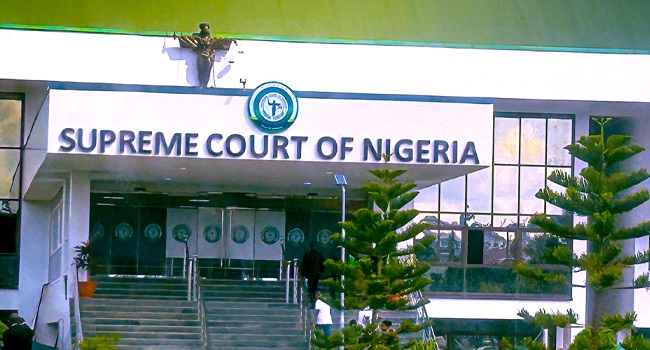
The Supreme Court, on Friday, upheld death by hanging for a convicted Delta-based kidnapper, Chelynor Halim.
In a unanimous decision, a five‑member panel of the apex court dismissed the convict’s appeal as lacking in merit.
A High Court in Asaba, Delta State, held in 2017 that the proof of evidence established Halim’s involvement in armed robbery and kidnapping.
The trial court heard that the defendant, together with his accomplices, kidnapped one Joan Osemene on February 9, 2014, and took her to an unknown location in Ibusa, Delta State.
Halim, who allegedly slapped the victim and threatened her with a gun, later covered her nose with a cloth containing a substance that caused her to pass out.
At the scene, the gang leader, identified as Edozie Obude, allegedly grabbed the victim by the throat, struck her neck with a metal object, and ordered that she be thoroughly searched.
The victim, who testified during the trial, told the court that after the search the gang seized her ATM card and N10,000 in cash that she had on her.
Subsequently, the gang used the ATM card to withdraw N55,000 from the victim’s account.
According to the victim, her hands and legs were tied and she was taken to another location where the gang abandoned her.
She eventually freed herself and escaped, running until she reached a major road.
There she flagged down a motorcyclist to move farther from the area; that motorcyclist turned out to be the convict.
Upon recognising the convict as one of her attackers, the victim raised the alarm, prompting nearby bystanders to apprehend the motorcyclist before he could flee.
The convict was later handed over to the Department of State Services (DSS), after which he led operatives to his gang’s hideout, where a shootout ensued that resulted in the death of their leader, Obude.
In a lead judgment read on Friday by Justice Chioma Nwosu‑Iheme, the Supreme Court held that there was no doubt about the appellant’s identity as one of the gang members, and that the evidence adduced at trial established his presence at the scene of the crime.
The apex court dismissed the convict’s appeal marked SC/CR/913/2022, and upheld his death sentence by hanging.
The judgment comes amid a rising spate of kidnappings across the federation, including recent abductions of pupils and teachers from schools in Oyo and Borno states.
In Borno, armed groups attacked schools in Askira Uba and Chibok local government areas on May 13 and 14, abducting 42 pupils. In Oyo, coordinated attacks on May 15 at Baptist Nursery and Primary School, Yawota; Community Grammar School; and L.A. Primary School, Esiele, in Oriire Local Government Area resulted in the abduction of another 40 pupils.
Efforts are ongoing to secure the release of the abductees.

Nigeria seeks greater climate, biodiversity support as GEF-8 ends

How to cope with rainy season illnesses

Naira depreciates to N1,397/$ in parallel market




-

 News17 hours ago
Just in: Gov Soludo Drags 8 Anambra Pastors To Court Over Fake Miracles, Religious Scam
-

 Economy17 hours ago
See Dollar to Naira exchange rate today, June 5, 2026
-

 News17 hours ago
FBI announces fresh Top 10 list of scammers wanted for multibillion-dollar fraud
-

 News17 hours ago
WASSCE candidates again write exams late in the night
-

 News17 hours ago
BARC Farm: Stop Hiding Greed Behind Politics, PVD Tells Kefas Ropshik
-

 News17 hours ago
Legal Education Council unveils updated list of 117 universities accredited to offer Law
-

 News11 hours ago
Xenophobia: FG Set To Repatriate Over 1,000 Nationals From South Africa As Tensions Rise
-
 News1 hour ago
Nigerians Outraged As Bandits Release Videos Of R@pe Of Female Victims
Warning: Undefined variable $user_ID in /home/naijuinz/public_html/wp-content/themes/zox-news/comments.php on line 49
You must be logged in to post a comment Login