
News
Minimum wage: N’Assembly may propose seizing defaulting states, LGs’ allocations

- /home/naijuinz/public_html/wp-content/plugins/mvp-social-buttons/mvp-social-buttons.php on line 27
https://naijablitznews.com/wp-content/uploads/2024/05/Tinubu-at-NASS-joint-session.jpg&description=Minimum wage: N’Assembly may propose seizing defaulting states, LGs’ allocations', 'pinterestShare', 'width=750,height=350'); return false;" title="Pin This Post">
- Share
- Tweet /home/naijuinz/public_html/wp-content/plugins/mvp-social-buttons/mvp-social-buttons.php on line 72
https://naijablitznews.com/wp-content/uploads/2024/05/Tinubu-at-NASS-joint-session.jpg&description=Minimum wage: N’Assembly may propose seizing defaulting states, LGs’ allocations', 'pinterestShare', 'width=750,height=350'); return false;" title="Pin This Post">


The National Assembly has resolved to ensure that states, local governments, and the Organised Private Sector stop defaulting in the payment of the approved minimum wage
The National Assembly may even consider seizing allocations of states and local governments that fail to comply with the new minimum wage, says a source who spoke anonymously with Saturday PUNCH, because he was not authorised to speak on the matter.
This is as the National Assembly announced plans to include a clause that will provide clear sanctions for defaulters of the new minimum wage bill that will be passed after receiving the Wage Award Bill from President Bola Tinubu.
This was made known by the Senate spokesperson, Yemi Adaramodu, who explained that lawmakers would expedite the passage of the Wage Award Bill once President Tinubu sent it
He also hinted that the President would send the bill after the National Assembly resumed from the Sallah recess on July 2.
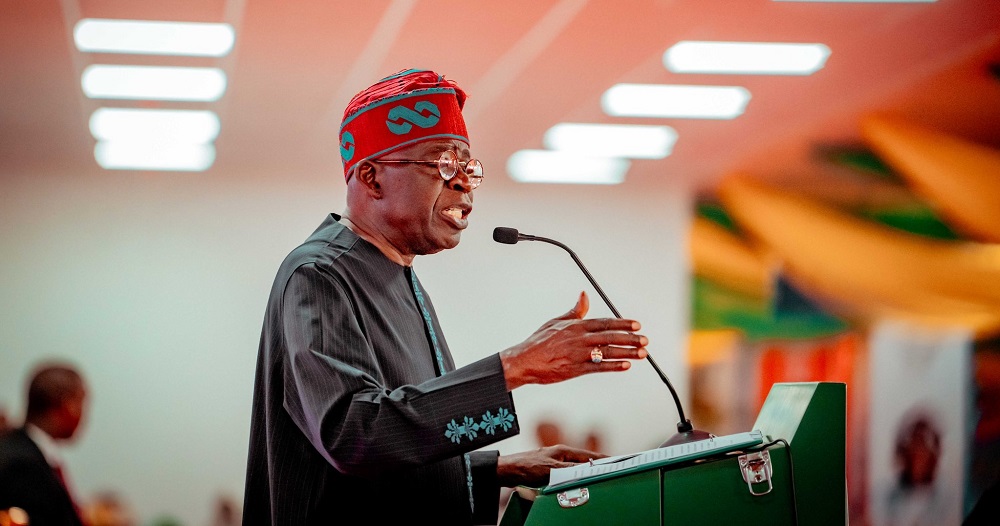
In his Democracy Day broadcast on Wednesday, the President had promised to forward a bill on the new minimum wage to the National Assembly soon.
The Federal Government and labour unions have been at odds over the new minimum wage, with union leaders demanding N250,000. Meanwhile, the Federal Government and the OPS countered with an offer of N62,000, while state governors maintained that they could not sustain a minimum wage higher than N60,000.
Labour unions have repeatedly dismissed the government’s offer, labelling it a “starvation wage”.
The Assistant General Secretary of the NLC, Chris Onyeka, stated that Organised Labour would not accept the latest offer of N62,000 or the N100,000 proposal suggested by some individuals and economists.
Expressing concern over the labour leaders’ demands and the potential economic repercussions, the Minister of Information and National Orientation, Mohammed Idris, stated on Wednesday that the N250,000 minimum wage proposal could destabilise the economy, lead to mass layoffs, and jeopardise the welfare of Nigerians.
Despite labour’s firm stance on the N250,000 minimum wage, the President emphasised that the government would pay workers what it could afford.
Addressing concerns about compliance, especially given that some states still pay the old N18,000 minimum wage, while others comply with the current N30,000, Adaramodu assured that the new bill will be “watertight”.
He added, “We will ensure it is strictly adhered to as law. The bill will include provisions for sanctions against non-compliance.”
“We are going to produce a watertight bill that we are proposing for the President to sign to ensure that it is strictly adhered to as law. For now, let’s not speculate on the details that the Federal Government will include in the bill to be submitted to the National Assembly.
“But, when it comes, whatever is there and whatever is not, we will ensure that it’s watertight and obeyed by all,” Adaramodu emphasised.
He added, “When we talk about the minimum wage, is it just about the Federal Government? It seems like it’s a fight between the Federal Government and labour. That’s the way everybody is looking at it. We keep mentioning the Federal Government, President Tinubu, and labour. We don’t even talk about the Organised Private Sector or the sub-nationals. The NLC, which recognises the workers in the organised private sector and the sub-nationals, needs to advocate for them.”
“The issue of some states still paying N18,000, though I don’t know because I don’t suspect that to be happening. If some states are paying that, what have the labour unions in those states done to ensure compliance with the N30,000 minimum wage? We need to ask them too. But, like I said, the National Assembly will make this law seriously watertight, with sanctions for non-compliance, whether at the state, sub-national, or organised private sector level,” Adaramodu stated.
The Senate spokesperson added that if such measures were not taken in the past, the 10th Assembly would ensure sanctions for defaulters of the newly agreed minimum wage. “That’s how it’s going to be done this time around. But the labour centres also need to protect the welfare of their members, not only with the Federal Government,” Adaramodu reiterated.
Speaking on the possibility of sanctioning state governors, Adaramodu noted that the National Assembly makes laws for the entire country. “The National Assembly makes laws for Nigeria, not just for President Tinubu,” he stated.
When asked about the specific sanctions to expect, the Senate spokesperson said it would be premature to give a definitive answer before the President sends the bill.
When the executive bill comes and we sit in the chamber during plenary, there will be opinions. The bill, when passed, will progress to the public hearing stage where we will invite not only legislators but also organised labour to contribute to making the law. When that time comes, we will decide on the appropriate sanctions for non-compliance, because we believe that the committee meeting to arrive at an acceptable minimum wage for Nigerian workers includes all necessary stakeholders, including the government, organised labour, and the organised private sector. Whatever result they come up with, we’ll make it law, and nobody will come and speak ambiguously,” he explained.
However, Adaramodu emphasised the urgency and commitment to ensuring Nigerian workers received an improved wage package. “If the bill is presented right after Sallah, we will handle it with lightning speed. It will be passed, because it benefits Nigerian workers,” the legislator affirmed.
Addressing concerns about the timeline for the bill’s passage, the legislator stressed the efficiency of the legislative process. “Even if it is possible within 30 minutes, we will do that. The bill will go through all necessary stages, but we aim to avoid any unnecessary delays,” he said.
Adaramodu added, “So, it depends on the content of the bill, because it will go through the necessary stages of passage. We are not going to sit down and just say the Bill has been passed.
“Once the bill gets to us at the National Assembly, we will go through the processes without delay and make sure that Nigerian workers get their due.”
Reps ready to pass wage bill
Buttressing the words of his colleague, House Minority Leader, Kingsley Chinda, said the Green Chamber was eager to pass the bill along with their colleagues in the Senate.
He said, “We can confirm as a House that the President made the above comment during his visit to parliament.
“I wish to also confirm that we are eager to receive the Supplementary Appropriation Bill and will do justice to it in line with the 10th Assembly’s Legislative Agenda.”
“This is in tandem with our resolve as Parliament to continue carrying out actions that will promote the unity, peace, and development of Nigeria,” he added.
However, Chinda stated, “The economy is biting harder, and the wage doesn’t cover anything. The take-home can hardly take any worker home.
“We don’t need a minimum wage but a living wage. Consider the costs of rent, transport, medical care, and education in fixing workers’ wages.”
Enforcing sanctions requires political will
Speaking with Saturday PUNCH, the National Treasurer of the Nigerian Labour Congress, Hakeem Ambali, called for the political will to enforce sanctions against states, local governments, and members of the Organised Private Sector not complying with minimum wage laws.
He noted that the National Assembly’s move was not new, adding that the former Minimum Wage Act also contained clauses for sanctions, even though they were not strong enough to deter defaulters.
“Such clauses have always been in the bill. This will not be the first time that they will be included in the bill. But, the political will to enforce that caveat really matters, though the provision was not strong in the last minimum wage act. If the Senate can do the needful and also oversee the implementation, it will be the best thing for Nigerian workers,” Ambali stated.
Regarding sanctioning defaulters, he said, “Any sanction proposed should be strong enough to deter them from disobeying that law.
“For the state governments that haven’t fully complied with the N30,000 minimum wage payment,” he said, “All of those in that category have been identified by Labour, and some of them have started approving the new minimum wage. That shows that it is all about the inability or deliberate refusal to pay due to a lack of priority for workers. Sadly, they are doing themselves harm because workers are the engine rooms that drive development. A happy and well-motivated worker is a very good asset to productivity and development.
“I believe there is no governor or local government chairman in Nigeria who cannot pay the minimum wage if we set our priorities right and desire true productivity in the country.
“We have not seen any new proposal. We expect Mr President to also engage Labour directly, so that we will have an amicable solution in the best interest of the country. The engagement does not need to take time. When there are two positions on the ground, we expect that there must be a way to harmonise the positions.”
Fayemi seeks decentralised negotiations
Meanwhile, former Governor of Ekiti State, Kayode Fayemi, reiterated the need for decentralised minimum wage negotiations. He emphasised the importance of allowing states to conduct their own wage negotiations with labour unions, separate from the Federal Government.
Fayemi, who is also a former Chairman of the Nigerian Governors Forum, stated this during an interview on Channels Television’s Politics Today programme, which aired on Friday night.
Fayemi stated, “The position of the Nigerian Governors Forum when I was chairman of the forum, and I believe even till this recent negotiation, is that we should decentralise minimum wage negotiations and allow states to have their negotiations with their labour unions, while the federal government conducts its own negotiation, because the circumstances are not equal.”
Highlighting the disparity in resources accruing to states, Fayemi said, “The Governor of Lagos State should not be earning the same salary as the Governor of Ekiti State. He has more resources, but we all go by rank. And, the N600,000 that I earned in Ekiti is what Governor Sanwo-Olu earns in Lagos.
“I don’t believe that we’re being realistic. This should be decentralised,” he added.
‘NASS should not concentrate on sanctions’
Speaking with Saturday PUNCH on the matter, the Director-General of the Nigeria Employers’ Consultative Association, Adewale-Smatt Oyerinde, said it was not the responsibility of the National Assembly to propose or introduce new clauses on sanctions, noting that the already existing National Minimum Wage Bill contained provisions for violations and enforcement.
He added that as it would be easier for the private sector to comply with the new minimum wage, the National Assembly should instead build an enabling system and environment that would make it easier for states and local government councils to enforce it.
He said, “It is not the responsibility of the Senate to say they will impose sanctions. They cannot impose sanctions. It is an anomaly, a demonstration of ignorance. The National Minimum Wage Bill itself has provisions for violations and enforcement. Those provisions are already in the Bill that has been agreed by the tripartite. The Bill for the national minimum wage as it is in 2019 is comprehensive enough and addresses every issue. If an employee is aggrieved, there is a process that has been established for them to seek redress. So, sensationalising the minimum wage is just creating problems.
See, this is a labour bill issue that has already captured the basis of penalties. It is a tripartite bill, and I think it is high time we started getting this thing correctly. It is a tripartite bill that the government, labour and workers have agreed upon. Some of these things are already captured. They are just sensationalising it. Most times, they commit these errors as if they can legislate compliance. If they legislate compliance and there is no instrument to carry out effective monitoring, then you just make the law for making sake. When they agreed on N30,000, some governors were still paying N5,000 or N20,000. The machinery for enforcement in the states is where the issue is. It is easier for the private sector to comply, but at the state and local government levels, what is the machinery that they put in place to enforce it?
“What the National Assembly should address is how to build a system around compliance. If we don’t create an environment that makes compliance easy, we will just be running helter-skelter. They should create an environment that will make it easy for local governments and the states to pay it. It is greater than an environment that already made my business profitable. If tax collection is so efficient or effective, they should not evade the principle of fairness, because that is why some people try to evade and cut corners with tax.”
Need for public hearing
Speaking with Saturday PUNCH, a professor of law at the University of Port Harcourt, Rivers State, Edward Bristol-Alagbariya, said the National Assembly cannot pass the executive bill on minimum wage without a public hearing to get inputs from the people, and even Organised Labour, that represent the workers.
He noted that arbitrarily passing the executive bill into law without a public hearing was inappropriate.
He said, “Labour represents the people. And, whenever you want to make an Act in the National Assembly, there is supposed to be a public hearing. The people have to appear and participate in the process of making laws. That is how citizens participate in their own governance. But if the citizens have not participated and you come up with a bill, then the National Assembly is not supposed to enact a law in vacuum. They are expected to look at the concerns of the citizens and what they want, because the lawmakers are the peoples’ representatives.”
Also reacting, a professor of Employment Relations and Labour Studies at the University of Lagos, Akeem Akinwale, said the ongoing controversy between the government and the Organised Labour was simply a political affair.
He said what the Organised Labour should be clamouring for was price control and reduction in the high inflation slashing the peoples’ purchasing power, as well as a drastic cut in the humongous salaries of public office holders in the country.
“What is happening is purely political. The tripartite committee comprises government representatives, employers’ representatives, and the Organised Labour. The reason President Tinubu made the statement is because the government representatives and employers’ representatives had agreed that they were not going beyond N62,000. Labour has not agreed with that proposal, but out of the three groups, two have agreed. So, I think it is on the strength of this that the Federal Government wants to go ahead to legislate on the new minimum wage.”

The West African Examinations Council (WAEC) has appointed Amos Dangut as its new Registrar and Chief Executive Officer, while Suleiman Kum has been named Head of the Nigeria National Office.
Mr Dangut, who previously headed WAEC’s Nigeria National Office, assumed office as Registrar in October 2026, while Mr Kum succeeded him as Head of the Nigeria office.
The appointments were announced in separate statements by WAEC spokesperson, Moyosola Adesina.
According to the council, Mr Dangut succeeds Pateh Bah of The Gambia and will serve a five-year term until September 2031.
WAEC said its International Governing Board ratified Mr Dangut’s appointment at its 74th Annual Meeting held in Accra, Ghana, in March.
As Registrar, he will oversee the council’s operations across its member countries.
Mr Kum, who served in the office of the Head of National Office before his appointment, takes over the Nigeria office following Mr Dangut’s elevation.
About Amos Dangut
Mr Dangut was born on 2 October 1967.
He obtained a Bachelor of Agriculture in Animal Production in 1991, a Master of Science in Animal Science in 1994, a Doctor of Philosophy in Animal Science in 2017 and a Master of Education in Administration and Planning in 2020.
He began his career in education at St Louis College, Jos, in 1994, where he also served as a WAEC examiner before joining the council in 1998.
At WAEC, he served in several capacities, including Assistant Registrar/Subject Officer in the Test Development Division, Head of Examinations Security, Deputy Branch Controller in Uyo and Bauchi, Branch Controller in Yola, Controller of the Post Examinations Department and Zonal Coordinator of the Ikeja Zonal Office.
He served as Deputy Registrar in the office of the Head of National Office between August and October 2023 before becoming Head of the Nigeria National Office on 2 October 2023.
He remained in that position until he was appointed the 14th Registrar of WAEC.
The examination body described Mr Dangut as an experienced test developer and administrator with expertise in test development and administration, branch and zonal office management.
The council said that for more than two decades, he had used information and communications technology to improve processes in test development, post-test activities and test administration.
His career also includes recognition from the Nigeria Examinations Committee for his handling of examination matters between 2000 and 2006. He also received an award for meritorious service from the Ondo State government and Akoko South Local Government during his NYSC service.
About Suleiman Kum
Mr Kum was born on 16 October 1970 in Minna, Niger State, and hails from Langtang North LGA of Plateau State.
He attended Baptist High School, Jos, where he obtained his General Certificate of Education in 1986/1987. He subsequently studied at the University of Agriculture, Makurdi, where he obtained a Bachelor of Agriculture in Animal Production with Second Class Honours, Upper Division, in 1992.
He later obtained a Postgraduate Diploma in Education from the National Open University of Nigeria (NOUN) in 2025 and is currently completing a Master of Education in Educational Administration and Planning at the university.
Mr Kum began his professional career in 1993 during his National Youth Service Corps deployment at the Division of Agricultural Colleges, Ahmadu Bello University, Zaria, where he served as Head of the Animal Production Unit.
Between 1995 and 1998, he worked at Baptist High School, Jos, where he served in various capacities, including Form Master, Labour Master, classroom teacher and Health Master.
He received the Light and Life Staff Merit Award in 1998.
He joined WAEC on 17 July 1998 as Assistant Registrar II and rose through the ranks to become Senior Deputy Registrar in 2024.
His roles at WAEC have included Head of Examinations Security in Awka, Yola and Makurdi; Branch Controller in Gusau and Kano; Head of the Security Printing Department; Zonal Coordinator in Port Harcourt and Ikeja; Director of Administration; and Senior Deputy Registrar/Test Administration.
Before his latest appointment, he served in the office of the Head of the Nigeria National Office.
WAEC described Mr Kum as an experienced test developer and administrator with expertise in examination security, test administration and branch and zonal office management.
The council said he led several administrative and technological initiatives, including enhanced security features in its printing operations, the introduction of facial-recognition biometric attendance systems and the delivery of achievement tests through computer-based examinations.
The National Health Insurance Authority (NHIA) has urged Nigerian women to prioritise early detection of breast cancer, while expanding financial protection for insured patients facing the high cost of oncology treatment.
The call comes as the country joins the global community to mark Breast Cancer Awareness Month, with the latest Nigeria-specific estimates putting annual new breast cancer cases at 32,278 and deaths at 16,332, according to the federal government and Nigerian cancer stakeholders from the Global Cancer Observatory.
Breast cancer remains the most commonly diagnosed cancer among Nigerian women and one of the country’s leading causes of cancer deaths.
The federal government also disclosed in July that Nigeria accounts for about 10.5 per cent of Africa’s cancer burden, placing the country among the three most affected on the continent.
NHIA, under its Director General, Dr. Kelechi Ohiri, is seeking to strengthen the role of health insurance as a buffer against the financial shock associated with serious illnesses.
For many families, the cost of comprehensive cancer care can quickly exceed household income, while treatment abroad remains beyond the reach of most Nigerians.
A key intervention is the expanded partnership between the NHIA and pharmaceutical company Roche, which is designed to reduce the cost of selected oncology medicines for eligible insured patients.
Under the arrangement, Roche absorbs 50 per cent of the cost of selected medicines, the NHIA contributes another 30 per cent, while the patient pays the remaining 20 per cent.
The cost-sharing structure effectively removes 80 per cent of the medicine cost from the patient’s direct financial burden, potentially making the difference between treatment being sustained and being interrupted for households already under economic pressure.
The authority had also introduced additional support for radiotherapy, ranging from up to N400,000 to full coverage for eligible patients, while maintaining benefits covering key cancer-related diagnostics.
These include mammography, CT and MRI scans, bone scans and laboratory investigations, alongside radiotherapy and other elements of cancer care covered under applicable benefit packages.
The broader package also provides for components of screening, surgery, chemotherapy and follow-up care, depending on the patient’s eligibility and the applicable insurance benefits.
For Ohiri, the interventions point to a shift in how the effectiveness of health insurance should be measured — away from enrolment figures alone and towards the extent to which coverage protects families when they face expensive illnesses.
He said, “The critical measure of the insurance system should no longer be the number of Nigerians carrying insurance records, but whether those records provide meaningful protection when illness strikes.”
Over 23 million Nigerians are currently enrolled in the national health insurance system, giving the NHIA a growing platform for scaling financial protection against cancer and other high-cost diseases.
The NHIA measures form part of the wider health reform agenda of the President Bola Tinubu administration, coordinated by the Federal Ministry of Health and Social Welfare under Professor Muhammad Ali Pate.
Cancer prevention and control have been elevated as national priorities under the administration’s health agenda, with the Federal Government implementing the Nigeria National Cancer Control Plan 2026–2030.
The plan covers prevention, early detection, diagnosis and treatment, as well as patient navigation, survivorship, research, data management and expansion of the oncology workforce.
The government is also upgrading six Oncology Centres of Excellence across the country. According to the Federal Ministry of Health, centres at the University College Hospital, Ibadan; University of Benin Teaching Hospital, Benin City; University of Nigeria Teaching Hospital, Enugu; and Ahmadu Bello University Teaching Hospital, Zaria, are already fully operational, with specialised equipment including brachytherapy machines.
Other interventions include the Cancer Access Partnership programme, which provides 27 anti-cancer medicines in 48 formulations across 14 federal tertiary hospitals, as well as the Cancer Health Fund for indigent patients suffering from breast, cervical and prostate cancers.
Together, the measures are aimed at addressing different points along the cancer-care chain — from prevention and early detection to diagnosis, treatment and financial protection.
But the NHIA said the interventions should be viewed as steps towards a broader response rather than a completed solution.
As breast cancer awareness month gets underway, the authority urged women to pay attention to unusual changes in their breasts, seek medical attention promptly and take advantage of screening opportunities where available.
It stressed that reducing Nigeria’s breast cancer burden would ultimately depend on detecting the disease earlier, expanding access to effective treatment and ensuring that the cost of care does not push patients and their families into financial distress.
Beyond the human toll, the disease can impose prolonged financial pressure on households, particularly when diagnosis comes late and treatment requires surgery, chemotherapy, radiotherapy, specialised medicines and repeated diagnostic investigations.
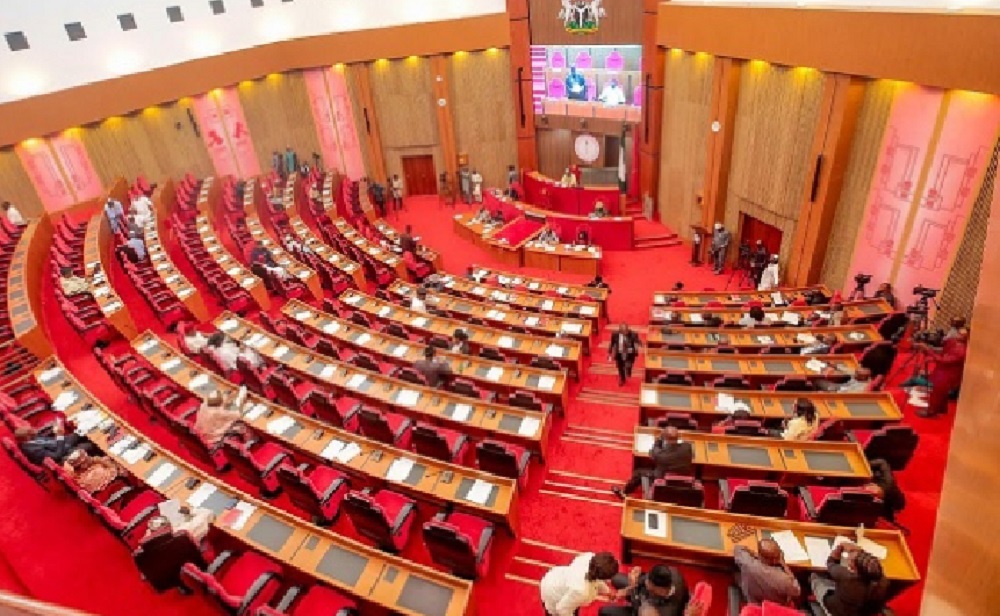
Senators from the 19 northern states and the Federal Capital Territory, under the aegis of the Northern Senators Forum (NSF), have called on the Federal Government and Defence Headquarters to urgently reinforce security presence in the Kopre-Sambisa corridor following reported insurgent attacks in Adamawa State.
The senators also urged the authorities to adopt a unified and proactive strategy to tackle what they described as criminal enclaves in the area.
The call followed attacks which the NSF said occurred between the night of September 30 and October 1, 2026, targeting communities and military outposts in Hong and Gombi Local Government Areas of Adamawa State.
In a statement signed by the Chairman of the forum, Senator Abdulaziz Musa Yar’Adua, APC, Katsina Central, the senators expressed condolences to families who lost loved ones in the attacks.
They specifically mentioned three soldiers of the 232 Battalion in Garaha, a forest guard and civilians among those reportedly killed.
The senators also expressed concern over reports of abductions, destruction of property, burning of places of worship and the displacement of hundreds of residents from communities including Garaha, Dabna, Bangna, Mubang, Zah, Bitirhuya, Kwapre, Mayo Ladde, Gaya-Dlang, Garkida, Boima and Guyaku.
The forum said the reported attacks on the 226 Battalion in Garkida and 232 Battalion in Garaha constituted a serious security concern for Adamawa State and the wider northern region.
The statement said: “The Northern Senators Forum stands in solidarity with the people of Adamawa State. By our collective efforts, you will not be abandoned to terrorists.”
The senators called on the Federal Government and Defence Headquarters to urgently reinforce security presence in the Kopre-Sambisa corridor and adopt a coordinated strategy to address the security situation.
They also urged the National Emergency Management Agency (NEMA), North-East Development Commission (NEDC) and other humanitarian agencies to urgently provide relief materials, medical assistance and trauma support to people displaced by the attacks.
The NSF further called on residents of Hong, Gombi and other parts of the country to remain vigilant and provide security agencies with actionable information.
The senators expressed sympathy to the families of the deceased and prayed for the restoration of peace in Hong, Gombi, Adamawa State and the wider northern region.

FCT police order arrest, prosecution of motorists with concealed number plates

NPFL: Rangers maintain top spot, Rivers United stay unbeaten

Incessant doctors’ strikes expose Makinde’s failure in health sector — APC guber candidate


-
 News14 hours ago
Monarchs in Etche LGA presenting symbolic traditional kola to FCT minister Wike at ongoing interactive meeting with Ogbakor, other stakeholders (Video)
-
 News14 hours ago
Tinubu’s lawyers agree there are errors in U.S. Court filing on 1990s drug probe, demand amendment
-
 News15 hours ago
Madonna Varsity rusticates students, suspends 14 others over viral Gen Z nurses video
-

 News14 hours ago
Watch moment FCT minister Wike arrives Etche in Etche LGA for town hall meeting today (Video)
-
 News14 hours ago
NDLEA intercepts 4.8kg cocaine hidden in shoe soles, travel bags; destroys 20 tonnes of cannabis in Osun, nabs fugitive after six years (Photos)
-
 News13 hours ago
Political Earthquake in Zamfara as Eight APC Lawmakers Quit Party, Reportedly Eye Wike-Backed Rainbow Coalition
You must be logged in to post a comment Login