
Foreign
Heat waves: US propose new regulations to protect workers

- /home/naijuinz/public_html/wp-content/plugins/mvp-social-buttons/mvp-social-buttons.php on line 27
https://naijablitznews.com/wp-content/uploads/2024/07/Screenshot_2024-07-02-11-30-39-158_com.android.chrome-edit-1000x600.jpg&description=Heat waves: US propose new regulations to protect workers', 'pinterestShare', 'width=750,height=350'); return false;" title="Pin This Post">
- Share
- Tweet /home/naijuinz/public_html/wp-content/plugins/mvp-social-buttons/mvp-social-buttons.php on line 72
https://naijablitznews.com/wp-content/uploads/2024/07/Screenshot_2024-07-02-11-30-39-158_com.android.chrome-edit-1000x600.jpg&description=Heat waves: US propose new regulations to protect workers', 'pinterestShare', 'width=750,height=350'); return false;" title="Pin This Post">


By Francesca Hangeior.
The United States President, Joe Biden, has proposed new regulations aimed at protecting labourers working in extremely high temperatures, as heat waves intensified by climate change increasingly blanket the nation.
The rule according to reports would be aimed at mail carriers, delivery people, construction workers, landscapers, restaurant staff and others exposed to consistently high heat indexes, which measures how the temperature actually feels to humans.
The measure — which would affect about 35 million workers, according to the government — would apply to those working both inside or outside who can expect to be exposed to a heat index of 80 degrees Fahrenheit (26 Celsius) or higher.
“The purpose of this rule… is to significantly reduce the number of worker-related deaths, injuries and illnesses suffered by workers who are exposed to excessive heat… simply by doing their jobs,” a senior administration official told reporters.
Under the rule, employers would be required to develop heat injury and illness prevention plans, and appoint a workplace heat safety coordinator.
If the heat index were to hit the 80-degree mark, workers would have to be provided with drinking water and access to break areas in the shade or in air-conditioned spaces.
Measures also would have to be implemented to allow for the “acclimatization” of employees who are either new or returning to work after illness, including more frequent breaks and a reduced workload until employees are back up to speed.
“Three out of four workers who die on the job” due to heat-related illnesses “die in that first week on the job,” the official said.
The rule, if finalized after a period for public debate, would be the first such rule in the United States at the federal level.
If the heat index were to exceed 90 degrees Fahrenheit, all employees would be allowed a 15-minute break every two hours, and managers would be required to monitor their workers for symptoms of heat-related illnesses.
Some workers, such as emergency medical personnel, would not be subject to the new rule.
The announcement, which comes as summer sets in across the United States, is one of a series of measures unveiled Tuesday by the Biden administration concerning extreme heat.
But the new work rule could be scrapped by a new administration should Biden not be reelected in November.








An Egyptian court has sentenced popular television presenter, Sarah Khalifa and 11 others to death over their alleged involvement in the production and trafficking of narcotics.
Khalifa, 39, is a well-known television personality and the presenter of ‘Mission Impossible’, a programme that focuses on security and crime-related issues.
According to the state-linked Al-Ahram newspaper, a Cairo court found Khalifa and the 11 other defendants guilty of forming an organized criminal gang involved in procuring materials used to manufacture narcotics for trafficking.
The defendants were also convicted of possessing and carrying unlicensed firearms and ammunition.
The court reached the death sentence after seeking the religious opinion of Egypt’s Grand Mufti, as required by law in capital punishment cases.
However, the verdict is subject to appeal.
State-run Akhbar Al-Youm newspaper reported that the defendants were accused of producing synthetic drugs for trafficking after allegedly importing the materials needed for their manufacture from outside Egypt.
Authorities reportedly seized more than 750 kilogrammes of narcotics and raw materials during investigations into the case. They also discovered two apartments allegedly being used as drug laboratories, alongside unlicensed firearms and ammunition.
Khalifa, who also owns a plastic surgery clinic and a production company involved in organizing parties and events, was further sentenced to five years in prison with other defendants in a separate case involving the kidnapping and assault of a young man.
Egyptian law allows the death penalty for offences including premeditated murder, terrorism, certain rape cases and drug trafficking. Data from the Egyptian Commission for Rights and Freedoms showed that 541 death sentences were handed down in Egypt in 2025

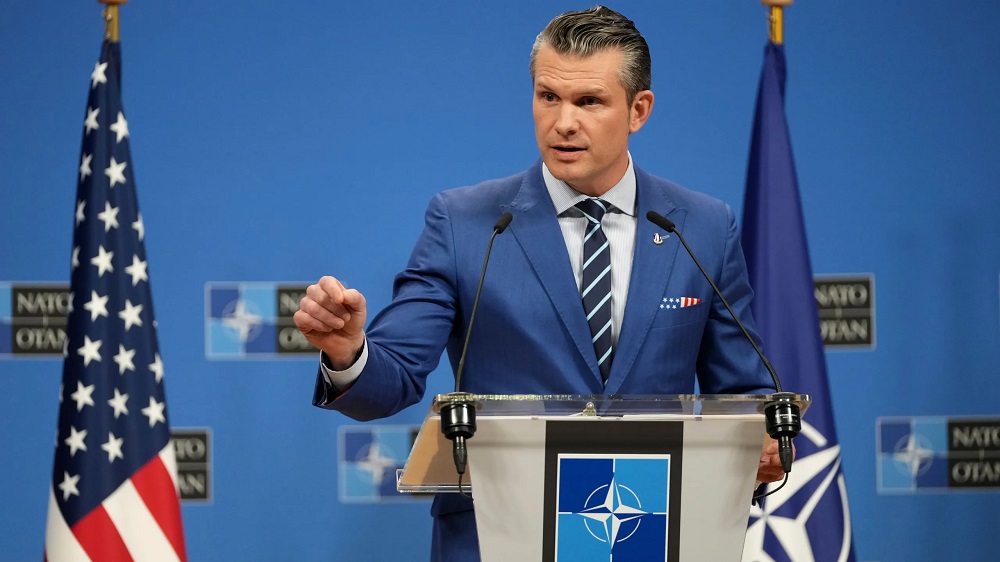
The United States has issued a fresh warning to Iran, threatening to destroy and sink Iranian oil tankers if Tehran launches further attacks against American naval vessels.
U.S. Secretary of War Pete Hegseth issued the warning on Saturday, September 5, 2026, shortly after American forces struck three Iranian oil tankers following what Washington described as ballistic-missile attacks by Iran’s Islamic Revolutionary Guard Corps (IRGC) against two U.S. Navy warships.
Hegseth, in a statement on X, said the United States would respond directly by targeting Iran’s oil fleet if American ships came under fire.
“It’s simple: if Iran shoots at U.S. ships, we will destroy (and sink) their oil tankers,” Hegseth said, adding that Iran only needed to refrain from attacking the U.S. Navy.
He further claimed that Iran’s oil tanker fleet was vulnerable because, according to him, Tehran lacked the naval and air capabilities necessary to protect the vessels.
“Iran’s oil tanker fleet is defenseless — Iran has no navy or air force. Our planes, ships & subs can strike them all,” Hegseth said, referring to areas under the U.S. Central Command and U.S. Indo-Pacific Command.
US strikes three Iranian tankers
The warning came after U.S. Central Command (CENTCOM) confirmed that American forces had struck three Iranian crude oil carriers.
CENTCOM said the action followed missile attacks by the IRGC against a U.S. aircraft carrier and a guided-missile destroyer. According to the command, both American warships successfully evaded the missiles and no U.S. personnel were injured.
The American military identified two of the vessels as M/T Downy, which was struck off Kharg Island, and M/T Stark 1, targeted near Jask.
Both vessels were described by CENTCOM as “permanently disabled.”
A third tanker, M/T Kylo, also known as Noxen, was attacked in the Gulf of Oman. CENTCOM said the crew was warned to abandon the vessel before it was destroyed.
The U.S. military said the tankers were connected to what it described as a multibillion-dollar “shadow network” allegedly used to finance Iran’s Revolutionary Guard and its regional allies.
US threatens wider action
The commander of U.S. Central Command, Admiral Brad Cooper, also warned that Washington would impose an even greater economic cost on Tehran if Iranian forces continued attacking American vessels.
“If you shoot at two of our ships, we will impose an even higher economic cost — taking out three of yours,” Cooper said.
He added that the United States would not hesitate to defend its forces and, if necessary, destroy Iran’s “limited and exposed oil fleet.”
The latest threats signal a potentially significant expansion of the maritime confrontation between Washington and Tehran, with Iranian oil shipments increasingly becoming a direct target of U.S. military pressure.
Iran condemns attacks
Iran has condemned the American strikes on its oil tankers, describing the attacks as illegal and warning that Washington and its allies would bear responsibility for the consequences of continued attacks.
Iranian authorities have also warned that further attacks on Iranian vessels could trigger retaliation against American interests in the region.
The escalation is particularly significant because it is unfolding around the Strait of Hormuz, one of the world’s most important energy shipping routes.
The waterway connects the Persian Gulf with the Gulf of Oman and is a critical route for global oil supplies. Continued attacks on commercial vessels could therefore have wider implications for international energy markets and global shipping.
With the United States now openly threatening to target Iran’s oil fleet in response to attacks on its Navy, the latest confrontation could mark a new and more dangerous phase in the ongoing U.S.-Iran conflict.
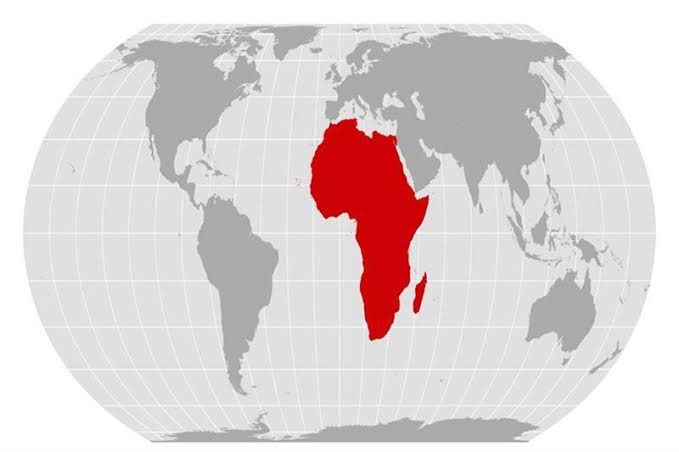
The United Nations General Assembly has overwhelmingly backed a Togo-led resolution calling for a more accurate representation of the world’s continents, particularly Africa, on global maps.
The resolution, “Correct the Map: Rebalancing Global Cartographic Representation and Promoting Equitable Representation of the World’s Regions, Particularly Africa,” was adopted on Friday, September 4, with 164 countries voting in favour, six abstaining and only the United States voting against.
The initiative promotes the gradual adoption of the Equal Earth projection, which represents the relative areas of continents more accurately than the centuries-old Mercator projection. The Mercator map, developed in 1569 primarily for navigation, significantly enlarges landmasses closer to the poles while making equatorial regions such as Africa appear disproportionately smaller.
Togo, which spearheaded the initiative with African Union backing, argued that maps are not merely geographical tools but also shape how societies perceive the world and their place in it.
The resolution is not legally binding and does not ban the Mercator projection, which remains useful for maritime navigation. Instead, it encourages governments, educational institutions and other users to consider more geographically accurate alternatives.
The vote also exposed differing political interpretations of the initiative. The United States was the sole country to oppose the resolution, arguing that the United Nations should concentrate on more pressing global challenges rather than what Washington characterised as an ideological agenda.
The measure nonetheless represents a significant diplomatic victory for African countries seeking to challenge longstanding distortions in the way the continent is visually represented on commonly used world maps.
Africa has not changed its size. The map is finally being asked to show it.

Drug trafficking: Court sentences popular tv presenter, 11 others to death

Ex-IG Adamu emerges SDP Nasarawa gov candidate

Traders Raise Alarm Over Circulation Of Counterfeit In Borno




-

 News20 hours ago
‘Provide Evidence El-Rufai Paid Bandits To Kill Kaduna People’ – Ex-Gen Queries Defence Minister
-

 News22 hours ago
Court of Appeal Upholds Order Against Mark-Led ADC Congresses, Declares Exercises Null and Void
-

 News21 hours ago
Two Policemen fired over death of UNIPORT graduate in Port Harcourt
-

 News21 hours ago
Stop empowering Nigerians with okada, Defense minister tells govs
-

 Sports19 hours ago
Sad! Military jet crashes during airshow
-

 News22 hours ago
Popular Journalist, Gloria Steinem Dies At 92
-

 Sports21 hours ago
Williams sisters lose in thrilling return to US Open doubles
-
 News21 hours ago
15 minors sold for N2m each rescued by NSCDC men
Warning: Undefined variable $user_ID in /home/naijuinz/public_html/wp-content/themes/zox-news/comments.php on line 49
You must be logged in to post a comment Login