Economy
NNPC Stake In Dangote Refinery Now 7.2% – Dangote

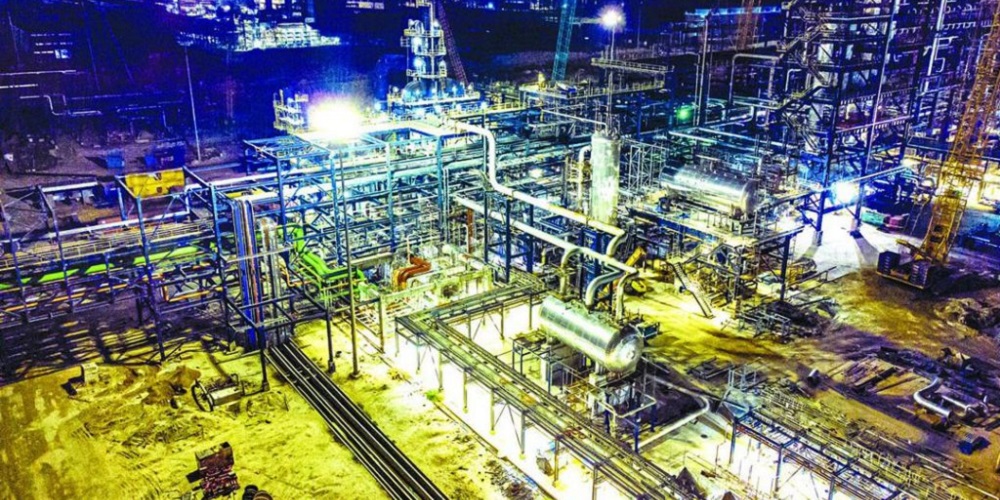


Africa’s richest man Aliko Dangote says the Nigerian National Petroleum Company (NNPC) Limited now owns a 7.2% stake in the Dangote Petroleum Refinery, and not a 20% stake as initially announced before the inauguration of the facility at the Lekki Free Trade Zone.
Dangote, who made this known at a press briefing on Sunday, said NNPC’s stake dropped to 7.2% over the company’s failure to pay the balance of their share, which was due in June. The NNPC had acquired a 20 per cent interest in the $20bn Dangote refinery for $2.76 billion.
“NNPC no longer owns a 20 per cent stake in the Dangote refinery. They were met to pay their balance in June, but have yet to fulfil the obligations. Now, they only own a 7.2% stake in the refinery,” Dangote said.
The NNPC confirmed the development in a statement late Sunday. “NNPC Limited periodically assesses its investment portfolio to ensure alignment with the company’s strategic goals,” said a spokesman for the company.
“The decision to cap its equity participation at the paid-up sum was made and communicated to Dangote Refinery several months ago,” said Olufemi Soneye.
Nigeria, Africa’s most populous nation, faces energy challenges, with all its state-owned refineries non-operational. The country is heavily reliant on imported refined petroleum products, with the state-run NNPC being the major importer of the essential commodities.
Fuel queues are a commonplace in the country. Prices of petrol tripled since the removal of subsidy in May 2023, compounding the woes of the citizens who power their vehicles, and generating sets with petrol, no thanks to decades-long epileptic electricity supply.
Last December, Dangote, one of Africa’s leading industrialists, commenced operations at his $20bn facility sited in Lagos with 350,000 barrels a day. The refinery hopes to achieve its full capacity of 650,000 barrels per day by the end of the year. The refinery has begun the supply of diesel and aviation fuel to marketers in the country while petrol supply is expected to commence in August.
Dangote had expressed frustration about getting Nigerian crude for his facility. A Bloomberg report had it that the Lagos-based refinery bought about 24 million barrels of crude from the United States.
The NNPC had reportedly pledged Nigerian crude in a $3.3 billion oil-for-loan Afreximbank deal, hampering its local crude supply. Nigeria’s crude oil production rose to 1.276 million barrels per day (bpd) in June, way lesser than the 1.7 million bpd benchmark in the 2024 Budget.
The Minister of State for Petroleum Resources (Oil), Heineken Lokpobiri, had in May said the decision by the Lagos-based refinery to import US crude could be based on its business model.
But Dangote disclosed on Sunday that his refinery would roll out petrol from August 2024, having resolved its crude oil supply issues with the NNPC and the Federal Government.
Nigeria’s total public debt stock has risen to N166.79 trillion as of June 30, 2026, up from N159.35 trillion recorded as of March 31, 2026, according to the Debt Management Office (DMO).
The latest figures showed that domestic debt accounted for N91.59 trillion, representing 54.91% of the country’s total debt portfolio, while the total debt stood at $120.93 billion in US dollar terms.
The dollar-denominated figure comprises $54.52 billion in external debt and $66.41 billion in domestic debt. The DMO said it converted the external debt stock using the Central Bank of Nigeria’s official exchange rate of N1,379.1842/$ as of June 30, 2026.
The Federal Government remains the dominant borrower, accounting for about N152.77 trillion of the total debt, while states and the Federal Capital Territory accounted for approximately N14.01 trillion.
According to the DMO, the Federal Government’s external debt stood at N65.77 trillion, representing 39.44% of the total public debt, while states and the FCT accounted for N9.42 trillion, or 5.65%.
On the domestic side, the FGN owed N87 trillion, representing 52.16% of the total debt, while states and the FCT accounted for N4.59 trillion, or 2.75%.
FGN bonds remained the largest component of the Federal Government’s domestic debt, with an outstanding value of N64.84 trillion, representing 74.53% of its domestic debt.
The latest figures also showed that Nigerian Treasury Bills stood at N19.48 trillion, while FGN Sukuk amounted to N1.19 trillion and savings bonds stood at N122.45 billion.
The DMO data further showed that Nigeria’s public debt has increased significantly from N87.38 trillion recorded as of June 30, 2023, shortly after President Bola Tinubu assumed office.
External debt rose from $42.49 billion in December 2023 to $51.86 billion by December 2025, while domestic debt increased from N59.1 trillion to N89.4 trillion within the same period.


The Nigerian naira recorded a marginal movement against the United States dollar at the official foreign exchange market on Thursday, September 24, 2026.
Data from the Central Bank of Nigeria (CBN) showed that the naira closed at ₦1,328.6687 to $1 on Thursday, compared with ₦1,328.4974/$1 recorded on Wednesday.
The latest figure represents a marginal depreciation of about ₦0.17, or roughly 0.01 per cent, against the dollar at the official market.
At the parallel market, commonly referred to as the black market, the naira closed at approximately ₦1,385 to $1 on Thursday.
This means the parallel-market rate was about ₦56.33 higher than the official CBN reference rate.
However, exchange rates offered by commercial banks, Bureau de Change (BDC) operators and other foreign exchange dealers may vary from the reference rates due to transaction margins, market conditions and prevailing demand and supply.
Market participants are expected to continue monitoring foreign exchange inflows, dollar demand and monetary policy developments for indications of the naira’s direction in the coming days.
The Nigerian naira is trading at different rates against the United States dollar across the official Nigerian Foreign Exchange Market (NFEM) and the parallel market on Wednesday, September 23, 2026.
The latest available data show that the naira strengthened to N1,327.78 per dollar at the NFEM on Tuesday, from N1,329.80 recorded on Monday.
The latest movement represents a N2.02 appreciation by the naira against the dollar on a day-to-day basis.
In the parallel market, the dollar was quoted at about N1,389 on Tuesday, down from N1,390 recorded the previous day.
The parallel-market rate puts the gap between the official NFEM rate and the street-market selling rate at about N61.22 per dollar.
At the parallel market rate of N1,389, customers buying $100 would need approximately N138,900, while $1,000 would cost about N1.389 million.
The exchange rate available to individuals and businesses may vary depending on the dealer, location, transaction size and prevailing market conditions.
The naira’s recent performance has come amid developments in Nigeria’s foreign exchange market, including changes in dollar liquidity and monetary policy.
The Central Bank of Nigeria has continued to monitor conditions in the foreign exchange market as the naira trades around the N1,300-per-dollar level at the official market. Reuters also reported in September that the naira had remained relatively stable, supported by central bank dollar sales and subdued import demand.
For Wednesday, September 23, the latest confirmed figures put the dollar at N1,327.78 at the NFEM and around N1,389 in the parallel market.
The rates could change during the day as demand and supply conditions shift across both markets.

10m beneficiaries of cash transfers don’t have phones, not on social media – APC Chairman

‘I’m like three women’ — Ivie Atuwatse rules out polygamy for Olu of Warri

My ex-husband always wanted threesome – US-based Nurse Sugar alleges



-

 News16 hours ago
Tinubu’s tough decisions are already yielding fruits, Yari will deliver on assignment -TSTA
-
 Politics17 hours ago
Before dreaming of Aso Villa, APM should first find its feet-Ali Campaign Organization
-

 News17 hours ago
PDP group slams Zamfara Governor for attacking Wike, hails FCT Minister’s nationalistic position
-

 News16 hours ago
EFCC nabs City Boy Movement woman leader
-

 News16 hours ago
SAD: Pastor Chris Oyakhilome’s mother is dead
-

 News11 hours ago
House of Assembly Candidate, Sanni Urges Unity Among Ekiti ADC Members
You must be logged in to post a comment Login