Foreign
Biden campaign kicks as Trump names J.D. Vance as his running mate
- /home/naijuinz/public_html/wp-content/plugins/mvp-social-buttons/mvp-social-buttons.php on line 27
https://naijablitznews.com/wp-content/uploads/2024/07/J.D.-Vance.jpg&description=Biden campaign kicks as Trump names J.D. Vance as his running mate', 'pinterestShare', 'width=750,height=350'); return false;" title="Pin This Post">
- Share
- Tweet /home/naijuinz/public_html/wp-content/plugins/mvp-social-buttons/mvp-social-buttons.php on line 72
https://naijablitznews.com/wp-content/uploads/2024/07/J.D.-Vance.jpg&description=Biden campaign kicks as Trump names J.D. Vance as his running mate', 'pinterestShare', 'width=750,height=350'); return false;" title="Pin This Post">
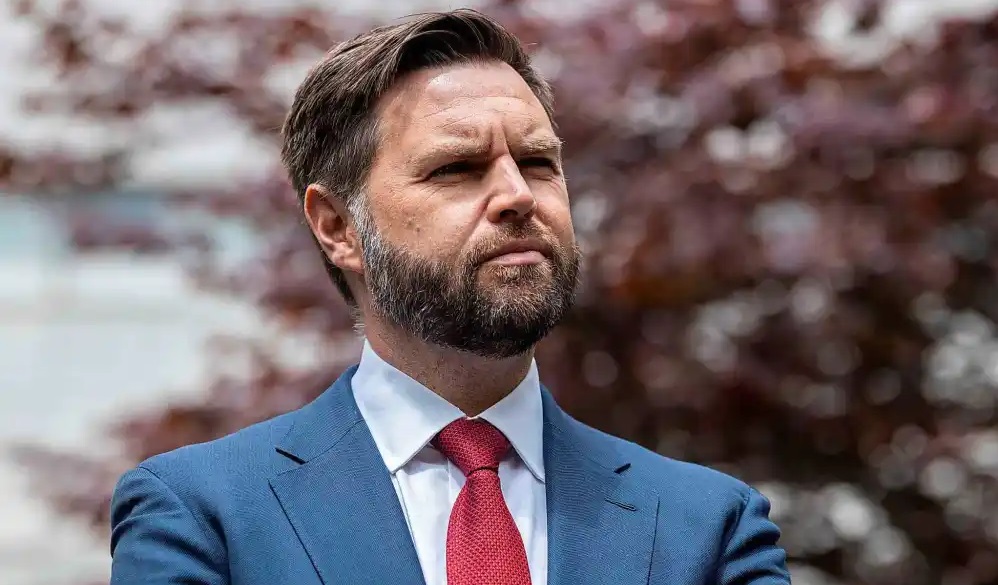
Donald Trump, on Monday, announced Republican Senator J.D. Vance of Ohio as his running mate in the 2024 presidential election.

This is as the former president received enough convention delegate votes to become the Republican presidential nominee.
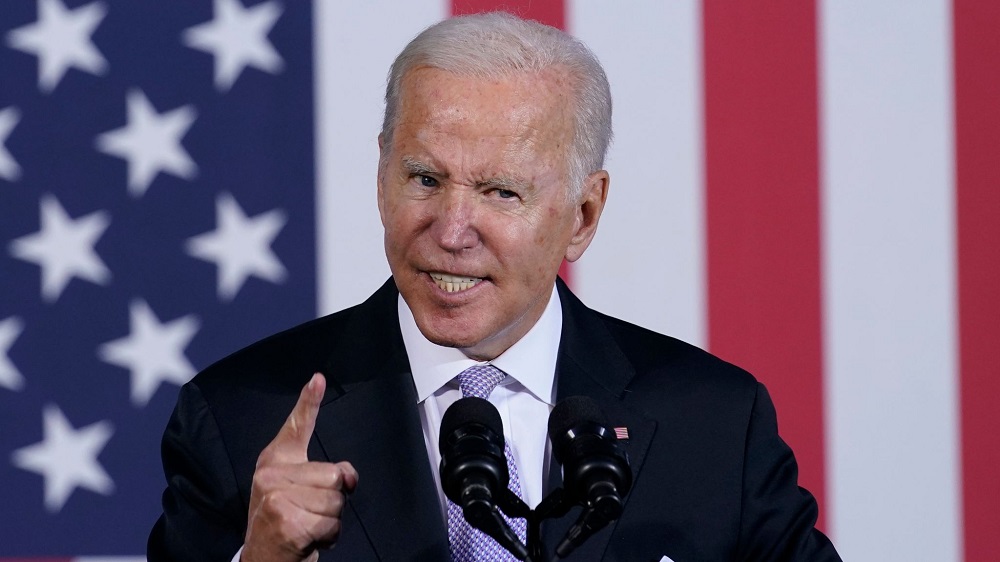
But the Joe Biden campaign promptly dismissed Vance as a “far-right MAGA extremist.”

In a post on Truth Social, Trump wrote that “after lengthy deliberation and thought, and considering the tremendous talents of many others, I have decided that the person best suited to assume the position of Vice President of the United States is Senator J.D. Vance of the Great State of Ohio.”
Vance, a 39-year-old who grew up in Kentucky and Ohio, rose to prominence in 2016 with his bestselling memoir Hillbilly Elegy. He has served as Ohio’s junior U.S. senator since 2023.
Over recent weeks, Trump was reported to have narrowed his list of possible running mates to include Vance, Sen. Marco Rubio of Florida and North Dakota Gov. Doug Burgum.
The Republican National Convention, which got underway on Monday, is scheduled to run through Thursday.
Trump’s appearances at the Fiserv Forum arena will mark his first public events since he was rushed off the stage in Butler, Pa., after what authorities described as an attempt on his life.
In the wake of the attack over the weekend, security at the RNC has been scrutinized. The director of the Secret Service said on Monday that security plans have been “reviewed and strengthened in the wake of Saturday’s shooting.”
What happens to J.D. Vance’s Senate seat if Trump wins?
If J.D. Vance is elected vice president, Ohio Gov. Mike DeWine, a Republican, would get to select a replacement in the U.S. Senate.
That replacement would hold the seat until a special election in November 2026 to fill the Senate seat until the end of the term, which is 2028.
Vance was elected to the Senate in 2022 and took office in 2023.
After Vance was announced as Trump’s VP pick on Monday, DeWine told CNN: “It’s a great day for Ohio.”
Who is Usha Vance, wife of Trump’s vice presidential nominee J.D. Vance?
Hours after being named as Trump’s running mate on Monday, Sen. J.D. Vance of Ohio took the floor at the Republican National Convention, hand in hand with his wife, Usha Chilukuri Vance.
Usha Vance is the daughter of Indian immigrants and grew up in a suburb of San Diego, according to the New York Times. She earned a bachelor’s degree in history from Yale and also has a master’s degree in philosophy from the University of Cambridge.
Usha reportedly met J.D. in 2013, when they were both students at Yale Law School. There the couple organized a discussion group about social decline in rural white America, a topic that would become the focus of Vance’s memoir “Hillbilly Elegy,” which was adapted into a film of the same title in 2020.
The couple has been married since 2014 and have three children. Until 2014, Usha was a registered Democrat, according to the Times.
From 2015 to 2017, Usha worked at California law firm Munger, Tolles & Olson, then left to complete a number of clerkships, including for Supreme Court Chief Justice John Roberts.
In 2019, she returned to Munger, Tolles & Olson, where she worked up until Monday’s announcement. A spokesperson for the firm told Bloomberg Law that Vance will step down from her position there.
Biden camp slams Trump’s running mate as extremist
Meanwhile, US President Joe Biden’s campaign on Monday dismissed Donald Trump’s newly-unveiled running mate J.D. Vance as a “far-right MAGA extremist.”
“Vance is a 2020 election denier, supports a national abortion ban, and voted against IVF access,” Biden’s team said.
The president said Vance “talks a big game about working people. But now, he and Trump want to raise taxes on middle-class families while pushing more tax cuts for the rich.”
Foreign
Seven PMs In 10 Years: Britain’s Decade Of ‘Change’
Britain will have its seventh prime minister in 10 years after Labour leader Keir Starmer was ousted on Monday by his own party.
The party’s self-inflicted wound was a trend set by the Conservatives when they were in office.
Starmer announced his resignation on Monday following months of nose-diving poll ratings and manoeuvring by his own MPs.

Veteran Labour politician Andy Burnham has confirmed he will seek to replace him.
The main opposition Tories went through five prime ministers between 2016 and July 2024 when Starmer swept to power in a landslide general election victory.
The rapid turnover at the top prompted Starmer — before he became prime minister — to call for an end to the “chaos” of chopping and changing leaders.
After less than two years, Starmer has now met a similar fate himself.
Here’s what happened to his predecessors:
David Cameron (May 2010 to July 2016)

Britain’s decision to leave the European Union ended Cameron’s second term as prime minister.
After the country voted to leave in a June 2016 referendum, Cameron, who had campaigned to remain in the bloc, resigned.
Theresa May (July 2016 to July 2019)

Tolga AKMEN / AFP
May took over amid the fallout from the Brexit referendum after a long tenure in the notoriously difficult post of interior minister.
She called a snap election the following year to strengthen her hand in Brexit negotiations, but the move backfired when her party emerged as the biggest in parliament but without a majority.
Unable to get her Brexit deal through parliament, the Conservatives suffered a drubbing in European Parliament elections in May 2019, leading to her resignation.
Boris Johnson (July 2019 to September 2022)

Johnson, a maverick politician famed for making a career out of breaking the rules, had to navigate the coronavirus pandemic and Britain’s departure from the European Union.
He led the Conservatives to victory in the December 2019 snap general election.
But weakened by scandals, he was eventually forced to step down following a cascade of resignations by ministers and aides.
Liz Truss (September 2022 to October 2022)

Truss was prime minister for just 49 days, the shortest on record, before being ousted over her disastrous tax-cutting mini-budget.
Her economic agenda spooked the markets and took the UK to the brink of financial meltdown, losing her the support of her own party.
Rishi Sunak (October 2022 to July 2024)

Sunak was at the helm for 20 months before losing the 2024 general election to Starmer, bringing to an end 14 years of Conservative rule.
He brought some stability following the Truss debacle but failed to stop bitter Tory infighting.
The privately wealthy former financier ultimately failed to connect with regular voters struggling with a cost-of-living crisis.
AFP
Foreign
Trump To End HIV Funding For South Africa Over Violence
The US government says it will stop funding programmes in South Africa intended to tackle the spread of HIV and Aids.
More than eight million South Africans are living with HIV – the highest number of any country in the world.
The US State Department appeared to link the decision to South Africa’s alleged failure to protect the white-minority Afrikaner community – an allegation the South African government has repeatedly rejected.
South Africa’s health ministry responded by saying that though it had not been informed of this decision, it had “long been working on a self-reliance plan”.
Until 2025, the US was supporting South Africa’s efforts to deal with the virus with an estimated $400m (£300m) a year through the President’s Emergency Fund for Aids Relief (PEPFAR).
But since the inauguration of President Donald Trump, relations between the two countries have increasingly soured.
Shortly after he came into office, Trump issued an executive order alleging that “countless” South African policies dismantled equal opportunities and fuelled violence “against racially disfavored landowners”.
This is disputed by the South African government, which says its Black Economic Empowerment policy is needed to correct economic inequality dating from the apartheid era.
The executive order also highlighted South Africa’s case against Israel at the International Court of Justice and its links to Iran.
The White House said that given these “unjust and immoral practices”, further aid to South Africa would not be provided.
Trump has also falsely alleged that there is a “white genocide” taking place in South Africa, which has led to the administration setting up a refugee programme for Afrikaners – descendants of Western Europeans who settled in southern Africa in the 17th Century.
They are now just about the only refugees being allowed into the US.
The genocide claim has been widely discredited.
Pepfar funding, which had been providing about a fifth of South Africa’s total spending on HIV programmes, got a reprieve last October with what was called a “bridge plan”.
But a US State Department official has confirmed that a “phased drawdown” of Pepfar funding would now start.
This was because of “South Africa’s failure to make demonstrable progress on policy requests by the administration”, the official said.
The US government intended to “foster self-reliance” and reduce dependency on American funding, they added, pointing out that “South Africa is a middle-income country and is more than capable of supporting its own health programs”.
South Africa’s health ministry has said that while Pepfar contributed to the country’s HIV programme, the provision of life-saving antiretroviral drugs was funded entirely separately, with most coming from the government.
Attempts to mend US-South Africa relations have floundered. These include a high-profile White House meeting between Trump and South African President Cyril Ramaphosa just over a year ago, when the US president confronted his counterpart with his claims of white persecution.
The US also boycotted the G20 meeting, a gathering of the world’s major economies, hosted by South Africa last November.
Foreign
Israel, Hezbollah Agree Ceasefire As US-Iran Deal Under Strain
Israel and Hezbollah agreed a ceasefire on Friday, a US official said, after deadly exchanges between the two sides in Lebanon put a deal to end the Middle East war under strain, less than two days after it was signed.
Talks that were scheduled to take place between the US and Iran in Switzerland on Friday to build on the deal and work towards a lasting settlement were postponed amid the fighting, with no new date announced.
Tehran’s top negotiator warned it would not bend on its red lines and that its finger was still “on the trigger”, even as shipping appeared to pick up in the Strait of Hormuz, which had essentially been closed during the war.
The deal signed this week by President Donald Trump and his Iranian counterpart Masoud Pezeshkian aims to end a war that began on February 28 with US-Israeli strikes that killed supreme leader Ayatollah Ali Khamenei.
The agreement was also meant to halt the fighting in Lebanon, which Iran has always insisted should be covered under any accord, turning Israel’s ongoing campaign there into a source of frustration for Washington.
Israel’s military said Friday that it had struck more than 80 Hezbollah targets in Lebanon and killed dozens of members of the Iran-backed group.
‘Permanent war’
Lebanon said 47 people were killed and 97 others wounded in Israeli strikes on Lebanon Friday. Israel’s military reported four troops were killed.
But a US official told AFP a truce between Israel and Hezbollah, beginning immediately, had been brokered by US and Qatari mediators following talks with Israel and Iran. A Gulf diplomat confirmed the ceasefire.
Yet even after the truce was announced, Lebanese state media reported an Israeli airstrike on the country’s south in the Jezzine region.
A previous truce nominally agreed in April did nothing to stop attacks by either side, and Prime Minister Benjamin Netanyahu had said just hours earlier that the Israeli army would stay in Lebanon “as long as necessary” and would make Iran-backed Hezbollah pay a “heavy price” for its attacks.
Far-right Israeli National Security Minister Itamar Ben Gvir went even further, saying after the soldiers’ deaths that “all of Lebanon must burn”.
Iran’s Foreign Minister Abbas Araghchi accused Israel of only being interested in “permanent war”.
‘No urgency’
Preparations had been made to host Iranian and US delegations led by Tehran’s top negotiator Mohammad Bagher Ghalibaf and US Vice President JD Vance at the Swiss resort of Burgenstock, overlooking Lake Lucerne.
The talks were due to kick off a two-month period of negotiations to discuss outstanding issues not covered by the initial deal, notably Iran’s nuclear programme.
Switzerland’s foreign ministry confirmed the discussions had been postponed but said it “remains ready to facilitate these talks”.
Quoting diplomats, the Financial Times said Israel’s strikes on Lebanon had led to the postponement but there was no immediate confirmation.
Iranian foreign ministry spokesman, Esmaeil Baqaei, said there was “no urgency to hold the meeting” but that it was planned “in the coming days”
‘Crushing response’
Ghalibaf said on Friday that talks with the United States would remain bound by Tehran’s “red lines”.
“If the enemy seeks to be excessive, we have proven that our fingers are on the trigger and we have no hesitation in giving a crushing response to the enemy,” he said, in remarks published by the official IRNA news agency.
Vance, meanwhile, has expressed a degree of exasperation with the Israeli government rare for a top US official, telling the New York Times “you can’t just kill your way out of solving every single national security problem that you have”.
A key aspect of the deal was the immediate re-opening of the Strait of Hormuz, the key shipping bottleneck whose closure caused global energy prices to rise.
A total of 25 commercial vessels crossed the newly-reopened strait on Thursday, the highest number since mid-April, according to data from maritime tracking firm AXSMarine published on Friday.
American forces on Thursday lifted their parallel naval blockade of Iranian ports, the US military said, noting that American warships “will remain in the general area”.
Iran’s maritime authority said on Friday that all ships seeking to cross the Strait of Hormuz should submit a transit request “48 hours in advance”, despite its reopening.
AFP
-
News24 hours agoNigeria-Côte d’Ivoire Reaffirm Strong Ties as Ambassador Nwaobiala Presents Credentials
-
News22 hours agoDAY 9 of Projects Commissioning in the FCT: Watch moment Wike arrives Karu(Video)
-
Sports21 hours agoEgypt’s historic World Cup win over New Zealand, will be remembered for a long time-Sallah
-
News10 hours agoWait for 2027, Presidency Tells Peter Obi Amid Calls for Tinubu’s Resignation
-
News21 hours agoSAD! Lassa Fever Kills 214, Fatality Rate Rises To 25% — NCDC
-
News21 hours agoPlateau boils again, 25 feared dead as bandits invade community
-
News21 hours agoSouth Africa deploy security personnel nationwide ahead of anti-migrant deadline
-
News10 hours agoEl-Rufai confessed to wiretapping NSA’s phone on TV interview- witness

Warning: Undefined variable $user_ID in /home/naijuinz/public_html/wp-content/themes/zox-news/comments.php on line 49
You must be logged in to post a comment Login