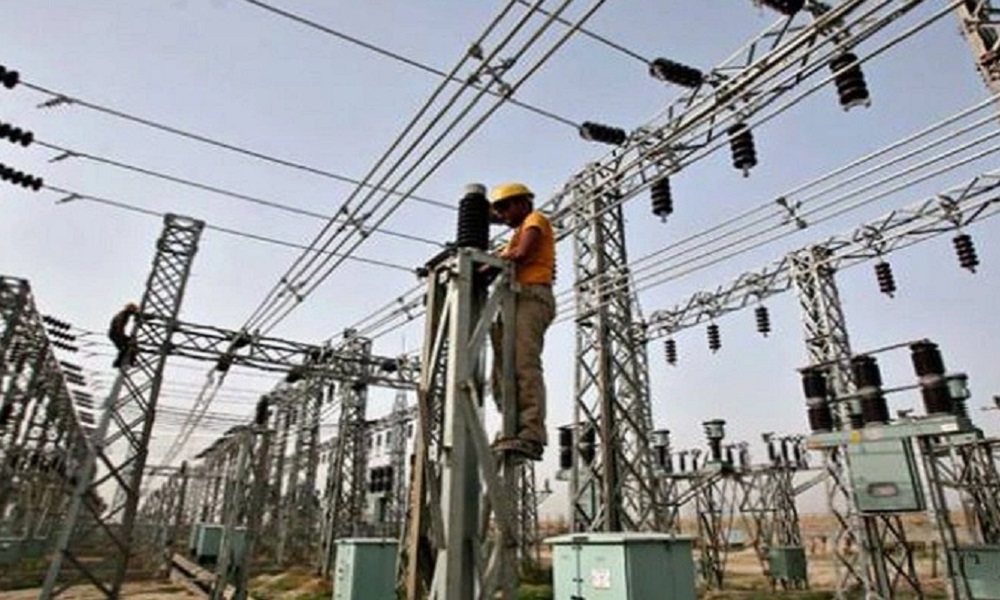
Nigeria’s weak electricity grid system collapsed again yesterday barely 24 hours after a committee set up by the Federal Government to end the national power grid incessant collapses submitted its report.


The collapse, the second time this week and the 10th in 2024 left the country without public power supply with power generation and distribution companies taking huge financial hits and customers expressing frustrations.
Meanwhile, power sector stakeholders have warned that the incessant national grid collapse may persist, except urgent steps are taken to address the several challenges bedevilling the power sector. 
These factors they said include obsolete equipment, inadequate gas supply, improper coordination of plants and gas pipelines, lack of operating/spinning reserve and voltage support scheme, lack of reliable Supervisory Control and Data Acquisition, SCADA, vandalism, tripping of critical infrastructure lines, lack of reliable communication facility, lack of visibility on the DISCOs network and corruption.
Latest grid collapse
Data from the National System Operator showed that the grid, which had been recovering from the collapse that occurred October 6th, had peaked at 4,360.8MW on Wednesday with lowest generation at 1,454.64MW. The NSO data indicated that the grid supplied 2,709.45MW as of 11am yesterday but dropped dramatically to 4.5MW at 12pm with only Afam VI (3.7MW) and Omoku (0.8MW) power plants on the grid.
It, however, began a gradual recovery at 1pm reaching 104.8MW with Azura IPP (91MW) back on the grid.
In an update on the latest power supply setback, the Transmission Company of Nigeria, TCN, attributed it to “a sudden rise in frequency from 50.33Hz to 51.44Hz”.
TCN General Manager, Public Affairs, Ndidi Mbah said recovery efforts were ongoing to restore the grid.
“TCN wishes to inform the public that the national grid experienced a disturbance at approximately 11:29 AM this morning, caused by a sudden rise in frequency from 50.33Hz to 51.44Hz. Recovery efforts began immediately, and the Abuja Axis was restored within 28 minutes. Recovery is still ongoing.
“The frequency spike was caused by issues encountered at one of TCN’s substations, which had to be shut down to prevent further complications. In addition to this, we are actively engaged in significant repair work on several critical transmission lines and substations. This includes the 330kV transmission lines along the Shiroro–Mando axis, major upgrades at the Jebba Transmission Substation, and the restoration of the second Ugwuaji–Apir 330kV transmission line.
“Furthermore, following the submission of the investigative report on the causes of previous grid collapses, we have begun addressing the identified weaknesses in the transmission system. Efforts are being made to close the gaps highlighted in the report, and to enhance the overall stability and resilience of the grid. These efforts include both technical upgrades and strategic interventions based on the committee’s recommendations.
“However, it is important to note that while these repairs and improvements are underway, some degree of instability in the system is likely to persist until all major works are completed. We acknowledge the impact of these disruptions and ask for the understanding and patience of the public during this challenging period.
“TCN remains committed to improving the reliability of electricity supply, recognizing the vital role that stable power plays in Nigeria’s socio-economic development. We assure the public that all necessary measures are being taken to ensure the grid’s long-term stability, in line with the recommendations of the investigative committee, while also addressing infrastructure damage such as vandalized transmission lines”, she stated.
Also confirming the latest grid collapse, several electricity distribution companies, including Ikeja Electric and Eko DISCOs, in separate circulars, apologised to their customers for the disruption caused by the incident.
According to a circular to its customers, Ikeja Electric stated: “Dear Esteemed Customer. Please be informed that we experienced a system outage today 07 November 2024 at 11:29Hrs affecting supply within our network.
“Restoration of supply is ongoing in collaboration with our critical stakeholders. Kindly bear with us. Signed: Management.”
Similarly, Eko DISCO said: “Dear Valued Customer. Kindly be informed that at precisely 11.29 hours of today, 7th November 2024, we experienced the simultaneous loss of supply across our network.
“A potential system failure or collapse is suspected. We are currently working with our partners as we hope for speedy grid restoration.”
Also, Jos Electricity Distribution Company (Jos Disco) in a statement obtained from its verified Facebook page, confirmed the current power outage and attributed it to the loss of power supply from the national grid.
“The loss of power supply from the national grid occurred this morning at about 11:28 hours of today, Thursday, 7th November 2024, hence the loss of power supply on all our feeders.”
“We hope to restore normal power supply to our esteemed customers as soon as the grid supply is restored to normalcy.”
Speaking to Vanguard, a top official in one of the leading power generation companies lamented that GENCOS have incurred huge losses since frequent collapses began last month.
The official, who did not wish to be named for fear of victimisation said: “If you know how much we have lost commercially you won’t be asking that question and that is not counting the damages done to our machines by the frequent shutdowns.
“Who will pay for the damages? TCN? FG that owes us so much? NERC? NBET? I can tell you that the industry is in a precarious situation and it would collapse if nothing is done urgently to arrest these failures”, the source stated.
To date, the grid has collapsed ten times this year, with multiple failures occurring in a single month.
Meanwhile, the latest grid collapse occurred barely 24 hours after a committee set up by the federal government to investigate the recent grid collapse submitted its report.
The committee, headed by the Executive Director of System Operations at the TCN, Engr. Nafisatu Asabe Ali, had identified a poor maintenance culture and inadequate and aged equipment, among other challenges, as underlying reasons for the continuous multiple collapses of the national power grid witnessed in recent months.
But operators have called for more investment in the infrastructure of Transmission Company, TCN and Distribution Companies, DISCOs, to end the ongoing grid collapses
Speaking on the issue of incessant grid collapses, the President, Chartered Institute of Power Engineers of Nigeria, CIPEN, Engr. Israel Abraham, blamed politics involved in taking decisions on where to site grid infrastructure as well as poor maintenance culture for the current grid challenges.
Engr. Abraham noted that significant investment was needed to replace the old lines and networks before the grid would stabilize.
“The grid is a connection from generation to transmission to distribution and up to the consumer where you are. It involves all the wires and networks. It is the connection of interconnections of all these equipment and accessories. Most of these equipment are aged and they need to be replaced. You need to reconduct the lines because they have been there for decades.
“To reconduct the lines means you have to remove the old ones and put in new ones or you upgrade it from maybe a lower capacity to a higher one. These things are necessary because as the population grows, you have more people taking power in certain areas and you need to reconduct or you need to upgrade such facilities”.
He pointed out that the location of most substations across the country were not driven by expert decisions but politically made with equipment sited at locations where they are not needed causing imbalance in the system
“If you now have a situation whereby you are not in control to do what you need to do, I go back to that same word again of patronage, you find that you just do what you are asked to do. And if you do what you are asked to do, then you will have what you should have.
“But if we can actually take charge completely and you have professionals deciding what to do, then some of these things will gradually fade out because we will be able to make professional decisions. For instance, in this very environment where we are right now, maybe they need a transformer that is just maybe 500 kVA.
“But if the owner of this place is politically savvy, he can force the government or pass through some politicians and they will bring it in as a constituency project and put maybe a one-megawatt transformer. Now, what happens is the rest is wasted and it also hurts the grid system”.
He urged the Federal Government to summon the political will and ensure that the right things are done in the sector, and also permanently end the culture of political patronage in the execution of projects in the power sector.
SCADA is a system used for controlling, monitoring, analyzing and stabilizing power supply
Vanguard gathered that these and other issues would not be eliminated soon because of many reasons, especially the huge costs and time required to put appropriate systems in place.
It was also gathered that even if adequate funds were available, the government would still need much time to negotiate and place orders to enable foreign manufacturers to produce and ship them to Nigeria, meaning that the frequent system collapse would persist for a long time.
Practical approach in solving grid collapse –PowerUp Nigeria
Speaking to Vanguard on the development, Executive Director, PowerUp Nigeria, Adetayo Adegbemle, said: “Many factors culminate in system collapse but these are very negatively impacting. It should be noted that system collapse occurs as a result of frequency variation when the pull from consumer ends is sharply different from what generation can supply.
“A system collapse is like what happens when you put on your generator in the house, but the load in the house surpasses the capacity that your generator can supply. The system collapse affects the Electricity Generation Companies, GENCOs, as it causes damage to the generating plants.
“It also affects the economy because all economic activities that depend on electricity are shut down or disrupted until the grid is restored, thereby causing losses, both financially and damages to electrical systems. Some manufacturing equipment will not function until there is frequency balance on the grid.
“There are systems that are supposed to be installed to maintain the grid, and used for grid system planning. The SCADA system is meant to help balance the grid and plan for such occurrences, but unfortunately, we have spent so much funds and time getting this system installed, we are still not sure when this will be completed by the Transmission Company of Nigeria.
“Experts have also been harping on the need to have a spinning reserve to mitigate against such grid collapses. The Spinning Reserve is meant to serve as a buffer in cases of frequency imbalance
“The power sector should look at pooling resources to complete the installation of the SCADA system and procure a spinning reserve to forestall future occurrences.”
Adegbemle accused the Transmission Company of Nigeria, TCN, of many of Nigeria’s system collapses, stressing, “It is also my belief that management of the grid system, in this case, the TCN, should be made responsible for future occurrences. That is why we have engineers and experts leading these key infrastructure in the country.”
Gencos advocate more practical approach
Meanwhile, Chief Executive Officer of Association of Power Generating Companies, APGC, Dr. Joy Ogaji, has called for a more practical approach in solving the crisis.
Speaking at the public hearing on incessant grid collapses, organized by the Nigerian Electricity Regulatory Commission (NERC), Ogaji, calls for proactive measures in addressing the problems causing the collapse.
She said, “So, while I am not saying that spinning reserve is a solution, I believe that putting a spinning reserve and the free governor mode side by side can cure the volatility on the grid, because research shows that about hundreds of steel mills operate on our grid, and we know what steel mills does to frequency.”
She further said the association did a study and found out that 95 percent of the time, from 2013 till date, the grid has not been in compliance with the grid code requirement of 50 hertz.
“It has always been out of frequency requirement of the grid.”
Grid collapse embarrassing – DISCOs
Similarly, the DISCOs had described the frequent grid collapses as embarrassing, saying that it has dented their reputation.
Speaking for the DISCOs, Umar Sanni Bello, representative of the Jos Electricity Distribution Company (JEDC), said the development had made some of its big customers, like manufacturers, threaten to leave the company.
“Right now we have continued to manage these threats, but with these constant outrages, it is more difficult. We are likely to lose both big and regular customers to other spaces if this continues. “
Decentralize grid – Iledare, Yusuf
In the views of Prof. Wumi Iledare, a Professor Emeritus in Petroleum Economics and Policy Research, there is a need to decentralize the national grid to attain efficiency.
“The grids are incapable of transmitting the electrons fed into it. They are old infrastructure. Here lies the need to decentralise the electrical power system governance and management.”
For Chief Executive Officer of the Centre for the Promotion of Private Enterprise, CPPE, Dr. Muda Yusuf, the frequency of the grid collapse is becoming very embarrassing.
“There is a need to do something urgently about it and it should be treated as an emergency and in fairness, I am aware the minister of power has taken some steps setting committees to look into it.
“From my view, there are so many several reasons for grid collapse. The government has the responsibility to ensure it minimises the disruptions and dislocation that these collapses are causing the economy.
“This is because the alternative to power supply is very expensive, which are petrol, diesel or gas generators. These are very costly and thus affecting the cost of productions and operations, especially when you think of other pressures businesses are facing at this time. Challenges of Foreign exchange, FOREX, high interest rate, high cost of imports and clearing cargoes, high cost of transportation, and we cannot allow this additional burden to compound the problem, So something has to happen fundamentally.
“But we need to decentralize the grid and it has to be done very urgently. This is so that when there is a grid problem, it can be localised. Because the National grid’s framework is too centralized in such a way that what happens in Jebba or Oshogbo substation, it affects everywhere in the country.”
Propane, a way out – Oilserv
Continuing, Chief of Staff of Oilserv Group of Companies, Mr. Cephalus Wariri, highlighted the vast potential of propane to reshape Nigeria’s energy landscape by providing cleaner, cost-effective, and decentralized power solutions.
According to him,“Nigeria’s persistent energy challenges, which include unreliable grid infrastructure, inefficiencies in power delivery, and escalating operational costs have affected millions of Nigerians.
“Off-grid solutions have emerged as essential for closing the electricity gap, but not all off-grid sources offer sustainable, cost-effective, or eco-friendly options.”
Wariri, who presented research co-authored with Prof. Obindah Gershon of the Centre for Economic, Policy, and Development Research (CEPDeR) at Covenant University, underscoring propane’s advantages as an off-grid solution.
He said, “Our study revealed that propane-powered generators could reduce CO‚ emissions by 13.8 percent to 31.1 percent compared to diesel, based on generator-load matching. Also, propane provides notable economic benefits; its generators reduce the Levelized Cost of Electricity (LCOE) by 10.52 percent to 45.25 per cent relative to diesel, while the fuel itself is approximately 41.64 percent cheaper per gallon than Automotive Gas Oil (AGO). With these cost savings, propane-powered systems stand out as both a cleaner and more affordable alternative for Nigeria’s off-grid energy sector.”