Economy
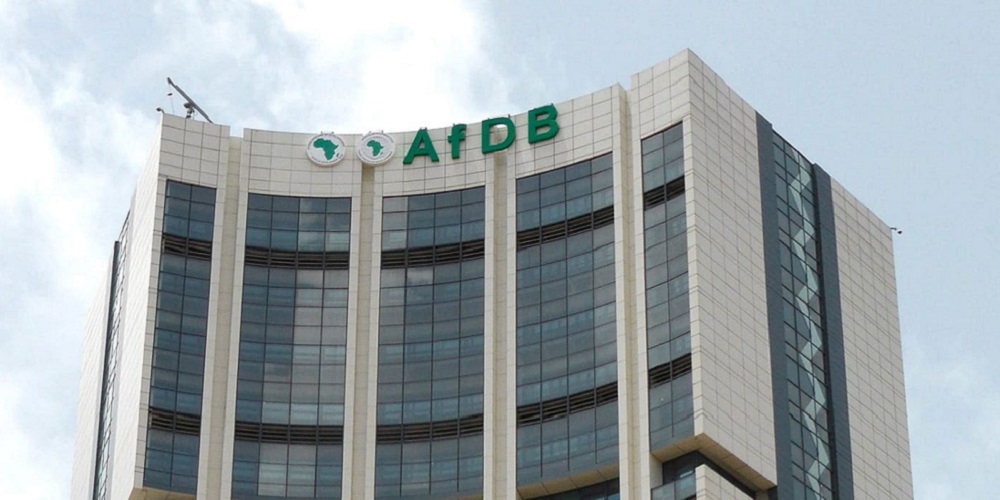
AfDB To Release $2.2bn Nigerian Agro-Industrial Fund From 2025

- /home/naijuinz/public_html/wp-content/plugins/mvp-social-buttons/mvp-social-buttons.php on line 27
https://naijablitznews.com/wp-content/uploads/2024/02/AfDB.jpg&description=AfDB To Release $2.2bn Nigerian Agro-Industrial Fund From 2025', 'pinterestShare', 'width=750,height=350'); return false;" title="Pin This Post">
- Share
- Tweet /home/naijuinz/public_html/wp-content/plugins/mvp-social-buttons/mvp-social-buttons.php on line 72
https://naijablitznews.com/wp-content/uploads/2024/02/AfDB.jpg&description=AfDB To Release $2.2bn Nigerian Agro-Industrial Fund From 2025', 'pinterestShare', 'width=750,height=350'); return false;" title="Pin This Post">


The African Development Bank (AfDB) is set to start releasing a $2.2bn fund for the development of Special Agro-Industrial Process Zones in Nigeria (SAPZ).
Director General of AfDB Nigeria Office, Abdul Kamara, made this known during Channels Television’s 2024 End-Of-Year Review with the theme, ‘Focus on the Agriculture Sector, Food Security, Research and AfDB Investments’.
“Specifically from next year (2025), we will see contracts signed and mobilization and construction on site will start in some states. Of course, not all the states will start together,” he said.
He said the money would be used for the development of agro-industrial hubs where processing will happen, aggregation centres and agricultural transformation programmes.
The developmental economist said though the Special Agro-Industrial Process Zones was approved by the AfDB Board in 2021, the project is picking up after startup delays attributed to several factors.
“When you approve a programme, you have to have it signed with the Federal Government, especially of that magnitude. You also have to have it signed with the co-financiers. The Bank had to bring in IFAD (International Fund for Agricultural Development) and Islamic Development Bank as co-financiers,” he said.
Kamara said when the Bank met with some state governors, months back, they agreed on certain actions to accelerate SAPZ. “In all the seven states including the FCT, Cross River, Ogun, Oyo, Kaduna, Kano and Kwara, in each of the states, we are now in conversation with and are publishing the bidding document so that we’ll shorten the process. So, it’s picking up and that is not strange. Projects that are very complex
“That is even why at the African Investment Forum just concluded early this month, we had a pledge from different financiers to the tune of $2.2bn.
“So, the SAPZ is going to happen and it’s going to deliver as much as we have elsewhere.
“The value, give or take, what the Bank is putting in is about one billion dollars. Of course, if you add what others are bringing in, it will be more than that because we are a convener; we bring in others,” he said.






The Black Market Dollar-to-Naira Exchange Rate for 12th September 2026 Can Be Accessed Below.
NOTE: The exchange rate changes hourly. It depends on the volume of dollars available and the Demand. This means…you can buy or sell 1 dollar at a certain rate, and the price can change (high or low) within hours.
The official naira black market exchange rate in Nigeria today, including the Black Market rates, Bureau De Change (BDC), and CBN rates.
The exchange rate fluctuates hourly based on the supply and demand of dollars in the market.
What’s the dollar to naira black market today, 12th September 2026?
The exchange rate for a dollar to naira at Lagos Parallel Market (Black Market) players sell a dollar for ₦1380 and buy at ₦1392 on Saturday, 12th September, 2026, according to sources at Bureau De Change (BDC).
Please note that the Central Bank of Nigeria (CBN) does not recognize the parallel market (black market), as it has directed individuals who want to engage in Forex to approach their respective banks.
Dollar to Naira Black Market Rate Today
Dollar to Naira (USD to NGN) Black Market Exchange Rate Today
Selling Rate ₦1380
Buying Rate ₦1392
Dollar to Naira CBN Rate Today
Dollar to Naira (USD to NGN) CBN Rate Today
Highest Rate ₦1326
Lowest Rate ₦1326


Nigerian Financial Intelligence Unit (NFIU) has moved to forge a new public-private partnership that will bring banks, fintechs, insurers, virtual asset providers and regulators together to tackle increasingly sophisticated financial crimes and illicit financial flows.
The initiative, known as the Joint Financial Intelligence Collaboration (JFIC), is designed to create a trusted platform for public and private institutions to share financial intelligence, detect emerging threats and disrupt illicit financial networks.
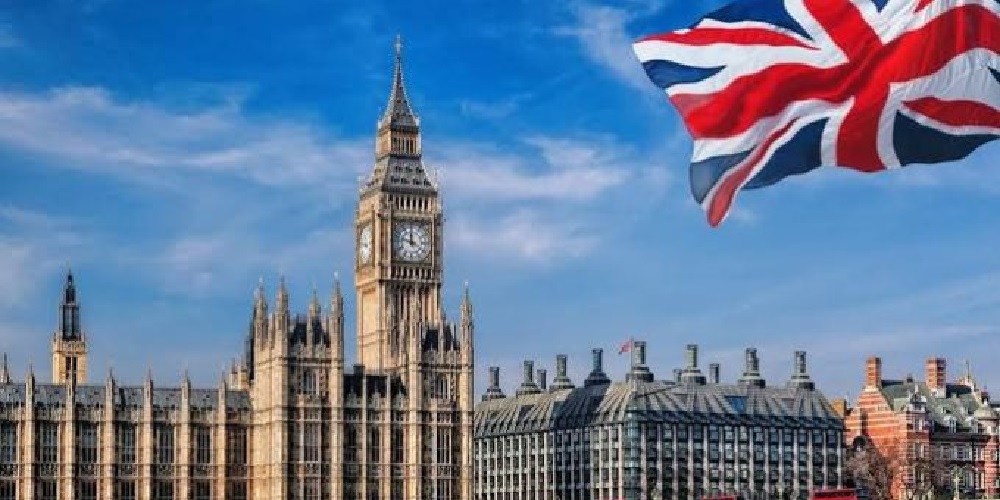
The NFIU unveiled the framework at a stakeholders’ engagement in Abuja yesterday, with support from the British High Commission and the Convention for Business Integrity (CBi).
Representatives of banks, insurance companies, fintechs, Virtual Asset Service Providers (VASPs), technology firms, regulators and other stakeholders participated in the engagement, which was aimed at moving the proposed partnership from concept to implementation.
Representing the NFIU Chief Executive Officer, Hafsat Bakari, the Unit’s General Counsel, Felix Obiamalu, said the engagement marked a decisive turning point in the development of the initiative.
“We have moved from dialogue to design, to commitment and implementation,” Obiamalu said.
He stressed that the objective was no longer merely to discuss the concept, but to jointly determine the structure, operation and value of the partnership and how it could be sustained.
“The objective is no longer simply to discuss the concept. It is to jointly determine what this partnership should look like, how it should operate, what value it should create and how it can be sustained over time,” he said.
The NFIU said the initiative was premised on the recognition that no single institution could effectively combat modern financial crime in isolation, making intelligence sharing and coordinated action between government and industry increasingly critical.
Speaking on behalf of the British High Commission, Jehanzeb Khan, Illicit Financial Flows Officer at the Foreign, Commonwealth and Development Office (FCDO), reaffirmed the importance of stronger collaboration between government and the private sector in combating illicit financial flows.
Managing Director of the Convention for Business Integrity, Olusoji Apampa, said the process was deliberately structured to place the private sector at the centre of decision-making.
According to him, this would ensure that the emerging framework reflects operational realities and secures broad ownership among stakeholders.
Delivering the keynote presentation, former Chair of the Egmont Group and former Director of South Africa’s Financial Intelligence Centre, Xolisile Khanyile, described private-sector participation in the fight against financial crime as a national responsibility.
She urged Nigeria to adopt a practical and phased approach to implementing the proposed collaboration.
“Trust, shared ownership and collaboration are the foundations of every successful public-private partnership,” Khanyile said.
She added that given Nigeria’s strategic importance within the global anti-money laundering and countering the financing of terrorism (AML/CFT) framework, the initiative was both timely and necessary.
The engagement ended with strong stakeholder support for the proposed JFIC framework and a commitment to advancing a partnership capable of strengthening financial intelligence, improving threat detection and enhancing Nigeria’s response to increasingly sophisticated financial crimes.
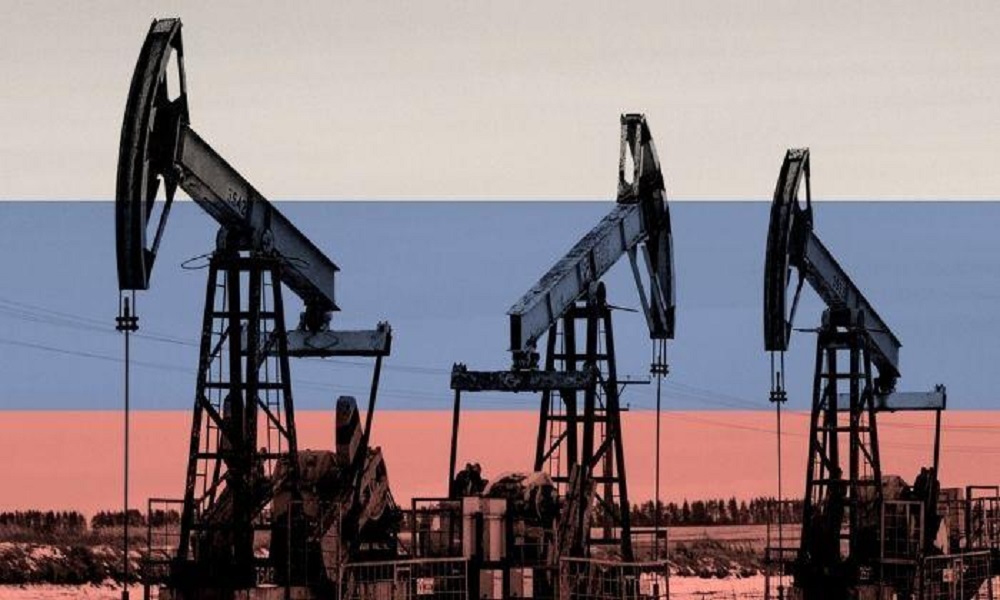
Oil prices surged yesterday with Brent crude hitting over $107 per barrel for the first time since May, as traders braced for a more prolonged supply shock caused by the Iran war.
Oil prices have climbed back above the $100 per barrel mark this week as fighting in the Strait of Hormuz and Red Sea has intensified. The US and Iran have traded strikes, while the Iran-backed Houthis have attacked Saudi Arabia and ignited tensions in the Bab al-Mandab Strait.
In Nigeria, fuel prices have continued to rise, with the cost of diesel (Automotive Gas Oil) reaching about N2,000 per litre in some locations, while petrol has climbed beyond N1,400 per litre in parts of the country.
The fresh increases are adding to pressure on businesses and households, particularly manufacturers, transport operators and other users that depend heavily on petroleum products for power and mobility.
The development has also raised concerns over a renewed increase in transportation and production costs, with businesses likely to pass higher energy expenses on to consumers through increased prices of goods and services.
The latest surge in pump prices comes despite increased domestic refining capacity, underscoring the continued impact of crude supply, distribution costs, market conditions and other factors on the pricing of petroleum products.
Yesterday, Brent crude, the global oil benchmark, rose 6.1 per cent and traded at $107.40 per barrel while US crude rose 6.2 per cent and hit $102 per barrel for the first time since May.
Resurgent conflict has stoked concerns of further disruptions to global oil supplies and the flow of crude through the Strait of Hormuz.
“The step up in attacks in the Strait of Hormuz and by the Houthis against Saudi Arabia suggests that Iran and its proxies are trying to regain the initiative in the war,” Jason Tuvey, deputy chief emerging markets economist at Capital Economics, said in a note.
“This could set back the recovery in oil output in the Gulf and raises the risk that global energy prices rise even further in the coming weeks,” Tuvey said.
For the first time since the war started, S&P Global Energy said Thursday it does not expect Middle East oil production to return to pre-war levels by the end of next year. The firm no longer assumes a definitive end to the war nor a return to normal in the Strait of Hormuz by the end of 2027.
S&P now expects oil prices to stay high in the $80 to $100 a barrel range through next year.
The rise in oil prices has added to nerves about inflation and central bank rate hikes, sending ripples through bonds and stocks, a CNN report stated.

Haaland came through as 10-man Man City defeats Manchester United

Northern Leaders Seek Unity As Almajiri, Insecurity Threaten Region

‘I Don’t Want to Return to Nigeria’ — Chimamanda Adichie Speaks After Son’s Death




-

 News15 hours ago
PCN Seals 797 Drug Outlets, Shuts Kano Illegal Medicine Cluster
-

 News21 hours ago
FULL LIST: INEC Names 18 Presidential Candidates for 2027 Election
-
 News15 hours ago
INEC Unveils Final List Of Presidential Candidates For 2027 Election
-
 News15 hours ago
You Can’t Insist You Won 2023 Election After Supreme Court Gave Final Ruling’ – Tinubu Presidency Tackles Peter Obi
-
 News15 hours ago
Sanwo-Olu Explains Delay In Opening Ojota-Opebi Link Bridge
-

 News15 hours ago
Bosun Tijani Withdraws From ITU Deputy Secretary-General Race
-

 News10 hours ago
2027: Peter Obi Launches Four-Year Reform Plan
-
 News10 hours ago
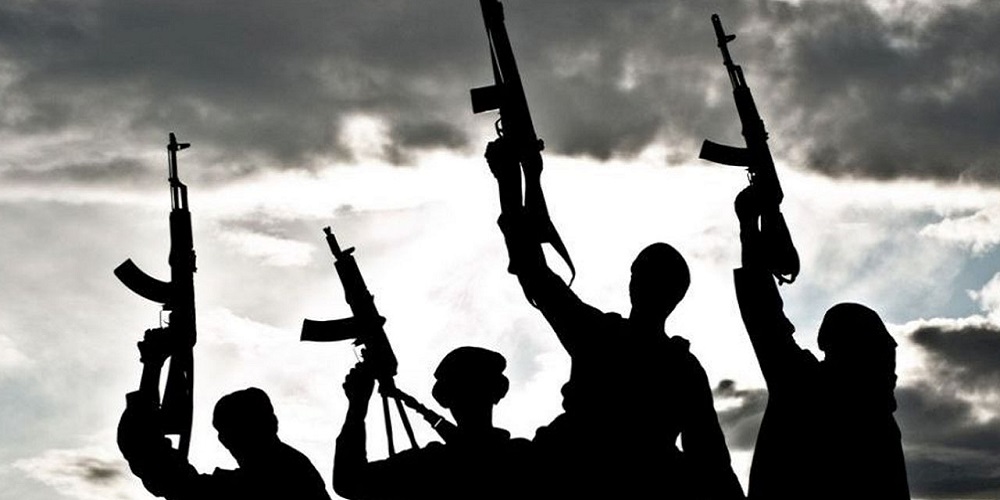
Just in: Five Islamic Clerics Reportedly Abducted After Praying for Tinubu’s Re-Election at Senator Yari’s Residence
Warning: Undefined variable $user_ID in /home/naijuinz/public_html/wp-content/themes/zox-news/comments.php on line 49
You must be logged in to post a comment Login