
News
SAD! Two Judges shot dead in Court as attacker takes own life

- /home/naijuinz/public_html/wp-content/plugins/mvp-social-buttons/mvp-social-buttons.php on line 27
https://naijablitznews.com/wp-content/uploads/2025/01/images-2025-01-18T160900.934.jpeg&description=SAD! Two Judges shot dead in Court as attacker takes own life', 'pinterestShare', 'width=750,height=350'); return false;" title="Pin This Post">
- Share
- Tweet /home/naijuinz/public_html/wp-content/plugins/mvp-social-buttons/mvp-social-buttons.php on line 72
https://naijablitznews.com/wp-content/uploads/2025/01/images-2025-01-18T160900.934.jpeg&description=SAD! Two Judges shot dead in Court as attacker takes own life', 'pinterestShare', 'width=750,height=350'); return false;" title="Pin This Post">


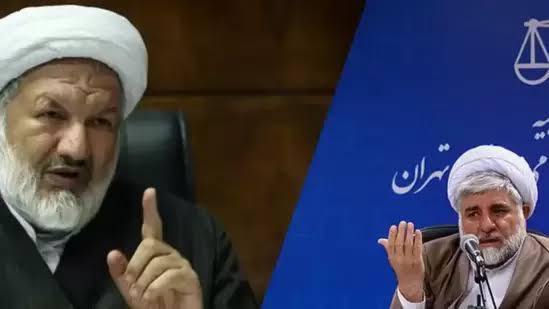
Two top judges in Iran were shot dead on Saturday in what has been reported as a targeted assassination directed at the Islamic regime’s enablers in the country’s Supreme Court.
The two judges, Ali Razini and Mohammad Moghiseh were killed after an armed man entered the court, in Tehran, Iran’s capital on Saturday morning.
The attacker was said to have then killed himself while fleeing the scene, according to the judiciary’s news website, Mizan. A bodyguard was also injured in the attack.
The motive for the attack is unclear, but both judges are said to have played a role in the persecution and killing of opponents of the Islamic regime throughout the 1980s and 1990s.
In a statement to state news agency IRNA, the judiciary’s media office described the attack as premeditated assassination.
It also said that, according to initial findings, the attacker had not been involved in any case considered by the supreme court, and an investigation had been launched to identify and arrest any further people who may have been involved in the attack.
The judiciary’s spokesman, Asghar Jahangir, told Iranian state TV that the attacker had entered the court carrying a handgun before opening fire.
One of the judges, Razini, had survived an assassination attempt in 1998 that shook Iran at that time. He was one of the most senior judges in Iran.
The other, Moghiseh, was sanctioned by the US in 2019, with the treasury department accusing him of having “overseen countless unfair trials, during which charges went unsubstantiated and evidence was disregarded”.
At that time, he was a judge in the Tehran Revolutionary Court. He was reportedly named to the supreme court in 2020.
Moghiseh was also among seven Iranian judges sanctioned by Canada in 2023 for what the country described as “their role in gross and systematic human rights violations”.






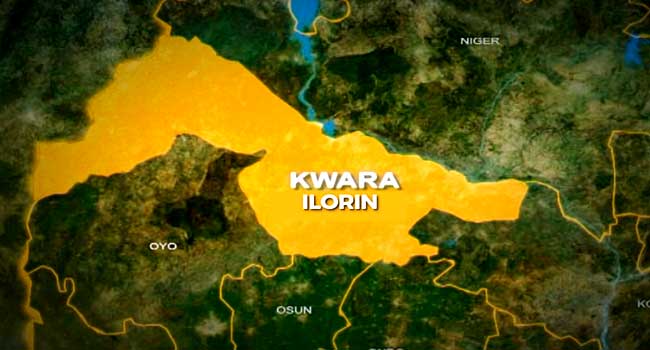
The House of Assembly has declared the seats of two lawmakers representing Edu and Irepodun constituencies vacant following their defection from the ruling All Progressives Congress (APC) to the opposition Peoples Democratic Party (PDP).
The affected lawmakers are Hon. Saaba Issa Gedeon, representing Edu Constituency, and Hon. Olusola Odetundun, representing Irepodun Constituency.
The House took the decision following a request by the state chairman of the APC, Prince Sunday Fagbemi, who asked the Speaker of the Assembly, Rt. Hon. Salihu Yakubu Danladi, to declare the seats vacant in accordance with Section 109(1)(g) of the 1999 Constitution of the Federal Republic of Nigeria, as amended.
In a letter addressed to the Speaker, Fagbemi argued that the two lawmakers were elected into the Assembly on the platform of the APC and could not constitutionally defect to another political party while retaining their seats, particularly as there was no division or factional crisis within the APC.
The APC chairman maintained that the lawmakers had abandoned the party under whose platform they were elected and joined the PDP, thereby triggering the constitutional provision on defection.
The matter was subsequently brought before the House for consideration.
Leading the debate on the request, the Leader of the House, Hon. Oba Mogaji, described the issue as fundamentally a constitutional matter, adding that it should be treated in accordance with the provisions of the 1999 Constitution.
Mogaji referred specifically to Section 109(1)(g), which provides circumstances under which a member of a State House of Assembly may lose their seat after defecting from the political party on whose platform they were elected.
According to him, the constitutional provision makes it clear that a lawmaker cannot simply abandon the political party that sponsored his or her election for another party while retaining the legislative seat, where there is no recognised division within the original party.
The House Leader noted that both Gedeon and Odetundun had left the APC for the PDP and were now seeking to retain or return to their respective constituencies under the platform of the opposition party.
He argued that their actions were contrary to the constitutional provisions governing membership of the State House of Assembly.
Mogaji therefore supported the request by the APC chairman for the seats of the two lawmakers to be declared vacant.
Other members of the House also spoke in support of the motion.
Hon. Abolarin Ganiyu Gabriel, representing Ekiti Constituency, backed the request, arguing that the constitutional provision should be upheld.
Hon. Ganiyu Folabi, representing Omupo Constituency, also supported the declaration of the two seats as vacant.
Similarly, Hon. Adato Oguniyi, representing Ojomu/Balogun Constituency, spoke in favour of the vacation of the seats.
Following the debate and contributions by the lawmakers, the Speaker, Hon. Salihu Yakubu Danladi, declared the seats representing Edu Constituency and Irepodun Constituency vacant, in line with the resolution of the House.
The decision effectively removes Saaba Issa Gedeon and Olusola Odetundun from the Kwara State House of Assembly as members representing their respective constituencies.
The development comes after the two lawmakers defected from the ruling APC to the PDP, setting the stage for their respective seats to become subject to the constitutional provision cited by the Assembly.
The Assembly’s action was based on the argument that the lawmakers were elected under the APC and that there was no division within the party capable of providing an exception to the constitutional restriction on defection.
The declaration means that the Edu and Irepodun constituencies are now without their elected representatives in the Kwara State House of Assembly, pending further developments in accordance with the law.
The Speaker’s declaration followed the House’s resolution after the lawmakers considered the request from the APC chairman and heard arguments from members in support of declaring the seats vacant.
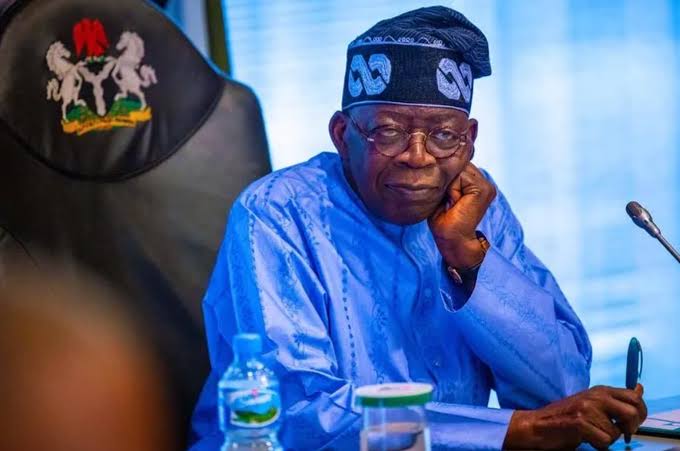
The United States Federal Bureau of Investigation (FBI) has confirmed that President Bola Ahmed Tinubu was the subject of a criminal investigation into drug-trafficking crimes in the early 1990s.
This is according to a sworn declaration filed in a US federal court.
The declaration was submitted on August 28, 2026, before the United States District Court for the District of Columbia as part of an ongoing Freedom of Information Act (FOIA) case seeking access to FBI records relating to Tinubu.
In the filing, the FBI stated that “the responsive records herein were compiled in furtherance of the FBI’s investigation of multiple individuals for drug trafficking crimes.”
The agency also stated that “the court has already determined that an official acknowledgement had been made of an investigation of Bola Tinubu.”
The declaration followed an April 2025 ruling by US District Judge Beryl Howell, who held that the FBI and the Drug Enforcement Administration (DEA) could no longer rely on “Glomar” responses to refuse to confirm or deny the existence of records relating to the investigation.
Howell ruled that the agencies had failed to establish sufficient privacy grounds to conceal the fact that Tinubu had been the subject of a criminal investigation.
She ordered the agencies to process non-exempt records sought under FOIA.
The ruling, however, did not establish that Tinubu committed a drug-trafficking offence or that he was convicted of any crime.
The latest declaration relates to FOIA requests filed by American transparency activist Aaron Greenspan.
Among the records sought were the “entire FBI file for Bola Ahmed Tinubu” and FBI 302 interview records involving Tinubu from FBI Case No. 245-IP-71386-UUUUUU between 1992 and 1993.
Greenspan’s requests formed part of a broader effort to obtain records concerning a Chicago heroin-trafficking operation that operated in the early 1990s.
The FBI has continued to withhold portions of the records, citing several FOIA exemptions covering personal privacy, confidential sources, law-enforcement techniques and information whose disclosure could endanger individuals.
The agency said it could not publicly disclose the full basis for its reliance on some of the exemptions.
Von Batten-Montague-York, a Washington-based lobbying firm hired by former Vice-President Atiku Abubakar ahead of the 2027 presidential election, publicised portions of the FBI declaration.
The firm in a post on its X handle said it was reviewing a large volume of records received from the FBI and redacting portions where necessary.
“The FBI states under oath that the court has already determined that a criminal investigation of Nigerian President Bola Tinubu was officially acknowledged,” the firm said.
The firm said it released the document to counter claims that Tinubu had never been criminally investigated.
“We are posting this document to counter the claim made yesterday that President Tinubu was never criminally investigated and is simply following the law to protect his privacy,” it said.
“That claim is false, as shown by the FBI’s sworn declaration below.”
Reacting to the development, Special Adviser to the President on Media and Public Communications, Sunday Dare, dismissed the claims surrounding the FBI records as politically motivated and accused Atiku of using a Washington-based lobbying firm to create controversy ahead of the 2027 election.
Dare described the campaign as “a clinical demonstration of desperation” and said the materials being circulated did not constitute an intelligence breakthrough.
“The coordinated media blitz orchestrated around a Washington, D.C. advisory firm is not an intelligence breakthrough; it is a clinical demonstration of desperation,” Dare said.
He questioned the credibility of the lobbying firm’s representations, arguing that its statements should not be presented as the position of the US government.
“The incendiary press releases being carefully churned out from Washington are public relations propaganda sheets passed off as the view of the U.S. Government. They are not,” he said.
Dare also challenged those making allegations to produce evidence supporting claims about classified intelligence.
“Sane minds must categorically dismiss these reports as fabricated, politically motivated, and entirely unsupported by evidence,” he said.
“We demand that they produce the so-called ‘highly classified intelligence report,’ identify their unnamed sources, and provide tangible evidence for their wild allegations.”
He alleged that publicly available US Department of Justice Foreign Agents Registration Act (FARA) filings showed that Atiku contracted Von Batten-Montague-York, L.C. on a $1.2 million, 12-month retainer.
According to Dare, the arrangement was designed to “counterbalance” Nigerian government narratives and use historical US judicial records for political leverage ahead of the 2027 elections.
Dare also questioned the role of the firm’s principal, Dr Karl-Marx Edward Okeke-Von Batten, in the ongoing FOIA litigation.
“Okeke-Von Batten must have conned a desperate Alhaji Abubakar Atiku into believing that he has access to everyone in the Trump administration, including President Trump himself,” Dare alleged.
He argued that the lobbying firm had no role in the US court proceedings, which he said had been ongoing since 2023.
“He has absolute zero to do with what is playing out in the U.S. court system,” Dare said.
“The case has been active since 2023, and the FBI’s main concern is simply the protection of the techniques by which it gathers information and the safety of its sources.”
Dare also rejected any connection between Tinubu’s foreign travel and the FOIA proceedings, saying the President was on a previously scheduled annual leave.
“This orchestrated distraction attempts to tie the President’s movements to foreign legal proceedings, but the facts are clear: President Tinubu is on a previously scheduled annual leave, and there is absolutely no connection between the President’s European trip and the ongoing U.S. FOIA proceedings,” he said.
Dare further cited comments by Tinubu’s lawyer, Wole Afolabi, SAN, who recently addressed the FOIA proceedings on Channels Television.
According to him, Afolabi explained that efforts to withhold portions of the records were based on US legal provisions protecting confidential investigative processes.
Dare said Afolabi also argued that if Tinubu had been criminally liable under US law, American authorities would have indicted and prosecuted him at the time.
“He emphasized the core reality: if the president had been criminally liable under U.S. law during past investigations, American authorities would have indicted and prosecuted him at the time,” Dare said.
Dare accused the opposition of focusing on decades-old US records instead of presenting Nigerians with detailed policy alternatives ahead of the 2027 elections.
“The opposition’s 2027 framework remains devoid of noble economic blueprints, structural innovation, or issue-based engagement,” he said.
He argued that the election should ultimately be decided by domestic performance and policy proposals rather than controversies surrounding historical US records.
“True democratic validation is earned through the ballot box and tangible service delivery to the citizens at home, not through manufactured headlines bought and paid for in foreign currency,” Dare said.
Tinubu’s legal team has opposed further disclosure of the records, arguing that releasing personal information from government archives would violate his privacy rights.
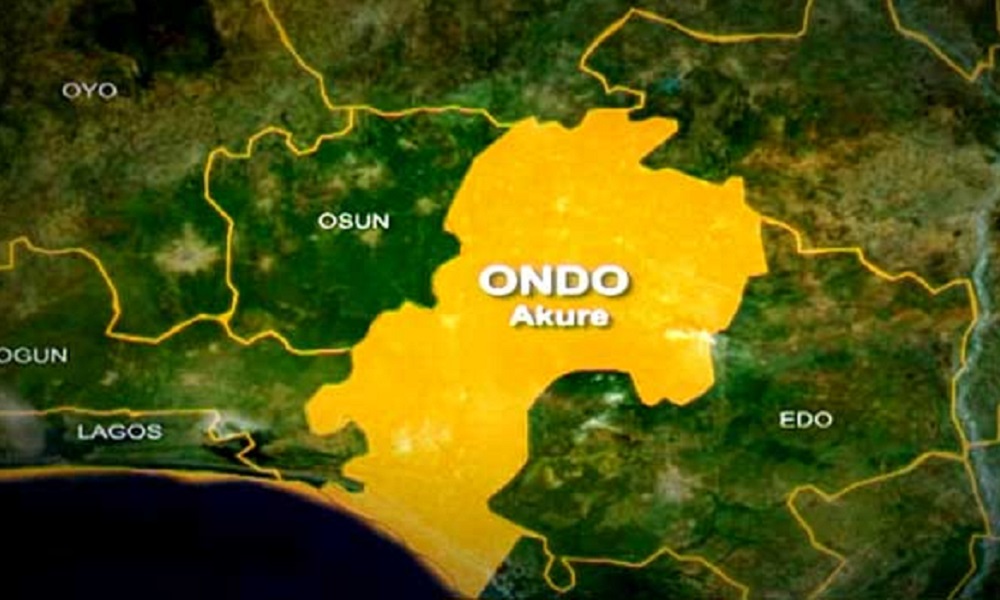
Workers under the Joint Action Committee of the Senior Staff Association of Nigerian Universities, Non-Academic Staff Union and National Association of Academic Technologists have commenced an indefinite strike across the three state-owned universities in Ondo State.
The industrial action, which takes effect from midnight on Wednesday, September 2, 2026, is aimed at forcing the Ondo State Government to implement the Federal Government and unions’ agreement with effect from January 2026.
The affected institutions are Adekunle Ajasin University, Akungba-Akoko; Olusegun Agagu University of Science and Technology, Okitipupa; and the University of Medical Sciences, Ondo.
The decision was contained in a strike notice issued by the JAC leadership following an emergency meeting held on Tuesday, September 1, 2026.
The notice was signed by the JAC-ODSTI Secretary, Comrade Kunle Akinwonmi, and the Chairman, Comrade Tayo Ogungbeni.
According to the unions, the strike became necessary following the alleged failure of the state government to fulfil its promise to implement the agreement from the August 2026 salary.
“Whereas, the same government released the same old subventions to all the institutions without the 60 per cent promised for the month of August 2026,” the unions stated.
The workers recalled that the state government had announced a 60 per cent increase in subventions to all tertiary institutions in the state, alongside approval for the full implementation of the FGN/Unions Agreement from August 2026.
They, however, alleged that the government failed to match the announcement with corresponding funding, despite the expiration of a 14-day ultimatum issued to compel it to act.
“It is crystal clear that the State Government is playing politics with our lives and wellbeing, therefore, we have no other alternative than to embark on this industrial action,” the unions said.
The JAC directed its members to withdraw all clerical, administrative, technical, clinical and other services provided across the three universities until their demands are met.
The unions specifically demanded the unconditional payment of the Consolidated Tertiary Institutions and other allowances attached to the agreement from January 2026 to date.
The workers appealed to their members to comply fully with the directive, declaring, “Aluta Continua, Victoria Ascerta!”

Kwara Assembly Declares Two Assembly members’ Seats Vacant Over Defection From APC To PDP

FBI confirms Tinubu was Under Investigation for Drugs

BREAKING: Ondo Universities begin indefinite industrial action




-
 News21 hours ago
EFCC sacks over 40 staff for corruption, prosecutes 5 others
-

 Economy21 hours ago
NNPCL Increases Price Of Petrol
-

 News21 hours ago
Calls Mount for Forensic Audit of Chinua Achebe Airport Over Alleged Revenue Diversion
-
 Metro21 hours ago
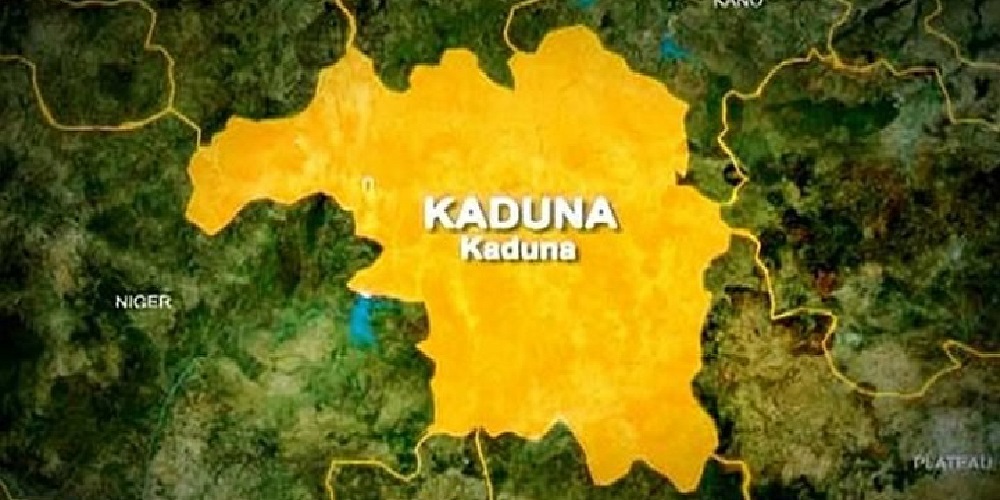
Air Force Officer Narrates How Gunmen Abducted His Wife, Two Children From Kaduna Home
-

 News14 hours ago
Just in: Court fires 2027 APC candidate, orders fresh primaries
-

 Entertainment21 hours ago
Headies dismiss claims of sidelining gospel artistes
-

 News14 hours ago
Breaking Dangote Refinery stops sales of petroleum products to Matrix, AA Rano, others
-

 News14 hours ago
Intoxicated Pilot Crashes Stolen Plane Near Nuclear Site
Warning: Undefined variable $user_ID in /home/naijuinz/public_html/wp-content/themes/zox-news/comments.php on line 49
You must be logged in to post a comment Login