
Foreign
US judge halts Trump’s Executive order freezing foreign aids

- /home/naijuinz/public_html/wp-content/plugins/mvp-social-buttons/mvp-social-buttons.php on line 27
https://naijablitznews.com/wp-content/uploads/2025/01/Donald-Trump-1-1000x575.jpg&description=US judge halts Trump’s Executive order freezing foreign aids', 'pinterestShare', 'width=750,height=350'); return false;" title="Pin This Post">
- Share
- Tweet /home/naijuinz/public_html/wp-content/plugins/mvp-social-buttons/mvp-social-buttons.php on line 72
https://naijablitznews.com/wp-content/uploads/2025/01/Donald-Trump-1-1000x575.jpg&description=US judge halts Trump’s Executive order freezing foreign aids', 'pinterestShare', 'width=750,height=350'); return false;" title="Pin This Post">


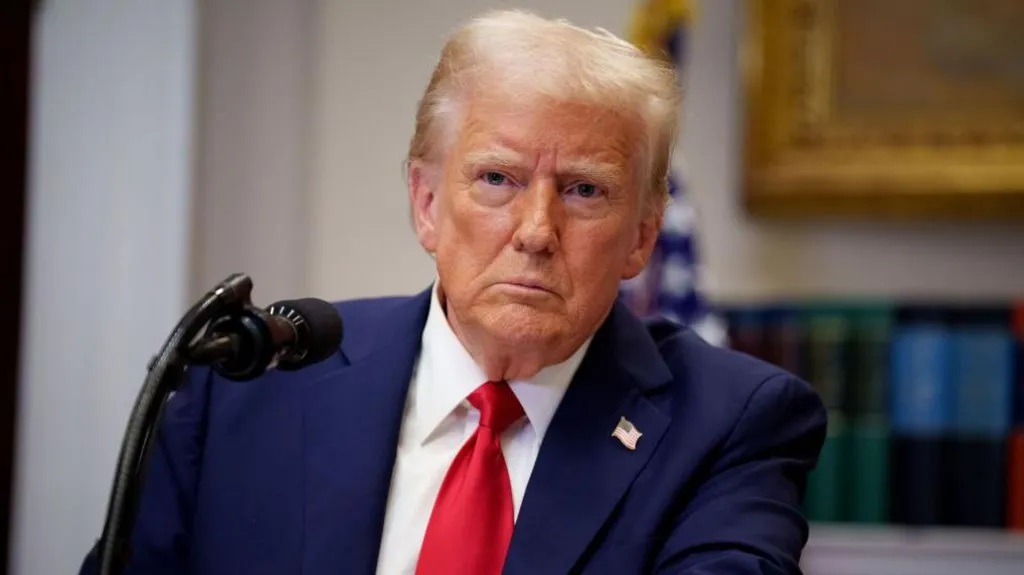
A federal judge on Thursday ordered the Trump administration to restore funding for hundreds of foreign aid contractors who say they’ve been devastated by President Donald Trump’s abrupt — and in their view illegal — 90-day blanket freeze.
U.S. District Judge Amir Ali, a Washington, D.C.-based appointee of President Joe Biden, said the Trump administration failed to account for the extraordinary harm caused by the broad-based halt to foreign aid.
“At least to date, Defendants have not offered any explanation for why a blanket suspension of all congressionally appropriated foreign aid, which set off a shock wave and upended reliance interests for thousands of agreements with businesses, nonprofits, and organizations around the country, was a rational precursor to reviewing programs,” Ali wrote.
“Absent temporary injunctive relief, therefore, the scale of the enormous harm that has already occurred will almost certainly increase,” the judge added.
Ali barred Trump’s top State Department and budget aides — including Secretary of State Marco Rubio and Office of Management and Budget Director Russell Vought — from implementing any contract cancellations or stop-work orders put into effect after Trump’s inauguration, at least while further litigation plays out.
The ruling effectively halts a central component of one of Trump’s Day One executive orders commanding his administration to freeze foreign aid for 90 days.
The judge concluded that the Trump administration appeared to act in an “arbitrary and capricious” manner by abruptly shutting off all foreign aid without considering consequences for businesses to whom that aid was awarded prior to Trump’s inauguration.
“There is nothing arbitrary and capricious about executive agencies conducting a review of programs,” he said. “But there has been no explanation offered … as to why reviewing programs — many longstanding and taking place pursuant to contractual terms — required an immediate and wholesale suspension of appropriated foreign aid.”
Lawyers for the contractors described extensive damage and disruption caused by Trump’s bid to freeze and cancel thousands of ongoing contracts with organizations funded by USAID foreign assistance dollars. Their claims were bolstered by a list the administration delivered at the judge’s order of more than 200 foreign aid contracts that were canceled just this week.
“Businesses are shuttering, terminating employees … food is rotting, medication is expiring,” attorney Stephen Wirth described in a 90-minute, conference-call hearing Ali held Wednesday as the courthouse was closed due to snow.
Lawyers for the contract and grant recipients emphasized that it wasn’t just foreign organizations being harmed but businesses and organizations across the United States — who work with overseas partners — that were laying off or furloughing nearly their entire staffs. Many of them won’t survive the 90-day freeze, the attorneys said.
“Shutting down billions of dollars in government spending, sending numerous foreign aid partners large and small into oblivion, shutting them down so they are out of business is clearly of sufficient political, social and economic significance that it would require clear congressional authorization,” another attorney for the groups argued.
Ali agreed that the harm being caused by the freeze, coupled with their credible arguments that the freeze could violate laws against government officials making “arbitrary and capricious” decisions, justified ordering the administration to lift the freeze while further litigation plays out.
In the arguments Wednesday, the Justice Department took an unusually expansive view of executive power. DOJ attorney Eric Hamilton argued that, because the steps being taken are at presidential direction, the groups had no authority to challenge the actions by USAID and the State Department under the Administrative Procedure Act, which is what allows courts to block “arbitrary and capricious” actions by federal agencies.
“We don’t have agency action because the agency is implementing an executive order,” Hamilton said. “It is an enormously disruptive suggestion … to have this intrusion into USAID which would basically place USAID into receivership with a federal court … This policy is happening against the backdrop of the president’s exercise of his Article II authority to set the foreign policy for the United States.”
In his Thursday night ruling, Ali scoffed at that argument, saying the Justice Department’s interpretation would put all sorts of agency action beyond review from the courts and could gut the APA.
“Defendants’ argument, at least as it has been articulated to date, proves too much — it would allow the President and agencies to simply reframe agency action as orders or directives originating from the President to avoid APA review,” the judge wrote.
Ali’s order is the second to interrupt Trump’s sweeping effort to defund and dismantle USAID, the agency responsible for administering billions of dollars in foreign aid programs.
Last week, U.S. District Judge Carl Nichols, a Trump appointee, blocked the administration from abruptly placing thousands of workers on administrative leave and cutting off their access to government systems. Nichols extended that hold Thursday for another week.
Ali is also the third judge to issue an emergency block on Trump’s efforts to unilaterally freeze wide swaths of government spending. U.S. District Judge John McConnell, an appointee of President Barack Obama based in Rhode Island, has forced the administration to lift a blanket freeze on domestic federal programs. Another Washington, D.C., judge, Biden appointee Loren AliKhan, has also blocked aspects of Trump’s domestic spending freeze.







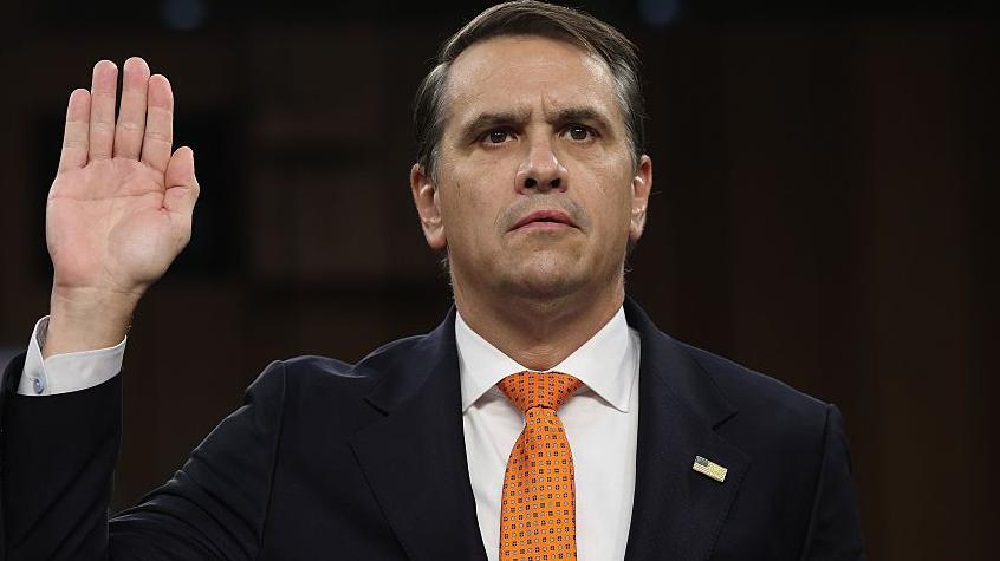
President Donald Trump’s former personal lawyer Todd Blanche took a key step on Tuesday towards becoming the top US law enforcement officer after a Senate panel approved his nomination to head the Justice Department.
The 12-10 vote in the Senate Judiciary Committee was along party lines and came after two Republican senators dropped their opposition to Blanche’s nomination.
Blanche’s Senate confirmation had been held up by concerns from senators John Cornyn and Thom Tillis over a $1.8 billion fund for alleged victims of politically motivated prosecution and a tax audit immunity deal with the Republican president.
Blanche issued a written order over the weekend scrapping the so-called “anti-weaponization fund” and said the audit immunity agreement with Trump, his two eldest sons and the Trump Organization would only apply “retroactively” to past tax years and not future filings.
The full Senate, where Republicans hold a majority, is expected to vote later this week to confirm Blanche as attorney general. He has been serving as acting attorney general since Trump fired Pam Bondi in April.
Senate Democrats have been united in their opposition to Blanche amid concerns he has treated the Department of Justice as an extension of the Republican president’s legal team.
“Todd Blanche has no business serving as our nation’s chief law enforcement officer,” Senator Dick Durbin, the ranking Democrat on the Senate Judiciary Committee, said before Tuesday’s vote.
“The attorney general is supposed to be the people’s lawyer,” Durbin said. “Mr Blanche continues to operate as the president’s personal lawyer, treating the Justice Department like a law firm serving one client — the president.”
– ‘Retribution’ campaign –
Vice President JD Vance, in a post on X following the committee vote, said Blanche “will continue to serve the American people and the Trump Administration loyally, and he will make a great Attorney General.”
Blanche has been closely tied to what Democrats have dubbed a “retribution” campaign by the president against his perceived political enemies and he helped negotiate the extraordinary legal settlement between Trump and the government he controls.
The out-of-court settlement stems from Trump’s $10 billion lawsuit against the Internal Revenue Service (IRS) over the illegal disclosure of his tax records by an agency contractor.
It proposed immunity from audits for past tax years and a $1.776 billion fund for people who say they were unfairly targeted by the Department of Justice, potentially including Trump supporters convicted over the January 6, 2021 attack on the US Capitol.
Federal judges have separately blocked the fund and condemned the tax settlement, which according to US press reports could help the president avoid past liabilities of up to $100 million.
Blanche has also come in for criticism from victims of Jeffrey Epstein over his handling of the release of investigative files about the convicted sex offender, a one-time close friend of Trump.
Prior to joining the Department of Justice, Blanche represented Trump in his New York trial over alleged “hush money” paid to porn star Stormy Daniels.
He was also on the legal defense team in two federal cases brought against Trump by special counsel Jack Smith — for allegedly mishandling classified documents after leaving the White House and for seeking to overturn the results of the 2020 presidential election.
Both cases were dropped after Trump won the 2024 presidential election.
AFP
Foreign
Man Jailed for Keeping His Mom’s Dead Body in a Freezer for Nearly 3 Years While Receiving Her Financial Benefits

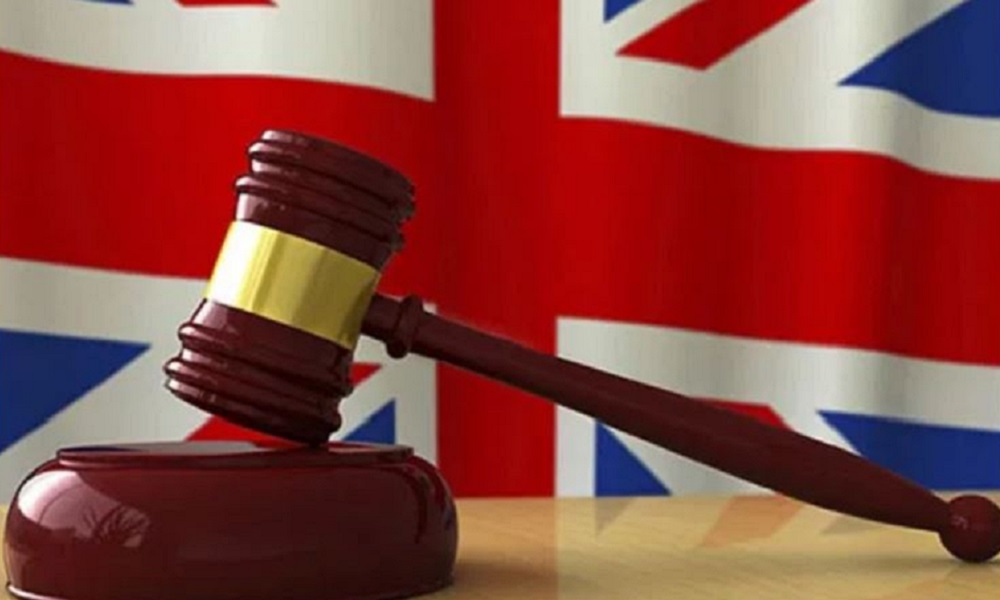
Merthyr Tydfil Crown Court in Wales court in Wales, United Kingdom, has sentenced Christopher Phillips, from Porthcawl, Bridgend, to two years and four months in prison after he kept the body of his deceased mother, Sylvia Phillips, in a freezer for nearly three years while continuing to receive her financial benefits.
Police were called to the property in February after concerns were raised about Sylvia’s welfare. She had not been seen by medical professionals since 2022, despite continuing to receive prescriptions and previously maintaining regular contact with healthcare services.
When officers arrived, Phillips claimed his mother was in London visiting cousins but failed to provide any further details, prompting a search of the house.
During the search, police discovered a freezer with flowers placed on top. Inside was the body of a woman in her 80s, later confirmed to be Sylvia Phillips.
Phillips initially answered “no comment” to all police questions but later pleaded guilty to preventing the lawful and decent burial of a d+ad body and fraud by false representation.
He has now been sentenced to two years and four months in prison for the offences.

Iran has executed two men convicted of spying for Israel, as authorities continue a surge in executions linked to alleged espionage during the country’s ongoing conflict with Israel and the United States.
The executions were carried out on Monday, according to Iran’s judiciary, marking the latest in a series of hangings involving individuals accused of working with Israeli intelligence since the war began in February.
“Omid Behzad and Pouria Safvat were hanged this morning for transmitting the coordinates of sensitive military and security sites to Mossad agents,” said Mizan, the media outlet for Iran’s judiciary, referring to Israel’s foreign intelligence service.
Advertisement
Iranian authorities did not disclose when the two men were arrested or tried. However, Mizan said they were found guilty of “espionage and collaboration with the Zionist regime”.
“They helped the intelligence services achieve their objectives by providing them with information on military and security centres during the war,” Mizan added.
Executions in Iran have increased sharply since the conflict erupted on February 28 following large-scale US-Israeli strikes that resulted in the death of the country’s supreme leader.
According to international rights organisations, Iran remains the world’s second-highest user of the death penalty after China.
Figures released by Norway-based Iran Human Rights and Paris-headquartered Together Against the Death Penalty (ECPM) showed that at least 1,639 people were executed in Iran last year, the highest annual total recorded since 1989.
On Tuesday, Amnesty criticised what it described as an “escalation” in executions after Iranian authorities confirmed the hanging of two men convicted of participating in anti-government protests during the winter.
(AFP)

Confusion as three kids found in female witch doctor’s apartment

BREAKING: Dangote Refinery slashes petrol, diesel prices

Just in: FG ready to pay outstanding wage award before August 15, promotion arrears to follow




-

 News15 hours ago
Good news as Tinubu jerks up soldiers salaries by 80%
-

 News15 hours ago
Police summon VDM, question AIG Moshood Jimoh over allegations, insist on due process
-

 News15 hours ago
Pay Rise: Defence Minister Assures Tinubu Of Renewed Military Commitment
-

 News15 hours ago
Just in: Sultan of Sokoto denies approving TInubu for 2nd term
-
 News22 hours ago
Alleged N400m Contract Scam: Reps Summon FRSC Chief as Businessman Recounts Ordeal Before Committee
-

 Sports15 hours ago
Liverpool Legend, Mo Salah Joins Tranzonspor On Two-Year Deal
-
Metro15 hours ago
Lady saved from jumping into Lagos lagoon
-

 News9 hours ago
NCC hands over digital facilities to Enugu govt
Warning: Undefined variable $user_ID in /home/naijuinz/public_html/wp-content/themes/zox-news/comments.php on line 49
You must be logged in to post a comment Login