News
FG threatens to withdraw dormant oil blocks licences
- /home/naijuinz/public_html/wp-content/plugins/mvp-social-buttons/mvp-social-buttons.php on line 27
https://naijablitznews.com/wp-content/uploads/2024/05/Heineken-Lokpobiri.jpg&description=FG threatens to withdraw dormant oil blocks licences', 'pinterestShare', 'width=750,height=350'); return false;" title="Pin This Post">
- Share
- Tweet /home/naijuinz/public_html/wp-content/plugins/mvp-social-buttons/mvp-social-buttons.php on line 72
https://naijablitznews.com/wp-content/uploads/2024/05/Heineken-Lokpobiri.jpg&description=FG threatens to withdraw dormant oil blocks licences', 'pinterestShare', 'width=750,height=350'); return false;" title="Pin This Post">
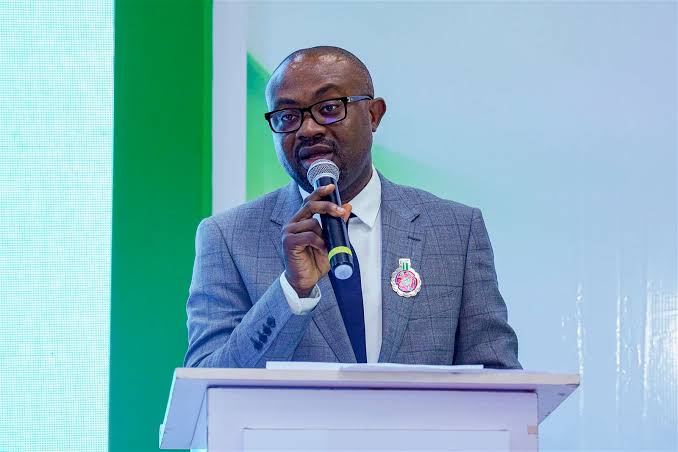
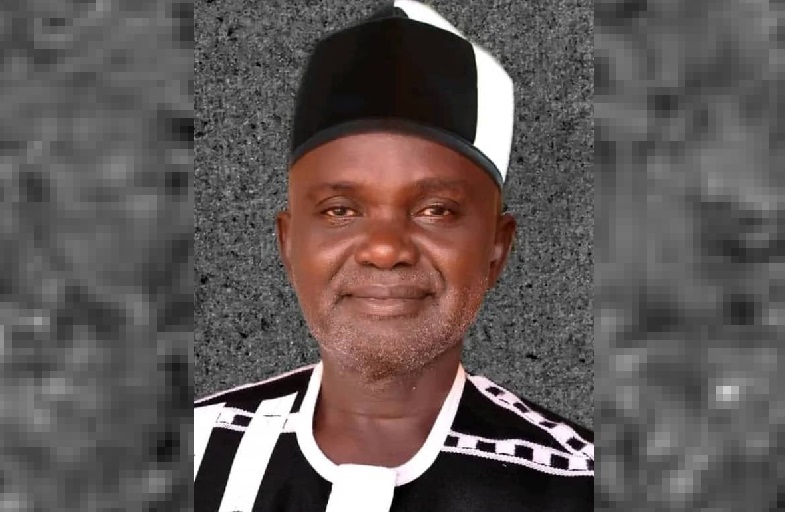
The Minister of State Petroleum Resources (Oil), Senator Heineken Lokpobiri, threatened to withdraw oil blocks from owners that have failed to develop them.

This is against the backdrop of the Federal Government calling on international oil companies operating in Nigeria to ramp up investment in the country’s oil and gas sector, emphasising that the current administration has provided every necessary incentive to ensure seamless and profitable operations.
With the Federal Government setting a production target of 2.06 million barrels per day in 2025, Lokpobiri said the government will begin implementing the “drill or drop” provisions of the Petroleum Industry Act in line with the drive to boost oil production.

As of February 2025, oil production was reported at 1.67 million barrels per day by the Nigerian Upstream Petroleum Regulatory Commission.
A statement by the media aide to the minister, Nneamaka Okafor, on Tuesday said Senator Lokpobiri gave the warning to revoke licenses at a Cross Industry Group meeting held in Florence, Italy, organised by IOCs operating in Nigeria.
The meeting focused on challenges, expectations, and strategies to enhance the sector’s contributions to domestic energy needs and regional expansion across Sub-Saharan Africa.
According to the minister, “We cannot continue to have assets sitting idle for 20 to 30 years without development. If you are not utilising an asset and it remains underdeveloped for decades, it neither adds value to your books nor to us as a country.
“We encourage industry players to explore collaborative measures such as shared resources for contiguous assets, farm-outs, and the release of underutilised assets to operators ready to invest in production. Otherwise, like any responsible government, we will take back these assets and allocate them to those willing to go to work.”
The minister also urged operators to consider farm-out agreements where assets are close to existing infrastructure, rather than incurring high costs on new floating production storage and offloading units.
The minister urged the operators to ramp up investment in the oil and gas industry.
He explained that while IOCs have pointed to engineering, procurement, and construction contractors as a challenge, EPCs will only commit when they see strong investment decisions from industry players.
He said, “The government has done its part by providing the requisite and investment-friendly fiscal policies, including the president’s executive order incentivising deepwater investments. Now, the ball is in the court of the IOCs and other operators to make strategic investment decisions that will drive increased production and sustainability in the sector.”
He emphasised the need for IOCs to support local refining efforts, noting that more refineries are coming upstream and will require a steady supply of crude oil.
To make this easy and possible, he stressed that ramping up production will enable Nigeria to meet both local and international obligations.
Also speaking at the meeting, the Chairman of the Oil Producers Trade Section, OPTS, Mr Osagie Osunbor, commended the Minister for his direct engagement with industry players and for the Federal Government’s continued efforts in advancing the sector.
“We appreciate the government’s commitment to creating a conducive environment for investment. The minister’s engagement has provided critical insights and has also challenged us as industry players to step up efforts to increase production,” he stated.
Meanwhile, a Bloomberg report has indicated that Nigeria made the biggest oil production cut among members of the Organisation of the Petroleum Exporting Countries in March, reducing output by 50,000 barrels per day.
It said the country cut to maintain an average of 1.5 million barrels per day, in line with its OPEC quota, as the cartel urged tightened quotas among its members.
According to a Bloomberg survey, OPEC reduced overall production by 110,000 barrels per day in March.
It added that Iraq followed with the second-largest reduction after Nigeria, cutting output by 40,000 barrels per day to 4.15 million barrels. Despite this, Iraq maintained above its agreed limit of 4 million barrels per day.
However, the United Arab Emirates increased production by 30,000 barrels per day, further exceeding its quota.
Meanwhile, OPEC+—led by Saudi Arabia and Russia—has expressed readiness to gradually restore production and increase supplies to stabilise global oil prices.
The group is expected to add roughly 138,000 barrels per day this month as part of a phased increase running through late 2026.
The report noted that the cut in Nigeria’s production follows delays in loading Bonny Light crude due to the recent explosion at the Trans-Niger Pipeline.
The pipeline, which is a critical infrastructure for Nigeria’s crude exports, has frequently faced operational disruptions, affecting the country’s ability to meet production targets.
News
Real reason why we banned night vigils – MFM
The Mountain of Fire and Miracles Ministries (MFM) has placed an indefinite ban on overnight vigils and ordered all church programmes to end by 8 p.m. daily, citing rising security concerns nationwide.
The new directive was contained in a circular dated June 5, 2026, sent to Regional Overseers and branch pastors. It takes effect immediately.
According to the memo, all services, meetings, and programmes at every level of the church must now close by 8 p.m. “for the foreseeable future.” Overnight vigils and late-night prayer meetings have been suspended indefinitely.
Where such gatherings are considered necessary, leaders are to restructure them into evening prayer sessions that must still wrap up by 8 p.m. at the latest.
The circular was signed by Temitope A. Olawale, Director of Administration at MFM International Headquarters and Nigeria. He said the decision is a safety measure based on the current state of security in the country.
“The directives are purely precautionary and aimed at safeguarding the lives and well-being of our members in the face of the current security situation in the country,” the statement read.
MFM is known for its marathon prayer sessions and overnight programmes. The new rule marks a major shift for the church as insecurity continues to impact religious gatherings across Nigeria.
News
CBN Imposes N100M Penalty On Inadequate Processing Of Forex Documents
The Central Bank of Nigeria (CBN) has introduced stricter sanctions for banks that process foreign exchange transactions without proper documentation, imposing penalties that could run into hundreds of millions of naira.
Under the revised foreign exchange regulatory framework, authorised dealer banks found to have completed forex transactions with insufficient supporting documents will pay a N100 million fine. They will also incur an additional N10 million penalty for each affected transaction.
The sanctions are contained in the fourth edition of the Foreign Exchange Manual released by the apex bank. The document serves as the operational guide for participants in Nigeria’s foreign exchange market.
According to the CBN, the updated manual is designed to strengthen regulatory compliance, improve transparency and reinforce confidence in the country’s foreign exchange system.
The regulator classified the offence as the execution of foreign exchange transactions without adequate documentation. It stated that any authorised dealer found culpable would be liable to the prescribed penalties.
The revised guidelines place greater emphasis on documentation requirements for all categories of foreign exchange transactions. These include spot transactions, forward contracts, swap arrangements, imports and export-related dealings.
Banks are now required to obtain, verify and retain all relevant supporting documents before foreign currency can be released to customers. Similar requirements apply to forward and swap transactions, where evidence of the underlying trade or obligation must be available before settlement.
The manual also retains existing documentation requirements for imports. Importers are expected to provide Form M, invoices, certificates of origin, packing lists and shipping documents, among other mandatory records.
In addition, importers must submit Exchange Control Documents within 90 days after negotiating shipping documents through overseas correspondent banks.
Failure to comply with the documentation requirements attracts progressively stiffer sanctions.
A first violation will result in a 90-day suspension from foreign exchange transactions. A second offence carries a 180-day restriction, while a third attracts a one-year suspension.
The CBN warned that a fourth violation could lead to a complete prohibition from participating in foreign exchange transactions.
Banks that fail to report cases of default to the regulator will also face sanctions under the new framework.
The apex bank further tightened reporting obligations for authorised dealers. Institutions that fail to submit required daily or monthly returns will be fined N500,000 for late submission.
Where returns are not rendered at all, the offending institution will pay a minimum penalty of N5 million. An additional N500,000 daily fine will apply until the breach is corrected.
The revised manual also strengthens oversight of banks’ foreign currency exposure levels.
Financial institutions that exceed approved Net Open Position limits will receive a warning for the first offence. A second violation will attract a 10-working-day suspension from the Nigerian Foreign Exchange Market.
A third breach will result in a 90-day suspension from market activities.
The CBN also imposed sanctions on unauthorised reallocation of foreign exchange funds. Any bank found engaging in such practices will pay N10 million for each transaction involved.
Beyond the monetary penalty, affected institutions may be referred to the Bankers’ Committee ethics framework for further disciplinary action.
The central bank said the new measures form part of ongoing efforts to deepen transparency, promote market discipline and establish a more rules-based foreign exchange regime.
According to the regulator, stronger compliance standards and stricter enforcement will help improve market integrity, reduce abuses and enhance investor confidence in Nigeria’s foreign exchange market.
News
Umahi Threatens To Delist Road Contractors Over Non-Compliance
The Minister of Works, Engr. David Umahi, has threatened to delist contractors who fail to comply with federal government construction guidelines on road projects across the country.
He also warned that ministry officials who fail to enforce compliance would be removed or redeployed.
Umahi issued the warning on Saturday during an inspection of the Mararaba–Keffi road project.
He said the federal government would begin a cleanup of non-performing contractors from next week.
“From next week, we are going to weed out contractors—whether indigenous or expatriate—who are not committed. Some of them have up to 25 jobs awarded before we came on board. If you are not ready to invest while awaiting federal government payments, then you are not part of the progress of this country,” he said.
He added that contractors who only depend on advance payments before mobilising to site would be removed, noting that some had benefitted from government jobs for over 30 years without adequate performance.
Umahi, however, commended JRB Construction Company for its quality of work and commitment to road infrastructure development despite funding challenges.
“I declare JRB as the best indigenous contractor because of the quality of work he does, the amount of equipment he has, and his partnership with the Federal Government,” he said.
He explained that the contractor was selected for intervention works when funding delays slowed down the dual carriageway project and immediately mobilised without receiving advance payment.
“Where we are facing challenges is identifying true partners in progress. JRB, I commend you,” he added.
Also speaking, the chairman of the House Committee on Works, Hon. Akintola Alabi, criticised some foreign contractors for collecting mobilisation fees without moving to site.
He commended JRB for demonstrating that Nigerian contractors can deliver quality infrastructure projects.
“There are some contractors from abroad who collect mobilisation and go back without working, then return for variations. But you are different. You continue working because you understand this is your country,” he said.
He further praised the contractor for his consistency and contribution to national infrastructure development.
-
News22 hours agoWATCH moment FCT minister Wike arrives at UNIPORT to deliver convocation lecture
-
News19 hours agoFinally, Iranian Footballers Granted Visas For 2026 World Cup
-
News15 hours agoLEADERSHIP AND INFRASTRUCTURE DEVELOPMENT IN NIGERIA: LESSONS FOR FUTURE LEADERS
-
News21 hours agoLady Drags Husband To Court For Hiring Out Her Bedroom
-
News20 hours agoPHOTOS: Dutiful wife of FCT minister Wike, adjusting her husband’s cap at ongoing UNIPORT Convocation lecture
-
Sports19 hours agoLamine Yamal leads list of most valuable footballers [Top 10] for 2026 World Cup
-
News23 hours agoJust in: PDP angry over deliberate misrepresentation of court judgements, wants defaulters severely punished
-
News21 hours agoTroops Intercept Arms Courier, Recover Over 1,000 Ammunition in Zamfara Operation

Warning: Undefined variable $user_ID in /home/naijuinz/public_html/wp-content/themes/zox-news/comments.php on line 49
You must be logged in to post a comment Login