

West African Ministers Meet in Accra Over Future of Key Regional Institutions


ADVERTISEMENT
Zoom Ad
ADVERTISEMENT
Zoom Ad

…addresses shifts in bloc dynamics as 3 member states prepare exit

By Gloria Ikibah

Advertisement

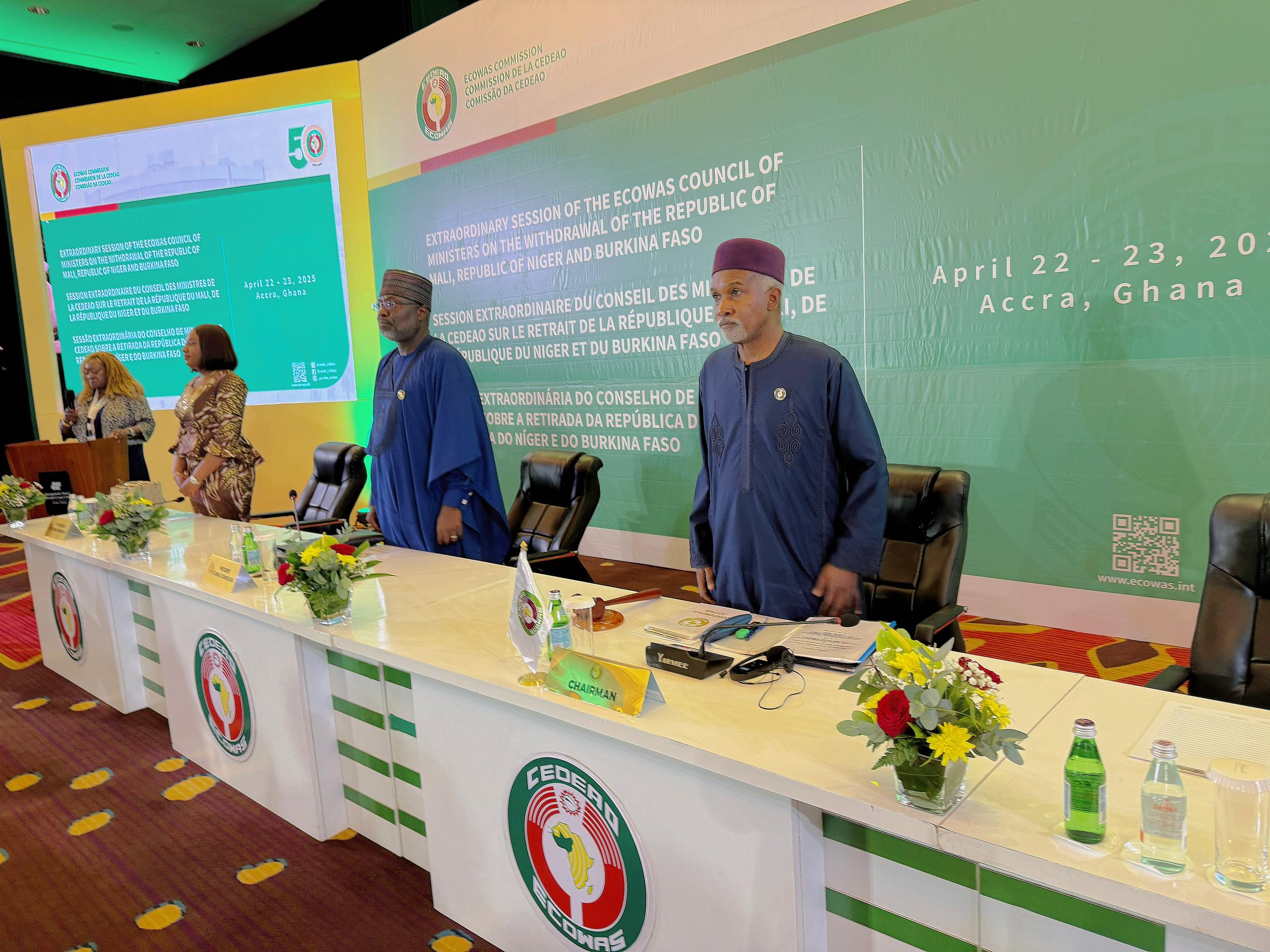
Top officials from across West Africa have  gathered in Accra for an emergency meeting of the ECOWAS Council of Ministers, as the regional body weighs critical decisions in the wake of formal withdrawal notifications from Burkina Faso, Mali, and Niger.

At the start of deliberations, Nigeria’s Foreign Affairs Minister, Ambassador Yusuf Maitama Tuggar, who currently chairs the Council, acknowledged Ghana’s warm reception and expressed gratitude for the country’s role in hosting the session.

He also praised the joint efforts of Ghana and the ECOWAS Commission in organising the recent “ECOWAS at 50” commemorations, calling the celebrations a timely opportunity to reflect on the journey so far—its shared progress, setbacks, and enduring aspirations.

One of the key items on the agenda was the possible relocation of some ECOWAS institutions, a move that has become necessary as political realities shift and the bloc reassesses its presence in the region.
Tuggar said: “This gathering demonstrates our unwavering commitment to the advancement of our regional community and the fulfillment of ECOWAS’s core purpose”.
 
The Extraordinary Session follows a directive from the Authority of Heads of State and Government during its 66th Ordinary Session, mandating the Council to adopt modalities and a contingency plan for the disengagement of the three Sahelian nations. 
 
The ECOWAS Commission is expected to present memoranda addressing the withdrawal process, suspension of programs in the affected countries, and challenges related to the free movement of people, goods, and services.
 
Additionally, the Council will examine the potential relocation of ECOWAS institutions and agencies currently based in Burkina Faso, Mali, and Niger, with an eye toward mitigating any disruptions caused by their exit. In a solemn tone, the Chair acknowledged that the session marks a difficult moment in ECOWAS’s history.
 
“It was never our wish to deliberate on the withdrawal of member states. But in recognizing the sovereignty of these nations under their current military governments, we must now adapt and chart a forward-looking path,” he said.
 
Despite the gravity of the situation, Tuggar urged ministers to view the crisis as an opportunity for institutional renewal and a recommitment to regional integration. He emphasized that ECOWAS remains the most integrated regional bloc in Africa, underpinned by harmonized policies and a shared vision for political, economic, and security cooperation.
 
“As we look ahead, our responsibility is to maintain the ECOWAS legacy and pass it on stronger to the next generation. Our unity has been tested before—and we emerged stronger. We will do so again,” he stated.
 
The Chair therefore called on his colleagues to engage in constructive deliberations and to ensure the effective implementation of the withdrawal, reaffirming that ECOWAS remains the premier platform for addressing West Africa’s collective challenges.
 
“Membership, as the saying goes, has its privileges,” he added.
 
 
Add a Comment

Leave a Reply

Keep Up to Date with the Most Important News

By pressing the Subscribe button, you confirm that you have read and are agreeing to our Privacy Policy and Terms of Use
Advertisement