Connect with us

News

Legacy Honoured in Ede as Leadership Centre Opens in Memory of Isiaka Adeleke+PHOTOS

Published

on

ADVERTISEMENT
Zoom Ad
ADVERTISEMENT
Zoom Ad

…as Rep Salam say true leadership begins with compassion

By Gloria Ikibah

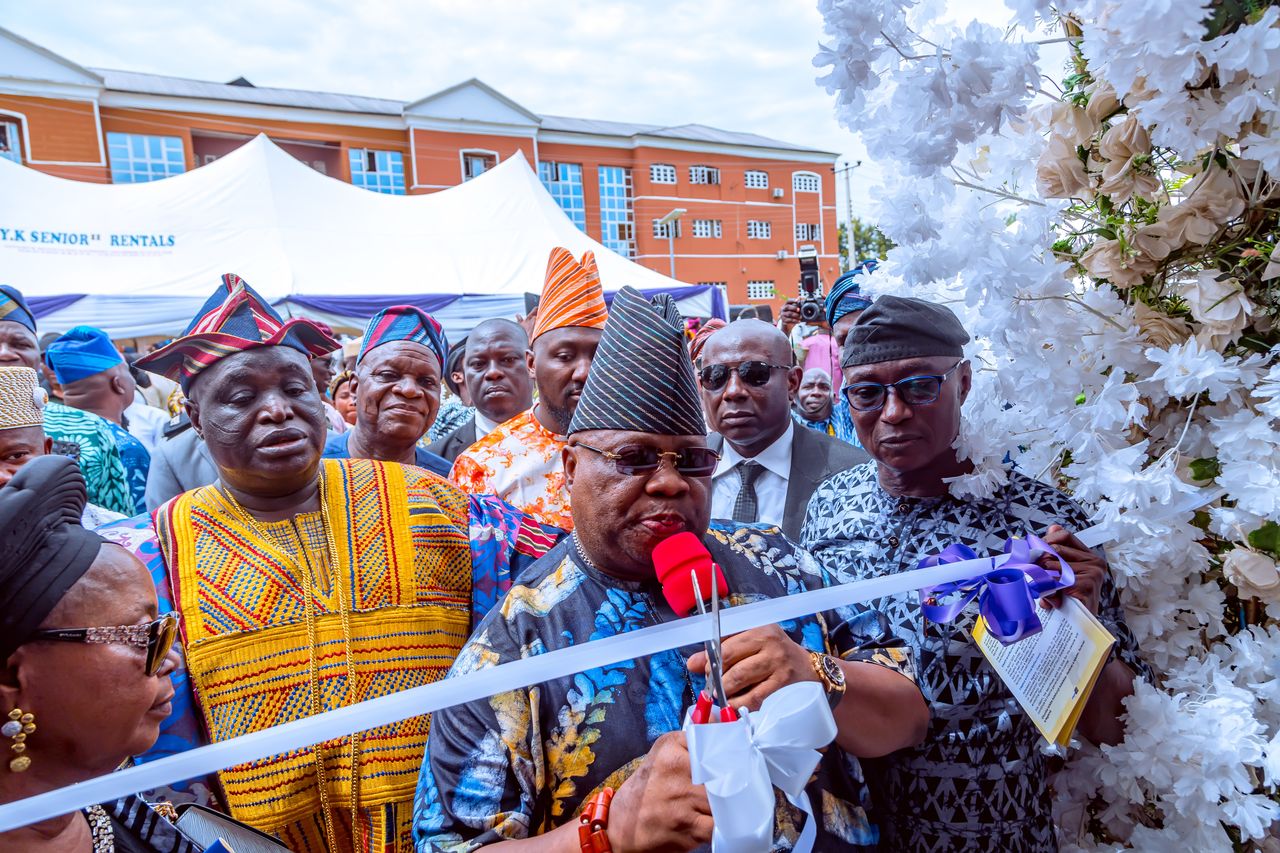
A quiet air of reverence filled the grounds of Adeleke University in Ede, Osun State, as Governor Ademola Adeleke officially opened a newly completed leadership centre named in honour of his late brother, Senator Isiaka Adetunji Adeleke.

The centre, a project facilitated by member representing Ede North, Ede South, Egbedore, and Ejigbo federal constituency of Osun State in the House of Representatives, Rep. Bamidele Salam, stands as both a memorial and a statement of intent—a space dedicated to raising a new generation of leaders rooted in empathy, integrity, and public service.

Advertisement

Describing the facility as a “landmark initiative” during his address, Governor Adeleke reflected on the values his late brother embodied—values he said continue to inspire governance and community-building across the state.
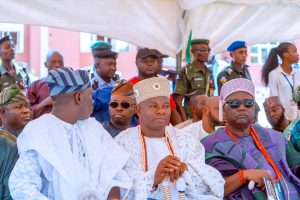
Traditional rulers, community leaders, and dignitaries joined in celebrating the late Isiaka Adeleke, the state’s first civilian governor, with heartfelt tributes that echoed his deep connection to the people and his legacy of accessible leadership.

Rep. Salam, whose vision brought the centre to life, spoke of the late senator’s enduring influence, stating, “Compassion is at the root of true leadership. Senator Adeleke lived this principle, and this centre is a reflection of that truth.”

For many in attendance, the moment marked more than a dedication—it was a reminder of what public service should look like: human, humble, and lasting.

Advertisement

He said, “It is with mixed feelings of joy and remembrance that I attend this event as a special guest. The commissioning of the leadership centre named after my late brother, the first executive governor of Osun State, is a landmark event. The significance is both for the Adeleke dynasty and the people of Osun State.

“My late brother, former Senator and pioneer governor of our dear state, truly represents a school of thought in political leadership. His style, ideas, and philosophy are unique and distinctive. He was a model never before seen in Osun State. He is a leader deeply entrenched in people’s hearts because of his classic, people-centered governance approach.

“When he was alive, my late brother was a leveler who detested discrimination in all forms. His artisan supporters were as important to him as his wealthy admirers. When invited to local events, he wore the clothes selected for the occasion. To him, all men and women are created equal, and differences based on class and wealth were unacceptable.”
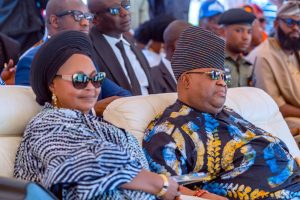
According to the Governor, “If late Senator Adeleke upheld equality in private and public life, he also demonstrated open inclusiveness as a political leader. In both private and public decisions, the late Governor ensured that all stakeholders had a say. He adopted the Athenian model of democracy, where all residents contributed to the governance process.

Advertisement

“Another unique feature was his pro-people outlook. Decisions were made from the viewpoint of the people. I’m u Throughout his tenure as Governor, my late brother focused on delivering democratic dividends and good governance to the people of Osun. He was deeply driven by a love for the citizenry, which he saw as the true goal of democracy.

“Aside from all the above, Senator Adeleke was a strong believer in building a state in infrastructure as a foundation for economic growth and development. He devoted the bulk of his time to creating critical institutions and agencies designed to jumpstart a strong state economy.

“A key ingredient of strong leadership is the ability to inspire followers. Our late Excellency spread optimism amidst governance challenges. His can-do spirit fostered a loyal political following. He mentored many new leaders who continued the spirit of open governance and sustainable development.

“Creating a leadership centre devoted to the first executive governor of Osun State is therefore a well-deserved tribute to a blessed legacy. It is also a legacy project for the present and future generations to learn and embrace a culture of inclusive, consultative, and open leadership.

Advertisement

“I therefore commend the initiator of this project and a mentee of our late brother, Hon. Bamidele Salam. His consistent efforts to sustain the legacy of Senator Isiaka Adeleke are deeply appreciated by the entire Adeleke dynasty and all admirers of our late leader and brother.

“It is my expectation that the centre will run programmes of various dimensions on political leadership. The nation today needs more leaders equipped with skills in open governance, consensus building, public-spiritedness, and selfless public service. The centre under Adeleke University can serve as a valuable platform for imparting those skills.

“It is on this note that I commissioned this centre in memory of the first executive governor of Osun State, the former Asiwaju of Edeland, my dear brother, Senator Isiaka Adetunji Adeleke”, he added.

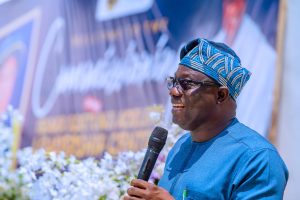
In an emotionally charged address, Rep. Salam reflected on the eighth anniversary of Senator Adeleke’s passing.
Advertisement

He recalled that it was a quiet Sunday morning, and he was in church at Dada Estate with his friend, Femi Adefila. Midway through the service, Femi suddenly got up and motioned for him to come outside. Confused but concerned, he followed.

Outside, under the shade of a tree, Femi broke the silence. Someone had just called with troubling news—”Gov” was gone. Still trying to process it, he asked, “Which Gov?” But before any answer could settle, the phone started ringing again. One call after another, each one confirming what they’d hoped wasn’t true.

He said: “It was on this day, eight years ago, that Osun State, Nigeria, and humanity lost a truly remarkable man, a great leader, His Excellency, Otunba Isiaka Adetunji Adeleke.

“May God Almighty grant him eternal rest. For a man like Otunba Adeleke, it’s difficult to build monuments worthy of his legacy. No matter how many statues or buildings we erect in his honour, it will never be enough—especially when we think of the countless lives he touched during his time with us.

Advertisement

“Today, as we commission this Leadership Centre, I view it as a small token, a mere drop in the ocean, of the many things that have been, and will continue to be, done in honour of Otunba Isiaka Adetunji Adeleke.

“When we decided to create this Leadership Centre, I thought about what leadership truly means. And at the heart of leadership is compassion.

“I remember a conversation I had with the Speaker of the Osun House of Assembly, Rt. Hon. Adewale Egbedun. He said, ‘You cannot be a political leader if you are not compassionate.’ A person who lacks compassion can never be a good leader. When we think of compassion, we look to the lives of great leaders like Jesus Christ of Nazareth, the Holy Prophet Muhammad, and others who embody this principle. And indeed, Otunba Isiaka Adeleke was one of those leaders who exemplified compassion”.

He went on to explain that the Leadership Centre was built not just as a structure, but as a way to keep memories alive, memories that could easily fade with time.

Advertisement

The lawmaker recalled a conversation from years back with a respected figure in the community, someone who had expressed curiosity about how Governor Isiaka Adeleke found his way into politics. He remembered Dr. Deji Adeleke, their father, once sharing that Otunba Adeleke’s first political aspiration wasn’t a grand one. In fact, he had initially set his sights on something closer to home—he had simply wanted to serve as a local government chairman.

“He approached his father, Senator Ayoola Adeleke, and announced his intention. To his father, this seemed almost laughable—Otunba Adeleke was too refined and too exposed to get involved in such local politics, especially after living for so many years in the United States. But, as time passed, Otunba Adeleke changed his mind and set his sights on running for governor of Oyo State.

“He went to his father again, this time with a bold plan to contest for the governorship, and once again, his father laughed at the idea. But Otunba Adeleke’s determination was unmatched. With unwavering commitment, dedication, and the full support of His Excellency Ademola Adeleke and the rest of his family, he threw himself into the race.

“And as history shows, the political campaign Otunba Adeleke ran in 1989, 1990, and 1991—before the creation of Osun State—was one of the most vibrant and flamboyant in the history of the old Oyo and Osun States.

Advertisement

“That kind of history is not something we can let fade into oblivion. It is something we must preserve. That’s why we are creating this Centre, so future generations can come, press a button, and learn about the journey of Otunba Isiaka Adetunji Adeleke.

“In a time when so much of political history is being lost, we need this Centre to document his life, his work, and his legacy.

“This is a place where younger generations, even 30 years from now, can come and learn who Otunba Isiaka Adetunji Adeleke was and what he stood for.

“Otunba Adeleke was a man of extreme patience and tolerance, qualities that are essential in any great leader.

Advertisement

“The design of this Leadership Centre’s frontage is inspired by the traditional cap of Otunba Isiaka Adetunji Adeleke, and inside, we have a library, a photo gallery, three offices, and a lecture hall that can accommodate up to 250 or 300 people.

“We also have a development plan for the next three to five years to ensure that systems and processes are put in place to sustain the vision and mission of this Leadership Centre.

“Lastly, I want to take a moment to commend the siblings, wife, and children of Otunba Isiaka Adetunji Adeleke. Your support and commitment to his legacy are invaluable,” he added.

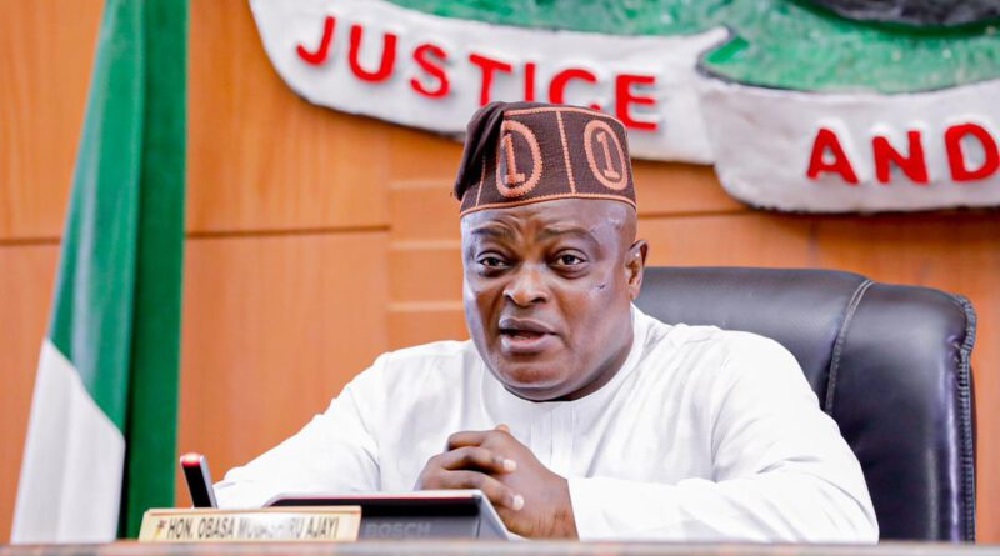
Also speaking at the event, the Timi of Edeland, Oba Munirudeen Adesola Lawal (Laminisa I), referred to Otunba Isiaka Adeleke as “an embodiment of wisdom, strength, and leadership.”

Advertisement

He commended Rep. Salam for putting the history together and setting records.
Continue Reading
Advertisement
Click to comment

You must be logged in to post a comment Login

Leave a Reply

News

Atiku And Other Northern Muslims Reject INEC 2027 Elections Dates

Published

on

By

ADVERTISEMENT
Zoom Ad
ADVERTISEMENT
Zoom Ad

The announcement by the Independent National Electoral Commission (INEC) fixing dates for the 2027 general elections has sparked widespread criticism, particularly among northern Muslim leaders and political figures who argue that the schedule coincides with the Islamic holy month of Ramadan.

Former Vice President Atiku Abubakar has demanded an immediate change of the date released by the Independent National Electoral Commission for the 2027 general elections, stating it falls within the Ramadan period.

“The Independent National Electoral Commission (INEC) must urgently reconsider the February 20, 2027 date it has announced for the general elections,” Mr Abubakar said in a statement on Friday. “That date falls squarely within the Ramadan period (February 7 – March 8, 2027), a sacred season of fasting, reflection, and spiritual devotion for millions of Nigerian Muslims.”

INEC had earlier released the official elections timetable, outlining dates for campaigns, voters’ registration, political parties’ primary elections and general elections.

Advertisement

However, Mr Abubakar blasted INEC for fixing the elections within the holy month of Ramadan, accusing the electoral umpire of poor judgement and insensitivity to the country’s socio-religious realities.

“Elections are not mere administrative rituals; they are national exercises that demand maximum participation, physical endurance, and collective focus. Fixing such a critical civic exercise in the middle of a major religious observance reflects poor judgment and a troubling lack of sensitivity to the nation’s socio-religious realities,” the ADC chieftain said.

While noting that inclusive planning was fundamental, the former vice president said INEC’s poor handling of election timing casts doubt on the capacity of the body to deliver free and fair elections to Nigerians.

“In a diverse country like Nigeria, inclusive planning is not optional, it is fundamental. Something as basic as choosing a broadly acceptable date should not be mishandled. It speaks to competence, foresight, and respect for citizens.

Advertisement

“If INEC struggles with getting a simple matter of timing right, Nigerians are justified in asking: what assurance do we have that it will competently deliver free, fair, and credible elections in 2027?” Mr Abubakar stated.

We have recently deactivated our website’s comment provider in favour of other channels of distribution and commentary. We encourage you to join the conversation on our stories via our Facebook, Twitter and other social media pages.

Ramadan is a sacred period in Islam marked by fasting from dawn to sunset, increased prayers, and spiritual reflection. For many Muslims, the month involves physical restraint, heightened devotion, and communal religious activities that can be physically demanding.

Critics argue that conducting national elections during this period could suppress voter turnout, especially in predominantly Muslim regions of northern Nigeria. They maintain that elections require physical endurance, long hours at polling units, and active participation in vote protection and monitoring — activities that may prove challenging while fasting.

Advertisement

A statement circulating online described the move as “a troubling lack of sensitivity to Nigeria’s socio-religious realities,” emphasizing that election planning in a diverse country must take religious observances into account.

In Nigeria, where religion plays a significant role in public life, stakeholders insist that inclusive planning is not optional but fundamental to democratic credibility.

Atiku and Other Northern Voices React

Another northern commentator, Hamma Hayatu, declared confidently on social media that “the date for elections 2027 just released shall be changed,” reflecting a growing sentiment among critics that public pressure may force a review.

Advertisement

Several social media users echoed similar concerns, with one post reading: “There’s no way the Muslim majority will participate in the casting and protection of votes during Ramadan.”

Questions About Consultation and Planning

Observers say the controversy raises broader questions about the consultative process that preceded the announcement.

In past election cycles, INEC has often engaged political parties, civil society organizations, and security agencies in discussions around logistics and scheduling. However, critics argue that the Ramadan overlap suggests either insufficient consultation with religious and community leaders or an oversight in evaluating the socio-cultural implications of the dates.

Advertisement

Some commentators have framed the issue as a test of INEC’s foresight and administrative competence.

“If INEC struggles with getting a simple matter of timing right, Nigerians are justified in asking what assurance we have that it will competently deliver free, fair, and credible elections in 2027,” one political analyst wrote.

The concern is not merely symbolic. Analysts warn that even a marginal decline in voter turnout in key regions could influence electoral outcomes and fuel post-election disputes.

Risks to Voter Participation and Credibility

Advertisement

The primary fear expressed by critics is the potential suppression of voter turnout among Muslims observing the fast. During Ramadan, many adherents limit strenuous activities, especially under the hot sun, which characterizes much of Nigeria’s dry season in February and March.

Long queues at polling units, delays in accreditation, and potential security challenges could further discourage participation.

Election observers also note that reduced turnout in certain demographics may affect perceptions of legitimacy. In a country already grappling with concerns about voter apathy and trust in electoral institutions, any factor that appears to limit participation could undermine public confidence.

Moreover, Ramadan evenings are often dedicated to special prayers known as Taraweeh, meaning extended polling delays could clash with religious commitments.

Advertisement

Broader Political Implications

Beyond religious considerations, the controversy comes at a politically sensitive time as parties begin early maneuvering ahead of the 2027 race.

The northern region remains a crucial voting bloc in presidential elections. Any perception that its predominantly Muslim population is disadvantaged could become a major campaign issue.

Political strategists suggest that opposition parties may seize on the controversy to question INEC’s neutrality or competence, potentially escalating tensions.

Advertisement

At the same time, some voices have urged calm, noting that Ramadan does not automatically preclude civic participation and that Muslims in other countries have voted during the holy month. However, they acknowledge that Nigeria’s logistical and climatic realities differ significantly.

Pressure Mounts on INEC

As criticism intensifies, pressure is mounting on INEC to review the announced dates. Civil society groups and commentators argue that adjusting the calendar now would demonstrate responsiveness and strengthen public trust.

So far, INEC has not issued a formal statement addressing the Ramadan concerns. The Commission’s leadership may face increasing calls to clarify whether alternative dates were considered and what consultations informed the decision.

Advertisement

Election experts emphasize that revising the schedule at this early stage would not pose significant logistical challenges, given that 2027 is still over a year away.

A Test of Inclusivity

Ultimately, the debate over the 2027 election dates underscores Nigeria’s delicate balance of religion, politics, and democracy.

In a multi-ethnic, multi-religious society, national institutions are expected to demonstrate sensitivity to diverse realities. Critics insist that something as fundamental as election timing should reflect inclusive planning.

Advertisement

Whether INEC will reconsider its decision remains to be seen. However, the immediate public outcry signals that the issue resonates deeply, particularly among northern Muslim communities.

As the 2027 elections approach, the controversy serves as an early reminder that beyond logistics and ballots, the credibility of Nigeria’s democracy rests heavily on public trust — and that trust often begins with decisions that show respect for the nation’s diversity.

Continue Reading

News

Bashir Ahmad urges INEC to review 2027 election timetable, cites Ramadan

Published

on

By

ADVERTISEMENT
Zoom Ad
ADVERTISEMENT
Zoom Ad

Former presidential aide Bashir Ahmad has urged the Independent National Electoral Commission (INEC) to reconsider the dates announced for the 2027 general elections, saying the proposed timetable falls within the Muslim holy month of Ramadan and could affect participation.

INEC, in a notice issued on Friday, fixed February 20, 2027, for the presidential and National Assembly elections, while governorship and state assembly elections are scheduled for March 6, 2027.

The dates were announced at a news conference in Abuja by the commission’s chairman, Joash Amupitan.

Reacting in a post on X, Ahmad addressed Independent National Electoral Commission, expressing concern that both election days fall within Ramadan.

Advertisement

“Dear INEC Nigeria, this is a respectful observation following the announcement of February 20th and March 6th, 2027, as the date for the next presidential and National Assembly and governorship and state assembly elections respectively,” he wrote.

“The proposed dates fall within the holy month of Ramadan, a period during which many Muslims devote significant time to fasting, prayer, and spiritual reflection,” Ahmad added.

He warned that holding the elections during the period could pose challenges for many voters.

“If the intention is to encourage full and inclusive participation in the electoral process, scheduling such a critical national exercise during Ramadan may present challenges for a large segment of the population,” he said.

Advertisement

According to him, many Muslims reduce engagement in demanding activities during the fasting period in order to focus on religious obligations.

“Given the significant Muslim population in this country, it may be worthwhile to reconsider the timing to ensure broader participation and convenience for all citizens,” Ahmad stated.

He added that his observation was made “in the spirit of inclusiveness and national cohesion.”

Advertisement
Continue Reading

News

‘I’ll Never Let My Child Go There’: Niger State Parents Reject School Reopening Over Insecurity Fears

Published

on

By

ADVERTISEMENT
Zoom Ad
ADVERTISEMENT
Zoom Ad

Parents and community leaders in Niger State have expressed concern over the reopening of schools, citing the continued risks to children and education workers in areas affected by insecurity.

Several schools in Shiroro, Agwara, Rafi, and Mariga local government areas are located in communities that have experienced repeated attacks, kidnappings, and threats.

The November 2025 attack on St. Mary’s Catholic School in Papiri, Agwara, which prompted a state-wide closure, remains a reference point for assessing safety in schools across the state. Residents have said reopening without adequate security could expose students to similar risks.

Mohammed Musa Alawa, Deputy Imam of Allawa Central Mosque in Shiroro LGA questioned the government’s handling of school closures and reopening, saying the situation remains unsafe, Saharareporters can report.

Advertisement

“Firstly, I need to question the government’s act on school closure; is school closure actually meant to combat insecurity? If it’s a yes, then I guess reopening schools at this moment is not safe,” Alawa said.

He also highlighted specific schools in insecure areas as unsafe for children to attend.

“For instance, Model Primary School, Allawa, as listed among the schools reopened, I will never let my child go there as there has been no one in Allawa since April 25, 2024 when the government withdrew the military stationed there,” he said.

“Actually, the only modalities I would like the government to put in place is none other than to take necessary measures on combating these cruel beings. Wiping them or driving them out of the state is the only solution that will guarantee the safety of our children,” Alawa added.

Advertisement

Alawa raised concerns about the effect of armed presence near schools.

He said, “While I understand that in some areas vigilantes are guarding schools, the presence of armed men on school premises can instill fear in students and hinder their ability to focus on their studies.”

The Lapkama Freedom Fighters (LFF) said schools could only be reopened where there is “visible, sustained and credible security presence alongside clear emergency response mechanisms.”

They warned that reopening schools in areas with ongoing threats “exposes innocent children and education workers to grave dangers.”

Advertisement

LFF said they had engaged security agencies, conducted public awareness campaigns, and advocated for a coordinated school safety framework involving government, communities, and security forces.

They said they were “willing and ready to collaborate with government and security agencies on school safety assessment, support community-based early warning and protection initiatives around schools.”

Recent incidents have underscored ongoing risks.

An IED explosion between Kududu and Chukuba in Shiroro, along with repeated attacks in Papiri, indicates that some schools officially cleared for reopening remain in areas of concern. Parents said children should only return “where there is safety, protection and a chance for our children to learn in peace.”

Advertisement

Schools approved for reopening in Agwara, Rafi, and Mariga LGAs include Alhaji Zakari Mohammed Sani Nursery and Primary School; Army Children School, Wawa; Federal Government Girls College Staff Nursery and Primary School; and Waziri Primary School.

Some residents said insecurity in these areas has raised doubts about whether reopening is feasible without additional safety measures.

The Niger State Government has emphasised that schools in unsafe areas remain closed until credible security is restored.

Authorities have urged stakeholders to comply with reopening directives while prioritising the safety and educational development of students.

Advertisement

As of the time of filing this report, Niger State Police Public Relations Officer, Wasiu Abiodun, had not responded to SaharaReporters’ requests for comment on the safety of schools in the affected areas.

Continue Reading

Trending

Copyright © 2024 Naija Blitz News