
News
10 states borrow N417bn despite higher allocations



At least 10 Nigerian states collectively increased their domestic debt by N417.7bn year-on-year, despite a significant rise in revenue allocations from the Federation Account Allocation Committee, a review of official data has shown.
An analysis of the Debt Management Office’s quarterly reports on subnational debt reveals that Rivers, Enugu, Niger, Taraba, Bauchi, Benue, Gombe, Edo, Kwara, and Nasarawa raised their combined debt stock from N884.9bn in Q1 2024 to N1.3tn in Q1 2025.
This represents a 47.2 per cent year-on-year increase, raising questions about fiscal prudence and the long-term sustainability of borrowing at the state level.
The data also shows that the 10 states’ combined domestic debt increased quarter-on-quarter, from N1.26tn in Q4 2024 to N1.30tn in Q1 2025, an additional N42.3bn, representing a 3.4 per cent increase in just three months.
This rise in indebtedness comes at a time when FAAC disbursements to states have improved considerably, fuelled by rising oil prices, gains from naira devaluation, and revenue freed up from petrol subsidy removal.
However, the figures suggest that rather than leveraging these inflows to reduce debt, some states are borrowing even more. Rivers State topped the list with a domestic debt stock of N364.39bn as at Q1 2025, the highest among the 10 states.
While the figure remained unchanged from Q4 2024, it marked a year-on-year increase of N131.82bn or 56.7 per cent, compared to N232.58bn in Q1 2024.
Enugu State’s debt rose from N82.48bn in Q1 2024 to N188.42bn in Q1 2025, indicating a rise of N105.95bn or 128.4 per cent. Enugu also posted the most significant quarterly growth, adding N69.14bn between December 2024 and March 2025.
Niger State followed with an increase of N57.68bn year-on-year, moving from N86.07bn to N143.75bn, a 67 per cent rise. The state also saw a quarter-on-quarter rise of N3.02bn.
Taraba State more than doubled its domestic debt from N32.64bn to N82.93bn, indicating a year-on-year rise of N50.29bn or 154.1 per cent. Taraba’s quarterly debt also rose slightly by N1.54bn.
Bauchi State raised its debt stock from N108.39bn to N142.40bn, representing a year-on-year increase of N34.01bn or 31.4 per cent. However, quarter-on-quarter, Bauchi recorded a slight decline of N1.55bn.
Benue State posted a year-on-year increase of N13.09bn, from N116.73bn to N129.82bn, translating to an 11.2 per cent rise. The state also grew its debt by N7.25bn between Q4 2024 and Q1 2025.
Gombe State saw its debt rise from N70.81bn to N83.66bn year-on-year, adding N12.85bn or 18.1 per cent. However, the state reduced its debt from N89.24bn in Q4 2024, indicating a quarterly decline of N5.58bn.
Edo State, which owed N72.38bn in Q1 2024, increased its debt to N82.40bn by Q1 2025, a rise of N10.02bn or 13.8 per cent. On a quarter-on-quarter basis, Edo recorded the sharpest decline among the 10 states, reducing its debt by N30.60bn from the N113bn recorded in Q4 2024.
Kwara State increased its debt from N59.07bn to N60.10bn year-on-year, up by N1.03bn or 1.7 per cent. Its quarterly increase stood at N1.02bn.
Nasarawa State, the tenth on the list, increased its debt from N23.76bn to N24.73bn year-on-year, representing a rise of N968m or 4.1 per cent. Quarter-on-quarter, however, its debt dropped by N1.87bn.
Altogether, the 10 states’ combined domestic debt of N1.30tn accounted for 33.67 per cent of the total N3.87tn domestic debt of all 36 states and the FCT as of Q1 2025.
This is a significant jump from the N884.9bn recorded by the same 10 states in Q1 2024 when they accounted for just 21.8 per cent of the national subnational debt stock. In Q4 2024, they made up 31.8 per cent of the total.
The figures show that borrowing at the subnational level is increasingly concentrated in a small number of states. While the total domestic debt across all states and the FCT declined slightly from N4.07tn in Q1 2024 to N3.87tn in Q1 2025, the increase in the 10 states’ share suggests uneven fiscal behaviour.
However, it is important to note that Rivers State’s figure for Q1 2025 was as of December 2025, with the DMO report stating, “The Domestic Debt Stock for Rivers State was as at December 31, 2024”.
The debt figure of Rivers for Q1 2024 was as of March 31, 2023, which explains the huge surge within that period and also shows that the state has been slow in releasing its latest figures to the DMO.
In contrast, Enugu’s rapid debt accumulation—more than doubling in one year—has raised eyebrows. While it is unclear what projects the new borrowings are financing, the scale of the increase demands scrutiny.
For Niger and Taraba, which also posted large increases, the challenge will be ensuring that the borrowed funds translate into tangible developmental outcomes. Taraba’s 154.1 per cent jump year-on-year is the steepest in percentage terms.
Meanwhile, states like Gombe and Edo show some signs of fiscal restraint, having reduced their debts quarter-on-quarter. Edo, in particular, slashed its debt by over N30bn in three months, possibly reflecting repayment efforts or better debt management.
Experts worry that the failure to take advantage of higher allocations to reduce debt could create challenges in future years, especially if revenue inflows weaken or interest rates rise.
There are also concerns about the potential crowding-out effect, where states’ debt obligations consume a growing portion of their monthly allocations, leaving less for capital and social spending.
States with weak Internally Generated Revenue are particularly at risk, as they depend heavily on FAAC for survival. The PUNCH earlier reported that seven states spent an average of 190 per cent of their Internally Generated Revenue on debt servicing in the first quarter of 2025.
Data from the Q1 2025 Budget Implementation Reports of Bayelsa, Adamawa, Benue, Niger, Kogi, Taraba, and Bauchi states show that debt service expenditure in each of the states exceeded their IGR, in some cases by more than 300 per cent.
The trend, when compared with figures from the preceding quarter (Q4 2024), also reflects a sharp quarter-on-quarter surge in debt service cost, which rose by approximately 51 per cent across the states reviewed.
The PUNCH observed that seven Nigerian states spent a total of N98.71bn on debt servicing in Q1 2025, marking a sharp increase of N33.48bn or 51 per cent compared to the N65.24bn recorded in the previous quarter.
The Director and Chief Economist at Proshare Nigeria LLC, Teslim Shitta-Bey, warned that the rising debt burden on Nigeria’s subnational governments could challenge their fiscal stability in the coming years.
He stressed that most state governments, along with the Federal Government, had failed to effectively manage their balance sheets. Speaking to The PUNCH, Shitta-Bey said, “The challenge here is that most of the governments, including the Federal Government, are unable to manage their balance sheets properly. While borrowing might seem like an easy way to run operations, it is not necessarily the right approach.”
According to Shitta-Bey, borrowing should not be the default solution for governments. “Governments could consider longer-term debt structures that resemble equity, which might actually be more beneficial in the long run,” he explained.
He also called for a comprehensive register of national assets to help states raise capital. He used the example of the National Stadium, which had not been used for major activities for a while.
Shitta-Bey lamented the underuse of state revenue bonds, which were originally designed to generate revenue. “States need to focus on raising revenue bonds instead of general obligation bonds,” he said.
On his part, a Lagos-based economist, Adewale Abimbola, attributed the persistent fiscal fragility of Nigerian states to their economic non-viability and overreliance on federal allocations.
According to Abimbola, most states are not economically viable and depend heavily on disbursements from the Federation Account Allocation Committee for survival.
He noted that state governments, particularly the less vibrant ones, must begin to examine themselves inwardly to identify sectors in which they possess competitive advantages. “Once that is mapped out,” he said, “they need to communicate and amplify these opportunities to both the local private sector and foreign investors.”
Abimbola also stressed the importance of improving the ease of doing business, saying that states should adopt supportive policies and avoid stifling regulations, which often deter investment.
“The thing is, state governors know what to do. They know what to do,” he remarked pointedly. “But what’s lacking is the political will to pursue them.”
He expressed concern that this governance gap had worsened in 2025, as many political actors are now more focused on the 2027 elections than on addressing governance and development priorities.
A macroeconomic analyst, Dayo Adenubi, also emphasised the need for states to take more targeted steps toward boosting internally generated revenue as they grapple with rising debt obligations and constrained federal transfers.
According to Adenubi, one key strategy is to raise consumption levels in order to increase Value Added Tax collections.
He also stressed the importance of improving tax collection within state corridors, especially by enforcing taxes such as property taxes and transport-related levies, while ensuring that governments deliver on the social contract to maintain citizen trust and compliance.
Credit: PUNCH

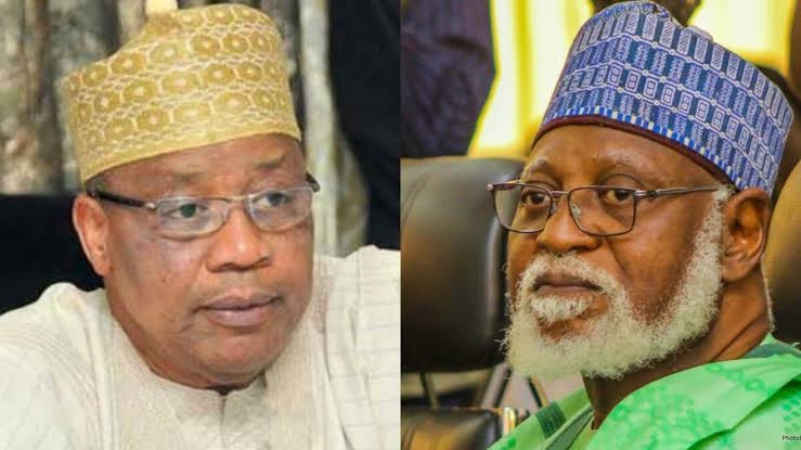
Former military President Ibrahim Badamasi Babangida and former Head of State Abdulsalami Abubakar have called for a thorough and transparent investigation into the deaths of 37 suspected illegal miners who died while in the custody of the Nigeria Security and Civil Defence Corps (NSCDC) in Minna, Niger State.
The former leaders made the call as concerns mounted over the circumstances surrounding the deaths, which have triggered public outrage, protests and calls for accountability.
The victims were among scores of suspected illegal miners arrested by NSCDC operatives during enforcement operations at mining sites in the M.I. Wushishi and Lukoto areas of Niger State on September 15 and 16, 2026. The deaths were discovered in the early hours of September 17.
The Niger State Government subsequently confirmed that 37 detainees had died in NSCDC custody. Governor Mohammed Umaru Bago declared three days of mourning and ordered an inquiry into the incident.
The circumstances surrounding the deaths remain under investigation.
The NSCDC initially said the detainees were found dead following a suspected disease outbreak, but its national headquarters stressed that no specific cause had been established and that medical and laboratory examinations were required before any conclusion could be reached.
Babangida, in a statement issued on his behalf by Dr Danladi Umar Abdulhameed, described the deaths as tragic and deeply disturbing while extending his condolences to the families of the deceased, as well as the government and people of Niger State.
He commended the state government for constituting a committee of inquiry and commencing medical and forensic examinations aimed at determining the circumstances and actual causes of the deaths.
According to Babangida, the investigative process was necessary to establish the facts and ensure that appropriate action was taken based on the findings.
He urged residents, particularly youths and relatives of the deceased, to remain calm and allow the investigation to proceed, warning against actions capable of escalating tensions or threatening peace and security in the state.
The former military president also expressed hope that the investigation would be conducted transparently and provide credible answers to the bereaved families and the wider public.
Similarly, Abdulsalami described the deaths of the 37 young people as a painful loss to their families, communities, Niger State and Nigeria.
The former Head of State called for an in-depth investigation to establish exactly what happened while the miners were in custody and to ensure that appropriate measures were put in place to prevent a recurrence.
He also urged relevant government agencies and stakeholders to strengthen safety measures at mining sites, particularly for young people whose livelihoods depend on artisanal mining and other economic activities.
Abdulsalami further appealed for calm among affected communities and called on the authorities to provide necessary support to the families of the deceased.
FG Suspends NSCDC Officers, Sets Up Independent Panel
The calls from the former leaders came as the Federal Government stepped up its response to the incident.
President Bola Ahmed Tinubu directed a comprehensive investigation, while the Minister of Interior, Olubunmi Tunji-Ojo, constituted a 10-member independent committee to investigate the deaths.
The government also suspended the Niger State NSCDC Commandant and 20 other officers pending the outcome of the investigation. The committee has two weeks to complete its assignment and submit its report.
The investigation is expected to examine the circumstances of the arrests, the condition of the detainees upon arrival, the conditions in which they were held, medical attention provided to them and other factors that may have contributed to the deaths.
The incident has also prompted broader calls for accountability from civil society and human rights organisations, with groups demanding an independent investigation into the deaths.
Meanwhile, questions have continued to surround the conditions under which the detainees were held. Some survivors reportedly alleged severe overcrowding and poor ventilation, while authorities have maintained that the actual cause of death must be established through proper investigation and medical evidence.
The incident has heightened concerns about the enforcement of Nigeria’s campaign against illegal mining, an activity authorities have linked to environmental degradation and, in some areas, criminal networks. At the same time, the deaths have raised questions about the treatment and welfare of suspects while in state custody.
The independent investigation is expected to determine the circumstances that led to the deaths and identify any responsibility or institutional failures involved.

The Bauchi State Police Command has arrested 47 people allegedly posing as operatives of a state-owned security outfit during the by-election in Disina State Constituency, Shira Local Government Area of the state.
The suspects were arrested at various polling units on Saturday while allegedly armed with guns, cutlasses and sticks, contrary to the Electoral Act and security directives issued ahead of the election.
The Police Public Relations Officer of the command, SP Nafiu Habib, disclosed this in a statement on Saturday.
Habib said, “Following our deployment for election duty in Disina State Constituency, Shira LGA, 47 operatives claiming to be members of a state-owned security outfit were arrested within polling units.
“They were found in possession of guns, cutlasses and sticks, in contravention of the Electoral Act and the security directives earlier issued.”
The PPRO added that the suspects were immediately taken into custody, while firearms and other dangerous weapons were recovered from them.
He said, “The suspects were immediately taken into custody. Exhibits, including firearms and other dangerous weapons, were recovered from them.”
According to Habib, the Commissioner of Police, Sani-Omolori Aliyu, condemned the development and directed that the suspects be transferred to the State Criminal Investigation Department for further investigation.
He quoted the CP as condemning “this blatant disregard for lawful directives and attempt to undermine the electoral process.”
Habib said the suspects had been transferred to the SCID, Bauchi, “for discreet investigation and prosecution in accordance with the law.”
The command reiterated its commitment to ensuring a peaceful, credible and hitch-free by-election.
It warned that “any person or group, regardless of status, who attempts to disrupt the electoral process or cause a breach of peace will be decisively dealt with.”
The police also called on members of the public to remain law-abiding and report suspicious activities to the authorities.
PUNCH reports that the Bauchi State Police Command, in a statement issued on Friday, September 18, 2026, outlined security arrangements for the bye-elections in Disina State Constituency, Shira LGA, and Sakwa State Constituency, Zaki LGA.
In the statement, the command declared that “state-owned security outfits, quasi-security agencies, private security guards and vigilante groups are not allowed to participate in election security coverage.”
The command stated that only “statutorily recognised security agencies under the Inter-Agency Consultative Committee on Election Security are mandated to provide security for the elections.”
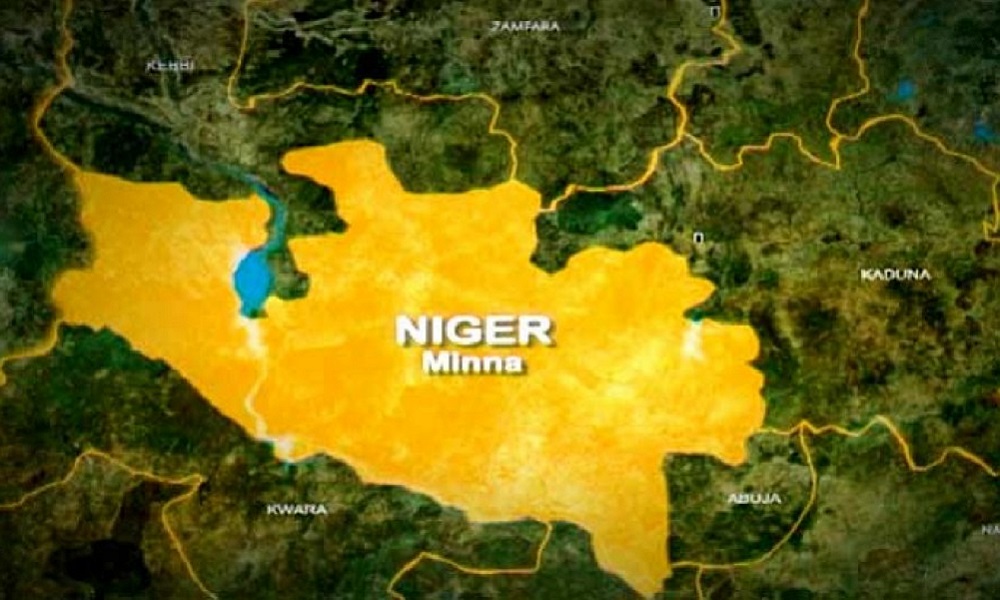
The federal government has constituted a 10-member independent committee to investigate the deaths of the 37 suspected illegal miners detained last Thursday by the Nigerian Security and Civil Defence Corps (NSCDC) in Minna, the Niger State capital.
This development followed Friday’s directive by President Bola Tinubu for a “full and transparent” investigation into the deaths of the suspected illegal miners.
The Northern Senators Forum (NSF), Nigerian Bar Association (NBA) and the Campaign for Democracy (CD) have also called for a thorough, independent and transparent probe into the incident.
In a statement issued yesterday, the Minister of Interior, Olubunmi Tunji-Ojo, also released the names of the 21 officers suspended so far in connection with the incident.
This is just as the former military President, General Ibrahim Badamasi Babangida (rtd.), has denied ownership of the mining site in Minna where some of the suspected illegal miners were arrested before they died in the custody of the NSCDC.
Babangida alongside former Head of State, General Abdulsalami Abubakar (rtd), also called for thorough and extensive investigations into the deaths of the 37 suspected illegal miners.
The National Human Rights Commission (NHRC) has also commenced a preliminary investigation into the incident.
On Thursday, the NSCDC said it arrested the suspects during operations conducted on September 15 and 16 around Lt. Gen. Mohammed Inuwa Wushishi Estate in Minna.
The NSCDC commandant in Niger State, Suberu Aniviye, had claimed in a statement that “scores of the detained suspects were found dead in the early hours of Thursday following a suspected outbreak of disease”.
Following the development, the federal government suspended him and ordered a full investigation into the circumstances surrounding the deaths.
Tunji-Ojo directed the suspension of all officers involved in the incident pending the conclusion of the independent committee’s investigation.
“The minister directed the committee to determine responsibility, complicity, negligence, and misconduct, and to recommend appropriate action, compensation where applicable, and measures to prevent a recurrence,” the statement reads.
The minister also warned that “any attempt to destroy or conceal evidence, intimidate witnesses or obstruct the investigation will be treated as a serious offence.”
A retired deputy director-general of the Department of State Services (DSS), Jonathan Kure, chairs the committee. In contrast, former director-general of the Nigeria Law School Isa Hayatu Chiroma will serve as secretary.
Other members include retired Assistant Inspector-General of Police (AIG) Hosea Karma; former chief medical director of the University of Ilorin Teaching Hospital, Olayinka Buhari; a representative of the Minna Emirate Council; and a representative of the Niger State government.
Also on the list are National Secretary of Miners Association of Nigeria, Liman Sulaiman; human rights lawyer, Deji Adeyanju; Zainab Suleiman Okino of Blueprint Newspaper; and a public affairs analyst, George Agbakahi.
The full list of the officers so far suspended, in addition to the Niger State NSCDC Commandant, are: Officer-in-Charge (O/C) Station Guard, SC Usman Isah Ndamaka; Station Guard, ASCI Hassan Mohammed; Station Guard, CCA Bala Mohammed; Arresting Officer/O/C Investigation, CSC Oluwadare Sunday; Arresting Officer, DCC Obafemi Elvis; Arresting Officer, CSC Annas Shitto Lamino; O/C Legal, ACC Stephen Tsado; and HOD INT/INV, DCC Philip Ajayi.
Others are: Day/Night Duty Officer, ASCI Alhassan Mohammed; Guard Duty, IC Abdullahi Sale; Guard Duty, IC Mohammed Sonfada; Guard Duty, CAI Liman Abubakar; Guard Duty, CAI Bala Usman; Guard Duty, IC Mohammed Jiya; Guard Duty, DSC Isah Suleiman; Guard Duty, CAI Ahmed Wushishi; Guard Duty, IC Sale Adamu; Guard Duty, IC Haruna Mohammed; Guard Duty, ASCI Aliyu Sallah; and Guard Duty, CAI Isah Sanusi.
Meanwhile, NHRC has also commenced a preliminary investigation into the incident.
Executive Secretary of the NHRC, Mr Tony Ojukwu, condemned the incident and expressed concern over the loss of lives in state custody, particularly as the precise cause of death remains subject to investigation.
According to the commission, the bodies of the deceased were deposited at the General Hospital, Minna, for medical examination, while security authorities have initiated separate investigations.
Ojukwu, in a statement issued by the organisation’s Director, Corporate Affairs and External Linkages, Fatimah Mohammed, directed the Commission’s preliminary investigation to establish the circumstances leading to the deaths.
He also called for an independent forensic autopsy and the preservation of all relevant evidence.
He further stressed that the investigations already ordered by the Minister of Interior and the NSCDC must be conducted transparently, thoroughly and in accordance with international standards governing investigations into potentially unlawful deaths in custody.
“Citizens who are arrested on suspicion by law enforcement agents are by law expected to enjoy the full complement of their fundamental human rights in accordance with national and international human rights instruments,” Ojukwu said.
Northern Senators, NBA, CD Demand Independent Probe
Meanwhile, the Northern Senators Forum (NSF) has demanded an immediate, transparent and independent investigation into the incident.
The senators also called for independent autopsies on all the victims. They demanded that anyone found culpable of criminal negligence, unlawful detention, reckless conduct or any deliberate act that contributed to the deaths should be prosecuted, irrespective of rank or position.
The Chairman of the Northern Senators Forum, Senator Abdulaziz Musa Yar’adua, in a statement issued yesterday, said the circumstances surrounding the deaths were “deeply disturbing and unacceptable.”
He stressed that no Nigerian should lose his life in the custody of an agency established to protect lives and property.
The senators also demanded answers to questions surrounding the alleged distress calls, including when they were made, who heard them and what action was taken before the deaths occurred.
The President of the NBA, Mrs Oyinkansola Badejo-Okusanya (SAN), has also called for a thorough, independent and transparent investigation into the deaths of the 37 suspected miners.
The association said it had deliberately refrained from reaching conclusions on the cause of the deaths pending the outcome of investigations, stressing that the incident required evidence-based findings.
The NBA said the prompt response by the authorities was commendable but stressed that the credibility of the process would depend on the independence and thoroughness of the investigations.
“The true measure of the response will ultimately not be the speed with which investigations are announced, but rather the independence and thoroughness with which they are conducted, the transparency with which their findings are made known, and the accountability that follows from those findings,” it said.
The association also called for an investigation into wider illegal mining operations, including those who may have owned, financed, controlled, or profited from the activities.
Similarly, the CD has called on the National Security Adviser (NSA), Mallam Nuhu Ribadu, and other senior security officials to institute an independent investigation into the incident.
The group also called for the immediate suspension of the NSCDC Controller-General, pending the outcome of the investigation, arguing that such a step would help ensure the credibility and independence of the probe.
In a statement issued yesterday by its National President, Reverend Ifeanyi Odili, the CD said the circumstances surrounding the reported deaths required urgent clarification, transparency and accountability.

IBB, Abdulsalami Demand Full Probe Into Deaths of 37 Miners in NSCDC Custody

Bauchi by-election: Police arrest 47 for impersonating state security

FG Probes Deaths of 37 Suspected Illegal Miners in Minna, Names 20 Suspended NSCDC Officers




-
 News22 hours ago
‘Now They See Nigerians as Drug Dealers Abroad’ — Cleric Blasts Tinubu Over Nigeria’s Image
-
 News21 hours ago
Beyond Party Lines: Why Wike Has Become a Political Asset to Tinubu
-

 News5 hours ago
Nicki Minaj follows Peter Obi on X after viral repost
-

 News5 hours ago
TikToker remanded over alleged defamation of Kano politician
-
 Metro5 hours ago
NDLEA officer drowns chasing drug suspect into Delta river
-

 News5 hours ago
Social media abuzz as Aisha Buhari, Seyi Tinubu, Dino Melaye, others attend pre-wedding in Spain
Warning: Undefined variable $user_ID in /home/naijuinz/public_html/wp-content/themes/zox-news/comments.php on line 49
You must be logged in to post a comment Login