News
10 states borrow N417bn despite higher allocations
- /home/naijuinz/public_html/wp-content/plugins/mvp-social-buttons/mvp-social-buttons.php on line 27
https://naijablitznews.com/wp-content/uploads/2024/03/Debt-Management-Office-DMO.jpg&description=10 states borrow N417bn despite higher allocations', 'pinterestShare', 'width=750,height=350'); return false;" title="Pin This Post">
- Share
- Tweet /home/naijuinz/public_html/wp-content/plugins/mvp-social-buttons/mvp-social-buttons.php on line 72
https://naijablitznews.com/wp-content/uploads/2024/03/Debt-Management-Office-DMO.jpg&description=10 states borrow N417bn despite higher allocations', 'pinterestShare', 'width=750,height=350'); return false;" title="Pin This Post">
At least 10 Nigerian states collectively increased their domestic debt by N417.7bn year-on-year, despite a significant rise in revenue allocations from the Federation Account Allocation Committee, a review of official data has shown.

An analysis of the Debt Management Office’s quarterly reports on subnational debt reveals that Rivers, Enugu, Niger, Taraba, Bauchi, Benue, Gombe, Edo, Kwara, and Nasarawa raised their combined debt stock from N884.9bn in Q1 2024 to N1.3tn in Q1 2025.
This represents a 47.2 per cent year-on-year increase, raising questions about fiscal prudence and the long-term sustainability of borrowing at the state level.

The data also shows that the 10 states’ combined domestic debt increased quarter-on-quarter, from N1.26tn in Q4 2024 to N1.30tn in Q1 2025, an additional N42.3bn, representing a 3.4 per cent increase in just three months.
This rise in indebtedness comes at a time when FAAC disbursements to states have improved considerably, fuelled by rising oil prices, gains from naira devaluation, and revenue freed up from petrol subsidy removal.
However, the figures suggest that rather than leveraging these inflows to reduce debt, some states are borrowing even more. Rivers State topped the list with a domestic debt stock of N364.39bn as at Q1 2025, the highest among the 10 states.
While the figure remained unchanged from Q4 2024, it marked a year-on-year increase of N131.82bn or 56.7 per cent, compared to N232.58bn in Q1 2024.
Enugu State’s debt rose from N82.48bn in Q1 2024 to N188.42bn in Q1 2025, indicating a rise of N105.95bn or 128.4 per cent. Enugu also posted the most significant quarterly growth, adding N69.14bn between December 2024 and March 2025.
Niger State followed with an increase of N57.68bn year-on-year, moving from N86.07bn to N143.75bn, a 67 per cent rise. The state also saw a quarter-on-quarter rise of N3.02bn.
Taraba State more than doubled its domestic debt from N32.64bn to N82.93bn, indicating a year-on-year rise of N50.29bn or 154.1 per cent. Taraba’s quarterly debt also rose slightly by N1.54bn.
Bauchi State raised its debt stock from N108.39bn to N142.40bn, representing a year-on-year increase of N34.01bn or 31.4 per cent. However, quarter-on-quarter, Bauchi recorded a slight decline of N1.55bn.
Benue State posted a year-on-year increase of N13.09bn, from N116.73bn to N129.82bn, translating to an 11.2 per cent rise. The state also grew its debt by N7.25bn between Q4 2024 and Q1 2025.
Gombe State saw its debt rise from N70.81bn to N83.66bn year-on-year, adding N12.85bn or 18.1 per cent. However, the state reduced its debt from N89.24bn in Q4 2024, indicating a quarterly decline of N5.58bn.
Edo State, which owed N72.38bn in Q1 2024, increased its debt to N82.40bn by Q1 2025, a rise of N10.02bn or 13.8 per cent. On a quarter-on-quarter basis, Edo recorded the sharpest decline among the 10 states, reducing its debt by N30.60bn from the N113bn recorded in Q4 2024.
Kwara State increased its debt from N59.07bn to N60.10bn year-on-year, up by N1.03bn or 1.7 per cent. Its quarterly increase stood at N1.02bn.
Nasarawa State, the tenth on the list, increased its debt from N23.76bn to N24.73bn year-on-year, representing a rise of N968m or 4.1 per cent. Quarter-on-quarter, however, its debt dropped by N1.87bn.
Altogether, the 10 states’ combined domestic debt of N1.30tn accounted for 33.67 per cent of the total N3.87tn domestic debt of all 36 states and the FCT as of Q1 2025.
This is a significant jump from the N884.9bn recorded by the same 10 states in Q1 2024 when they accounted for just 21.8 per cent of the national subnational debt stock. In Q4 2024, they made up 31.8 per cent of the total.
The figures show that borrowing at the subnational level is increasingly concentrated in a small number of states. While the total domestic debt across all states and the FCT declined slightly from N4.07tn in Q1 2024 to N3.87tn in Q1 2025, the increase in the 10 states’ share suggests uneven fiscal behaviour.
However, it is important to note that Rivers State’s figure for Q1 2025 was as of December 2025, with the DMO report stating, “The Domestic Debt Stock for Rivers State was as at December 31, 2024”.
The debt figure of Rivers for Q1 2024 was as of March 31, 2023, which explains the huge surge within that period and also shows that the state has been slow in releasing its latest figures to the DMO.
In contrast, Enugu’s rapid debt accumulation—more than doubling in one year—has raised eyebrows. While it is unclear what projects the new borrowings are financing, the scale of the increase demands scrutiny.
For Niger and Taraba, which also posted large increases, the challenge will be ensuring that the borrowed funds translate into tangible developmental outcomes. Taraba’s 154.1 per cent jump year-on-year is the steepest in percentage terms.
Meanwhile, states like Gombe and Edo show some signs of fiscal restraint, having reduced their debts quarter-on-quarter. Edo, in particular, slashed its debt by over N30bn in three months, possibly reflecting repayment efforts or better debt management.
Experts worry that the failure to take advantage of higher allocations to reduce debt could create challenges in future years, especially if revenue inflows weaken or interest rates rise.
There are also concerns about the potential crowding-out effect, where states’ debt obligations consume a growing portion of their monthly allocations, leaving less for capital and social spending.
States with weak Internally Generated Revenue are particularly at risk, as they depend heavily on FAAC for survival. The PUNCH earlier reported that seven states spent an average of 190 per cent of their Internally Generated Revenue on debt servicing in the first quarter of 2025.
Data from the Q1 2025 Budget Implementation Reports of Bayelsa, Adamawa, Benue, Niger, Kogi, Taraba, and Bauchi states show that debt service expenditure in each of the states exceeded their IGR, in some cases by more than 300 per cent.
The trend, when compared with figures from the preceding quarter (Q4 2024), also reflects a sharp quarter-on-quarter surge in debt service cost, which rose by approximately 51 per cent across the states reviewed.
The PUNCH observed that seven Nigerian states spent a total of N98.71bn on debt servicing in Q1 2025, marking a sharp increase of N33.48bn or 51 per cent compared to the N65.24bn recorded in the previous quarter.
The Director and Chief Economist at Proshare Nigeria LLC, Teslim Shitta-Bey, warned that the rising debt burden on Nigeria’s subnational governments could challenge their fiscal stability in the coming years.
He stressed that most state governments, along with the Federal Government, had failed to effectively manage their balance sheets. Speaking to The PUNCH, Shitta-Bey said, “The challenge here is that most of the governments, including the Federal Government, are unable to manage their balance sheets properly. While borrowing might seem like an easy way to run operations, it is not necessarily the right approach.”
According to Shitta-Bey, borrowing should not be the default solution for governments. “Governments could consider longer-term debt structures that resemble equity, which might actually be more beneficial in the long run,” he explained.
He also called for a comprehensive register of national assets to help states raise capital. He used the example of the National Stadium, which had not been used for major activities for a while.
Shitta-Bey lamented the underuse of state revenue bonds, which were originally designed to generate revenue. “States need to focus on raising revenue bonds instead of general obligation bonds,” he said.
On his part, a Lagos-based economist, Adewale Abimbola, attributed the persistent fiscal fragility of Nigerian states to their economic non-viability and overreliance on federal allocations.
According to Abimbola, most states are not economically viable and depend heavily on disbursements from the Federation Account Allocation Committee for survival.
He noted that state governments, particularly the less vibrant ones, must begin to examine themselves inwardly to identify sectors in which they possess competitive advantages. “Once that is mapped out,” he said, “they need to communicate and amplify these opportunities to both the local private sector and foreign investors.”
Abimbola also stressed the importance of improving the ease of doing business, saying that states should adopt supportive policies and avoid stifling regulations, which often deter investment.
“The thing is, state governors know what to do. They know what to do,” he remarked pointedly. “But what’s lacking is the political will to pursue them.”
He expressed concern that this governance gap had worsened in 2025, as many political actors are now more focused on the 2027 elections than on addressing governance and development priorities.
A macroeconomic analyst, Dayo Adenubi, also emphasised the need for states to take more targeted steps toward boosting internally generated revenue as they grapple with rising debt obligations and constrained federal transfers.
According to Adenubi, one key strategy is to raise consumption levels in order to increase Value Added Tax collections.
He also stressed the importance of improving tax collection within state corridors, especially by enforcing taxes such as property taxes and transport-related levies, while ensuring that governments deliver on the social contract to maintain citizen trust and compliance.
Credit: PUNCH
News
Primaries:”You’ve no right to declare winners, APC chairman tells state primary electotoral chairmen, insists only NWC can declare winners
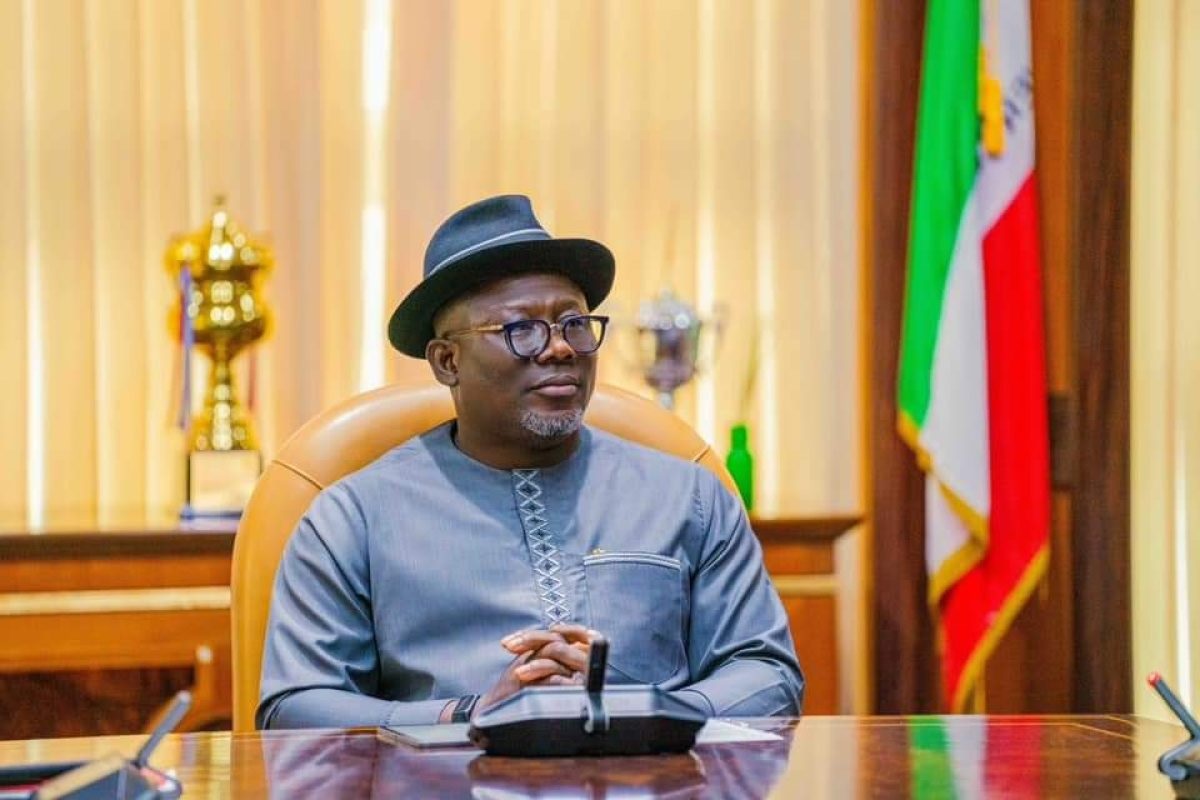
The National Chairman of the All Progressives Congress (APC), Nentawe Yilwatda, has declared that no state chapter or electoral committee of the party has the authority to announce winners of the party’s ongoing primary elections, insisting that only the National Working Committee (NWC) can ratify and officially declare results.
Yilwatda made the clarification on Sunday night in an interview with a national tv station.
According to the APC chairman, all results from the primaries conducted across the country must be transmitted to the party’s national headquarters in Abuja, where the NWC will carry out final verification before any winner is officially recognized.
“The states cannot announce winners until the NWC gives its verdict,” he stated during the live interview, stressing that the party’s constitution and internal guidelines place the final authority for primary election declarations on the national leadership.
The directive effectively nullifies several results already announced by state chapters and local collation committees following the recently concluded primaries.
The development comes amid growing controversies trailing the APC primaries in some states, with allegations of irregularities and manipulation emerging from different camps.
News
Rep Ugochinyere Alleges Plot to Frame Him, Warns Against Move to Silence Opposition Parties
…accuse police unit of abducting constituents, as he appeal to IGP, PSC to intervene
By Gloria Ikibah
Member representing Ideato North and South Federal Constituency of Imo State in the House of Representatives, Ikenga Imo Ugochinyere, has accused some officers attached to the Tiger Base and Violent Crime Response Unit of the Imo State Police Command of abducting and torturing his constituents in what he described as an attempt to implicate him in criminal activities.
Speaking at a press conference in Abuja on Monday, the lawmaker alleged that some of the detained individuals were being forced to make statements linking him to terrorism, gun-running and murder.
He said: “Imo police are abducting my constituents and torturing them in a bid to frame me for frivolous criminal allegations, terrorism, gun-running and murder,” Ugochinyere alleged.
“They are creating fear and uncertainty in Imo State and attempting to intimidate opposition voices ahead of the elections.”
The federal lawmaker claimed that the activities of some officers attached to the controversial Tiger Base unit had turned the police structure into what he described as a tool for political persecution.
He appealed to the Inspector-General of Police and the Police Service Commission to intervene urgently and investigate the officers involved, particularly those allegedly linked to unlawful arrests, extortion and torture.
Ugochinyere also raised concerns over what he described as a coordinated attempt to deregister opposition political parties through the courts ahead of the 2027 elections.
He mentioned parties including the African Democratic Congress, Accord Party, Action Peoples Party and the Zenith Labour Party as groups allegedly targeted in the legal action.
According to him, the move was aimed at shrinking the political space and frustrating opposition candidates ahead of future elections.
“What kind of anarchy do you want this country to go through?” he asked.
“You cannot deregister political parties a few months to elections and expect Nigerians to fold their arms. You are playing with fire”, he added.
The lawmaker warned that any attempt to eliminate opposition parties through judicial means could create political instability and undermine democratic participation.
He, however, commended the Court of Appeal for suspending proceedings in the case seeking the deregistration of some political parties.
Ugochinyere praised the appellate court judges for granting a stay of proceedings against a Federal High Court ruling he claimed had raised serious constitutional concerns.
“The Constitution is clear. Once a party wins even one councillorship seat, deregistration does not arise,” he stated.
He cited Section 225A of the Nigerian Constitution, maintaining that parties which had secured elective positions could not legally be deregistered.
The lawmaker also urged the Independent National Electoral Commission not to challenge a recent Federal High Court judgment relating to aspects of the electoral timetable, warning that further legal disputes could heighten political tension ahead of the elections.
“The country cannot afford confusion at this critical moment.
“Appealing this judgment will create tension, uncertainty and doubts about the credibility of the elections,” he said.
In his closing remarks, Ugochinyere appealed to President Bola Ahmed Tinubu, the Chief Justice of Nigeria, security agencies and the National Judicial Council to protect democratic institutions and prevent what he described as attempts to weaken opposition politics through intimidation and exclusion.
“Democracy is about participation, not exclusion.
“You don’t claim to be popular while running around disqualifying opponents, deregistering parties and framing critics with criminal allegations”, he said.
News
SEDC Launches Venture Capital Drive to Unlock South-East Business Growth
By Gloria Ikibah
The South East Development Commission has commenced the grand finale of its inaugural South East Venture Capital Programme, marking a major step towards expanding access to investment funding for emerging businesses across the region.
The event, taking place at the International Conference Centre in Enugu, features 50 finalist ventures selected from more than 1,200 applications submitted by entrepreneurs from across the South-East and other parts of the country.
According to the Commission, the initiative forms part of a broader strategy aimed at creating sustainable investment structures for innovation-driven enterprises and strengthening the region’s economic competitiveness.
The finalists emerged after a rigorous selection process involving video pitch reviews, phased assessments and judging rounds. The businesses were grouped into two categories, the Accelerator Track for ventures with measurable market traction and the Incubation Track for early-stage startups with strong growth potential.
Ahead of the final presentations, participants underwent an intensive investment-readiness bootcamp in Enugu focused on business development, investor engagement and pitch refinement.
Speaking before the grand finale, the Managing Director and Chief Executive Officer of the Commission, Mark Okoye, described the programme as a strategic economic intervention rather than a routine competition.
“What is taking place here is not simply a startup pitch event. It is the deliberate construction of institutional capital infrastructure for the South East. For far too long, exceptional entrepreneurial talent in this region has operated without the kind of structured financial backing required to scale sustainably. The South East Venture Capital Program is our response to that gap, carefully designed to create long-term pathways for capital, innovation, and enterprise growth,” he said.
The 30 successful ventures selected from the finale will be unveiled during the inaugural investment ceremony scheduled for Tuesday, May 26, 2026. The selected businesses are expected to receive structured early-stage investment support under the South East Venture Capital Fund.
The Commission explained that the Fund was established to tackle one of the region’s longstanding economic challenges, limited access to institutional startup financing. It added that the investment framework is expected to attract up to $50 million in blended financing from public institutions, development finance partners, private investors and diaspora contributors over time.
Also speaking, the Executive Director of Finance at the Commission and Chairman of the South East Venture Capital Programme, Stanley Ohajuruka, said the initiative had already demonstrated the depth of entrepreneurial talent within the region.
“What this programme has demonstrated very clearly is the depth of entrepreneurial ambition that exists across the South East. The volume and quality of participation affirm that there is no shortage of high-potential ventures in the region. The challenge has always been creating credible structures through which promising ventures can access early support, build investor confidence, and progress toward scale. This initiative is an important first step in building that bridge between enterprise and capital,” he stated.
The programme aligns with the Federal Government’s economic agenda focused on enterprise development, innovation and job creation under the Renewed Hope initiative.
-
News21 hours ago2027: Lamido’s son picks PDP gov’ship ticket in Jigawa
-
News21 hours agoNigeria-Vietnam Relations Growing in Trade and Investment — Amb. Bako
-
Sports22 hours agoEPL final day: Guardiola, Salah make history as they leave Man City, Liverpool
-
Sports22 hours agoArsenal coach, Arteta names world’s best manager, team in EPL history
-
Sports21 hours agoEnugu Rangers Beat Ikorodu City To Clinch Historic 9th NPFL Title
-
Sports21 hours agoEPL: Tottenham survive relegation scare as West Ham drop after 14-year stay
-
Economy21 hours agoCardoso rejects calls for CBN to return to intervention programmes
-
News22 hours agoCP condemns killing of 3 worshippers, abduction of 15 others in Kwara

Warning: Undefined variable $user_ID in /home/naijuinz/public_html/wp-content/themes/zox-news/comments.php on line 49
You must be logged in to post a comment Login