Connect with us

News

As petroleum industry deregulation threatens unionism, By Dan D.Kunle

Published

on

ADVERTISEMENT
Zoom Ad
ADVERTISEMENT
Zoom Ad

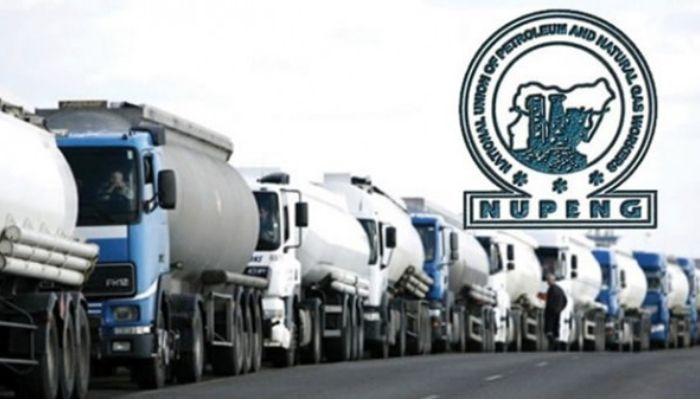
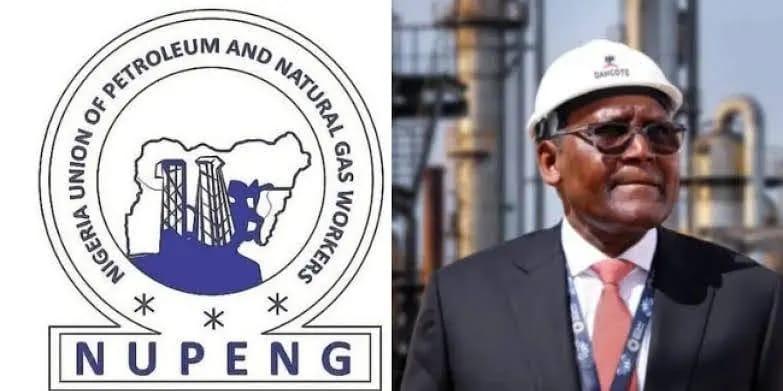
Nigeria once again finds itself at a familiar crossroads. The recent statement by the Nigeria Union of Petroleum and Natural Gas Workers (NUPENG) against Alhaji Aliko Dangote and Alhaji Sayyu Dantata is not simply an attack on two businessmen. It is a dangerous assault on the very idea that Nigeria can build, own, and sustain its own energy future. More importantly, NUPENG may not realise it, but they are inadvertently doing the devil’s bidding by implying Nigerians should remain subservient to foreign interests with regards to our energy needs.


This is why this debate matters. Let nobody miss the fact that this subject strikes at the heart of our national development. For decades, Nigeria has been trapped in the vicious cycle of exporting crude oil and importing refined products at punishing costs. Every litre bought at inflated prices is a monument to national failure. The Dangote Refinery, however, is not just a private enterprise. It is a national symbol of ambition. It is a clear pointer to what is possible when Nigerians invest boldly in their own land. To resist it is to resist progress itself.

As His Royal Majesty King Bubaraye Dakolo, Chairman of the Bayelsa Traditional Rulers Council, reminds us, “the Niger Delta and Nigeria in general benefit and profit more when Nigeria’s oil and gas are locally refined and globally marketed.” Anyone who fails to see the truth in this statement can be said to be more of a saboteur working against Nigeria’s national interest.

Yes, unions have the right to organise. That right is sacred and enshrined in law. At the same time, that right must never become a weapon to hold the nation hostage or to defend inefficiency. What NUPENG appears to be defending here is not the Nigerian worker but its own monopoly and the dues that fuel its capacity for disruption.

Advertisement

■ Competition is not sabotage

Let us be clear: a fleet of 10,000 modern CNG trucks entering the market is not sabotage. It is competition. It is capital at work. It is the essence of a free market where only the efficient survive. Inefficient operators will complain; they will cry sabotage, but discomfort is the natural price of progress. This has been proven true right from childhood when we all learned to walk, fall after the first few steps, feel the pain, and yet get up to try again.

If truth be told, there is no greater Nigerian pastime than blaming sabotage for every challenge that emerges. A neighbour buys a generator that works. Suddenly, yours refuses to start, and you suspect foul play. In Nigeria, even rainfall can be blamed on sabotage if it refuses to arrive on time. Now, NUPENG sees Dangote’s trucks rolling in and calls it sabotage. Nigerians deserve better than this brand of comic theatre dressed up as economics.

NUPENG knows this. Its alarm is not about the exploitation of workers; it is about the shrinking of its empire. A company that directly employs thousands of drivers dilutes NUPENG’s hold and reduces its capacity to shut down the country at will. That is the real grievance.

Advertisement

And let us not forget: union membership is voluntary. Nigerian law protects the freedom of association, not the monopoly of one union. If drivers wish to form a new body, the Registrar of Trade Unions is empowered to register it. The choice belongs to the workers, not to NUPENG’s leadership.

■ Who truly represents the workers?

On this issue, the workers themselves have spoken. The Petroleum Tanker Drivers branch publicly dismissed NUPENG’s position as insensitive and unacceptable. Traditional rulers have also weighed in. His Royal Majesty King Bubaraye Dakolo, Chairman of the Bayelsa Traditional Rulers Council, has offered “the right hand of fellowship” to Dangote and urged groups, and individuals not to sabotage this lofty idea.

These are not minor voices. They are the communities and citizens who bear the brunt of oil extraction and fuel scarcity. Their message is unmistakable: Dangote’s vision is aligned with the national interest. NUPENG’s reactionary posture is not.
And the facts bear this out. Over the past year, no other organisation has done more to stabilise fuel prices than the Dangote Refinery. By driving efficiency and investing at scale, Dangote has already offered relief to millions of Nigerians. With a cheaper CNG-powered logistics network, costs will fall even further. This is a pro-people policy. It is the kind of sincere management of scarce resources that Nigeria desperately needs. As King Dakolo put it bluntly, “No individual or corporation has been as responsible for stabilising petrol prices as Alhaji Dangote and the Dangote Refinery in the last year.”

Advertisement

■ NUPENG’s true fear: Loss of control, not workers’ welfare

For the avoidance of doubt, beneath NUPENG’s bluster lies a stark truth: their strike threat, scheduled for Monday, September 8, 2025, is not about protecting workers but about clinging to their fading grip on power. Their real grievance is not exploitation but the audacity of Dangote’s truck drivers to choose freedom over forced unionisation. By demanding that these drivers be barred from forming their own unions or opting out entirely, NUPENG exposes its monopolistic heart, a stance echoed by the Nigeria Labour Congress’s call for “immediate unionisation” and accusations of “corporate greed.” This reckless posturing risks plunging Nigeria into chaos, with fuel scarcity looming as tanker drivers halt distribution, leaving filling stations dry and ordinary Nigerians stranded.

We are all familiar with this impending national tragedy: Long queues, skyrocketing prices, and economic paralysis are the predictable fruits of NUPENG’s self-serving gambit. We therefore call on President Bola Tinubu and the federal government to deploy security agencies with urgency in ensuring this strike is stopped in its tracks. Nigeria’s energy security and the welfare of its people must not be held hostage by a union more concerned with dues than progress. The NLC’s own threat of solidarity action and mobilisation, as declared by President Joe Ajaero only underscores the need for decisive intervention to avert this needless crisis.

■ Entrepreneurship as a national asset

Advertisement

In all this, here is what must not be lost in the noise: Dangote is not merely a businessman. He is an institution. While others complain about government policy and write endless memos, he rolls up his sleeves and builds. Cement factories, fertiliser plants, and now the largest single-train refinery in the world. These are not PowerPoint slides or policy papers; they are concrete monuments to Nigerian ambition.

Placed in global context, the Dangote Refinery already ranks among the ten largest refineries in the world, processing around 650,000 barrels per day, with plans to ramp up to 700,000 bpd by the end of 2025, potentially overtaking South Korea’s Onsan Refinery. It even outstrips Europe’s largest refineries in capacity.

Dangote has delivered what decades of government task forces and committees could not. Countries such as India and Brazil have also harnessed private entrepreneurship to overcome union bottlenecks and structural inertia. While India’s Jamnagar refinery towers above all, Dangote’s Lekki facility proves that Africa, too, can play at the world scale.

This entrepreneurial spirit is what we should be celebrating, not vilifying. Every truck that rolls out of the Dangote fleet is more than metal on wheels. It is a moving billboard of self-reliance. Every litre refined in Lekki instead of Rotterdam or Singapore or Malta is a reminder that Nigeria can meet its own needs. This is nation-building in its purest form.

Advertisement

As King Dakolo said with refreshing candour, “It is preposterous for any organisation or individual to accuse Alhaji Dangote or the Dangote Refinery of being a monopoly. Their industry is an open industry, and anybody or a group of persons can enter it.”

■ The choice before us: Progress or inefficiency

This is why the government must act decisively. The choice is simple. Either we bow to old monopolies that thrive on inefficiency, or we embrace bold investments that can transform our economy. Traditional leaders, workers, and ordinary Nigerians have already chosen. They stand with progress.

Nigeria cannot continue to unionise around import dependency. We must unionise around ambition. We must unionise around innovation. We must unionise around local manufacturing and distribution. We must unionise around the Nigeria First policy.

Advertisement

The Dangote and Dantata investment is more than business. It is a declaration that Nigeria can chart its own destiny, create jobs, build cleaner energy systems, and safeguard its own security. To oppose it is to mortgage our future to the very inefficiencies that have kept us poor.

The time for half measures has passed. Nigeria’s energy market needs clarity, courage, and competition. It needs leaders who will not blink in the face of threats. Above all, it needs a nation ready to stand tall and back its own.
And so we say it without hesitation: For the sake of national prosperity and the promise of self-sufficiency, we stand with Dangote. To do otherwise would be to stand against Nigeria itself.

■ Mr Dan D. Kunle is an energy and market economy analyst.
Advertisement
Continue Reading
Advertisement
Click to comment

Warning: Undefined variable $user_ID in /home/naijuinz/public_html/wp-content/themes/zox-news/comments.php on line 49

You must be logged in to post a comment Login

Leave a Reply

News

NUT suspends strike, directs Oyo teachers to resume Thursday

Published

on

ADVERTISEMENT
Zoom Ad
ADVERTISEMENT
Zoom Ad

The Nigeria Union of Teachers (NUT) has suspended its industrial action across public primary and secondary schools in Oyo State, directing members to resume work on Thursday, July 2, 2026.

The decision followed fresh engagements with the Oyo State government and assurances on measures to improve security after the abduction of teachers and learners in Oriire Local Government Area.

In a statement jointly signed by the Oyo State Chairman of the union, Comrade Hassan Ajibola Fatai, and the State Secretary, Comrade Olukayode Salami, the union said the suspension was approved by its national leadership after reviewing the prevailing security situation and considering appeals by the state government and other stakeholders.

According to the statement, the strike, which was declared in protest against the kidnapping of teachers and students in the Oriire Local Government Area, was suspended in the interest of teachers, learners, and the general public.

Advertisement

“The Nigeria Union of Teachers hereby directs all public primary and secondary school teachers in Oyo State to resume official duties on Thursday, July 2, 2026,” the statement read.

The union said the state government had assured it of sustained efforts to secure the safe release of the abducted victims while strengthening security around schools and vulnerable communities across the state.

It noted that the government had committed to intensified rescue operations for the abducted teachers and learners, the establishment of a well-equipped Joint Security Task Force to patrol vulnerable schools and access roads, continuous engagement with affected families, psychosocial support and rehabilitation for rescued victims, and payment of gratuities and other entitlements to the families of deceased teachers.

Other commitments, according to the union, include strengthening the Safe School Initiative through public sensitisation and improved early warning systems, enhancing emergency response mechanisms, dismantling criminal hideouts, upgrading school infrastructure, tackling illegal mining and open grazing in forest reserves, improving community intelligence gathering, ensuring the speedy prosecution of criminal suspects, improving the welfare of security personnel, and deploying technology to improve school security.

Advertisement

The union commended its members for their discipline and solidarity throughout the industrial action while also appreciating the support of the All Nigeria Confederation of Principals of Secondary Schools (ANCOPSS) and the Association of Primary School Head Teachers of Nigeria (AOPSHON).

“We sincerely appreciate all our members, ANCOPSS, AOPSHON, and other stakeholders for their discipline, solidarity, and unwavering support during this period. Your cooperation has once again demonstrated our collective commitment to the welfare and safety of teachers and learners,” the statement added.

While directing teachers to return to the classroom, the union urged members to remain vigilant and report any security threats to the appropriate authorities.

“We urge all teachers to remain vigilant, law-abiding and promptly report any suspicious activities or security threats within their schools and communities to the relevant authorities. Together, we can build safer schools for our children and educators,” it stated.

Advertisement

The union reaffirmed its commitment to protecting the welfare and security of teachers, saying it would continue to engage the government until all outstanding concerns regarding the safety of teachers and learners are fully addressed.

“Our resolve to safeguard the lives, welfare and dignity of teachers remains unwavering. We shall continue constructive engagement with the government until every concern relating to the security of our members and learners is adequately addressed,” the statement said.

Continue Reading

News

Citizen Patience and Collaborative Efforts: A Pathway to Greatness for Tinubu’s Government, By Hajia Hansatu Zannah*

Published

on

ADVERTISEMENT
Zoom Ad
ADVERTISEMENT
Zoom Ad

Nation-building is never the sole responsibility of government; it is a shared endeavor that requires the active participation, patience, and collaboration of citizens. In Nigeria today, President Bola Ahmed Tinubu’s administration faces the daunting task of steering the country toward economic stability, social cohesion, and sustainable development. While policies and reforms are critical, their success ultimately depends on the willingness of citizens to remain patient and supportive during the often difficult process of implementation.

Transformational leadership demands bold decisions—structural reforms, economic adjustments, and institutional restructuring—that may not yield immediate results. In such circumstances, patience becomes a vital national asset. By resisting the urge for instant gratification and allowing time for reforms to mature, Nigerians can help create an environment where government initiatives are given the opportunity to succeed.

Every nation, regardless of its stage of development, grapples with challenges—economic struggles, political transitions, social tensions, and infrastructural gaps. These realities test the resilience of both leaders and citizens. In moments of strain, the attitude of the people toward their country becomes a powerful determinant of progress. Constructive criticism is healthy and necessary for accountability, but outright condemnation and vitriolic attacks against one’s nation can be deeply counterproductive.

Words shape perception, and perception influences reality. When citizens consistently speak negatively about their country, they reinforce hopelessness and despair. This weakens national morale and discourages foreign investors, partners, and allies who rely on the confidence of citizens as a measure of stability. By contrast, balanced and solution-oriented dialogue strengthens Nigeria’s image and inspires collective action.

Advertisement

Collaboration, however, goes beyond compliance—it requires active engagement. Citizens can contribute meaningfully to nation-building by supporting reforms through constructive dialogue rather than resistance, participating in civic duties such as voting, community service, and public consultations. These actions serve as catalysts for greater national progress. At the same time, holding leaders accountable in a respectful and lawful manner is essential. While harsh and divisive criticism may be insidious, patriotism calls for promoting unity across ethnic, religious, and political divides to strengthen national cohesion.

If citizens embrace patience and collaboration, Tinubu’s government stands a better chance of achieving greatness. Economic reforms can stabilize markets, infrastructural projects can transform communities, and social policies can uplift vulnerable populations. Greatness, in this context, is not merely about political success but about building a Nigeria where prosperity, justice, and peace are attainable for all.

Citizens are not passive observers; they are active participants in governance. By engaging in respectful dialogue, supporting reforms, and holding leaders accountable through lawful means, they contribute to the nation’s growth. Patriotism does not mean blind loyalty—it means believing in the possibility of progress and working toward it.

A nation is like a family; disagreements are inevitable, but condemnation destroys trust. Citizens must rise above destructive criticism and embrace constructive engagement. By doing so, they preserve the dignity of their country and create an atmosphere where greatness can flourish. The path to national transformation lies not in tearing down but in building up—through patience, collaboration, and unwavering belief in Nigeria’s future.

Advertisement

The greatness of any government is measured not only by the vision of its leaders but also by the resilience and cooperation of its people. For Tinubu’s administration, citizen patience and collaborative effort are indispensable. Together, government and citizens can write a new chapter in Nigeria’s history—one defined by progress, unity, and enduring impact.

*Hajia Hansatu Zannah is a distinguished member of the Governing Council of the African Union Agenda 2063 and Ambassador Plenipotentiary. She is also the widow of the late Zannah Umar Mustapha, former Deputy Governor of Borno State.*

Continue Reading

News

CBN revokes licences of 46 Microfinance Banks over failure to satisfy regulatory requirements

Published

on

ADVERTISEMENT
Zoom Ad
ADVERTISEMENT
Zoom Ad

The Central Bank of Nigeria (CBN) has revoked the operating licences of 46 microfinance banks across the country, citing their failure to meet key regulatory requirements for continued operation.

The decision takes effect from Wednesday, July 1, 2026, according to a statement issued by the Acting Director of the CBN’s Corporate Communications Department, Hakama Sidi-Ali. The apex bank said the action was taken in line with its powers under Sections 12 and 13 of the Banks and Other Financial Institutions Act (BOFIA), 2020, and was approved by the CBN Governor, Olayemi Cardoso.

According to the CBN, the affected institutions lost their licences after failing to satisfy the conditions required to remain licensed financial institutions.

The bank explained that the revocation was based on one or more regulatory infractions, including insufficient assets to meet liabilities, shutting down operations without obtaining CBN approval, prolonged inactivity and cessation of financial intermediation, failure to commence business within 12 months after receiving a licence, and failure to maintain the minimum capital requirements without impairment from accumulated losses.

Advertisement

The CBN described the move as part of its ongoing efforts to strengthen the nation’s financial system and ensure that all licensed financial institutions operate in compliance with existing laws and prudential regulations.

“The revocation of the licences is part of the Bank’s ongoing efforts to safeguard the stability of the financial sector, protect depositors, and ensure that licensed institutions comply with current laws and regulatory requirements,” the statement said.

The apex bank reiterated its commitment to maintaining a safe, sound and resilient financial system, stressing that it would continue to take appropriate supervisory and regulatory measures where necessary to sustain public confidence in Nigeria’s banking sector.

Advertisement
Continue Reading

Trending

Copyright © 2024 Naija Blitz News