Connect with us

Foreign

Hamas says it agrees to release Israeli hostages but seeks changes to US Gaza peace plan

Published

on

ADVERTISEMENT
Zoom Ad
ADVERTISEMENT
Zoom Ad

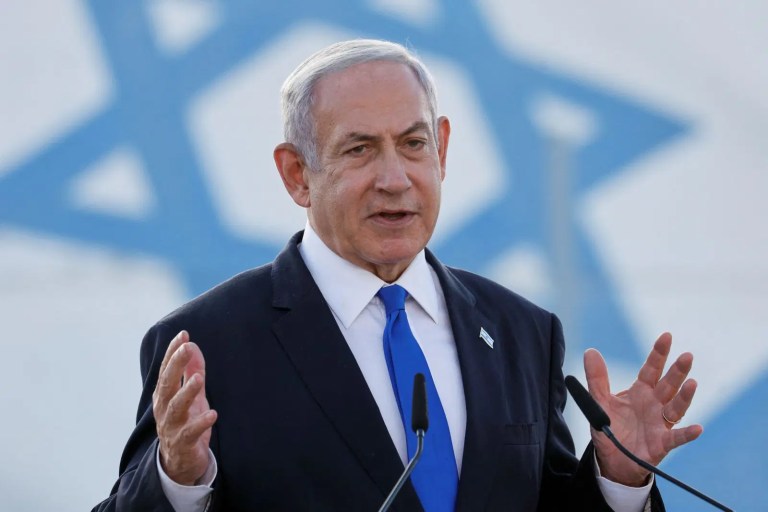
Hamas has agreed to release all the remaining Israeli hostages but says it wants further negotiations on a number of key points outlined in the US peace plan.


In a statement, the group said it agreed “to release all Israeli prisoners, both living and dead, according to the exchange formula contained in President Trump’s proposal” – if the proper conditions for the exchanges are met.

But it appears to suggest it is seeking further negotiation on other issues regarding the future of Gaza and the rights of Palestinians, saying they are still being discussed.

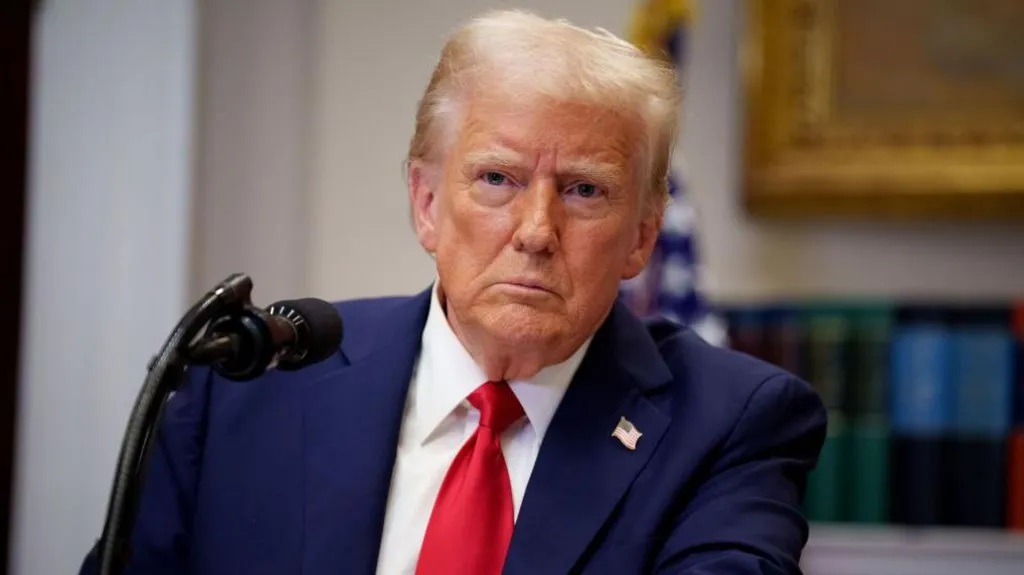
The announcement came hours after US President Donald Trump gave Hamas a Sunday deadline to accept the peace plan or face “all hell”.

Advertisement

After Hamas submitted its response, Trump posted on Truth Social “I believe they are ready for a lasting PEACE”.

He called on Israel to “immediately stop the bombing of Gaza, so that we can get the Hostages out safely and quickly!” adding that “we are already in discussions on details to be worked out”.

Tahir al-Nounou, media adviser to the head of Hamas’s political bureau, told the BBC: “President Trump’s statements are encouraging, and the movement is ready to begin negotiations immediately to achieve a prisoner exchange, end the war, and secure the withdrawal of the occupation.”

The Hamas statement did not specifically mention or accept Trump’s 20-point plan but says it “renews its agreement to hand over the administration of the Gaza Strip to a Palestinian body of independents (technocrats), based on Palestinian national consensus and Arab and Islamic support.”

Advertisement

However the statement makes no mention of one of the key demands of the plan – that Hamas agree to its disarmament and to playing no further role in the governance of Gaza.

The peace plan proposes an immediate end to fighting and the release within 72 hours of 20 living Israeli hostages held by Hamas – as well as the remains of hostages thought to be dead – in exchange for hundreds of detained Gazans.

There are believed to be 48 hostages still being held in the Palestinian territory by the armed group, only 20 of whom are thought to be alive.

The plan stipulates that once both sides agree to the proposal “full aid will be immediately sent into the Gaza Strip”.

Advertisement

Under the US plan, Hamas would have no role in governing Gaza, and it leaves the door open for an eventual Palestinian state.

However, after Trump and Israeli Prime Minister Netanyahu announced the plan together on Monday, Netanyahu reinstated his longstanding opposition to a Palestinian state, saying in a video statement shortly after the announcement: “It’s not written in the agreement. We said we would strongly oppose a Palestinian state.”

Hamas’s statement on Friday said that the part of the proposals dealing with the future of Gaza and the rights of Palestinian people was still being discussed “within a national framework”, of which it said Hamas will be a part.

Earlier on Friday, Trump posted on his Truth Social platform: “If this LAST CHANCE agreement is not reached, all HELL, like no one has ever seen before, will break out against Hamas. THERE WILL BE PEACE IN THE MIDDLE EAST ONE WAY OR THE OTHER,” Trump wrote in the Truth Social post.

Advertisement

On Tuesday Trump had said that he was giving Hamas “three to four days” to respond to the peace plan.

In a briefing at the White House on Friday afternoon, Press Secretary Karoline Leavitt said that the consequences of turning down the deal would be “very grave” for Hamas.

“I think that the entire world should hear the president of the United States loud and clear,” Leavitt added. “Hamas has an opportunity to accept this plan and move forward in a peaceful and prosperous manner in the region. If they don’t, the consequences, unfortunately, are going to be very tragic.”

European and Middle Eastern leaders have welcomed the proposal. The Palestinian Authority (PA), which governs parts of the Israeli-occupied West Bank, has called the US president’s efforts “sincere and determined”.

Advertisement

Trump has said that if Hamas does not agree to the plan, Israel would have US backing to “finish the job of destroying the threat of Hamas”.

Netanyahu has also said Israel “will finish the job” if Hamas rejected the plan or did not follow through.

The Israeli military launched a campaign in Gaza in response to the Hamas-led attack on southern Israel on 7 October 2023, in which about 1,200 people were killed and 251 others were taken hostage.

At least 66,288 people have been killed in Israeli attacks in Gaza since then, according to the territory’s Hamas-run health ministry.

Advertisement

In the 24 hours before midday on Friday, 63 people were killed by Israeli military operations, the health ministry said.

Israel is carrying out an offensive in Gaza City, with Israel’s defence minister saying earlier this week that Israeli forces were “tightening the siege” around the city.

Hundreds of thousands of Gaza City residents have been forced to flee after the Israeli military ordered evacuations to a designated “humanitarian area” in the south, but hundreds of thousands more are believed to have remained.

Israel’s defence minister has warned that those who stay during the offensive would be “terrorists and supporters of terror”.

Advertisement

Israel has said the offensive aims to secure the release of the remaining hostages.

James Elder, spokesman for the UN children’s agency, Unicef, said on Friday that the idea of a safe zone in southern Gaza was “farcical”.

“Bombs are dropped from the sky with chilling predictability. Schools, which have been designated as temporary shelters, are regularly reduced to rubble,” he said.

Advertisement
Continue Reading
Advertisement

Foreign

US Targets Alleged ISIS Funding Network, Names Nigerian

Published

on

By

ADVERTISEMENT
Zoom Ad
ADVERTISEMENT
Zoom Ad

The United States government has identified a Nigerian national among several individuals and organisations accused of facilitating financial operations for the Islamic State of Iraq and Syria (ISIS), as part of a broader crackdown on the group’s global funding network.

In a statement issued by the U.S. Department of State, officials said the action targeted three individuals and six entities operating across Europe, the Middle East, and West Africa, who are allegedly involved in moving funds used to support ISIS activities.

According to the department, the measures are aimed at disrupting the terrorist group’s ability to finance attacks and sustain its international operations.

“Under the leadership of President Trump, the United States is dismantling ISIS’s ability to finance terrorism around the world. We are cutting off the financial lifelines from around the world that enable ISIS to fund attacks, support its regional affiliates, and threaten civilians, including religious minorities,” spokesperson Thomas Pigott said.

Advertisement

The statement noted that the network spans France, Syria, Türkiye, and Nigeria, and is believed to have facilitated the cross-border movement of funds linked to the extremist group.

Officials alleged that the designated individuals include a France-based facilitator connected to explosives-related information shared with ISIS supporters, a Syria-based operator who reportedly used cryptocurrency to transfer funds internationally, and a Nigeria-based facilitator whose money exchange businesses were allegedly used as channels for ISIS financing.

The U.S. government said the designations are part of ongoing efforts to dismantle financial pipelines supporting terrorist organisations and to restrict their global operations.

Advertisement
Continue Reading

Foreign

Seven PMs In 10 Years: Britain’s Decade Of ‘Change’

Published

on

By

ADVERTISEMENT
Zoom Ad
ADVERTISEMENT
Zoom Ad

Britain will have its seventh prime minister in 10 years after Labour leader Keir Starmer was ousted on Monday by his own party.

The party’s self-inflicted wound was a trend set by the Conservatives when they were in office.

Starmer announced his resignation on Monday following months of nose-diving poll ratings and manoeuvring by his own MPs.


Advertisement
Britain’s Prime Minister Keir Starmer makes a statement on his future outside 10 Downing Street on the morning of June 22, 2026, in London. Photo by HENRY NICHOLLS / AFP

Veteran Labour politician Andy Burnham has confirmed he will seek to replace him.

The main opposition Tories went through five prime ministers between 2016 and July 2024 when Starmer swept to power in a landslide general election victory.

The rapid turnover at the top prompted Starmer — before he became prime minister — to call for an end to the “chaos” of chopping and changing leaders.

After less than two years, Starmer has now met a similar fate himself.

Here’s what happened to his predecessors:

Advertisement

David Cameron (May 2010 to July 2016)

David Cameron, Libya, UK
Former UK Prime Minister, David Cameron

Britain’s decision to leave the European Union ended Cameron’s second term as prime minister.

After the country voted to leave in a June 2016 referendum, Cameron, who had campaigned to remain in the bloc, resigned.

Theresa May (July 2016 to July 2019)

Britain’s Prime Minister Theresa May announces her resignation outside 10 Downing street in central London on May 24, 2019. Beleaguered British Prime Minister Theresa May announced on Friday that she will resign on June 7, 2019 following a Conservative Party mutiny over her remaining in power.
Tolga AKMEN / AFP

May took over amid the fallout from the Brexit referendum after a long tenure in the notoriously difficult post of interior minister.

She called a snap election the following year to strengthen her hand in Brexit negotiations, but the move backfired when her party emerged as the biggest in parliament but without a majority.

Advertisement

Unable to get her Brexit deal through parliament, the Conservatives suffered a drubbing in European Parliament elections in May 2019, leading to her resignation.


Boris Johnson (July 2019 to September 2022)

A video grab from footage broadcast by the UK Covid-19 Inquiry shows Britain’s former Prime Minister Boris Johnson speaking at the UK Covid-19 Inquiry, in west London, on December 6, 2023 to give evidence. (Photo by UK Covid-19 Inquiry / AFP)

Johnson, a maverick politician famed for making a career out of breaking the rules, had to navigate the coronavirus pandemic and Britain’s departure from the European Union.

He led the Conservatives to victory in the December 2019 snap general election.

Advertisement

But weakened by scandals, he was eventually forced to step down following a cascade of resignations by ministers and aides.

Liz Truss (September 2022 to October 2022)

Britain’s Prime Minister Liz Truss delivers a speech outside of 10 Downing Street in central London on October 20, 2022 to announce her resignation. (Photo by Daniel LEAL / AFP)

Truss was prime minister for just 49 days, the shortest on record, before being ousted over her disastrous tax-cutting mini-budget.

Her economic agenda spooked the markets and took the UK to the brink of financial meltdown, losing her the support of her own party.

Rishi Sunak (October 2022 to July 2024)

Advertisement
Britain’s outgoing Prime Minister and leader of the Conservative party, Risihi Sunak, delivers a statement after his general election defeat, outside 10 Downing Street in London on July 5, 2024, a day after Britain held a general election. (Photo by HENRY NICHOLLS / AFP)

Sunak was at the helm for 20 months before losing the 2024 general election to Starmer, bringing to an end 14 years of Conservative rule.

He brought some stability following the Truss debacle but failed to stop bitter Tory infighting.

The privately wealthy former financier ultimately failed to connect with regular voters struggling with a cost-of-living crisis.

AFP


Advertisement

Continue Reading

Foreign

Trump To End HIV Funding For South Africa Over Violence

Published

on

By

ADVERTISEMENT
Zoom Ad
ADVERTISEMENT
Zoom Ad

The US government says it will stop funding programmes in South Africa intended to tackle the spread of HIV and Aids.

More than eight million South Africans are living with HIV – the highest number of any country in the world.

The US State Department appeared to link the decision to South Africa’s alleged failure to protect the white-minority Afrikaner community – an allegation the South African government has repeatedly rejected.

South Africa’s health ministry responded by saying that though it had not been informed of this decision, it had “long been working on a self-reliance plan”.

Advertisement

Until 2025, the US was supporting South Africa’s efforts to deal with the virus with an estimated $400m (£300m) a year through the President’s Emergency Fund for Aids Relief (PEPFAR).

But since the inauguration of President Donald Trump, relations between the two countries have increasingly soured.

Shortly after he came into office, Trump issued an executive order alleging that “countless” South African policies dismantled equal opportunities and fuelled violence “against racially disfavored landowners”.

This is disputed by the South African government, which says its Black Economic Empowerment policy is needed to correct economic inequality dating from the apartheid era.

Advertisement

The executive order also highlighted South Africa’s case against Israel at the International Court of Justice and its links to Iran.

The White House said that given these “unjust and immoral practices”, further aid to South Africa would not be provided.

Trump has also falsely alleged that there is a “white genocide” taking place in South Africa, which has led to the administration setting up a refugee programme for Afrikaners – descendants of Western Europeans who settled in southern Africa in the 17th Century.

They are now just about the only refugees being allowed into the US.

Advertisement

The genocide claim has been widely discredited.

Pepfar funding, which had been providing about a fifth of South Africa’s total spending on HIV programmes, got a reprieve last October with what was called a “bridge plan”.

But a US State Department official has confirmed that a “phased drawdown” of Pepfar funding would now start.

This was because of “South Africa’s failure to make demonstrable progress on policy requests by the administration”, the official said.

Advertisement

The US government intended to “foster self-reliance” and reduce dependency on American funding, they added, pointing out that “South Africa is a middle-income country and is more than capable of supporting its own health programs”.

South Africa’s health ministry has said that while Pepfar contributed to the country’s HIV programme, the provision of life-saving antiretroviral drugs was funded entirely separately, with most coming from the government.

Attempts to mend US-South Africa relations have floundered. These include a high-profile White House meeting between Trump and South African President Cyril Ramaphosa just over a year ago, when the US president confronted his counterpart with his claims of white persecution.

The US also boycotted the G20 meeting, a gathering of the world’s major economies, hosted by South Africa last November.

Advertisement
Continue Reading

Trending

Copyright © 2024 Naija Blitz News