
News
FCT Admin remains steadfast in building a sustainable, flourishing capital city-Wike


- /home/naijuinz/public_html/wp-content/plugins/mvp-social-buttons/mvp-social-buttons.php on line 27
https://naijablitznews.com/wp-content/uploads/2025/10/Nyesom-Wike.jpg&description=FCT Admin remains steadfast in building a sustainable, flourishing capital city-Wike', 'pinterestShare', 'width=750,height=350'); return false;" title="Pin This Post">
- Share
- Tweet /home/naijuinz/public_html/wp-content/plugins/mvp-social-buttons/mvp-social-buttons.php on line 72
https://naijablitznews.com/wp-content/uploads/2025/10/Nyesom-Wike.jpg&description=FCT Admin remains steadfast in building a sustainable, flourishing capital city-Wike', 'pinterestShare', 'width=750,height=350'); return false;" title="Pin This Post">


Federal Capital Territory (FCT) Minister Nyesom Wike has urged local and international investors to take advantage of the abundant opportunities in the nation’s capital to drive sustainable growth and development.
Wike spoke on Wednesday at the opening of the second Abuja Business and Investment Expo (ABIEXPO 2025) at the Bola Ahmed Tinubu International Conference Centre in Abuja.
The event was organised by the Federal Capital Territory Administration (FCTA) through its investment arm, the Abuja Investments Company Limited (AICL).
Represented by the FCT Minister of State, Dr. Mariya Mahmoud, the minister reaffirmed the administration’s commitment to making Abuja not just the political capital of Nigeria but a model of sustainable economic growth in Africa.
Wike said: “As Abuja symbolises Nigeria’s aspirations, our mission, supported by Mr. President, is to make it a safe, investment-friendly city that empowers all citizens.”
The minister noted that the theme of the theme: Empowering Sustainable Growth: Unlocking Potentials in Emerging Markets, reflected the Renewed Hope Agenda of President Bola Ahmed Tinubu, which focuses on inclusive development, infrastructure expansion, and job creation.
He said the administration was prioritising infrastructural development to link satellite towns, area councils, and rural communities to the city centre.
Wike noted that such projects are essential for industrialisation and economic diversification.
Wike hailed the AICL for organising what he called a “strategic and forward-looking platform” that brings together investors, innovators, and development partners to explore opportunities for shared prosperity.
“The FCT Administration remains steadfast in building a sustainable, flourishing capital city and enhancing Nigeria’s position on the continental and global stage,” he added.
“That your organization found me worthy of this role, in recognition of our commitment to infrastructural renewal and transformative leadership, is deeply reassuring and truly appreciated.
In an age when leadership is too often viewed through partisan lenses, your invitation stands as both a soothing balm and a powerful vindication, an affirmation that purposeful governance, anchored on vision and accountability, still commands genuine recognition. Your thoughtful words, “Your Excellency, your administration’s bold investments in the infrastructural renewal of the Federal Capital Territory have not only redefined Abuja’s global standing but have also inspired confidence in Africa’s capacity for home-grown solutions…” are not taken as flattery, but as a sincere acknowledgment of the collective effort and transformative strides we are making in Abuja. Such commendations, echoed by many discerning voices, from both within and beyond our borders, strengthen our resolve to continue serving with conviction and excellence.
Reflections on Africa’s Present Moment
Africa today stands at a historic crossroads.
” On one hand, we are endowed with immense natural wealth, fertile lands, vibrant cultures, and the youngest population in the world. We are a continent of extraordinary promise, alive with creativity, innovation, and a deep cultural heritage that has shaped humanity itself. Yet, on the other hand, we continue to grapple with weak institutions, infrastructural deficits, widespread unemployment, poverty, and recurrent governance failures that have constrained our progress.
“This is the paradox of our age: how can a continent so richly blessed remain so constrained? How can such abundance coexist with scarcity, such youthful energy be stifled by joblessness, such sovereignty be undermined by fragility? This tension defines Africa’s present moment, a moment of both urgency and immense possibility.
“At the heart of this paradox lies the decisive factor of leadership. Leadership remains the fulcrum upon which the destinies of nations turn.
” It determines whether our vast resources become a blessing or a curse; whether our diversity becomes strength or division; whether our challenges become stumbling blocks or stepping stones. When leadership is visionary, accountable, and courageous, even the most daunting obstacles can be transformed into opportunities.
But leadership must also create the enabling environment for transformation by providing the critical infrastructure that attracts investment, drives productivity, and sustains growth.
At present, the level of investment in Africa remains minimal precisely because of infrastructural decay and policy inconsistency. Roads, power, railways, and digital connectivity are the arteries through which development flows; without them, the economy cannot freely breathe. It is to be deeply regretted that Africa continues to export raw materials and import finished goods, a cycle that perpetuates dependency and stifles industrial growth. This situation is unhealthy for sustainable development, which has eluded the continent for far too long.
“Africa’s future will be written by the kind of leadership we nurture today, leadership that not only dreams, but dares; not only commands, but serves; not only governs, but transforms.
Reimagining Africa’s Leadership in the 21st Century:
“To secure Africa’s future, we must first reimagine leadership itself. The time has come to move beyond transactional leadership, the kind driven by personal gain, patronage, and short-term calculations, to embrace transformational leadership rooted in vision, courage, service, and accountability. Leadership must not exploit, but empower; it must not rule, but serve; it must not merely transact, but transform.
“Many commentators agree that the greatest impediment to Africa’s progress and the chronic ailment that has stifled her development for decades is the plague of poor and mediocre leadership. Across the continent, both in military and civilian dispensations, leaders have often emerged through self-serving conspiracies that bear little or no relation to national interest or development priorities.
” Consequently, many African nations have been saddled with leaders unprepared for the enormity of leadership. The result is a tragic pattern of groping in the dark, with nations endlessly experimenting with the fundamentals of development: basic infrastructure, primary healthcare, functional economies, efficient democratic and judicial systems, and credible institutions.
The 21st century calls for a new kind of African leaders who are prepared, principled, and passionate. Leaders who embody vision, moral character, and resilience. Leaders who believe in Africa’s boundless possibilities and act decisively to unlock them. They must be bold enough to make difficult but necessary decisions; proactive enough to anticipate the future; and committed enough to build systems that prioritize excellence over mediocrity and performance over politics.
The leadership that Africa deserves in the 21st century is one that is about caring rather than controlling.
“A true leader must see himself as a servant, humbled by the weight of responsibility he carries for the welfare of the people. Africa is in urgent need of servant-leaders—leaders who do not see themselves as bosses but as mentors genuinely committed to the building of communities and the upliftment of people. Harry Gordon Selfridge and John C. Maxwell capture this distinction beautifully: “A boss drives his team; a leader guides them. A boss relies on authority; a leader relies on trust and goodwill.
“A boss inspires fear; a leader inspires enthusiasm. A boss says, “I”; a leader says, “We.” A boss demands punctuality; a leader arrives early to lead by example. A boss blames when things go wrong; a leader fixes the problem. A boss knows the path; a leader walks it with the team. A boss says, “Go”; a leader rallies his people with, “Let’s go together!” True leadership, then, is not about position or power, but about inspiring, serving, and journeying with those you lead.” This is the kind of leadership Africa must embrace if we are to move from stagnation to transformation.
Transformational leadership is not an abstract ideal; it is a living reality where bold vision meets purposeful action. Here in Abuja, we have witnessed how infrastructural renewal anchored on political will and strategic investment can turn aspiration into achievement. Roads that were once impassable are now open; bridges connect communities; public spaces once abandoned now thrive with life, enterprise, and hope.
“These are not mere structures of concrete and steel; they are symbols of what is possible when leadership dares to dream and to deliver.
President Bola Ahmed Tinubu’s commitment to difficult but necessary reforms further reminds us that leadership is ultimately about sacrifice for the greater good. From the first day of his presidency, Tinubu demonstrated uncommon courage by confronting one of Nigeria’s most intractable challenges, the removal of the fuel subsidy. While previous administrations acknowledged its dangers, none dared to act.
“Tinubu did, understanding the cost but believing in the long-term gain. Today, this bold decision is beginning to yield results: states and local governments now receive higher revenues for development; the burden of debt accumulation is easing; and the price of petrol is gradually aligning with market realities under sound regulatory oversight.
Equally transformative is his effort to decentralize governance and address the structural imbalance of over-centralization. Through the creation of zonal and regional commissions, President Tinubu is devolving development closer to the people, an essential step toward genuine federalism. In the area of security, his administration has invested in the training and retraining of the armed forces and approved the recruitment of forest guards nationwide to reclaim ungoverned spaces from bandits and terrorists. These and other strategic measures are repositioning Nigeria toward stability, productivity, and growth.
“Yet, it must be emphasized that no leader, however visionary or determined, can succeed without the support and cooperation of the people. The burden and glory of national transformation must be shared.
“History teaches us that no nation progresses without synergy between its leadership and followership. Dubai, for example, attained global prominence through the unity of purpose between a decisive leader and a believing people, for, as Yasar Jarrar observed, “Dubai had a leader who acted quickly and decisively, not shaken by challenges, and had his people backing him and believing in his vision.”
If we can reimagine leadership across Africa in this same spirit—leadership that builds, not blames; that inspires, not divides; that empowers, not dominates—then no mountain will be too high, no challenge too great, and no dream too ambitious for our continent. The time for belief is here; the time for action is now. Together, with visionary leadership and a committed citizenry, Africa can begin to realize the continent of its dreams.
Reimagining Investment and Africa’s Path to Transformation
Africa stands today at the threshold of destiny, a continent rich in promise yet still wrestling with the lingering weight of dependence. For too long, Africa has looked outward for solutions to problems that can only be solved from within.
The time has come for Africa to come of age and rise beyond the rhetoric of aid and dependency, and to take deliberate, courageous decisions to chart its own path toward self-reliance, prosperity, and global relevance.


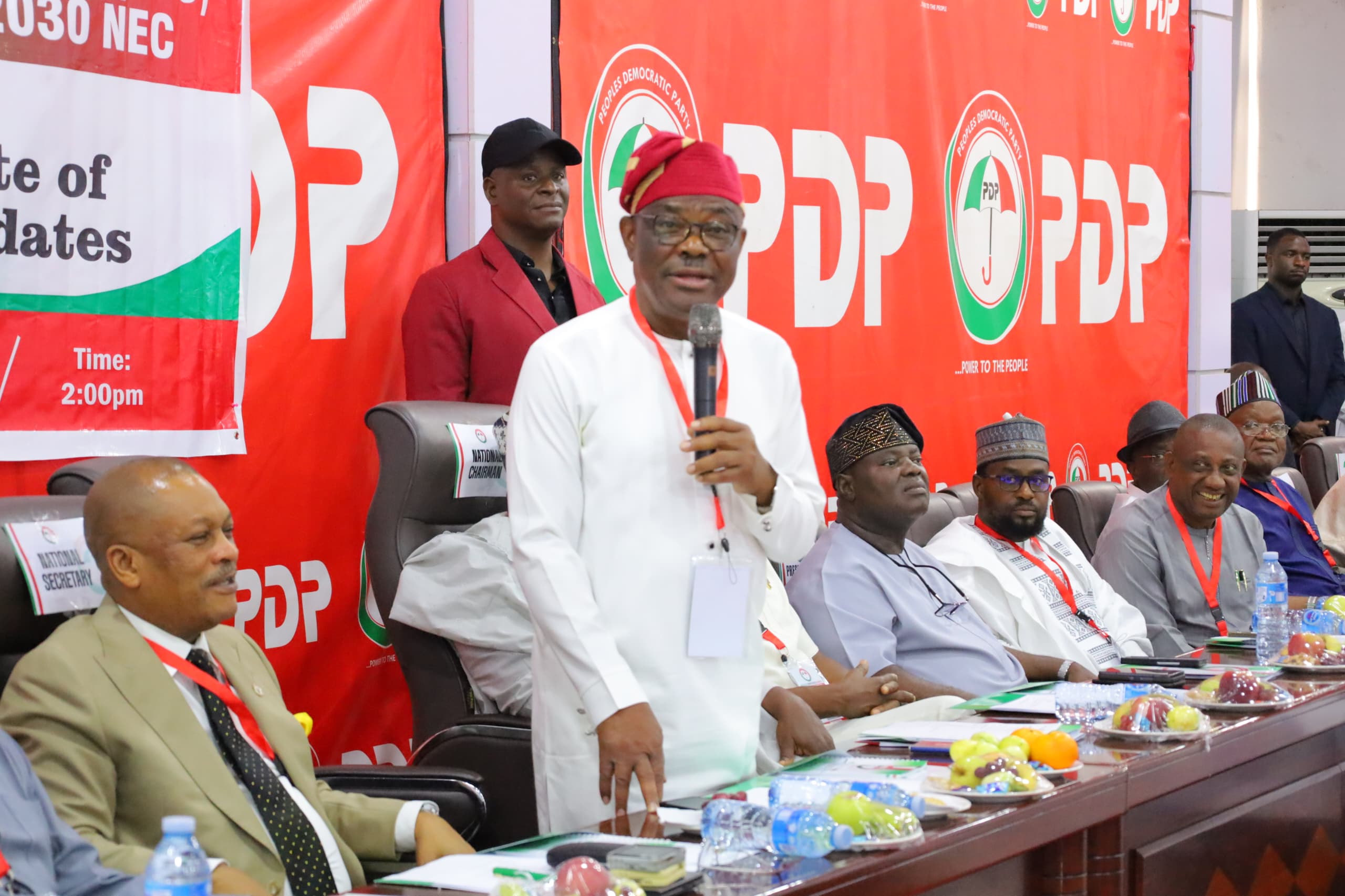
Minister of the Federal Capital Territory (FCT), Nyesom Wike, has challenged candidates contesting in the 2027 general elections on the platform of the Peoples Democratic Party (PDP) to be prepared to struggle for power.
Wike, a national leader of the PDP, stated this during the party’s 109th National Executive Committee (NEC) meeting on Wednesday in Abuja.
“Nobody gives power. Nobody has done it. Power is taken; if you did not do so, it’s your business.
“You must fight for it to take it. Nobody gives power, and nobody is ready to dash you power. You have to struggle for it. You have to fight for it. You don’t have to be afraid.
“Every time you complain, oh, the governor is this, what do you want him to do? To allow you to come and take power like that?
“If you’re not serious, say you are not serious to struggle for power. When you take it, you appreciate it, not when they dash you and you don’t know the meaning of it,” Wike said.
He recalled his political journey through various struggles, including how he became governor when the incumbent belonged to a different political party.
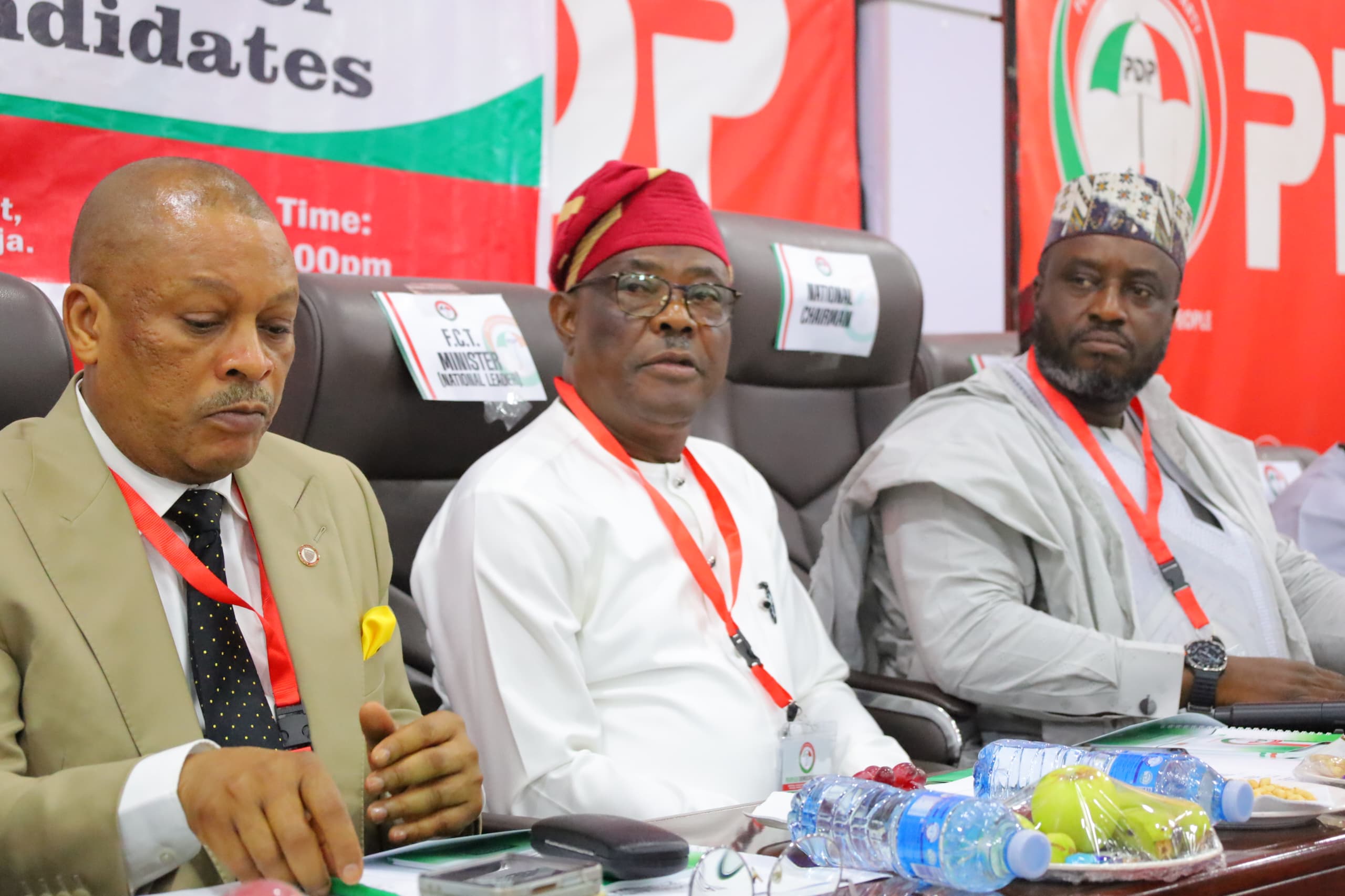
Wike advised candidates, especially those running for governorship, to brace up for keen contests.
He said that in the present setting, most people were used to ‘food is ready’ politics.
“You are used to people preparing something for you to come and eat, and you think it will always be like that. It cannot always be like that.
“A time will come when there will be challenges in life and when you will be tempted in life,” he said.
Wike said that he happened to come from a background where he never got anything on a platter of gold, recalling that when he contested for a local government chairmanship position, the matter went all the way to the Supreme Court.
“When I don’t see challenges, I know that something is wrong, but when I see challenges, I know success has come,” he said.
He noted that when the PDP was in power, many of its members were like spoiled children depending on their father for daily provisions, reminding them that the party was no longer at the centre.
He urged them to see themselves as children whose father is sick, and remain determined not to disappoint him.
The minister also advised party members to stop introducing religion into politics and electoral matters, challenging them instead to return to their bases and work for the party’s success.
“Why do you bring your faith to this race? Everybody go home, go and bring something, and put it on the table in 2027. Go and bring something.
“I will bring something to the table here. Every NEC member has to bring something. If you bring a House of Representatives seat, you have done something.
“If you bring a House of Assembly member, you have done something. But don’t come here empty-handed; this is not a place for empty hands.
“This is a place where when you come, we look at the results of what you brought. That is what politics is all about,” he said.
Wike advised party members not to be distracted by claims from the Tanimu Turaki-led PDP faction that it would sponsor candidates for all elective positions in 2027.
He explained that the access code to the Independent National Electoral Commission (INEC) candidate nomination portal would ultimately determine legitimacy.
“As far as I am concerned, June 26 is when INEC will give access codes to political parties to upload results. Don’t worry, we are good to go. Nobody is afraid; we will see who INEC will give the code to.
“It is not about going to collect money from people and saying we are in court. Nobody is afraid of the court; courts are meant for human beings, not ghosts.
“So, we are here, we are not afraid. Let them continue going to court while we continue to prepare for our own election.
“Don’t worry, stop thinking about what will happen; the worst has happened,” he said, adding that anyone who is not serious in the business of politics should leave.
The minister also challenged party members and leaders not to be afraid of intimidation, harassment, or arrest.
“Use me as an example. There is nothing I have not seen. I’ve seen everything, including intimidation,” he said.
The Nigeria Union of Journalists has expressed concern over rising insecurity, illegal revenue collection, open grazing and the growing misuse of public infrastructure across Delta State.
The union made its position known in a communiqué issued at the end of its congress in Asaba on Tuesday.
The congress, presided over by the Delta State Chairman of the union, Churchill Oyowe, reviewed key socio-economic, security, educational and environmental issues affecting the state.
On insecurity, the union said the increasing cases of kidnapping, armed robbery, cult-related violence and other crimes remained a major concern.
The union called on the Nigeria Police Force, Department of State Services and other security agencies to strengthen intelligence gathering, deepen community policing and improve collaboration with stakeholders to restore public confidence.
The congress also expressed concern over the activities of individuals allegedly operating as local government taskforces on federal roads, accusing them of harassing and extorting money from motorists.
It called for the immediate disbandment of all illegal road taskforces and urged security agencies to take action against those involved.
The union also raised concerns over reports of arbitrary and unauthorised levies imposed on parents and students in public schools across the state.
The congress called on the state government to investigate the allegations and sanction any official found culpable.
The union also criticised the growing use of flyovers in Asaba, Warri and Effurun as makeshift markets and motor parks by traders and tricycle operators.
Congress called on relevant government agencies to reclaim the facilities and enforce traffic regulations.
The union also expressed concern over weak enforcement of the Delta State anti-open grazing law.
It said continued violations of the law could threaten peaceful coexistence between farmers and herders, reduce agricultural productivity and worsen food security challenges.
The congress urged law enforcement agencies to ensure strict implementation of the law.
The union reaffirmed its commitment to promoting good governance, public accountability and citizens’ welfare, pledging to continue monitoring developments across the state in the interest of the public.

The Borno State High Court sitting in Maiduguri has ordered the remand of a man, Gambo Mohammed, in a correctional facility over an alleged N13.65 million land fraud and money laundering case brought against him by the Economic and Financial Crimes Commission (EFCC).
Mohammed was arraigned before Justice Babagana Shettima by the Maiduguri Zonal Directorate of the EFCC on a four-count charge bordering on alleged money laundering, obtaining money under false pretences and criminal misappropriation involving a total sum of N13,650,000.
According to the anti-graft agency, the defendant allegedly collected the money from one Umar Abubakar under the pretext of facilitating the purchase of two plots of land located opposite Maimalari Barracks in Jere Local Government Area of Borno State.
The EFCC alleged that after receiving the funds, Mohammed diverted the money to his personal use instead of completing the land transaction as agreed.
One of the charges filed against him stated that he fraudulently obtained the sum of N13.65 million from the complainant in 2025, purportedly as payment for two plots of land situated at Dubai Musari Ward, opposite Maimalari Barracks in Jere Local Government Area, knowing the representation to be false.
The charge reads in part: “That you, Gambo Mohammed, (a.k.a Modu Gambo), sometime in 2025, within the jurisdiction of this honourable Court, with intent to defraud, did obtain the sum of N13,650,000.00 from one Umar Abubakar, purportedly as purchase price for two plots of land situated at Dubai Musari Ward opposite Maimalari Barrack of Jere Local Government, Borno State, which you knew to be false.”
The prosecution maintained that the alleged act contravenes provisions of the Advance Fee Fraud and Other Fraud Related Offences Act, 2006.
When the charges were read to him in court, Mohammed pleaded not guilty to all four counts.
Following his plea, prosecuting counsel, A.D. Abdulmalik, requested the court to fix a date for trial and urged that the defendant be remanded in a correctional centre pending the commencement of proceedings.
Delivering his judgement, Justice Shettima subsequently adjourned the matter until July 13, 2026, for a pre-trial conference.
The court also ordered that Mohammed be remanded at the Maiduguri Maximum Security Correctional Facility pending further hearing of the case.

2027: Be Prepared to struggle for power, Wike tells PDP candidates

NUJ raises the alarm over insecurity, open grazing

Court remands Maiduguri businessmen over N13.6m fraud




-
 News18 hours ago
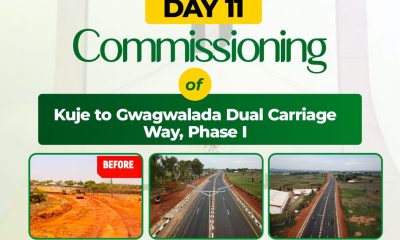
DAY 11 of Projects Commissioning in the FCT: TInubu set to commission Kuje, Gwagwalada road today
-
 News18 hours ago
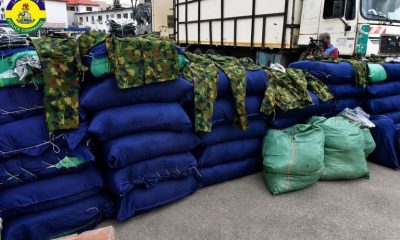
Photos: Police Block Truck Conveying 47 Sacks Of Camouflage & Drugs In Lagos
-
 News17 hours ago
BREAKING: El-Rufai arrives in court under heavy security for trial over alleged financial crimes
-
News18 hours ago
DAY 11 of Projects Commissioning in the FCT
-

 News13 hours ago
JUST IN: Senate passes Police Bill
-
 News13 hours ago
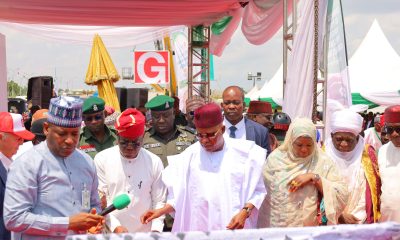
Kuje-Gwagwalada Road Was a Death Trap for Decades, Tinubu Declares as He Commissions Phase I Dual Carriageway (Photos)
-

 News17 hours ago
NDLEA unearths another massive industrial scale clandestine meth laboratory in Oyo forest(Photos)
-

 Economy18 hours ago
SEE Black Market Dollar To Naira Exchange Rate Today 24th June 2026