
News
Reps Push for Overhaul of Workplace Safety Laws


- /home/naijuinz/public_html/wp-content/plugins/mvp-social-buttons/mvp-social-buttons.php on line 27
https://naijablitznews.com/wp-content/uploads/2025/12/IMG-20251211-WA0007-1000x600.jpg&description=Reps Push for Overhaul of Workplace Safety Laws', 'pinterestShare', 'width=750,height=350'); return false;" title="Pin This Post">
- Share
- Tweet /home/naijuinz/public_html/wp-content/plugins/mvp-social-buttons/mvp-social-buttons.php on line 72
https://naijablitznews.com/wp-content/uploads/2025/12/IMG-20251211-WA0007-1000x600.jpg&description=Reps Push for Overhaul of Workplace Safety Laws', 'pinterestShare', 'width=750,height=350'); return false;" title="Pin This Post">


…as Speaker Abbas warns millions of Nigerian workers remain at risk
By Gloria Ikibah
Speaker of the House of Representatives, Rt. Hon. Tajudeen Abbas, has called for the urgent need for the nation to modernise its occupational safety laws to protect millions of workers who face preventable risks daily in factories, construction sites, farms, hospitals, and other workplaces.
Speaker Abbas stated this at a public hearing on a bill for an act to Repeal the Factories Act, CAP F1, Laws of the Federation of Nigeria, and to Enact the Occupational Health and Safety Act, 2025, organised by the House Committees on Safety Standards and Regulation and Labour, Employment and Productivity.
Represented by the Chairman Committee on Justice, Rep. Olumide Osoba, he cautioned that the workforce in Nigeria continues to suffer injuries, illnesses and deaths that could have been avoided if stronger regulations and enforcement mechanisms were in place.
“The true strength of any nation lies not only in its natural resources, but in the safety, security, and health of the people, particularly those who labour daily to sustain the economy.
“The Occupational Health and Safety Bill is therefore more than a legislation; it is a moral imperative, an economic necessity, and a national duty. It embodies our broader parliamentary mandate to protect citizens, promote sustainable development, and build a modern, productive, and globally competitive workforce for Nigeria.
“Across our industries, including manufacturing, agriculture, construction, oil and gas, healthcare, transport, mining, and the informal sector, workers face hazards that too often result in injury, illness, and even loss of life. Many of these tragedies are preventable. They persist due to outdated regulations, weak enforcement, inadequate institutional frameworks, and the absence of a unified national safety architecture.,” he said.
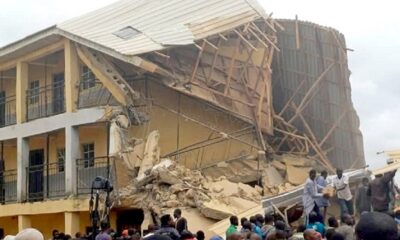
The Speaker noted that unsafe scaffolding, collapsing structures, exposure to harmful chemicals, toxic gases, offshore operations, and poorly maintained machinery remain common in sectors that drive the economy, particularly construction, manufacturing, agriculture and oil and gas.
“This Bill seeks to close those gaps. It establishes a modern, harmonised, and enforceable framework aligned with international best practices and the standards of the International Labour Organization.
“The urgency of this Bill is evident when we consider the fact that these hazards are mostly prevalent in the sectors that drive our economy. In construction, unsafe scaffolding and collapsing structures have left families devastated. In manufacturing, exposure to hazardous chemicals and poor training continue to endanger lives and undermine productivity. In oil and gas, the backbone of our economy, risks from flammable substances, toxic gases, and offshore operations demand preparedness and accountability that only clear legal mandates can ensure. Even in agriculture, where millions of Nigerians earn their livelihood, workers face pesticide exposure, machinery accidents, and unsafe conditions that have long been neglected”, he stated.
Abbas added that the proposed law gives renewed attention to workers in the informal sector, healthcare workers, transport operators, and artisans who, despite forming the bulk of the country’s workforce, are among the least protected.
“This Bill seeks to close those gaps. It establishes a modern, harmonised, and enforceable framework aligned with international best practices and the standards of the International Labour Organization.
“The urgency of this Bill is evident when we consider the fact that these hazards are mostly prevalent in the sectors that drive our economy. In construction, unsafe scaffolding and collapsing structures have left families devastated.
“In manufacturing, exposure to hazardous chemicals and poor training continue to endanger lives and undermine productivity. In oil and gas, the backbone of our economy, risks from flammable substances, toxic gases, and offshore operations demand preparedness and accountability that only clear legal mandates can ensure. Even in agriculture, where millions of Nigerians earn their livelihood, workers face pesticide exposure, machinery accidents, and unsafe conditions that have long been neglected”, Abbas added.
The Chairman House Committee on Safety Standards and Regulations, Rep. David Zacharias, explained that the proposed bill is a historic milestone for Nigeria, and that the country is finally taking decisive steps toward modernising its outdated workplace safety laws.
The legislation he said is a transformative moment for workplace safety after decades of relying on laws that no longer reflect the realities of Nigeria’s evolving work environment.
“This is not just a legislative formality; it is a historic milestone for Nigeria. After years of persistent advocacy from safety professionals, organised labour, industry leaders and concerned citizens, the Occupational Safety and Health Bill now stands before the public for consideration,” he said.
Rep.Zacharias commended the Committees on Safety Standards and Regulations and Labour, Employment and Productivity, as well as the Deputy Speaker, Rt. Hon. Benjamin Okezie Kalu, who sponsored the Bill. He said their collective commitment helped bring the legislation to this critical stage.
The Bill seeks to repeal the obsolete Factories Act of 2004 and replace it with a comprehensive, science-based, enforceable framework aligned with international best practices and relevant International Labour Organisation conventions.
Zacharias said millions of Nigerian workers continue to face daily hazards—chemical exposure, unsafe machinery, building collapses, infectious diseases, transportation-related incidents and ergonomic strain—often without adequate protection.
He noted that the Bill responds to these challenges by strengthening preventive measures, clarifying employer obligations and extending protections to vulnerable groups, especially those in the informal sector.
He emphasised that the impact of the Bill cuts across every major segment of the economy.
“In manufacturing, clearer standards for hazard control and emergency preparedness will reduce injuries and downtime.
“In construction, where accident rates remain high, provisions for safe scaffolding, fall prevention and proper supervision will save lives. In oil and gas, the Bill strengthens oversight and emergency procedures,” he said.
He added that the agricultural sector where millions of Nigerians work will benefit from safer pesticide handling and better training on machinery.
The Bill also introduces stronger biosafety measures and infection control for healthcare workers who are regularly exposed to risks.
For the first time, traders, drivers, mechanics, artisans and others in the informal economy would be covered under a unified national framework.
Zacharias said the Bill also tackles Nigeria’s longstanding systemic shortcomings in workplace safety, including fragmented regulations, low awareness among employers, fear of retaliation among workers, weak penalties, inadequate data on workplace injuries and limited inspectorate capacity.
“The Bill provides clearer duties for employers and employees, stronger enforcement powers for inspectors, mandatory reporting systems, improved penalties and nationwide safety information management,” he explained.
He emphasised that workplace safety is central to national development, noting that a safer workforce improves productivity, strengthens investor confidence, enhances export readiness and reduces pressure on the healthcare system.
“A safer workforce is a more productive workforce. No Nigerian should lose their life or livelihood simply because they went to work,” he said.
Zacharias urged stakeholders—including labour unions, employers, civil society groups, safety experts and regulators—to make constructive contributions that will help refine the Bill and ensure its effective implementation.
“Your voice matters, your experience matters and your participation matters,” he told participants. “This is an opportunity to shape the future of occupational safety and health in Nigeria.”
The Federal Fire Service urged to the House to clarify certain provisions in the proposed Occupational Safety and Health Bill to avoid conflicts with existing fire safety laws and responsibilities.
Represented by Chief Superintendent of Fire (CSF) Sarki Abdul-Rahman at the public hearing in Abuja, the Service said it supports the overall goal of the Bill but identified a few areas that require adjustment.
Abdul-Rahman said the Fire Service operates a wider mandate that covers all environments, not just workplaces, and therefore any provisions relating to fire protection, fire prevention or emergency response must align with the Fire Service Act, the National Building Code and the Fire Code.
He pointed specifically to Item 31 of the draft Bill, noting that any approval process concerning fire and life safety systems—including alarms, suppression equipment, means of escape and firefighting infrastructure—should not overlap with the statutory duties of the Fire Service.
“Our concern is to ensure that fire-related components remain under the appropriate authority so there is no conflict in enforcement,” he said.
The Fire Service also urged the Committee to review the section on penalties for workplace incidents to ensure that punishments reflect the severity of harm caused.


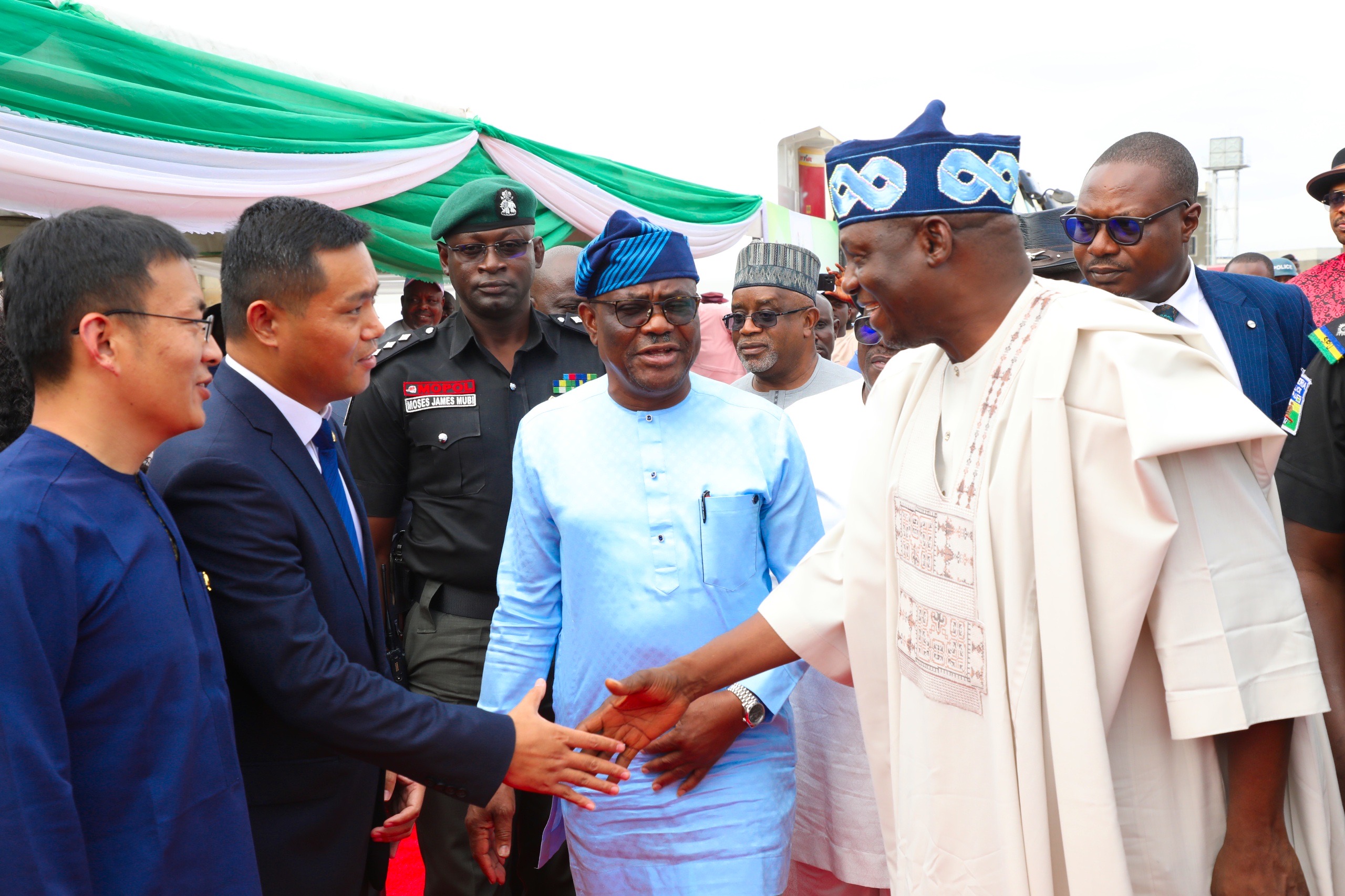
President Bola Tinubu has said that his administration was building road infrastructure to lay the needed physical foundation for a knowledge-driven economy, stressing that education, justice, and innovation need roads to thrive.
Tinubu stated this in Abuja on Tuesday, while flagging off the construction of Collector Road CO1 in the Institutional Research District, from Nile University to Ring Road III.
Represented by the National Chairman of the All Progressives Congress, Prof Nentawe Yilwatda, the President said that the project included dualisation of the road from Baze University roundabout to Nile University, that is the Base University.
He noted that three years into his administration, the results were speaking out.
“From the Southern Parkway to the Institution and Research District, we are laying the physical foundation for a knowledge-driven economy.
“Today, we provide those roads that are needed to provide justice, education, and innovation to our people.
“To the university community, this road is more than a route. It is a connection between learning, law, and the future of our capital,” he said.
He pointed out that the Institution and Research District was designed to be the intellectual heart of Abuja, adding that universities, law chambers, research centers, and innovation hubs were growing in the area.
He, however, stressed that ideas could not move if roads do not move and connect the heart and people together.
Tinubu further said: “Under the Renewed Hope Agenda, we made a choice to finish what was started and to start what we must finish.
“The first phase of this corridor connecting the Body of Benchers, Nile, and Base University is done and ready for commissioning. Today, we begin the next phase to Ring Road III to complete the loop.
“That is how we build a city—with a plan. Not a city of abandoned pieces. Infrastructure must be continuous, and it must also be useful to the people within the environment”.
He commended FCT Minister Nyesom Wike for turning FCT into a delivery agency, stressing that the transformation of Abuja under the minister’s watch is bold, visible and worthy of commendation.
He said, “Wike, your energy is unmatched. You took over a capital with many stalled projects and turned the FCTA into a delivery agency. ‘Mr. Projects’ is not a slogan, it is a record. You have revived sleeping roads, built new interchanges, and brought development to satellite towns. You have domesticated the Renewed Hope Agenda; street by street, district by district. The transformation of Abuja under your watch is bold, visible, and worthy of commendation. Well done, Minister Wike.”
In his remarks, Wike explained that the project was considered following a plea by the Body of Benchers to provide access roads to ease the movement of people in and out of the area.
He assured FCT residents that the Tinubu administration would fulfill all the promises made to the people of FCT, adding that the project would be completed by January 2027.
The minister said that he would continue to deliver life-impacting projects to FCT residents as directed by Tinubu, stressing that the delivery would not be affected by 2027 political activities.
Earlier, acting Executive Secretary, Federal Capital Development Authority, Mr Richard Dauda, said that the Institutional Research District of the FCT is located in Phase III of the city.
Dauda said that the area was planned to accommodate educational institutions like universities, research institutions, and other government institutions as provided in the Abuja master plan.
He added that the district was being developed in stages, with this project being a major intervention in the opening of this district.
He explained that the scope of the current stage involved the construction of Collector Road CO1, from the Nile University to Ring Road III with a total length of about six kilometres.
He added that the project also included the dualisation of the section from the Base University Junction to Nile University.
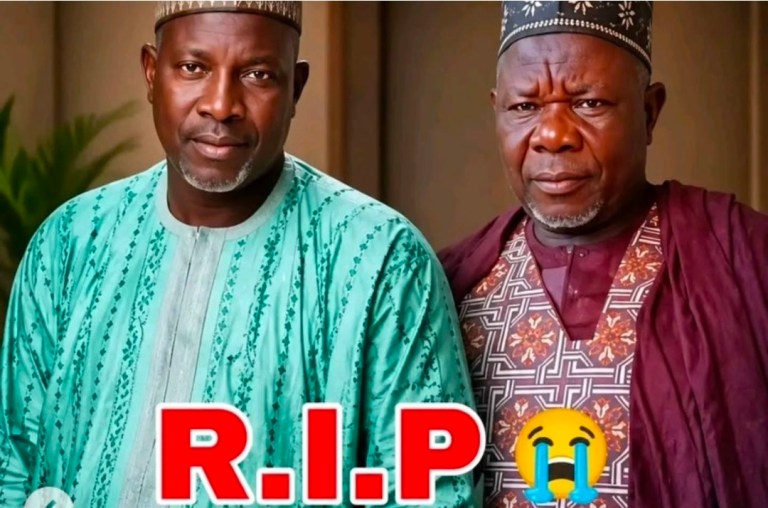
Tragedy struck in northern Nigeria following reports that two abducted victims, including a former chairman of the All Progressives Congress (APC) in Koko/Besse Local Government Area of Kebbi State, have died while in captivity.
The deceased, Alhaji Muhammadu Mai Barga Besse, who previously served as APC chairman in the local government area, was reportedly held hostage by armed kidnappers for an extended period before his death. Another victim who was abducted alongside him was also confirmed dead, although his identity had not been officially disclosed at the time of filing this report.
The sad development comes months after disturbing videos emerged online showing the victims in dire conditions while being held captive in the notorious Birnin Gwari forest.
The footage sparked widespread concern among family members, political associates and members of the public who called for urgent intervention to secure their release.
Despite efforts made during their captivity, both men were reportedly never reunited with their families before their deaths.
The incident has once again drawn attention to the persistent security challenges facing communities across northern Nigeria.
The Birnin Gwari axis, located along the Kaduna-Niger corridor, has become one of the country’s most dangerous regions, with criminal gangs and armed bandits frequently carrying out kidnappings, attacks on villages and other violent crimes.
Residents and stakeholders have repeatedly called on security agencies to intensify operations in the area and dismantle criminal hideouts within the vast forest, which has long served as a sanctuary for armed groups.
News of the deaths has generated an outpouring of grief on social media, with many Nigerians expressing sadness over the fate of the victims and urging authorities to strengthen efforts against kidnapping and banditry.
Popular social media personality Denglishalhajii also shared the development on Instagram, mourning the victims and drawing attention to the growing insecurity affecting many parts of the region.
The deaths of the former APC chairman and his fellow captive have further underscored the human cost of the country’s security crisis, leaving families, friends and political associates in mourning while raising renewed concerns about the safety of citizens in vulnerable communities.

President Bola Tinubu has asked the senate to approve a constitutional amendment bill seeking to establish state police across Nigeria as part of efforts to strengthen the country’s security architecture.
The request was contained in a letter dated June 15, 2026, and read on the floor of the senate on Tuesday by Godswill Akpabio.
In the correspondence, Tinubu said the proposed Constitution of the Federal Republic of Nigeria (Alteration) State Police Bill, 2026, seeks to amend the 1999 constitution to provide a legal framework for the creation of state police services.
The president said the bill is designed to address Nigeria’s evolving security challenges by introducing a dual policing structure that would allow both federal and state policing systems to operate within a constitutional framework.
According to him, the proposal builds on previous legislative efforts by both chambers of the national assembly and contains additional safeguards to ensure effective implementation.
“This bill builds on the significant work already done in this regard by the House of Representatives and the Senate, and incorporates additional safeguards to ensure that the creation of a dual policing structure to address our nation’s evolving national security challenges, will be achieved quickly and effectively to the benefit of all Nigerians,” Tinubu said.
The president described the proposed legislation as a key component of his administration’s broader plan to reform Nigeria’s security system and improve the protection of lives and property.
“The proposed legislation is a critical component of our administration’s strategy to reorganize Nigeria’s security architecture to better protect our citizens, and I’m confident that the Senate will act quickly to consider and pass this bill,” he added.
Read Also: Amnesty International Demands Immediate Release of Omoyele Sowore, Condemns Detention
Tinubu urged lawmakers to give the proposal expeditious consideration.
Following the reading of the letter, Akpabio referred the bill to the senate committee on constitution review for further legislative action.
The committee was directed to report back to the chamber on the next legislative day.

Photos: We’re building infrastructure for a knowledge-driven economy – Tinubu

Just in: Kidnapped APC Chairman, Another Victim Die in Abductors hideout

Tinubu Seeks Constitutional Backing For State Police, Writes Senate




-
 News16 hours ago
Tinubu Appoints Former UNILAG VC Ogundipe as NUC Governing Board Chairman
-

 Metro16 hours ago
Disaster Averted in Enugu as Rescue Teams Contain Gas Leak After Truck Crash at Ugwuonyeama
-

 News16 hours ago
Wait for 2027, Presidency Tells Peter Obi Amid Calls for Tinubu’s Resignation
-
 News16 hours ago
El-Rufai confessed to wiretapping NSA’s phone on TV interview- witness
-
 News16 hours ago
Ex-Delta Gov Okowa Visits EFCC Lagos Office
-

 News11 hours ago
Senator Abba Moro hails Olaka Nwogu on electoral victory
-
 Metro16 hours ago
Building Collapses Along Slaughter Road in Port Harcourt, No Casualties Reported
-

 News16 hours ago
‘We Need Help Now’ — Nigerians Trapped in South Africa Appeal to Tinubu