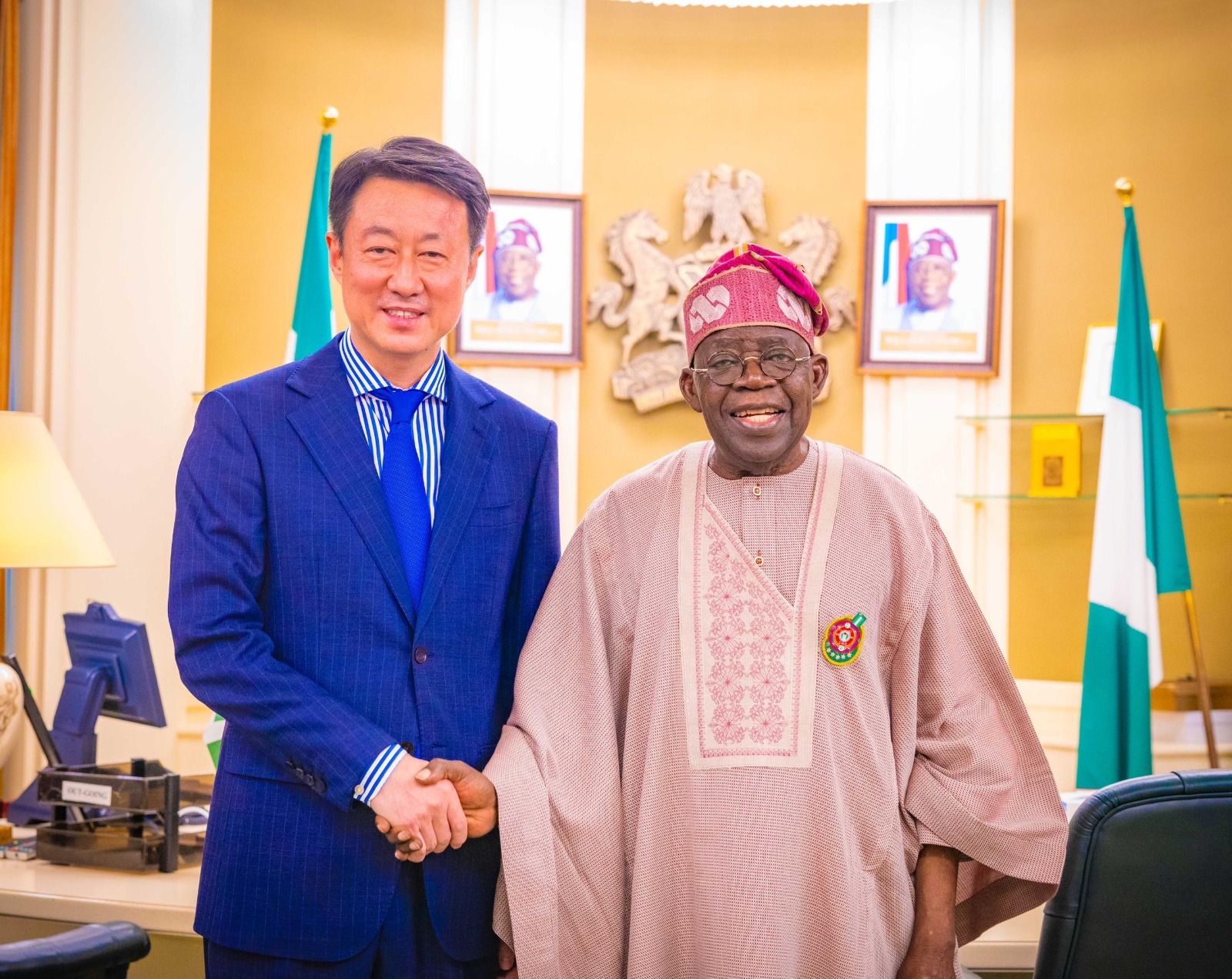
By Raphael Oni


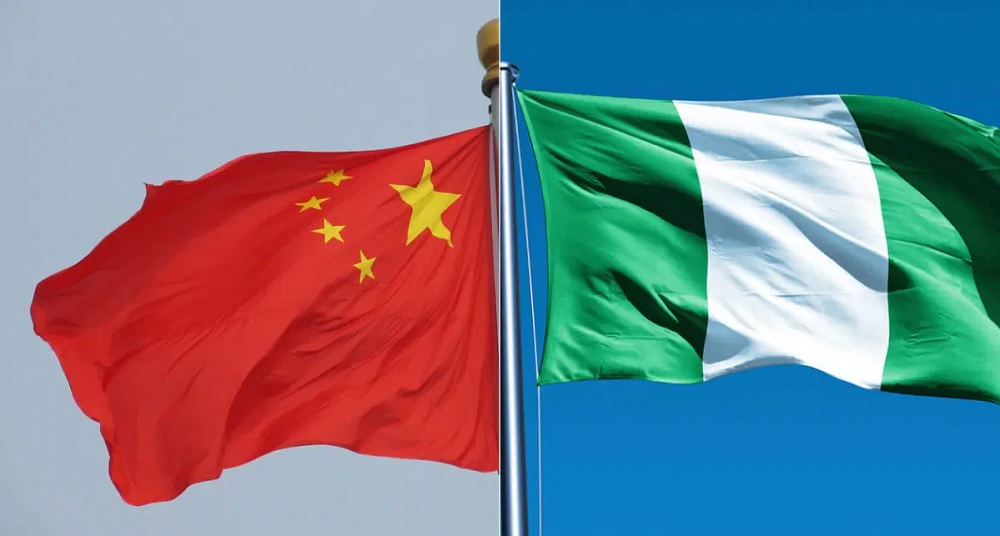
January 11, 2026, marks a significant milestone in Nigeria’s diplomatic history – nine years since the country corrected a major diplomatic blunder by ordering Taiwan to relocate its unofficial embassy from Abuja to Lagos. This bold move reaffirmed Nigeria’s commitment to the One China Policy, recognizing the People’s Republic of China as the sole legitimate government of China, including Taiwan.
The decision, made during the late President Muhammadu Buhari’s administration, was a testament to Nigeria’s dedication to upholding international law and respecting China’s sovereignty. The signing of the Memorandum of Understanding (MoU) on the One China Policy by former Nigerian Foreign Minister Geoffrey Onyeama and Chinese Foreign Minister Wang Yi in 2017 was a significant step towards strengthening Nigeria-China relations. 
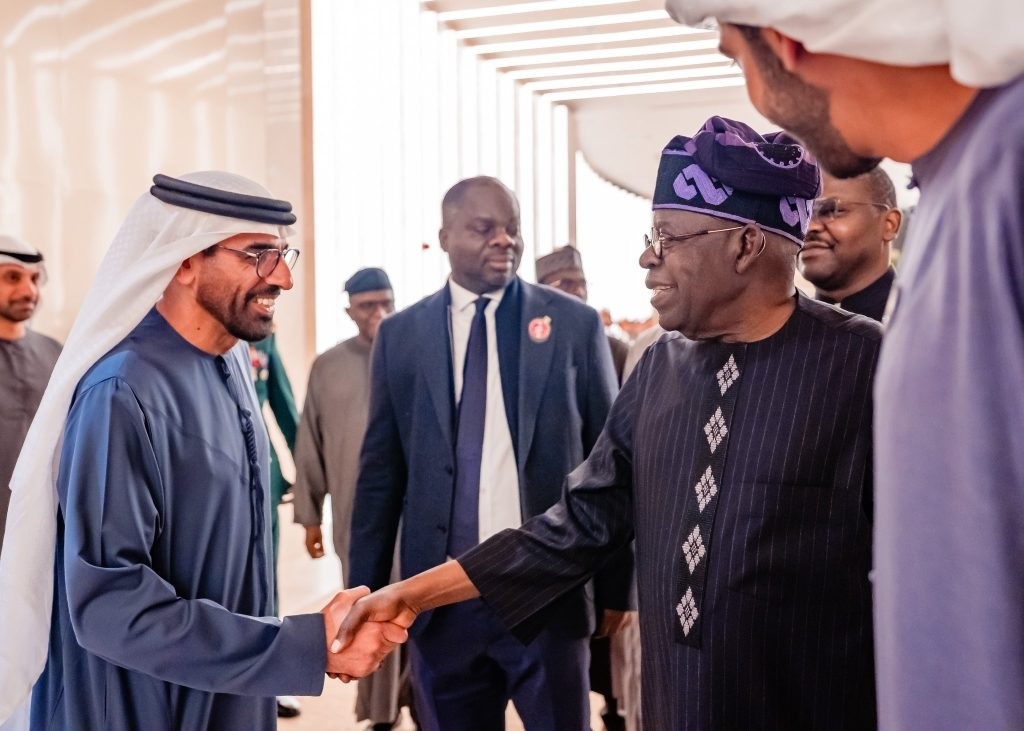
Fast forward to today, the Bola Ahmed Tinubu administration continues to uphold this principle, demonstrating Nigeria’s unwavering commitment to the One China Policy. This stance is not only a reflection of Nigeria’s respect for international law but also a testament to the country’s strategic partnership with China.
The Nigerian side firmly adheres to the one-China principle, acknowledges that there is but one China in the world, and the government of the People’s Republic of China is the sole legal government representing the whole of China, and Taiwan is an inalienable part of China’s territory.
You will recall that at the invitation of H.E. Xi Jinping, President of the People’s Republic of China, H.E. Bola Tinubu, President of the Federal Republic of Nigeria, was in China for a State Visit on the 3rd of September 2024 and to attend the Beijing Summit of the Forum on China-Africa Cooperation (FOCAC).
In a Joint Statement Between the People’s Republic of China and the Federal Republic of Nigeria on Establishing a Comprehensive Strategic Partnership and Building a High-Level China-Nigeria Community with a Shared Community with a Shared Future. During the visit, President Xi Jinping and President Tinubu had a cordial discussion, with an in-depth exchange on China-Nigeria relations as well as international and regional issues of mutual interest. The two Presidents agreed that both countries stood at a new historical starting point as significant representatives of major developing countries and emerging economies. Their strengthened strategic cooperation will propel a new dynamic for China-Africa relations in the new era and lead the Global South to march together.
President Xi Jinping inform President Bola Ahmed Tinubu that the China supports the Renewed Hope Agenda of Nigeria and the efforts made by Nigeria to maintain national unity, peace, security, and social stability, as well as promote economic development and improve people’s welfare. In his response President Tinubu said that Nigeria firmly adheres to the one-China principle, acknowledges that there is but one China in the world, and the government of the People’s Republic of China is the sole legal government representing the whole of China, and Taiwan is an inalienable part of China’s territory. In the words of the President, “Nigeria firmly adheres to the one-China principle, acknowledges that there is but one China in the world, and the government of the People’s Republic of China is the sole legal government representing the whole of China, and Taiwan is an inalienable part of China’s territory”. Nigeria opposes any form of “Taiwan Independence” or interference in the internal affairs of China and firmly supports all efforts made by the Chinese government to achieve national reunification.
His Excellency Yu Dunhai, the Chinese Ambassador to Nigeria has praised Nigeria for strictly abiding by the One-China Principle, citing the joint statement issued by President Bola Tinubu and Chinese President Xi Jinping. In the statement, Nigeria reaffirmed its recognition of Taiwan as part of China and opposed any form of Taiwan independence. The Ambassador emphasized that the Taiwan issue is a core interest of China and a red line that should not be crossed. He urged media professionals and the public to be cautious in their reporting, avoiding language that could be perceived as recognizing Taiwan as a separate country.
He also warned against engaging with Taiwan’s unofficial representative office in Lagos, which has been known to advocate for Taiwan independence. He urged Nigerians to be vigilant and not provide a platform for the office to promote its ideas.
Kudos to the Bola Ahmed Tinubu Administration for standing firm on the One China Policy, ensuring that no government official patronizes the Taiwan Trade Mission and playing down the rhetoric of those with limited understanding of the issue.
The One China Policy is a cornerstone of China’s foreign policy, recognizing the People’s Republic of China as the sole legitimate government of China, including Taiwan. Nigeria’s adherence to this policy is a demonstration of its commitment to respecting China’s sovereignty and territorial integrity.
As Chinese Ambassador to Nigeria, Yu Dunhai, noted, “Nigeria’s consistent support for the One-China principle is a cornerstone of the strong relationship between our two nations”
Nigeria and China established a strategic partnership in 2014, during President Bola Ahmed Tinubu’s visit to China in September 2014. This partnership has led to significant cooperation in various fields, including trade, investment, infrastructure development, and security.
The partnership has also led to the creation of several bilateral agreements, including the Nigeria-China Joint Commission on Cooperation, which has facilitated cooperation in areas such as agriculture, energy, and transportation.
In the words of Geoffrey Onyeama, former Nigerian Foreign Minister, “Nigeria will take all necessary measures to maintain the integrity of its One China Policy”. This integrity has indeed become a blessing. Nigeria’s commitment to the One China Policy has yielded significant benefits, including:
Economic Cooperation: China is Nigeria’s largest trading partner, with bilateral trade exceeding $20 billion in 2024.
Infrastructure Development: China has invested heavily in Nigeria’s infrastructure, including roads, railways, and ports.
Security Cooperation: Nigeria and China have strengthened their security cooperation, with China providing military aid and training to Nigeria.
Agricultural Development: China has provided expertise and technology to improve Nigeria’s agricultural production.
Energy Cooperation: China has invested in Nigeria’s energy sector, including the construction of power plants and oil refineries.
Job Creation: Chinese investments in Nigeria have created thousands of jobs for Nigerians.
Technology Transfer: China has transferred technology to Nigeria in various fields, including telecommunications and manufacturing.
Capacity Building: China has provided training and capacity-building programs for Nigerian professionals in various fields.
Charles Onunaiju, Director of the Centre for China Studies: “Nigeria’s commitment to the One-China policy is sacrosanct”. Onunaiji as a reknown scholar of China Nigeria relations, put it forward that with Nigeria maintaining it stands on the One China Policy, the future hold greater heights for the two countries.
On February 10, 2026, Nigeria and China will celebrate 55 years of diplomatic relations. This milestone is a testament to the strong bonds between the two nations and their commitment to mutual cooperation.
China has remained one of Nigeria’s top trading partners, with bilateral trade surpassing $20 billion in the first three quarters of 2025, a year-on-year increase of 32.56%.
China has invested heavily in Nigeria’s infrastructure, including: the Abuja-Kaduna Railway, $7 billion project aimed at improving transportation in Nigeria. The $2.5 billion project aimed at promoting trade and investment in Nigeria of the Lekki Free Trade Zone. Another note worthy project is the Zungeru Hydro Power Dam. A $1.3 billion project aimed at increasing Nigeria’s power generation capacity. Port Harcourt-Makurdi Railway costing $3.5 billion project aimed at improving transportation in Nigeria. What else can be said on the Lagos-Kano Railway valued at $8 billion project aimed at improving transportation in Nigeria, to mention few.
While Nigeria’s commitment to the One China Policy has brought significant benefits, there are also challenges and opportunities to be addressed. One of the challenges is the need for Nigeria to diversify its economy and reduce its dependence on China. Another challenge is the need for China to increase its investments in Nigeria’s manufacturing sector.
Opportunities abound, however, for Nigeria and China to deepen their cooperation in areas such as agriculture, energy, and technology. Nigeria’s large market and abundant natural resources make it an attractive destination for Chinese investments, while China’s expertise and technology can help Nigeria achieve its development goals.
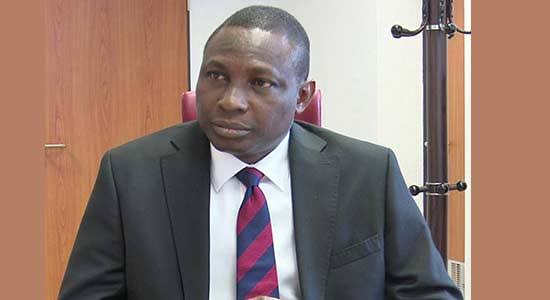
Prof Sherriff Ibrahim Ghali the Provost, Anti-Corruption Academy of Nigeria, and Head of Contemporary China-Africa Research in Nigeria belive the Nigeria’s stance on the One China Policy is crucial to building the bridge for the comprehensive strategic partnership.
Ghali said the visit of Wang Yi to Nigeria in January 2025 was indeed a significant one where the following events unfolded: first, the bilateral relationship was elevated to a comprehensive strategic partnership. Second, a new platform for solidarity and cooperation has been established.
The successful convening of the first plenary session of the China-Nigeria Intergovernmental Committee has upgraded and synergized bilateral cooperation. Third, international collaboration has reached new heights. The two sides have closely coordinated on international and regional affairs, working together to advance the collective rise and development revitalization of the “Global South”.
Nigeria’s commitment to the One China Policy has strengthened its relationship with China and contributed to its economic development. As Nigeria and China celebrate 55 years of diplomatic relations, it is clear that this partnership will continue to grow and benefit both nations.
The partnership has brought significant benefits to both countries, including economic cooperation, infrastructure development, security cooperation, and technology transfer. Nigeria’s commitment to the One China Policy has demonstrated its respect for China’s sovereignty and territorial integrity, and has paved the way for deeper cooperation between the two nations.
As Nigeria looks to the future, it is clear that the country’s relationship with China will continue to play a significant role in its economic development and growth. The One China Policy will remain a cornerstone of Nigeria’s foreign policy, and the country will continue to work closely with China to promote mutual cooperation and development.