
News
EU concludes digital skills programme advancing inclusive growth in North-East Nigeria

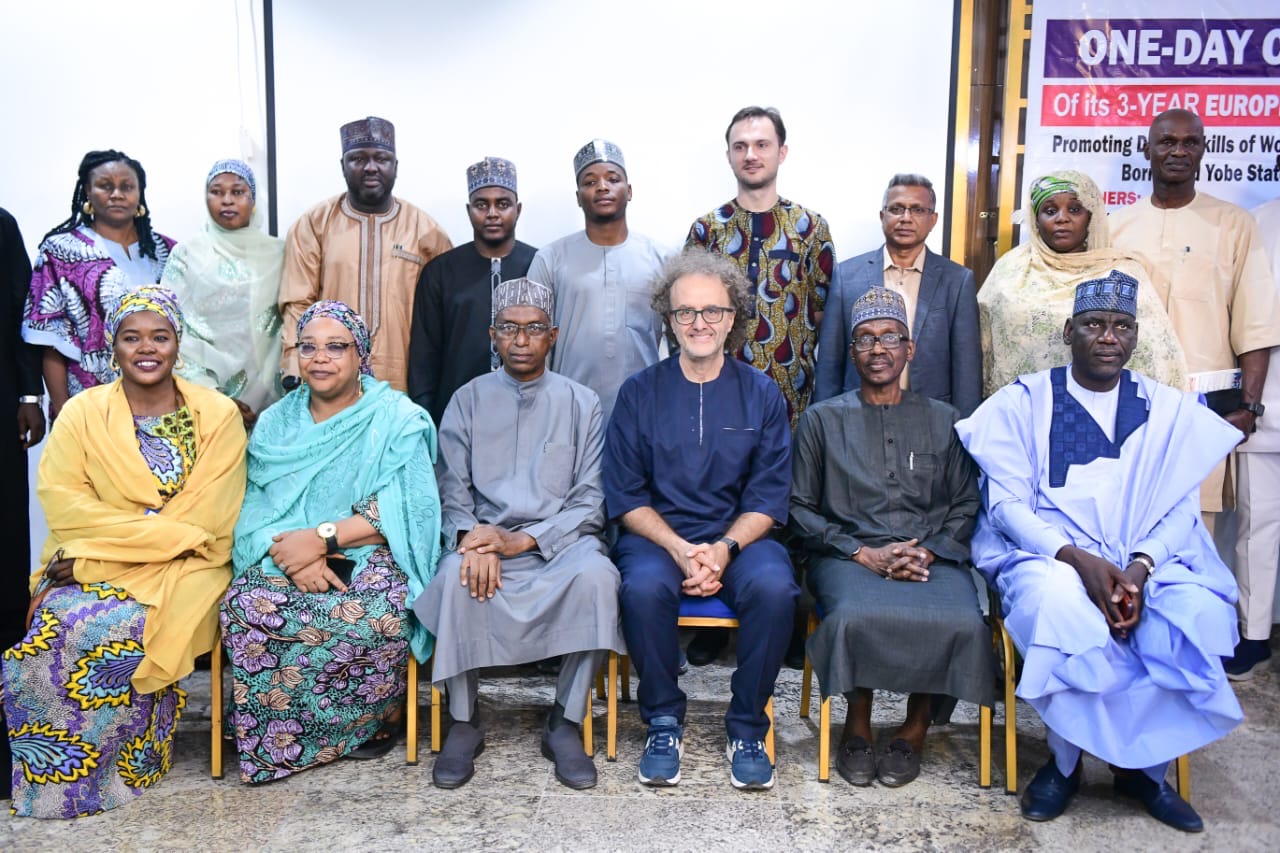


The European Union has concluded its Digital skills promotion programme targeting Women, Hard-to-Reach Youth, and Persons with Disabilities, following three years of targeted support to advance inclusive digital transformation and economic opportunity in Borno and Yobe States.
The programme aimed to reduce the digital gender divide and digital exclusion among women, youth, and persons with disabilities while strengthening community-level capacity in fragile contexts.
The closing ceremony, held in Maiduguri on 4 February 2026, brought together stakeholders, including representatives of the European Union, implementing partners, civil society organisations, and state government officials, to reflect on progress achieved and lessons learned from the initiative.
Funded by the European Union with €750,000, the programme was implemented by ZOA International from 2023 to 2026. It focused on narrowing the digital gender gap, expanding access to digital skills, and strengthening the capacity of grassroots civil society organisations across 30 communities in Borno and Yobe states.
Speaking at the closing ceremony in Maiduguri, the Head of Cooperation at the European Union Delegation to Nigeria and ECOWAS, Massimo De Luca, underscored the programme’s strategic focus on inclusive, people-centred digital development.
“This project shows how well-targeted digital investments can deliver lasting impact—by empowering communities, strengthening local institutions, and supporting inclusive economic growth,” De Luca said. “Through the Global Gateway strategy, the European Union is backing practical, people-centred digital transformation that responds to local realities and leaves no one behind.”
He emphasised the importance of digital inclusion in conflict-affected regions, noting:
“Digital inclusion is not a luxury; it is a necessity for resilience, innovation, and meaningful participation in today’s economy. For marginalised communities in conflict-affected regions, access to digital skills is essential to stability, opportunity, and long-term recovery.”
Highlighting the EU’s forward-looking approach, De Luca added:
“Looking ahead, the European Union wants initiatives like this to translate into real economic value. Our focus is on ensuring that skills, infrastructure, and innovation lead to viable enterprises, job creation, and durable economic resilience within local communities.”
Providing an overview of the programme’s outcomes, Godwin Dominic, ZOA Programme Manager, said the initiative delivered measurable results across target communities.
“Over the course of implementation, the programme trained 18,193 individuals, established 32 IT hubs, and supported the formation of a Digital Literacy Working Group to strengthen coordination and sustainability,” Dominic said.
“In addition, six schools were capacitated with access to IT services, expanding opportunities for digital learning and skills development across communities in Borno and Yobe states.”
Representing the Borno State Government, the Executive Secretary of the Borno Information and Communication Technology Development Agency (BICTDA), Engr. Mohammed Kabir Wanori commended the programme for complementing state development priorities, strategies, policies, and strengthening opportunities for women and youth.
As the programme concludes, partners reaffirmed their commitment to sustaining the digital infrastructure, skills, and local capacity developed through the initiative, ensuring that its outcomes continue to support inclusive economic participation and community resilience in North-East Nigeria.

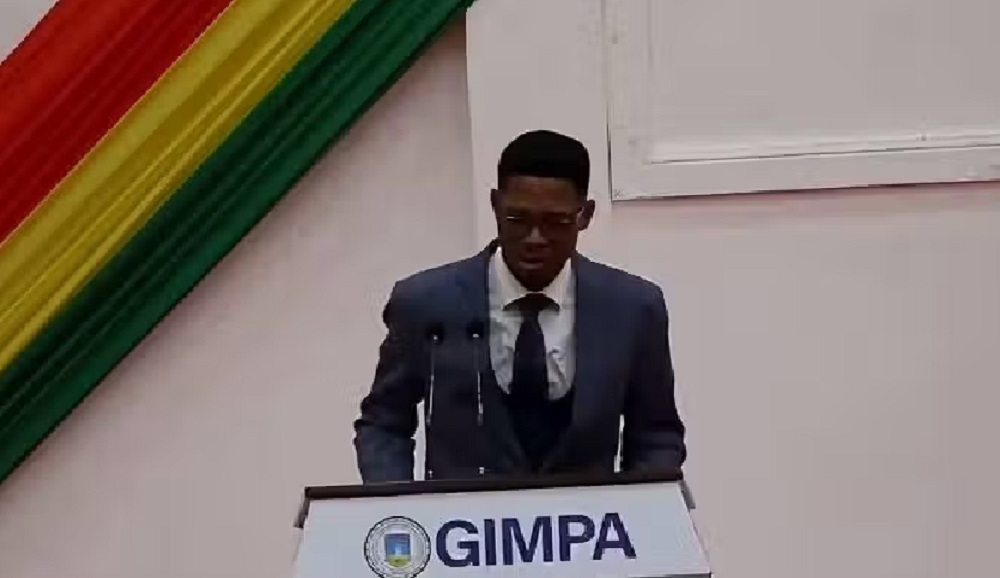
Francis-Xavier Sosu, Ghanaian member of parliament, collapsed on stage while delivering a speech.
Sosu was addressing students at the Ghana Institute of Management and Public Administration (GIMPA) in Accra on Thursday when he began to show signs of dizziness, according to video posted by Joy Online, a local media outlet.
Pausing his address, the lawmaker attempted to hold on to the podium but was unable to continue his speech or stand upright.
A man and a woman approached the podium from the side of the hall to assist the lawmaker, who later collapsed into their arms as they rushed him out of the building.
A statement issued by Ivan Dzakpasu, Sosu’s chief of staff, said the MP has received the necessary medical attention following the incident.
The statement did not provide details on the nature of the incident, the medical attention received or what may have caused the MP to become unwell.
The statement urged the public to remain calm and avoid relying on unverified reports or speculation about the lawmaker’s condition.
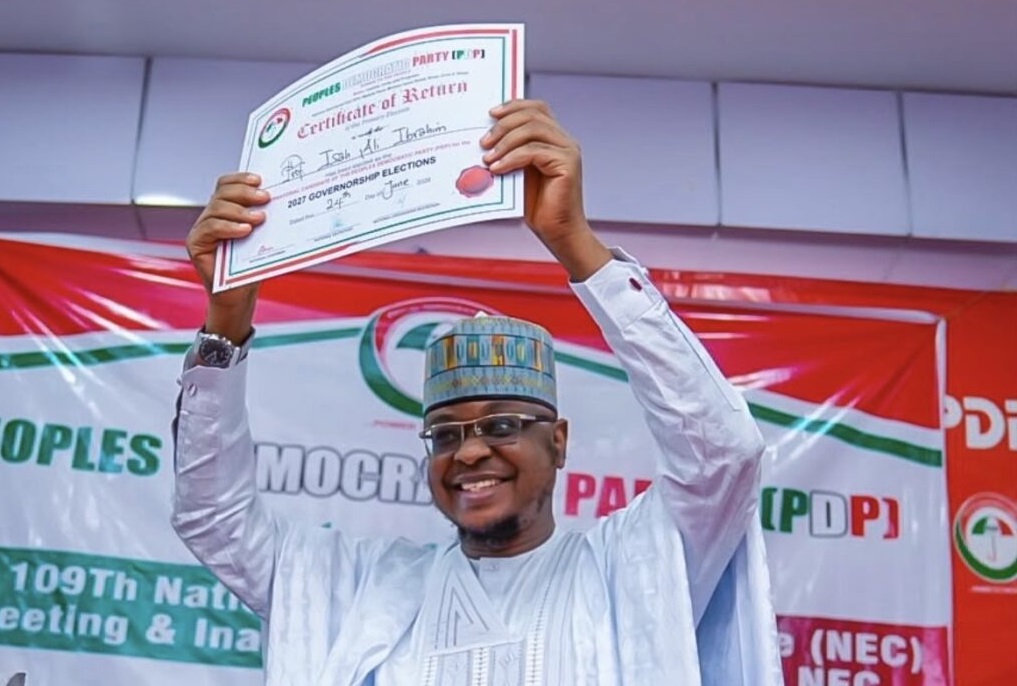
The federal high court in Gombe has nullified the emergence of Isa Pantami as the Peoples Democratic Party (PDP) candidate for the 2027 governorship election in the state.
The court, in a judgment delivered on Thursday by Amina Aliyu Mohammed, also ordered the PDP to conduct a fresh governorship primary in compliance with its constitution, guidelines and relevant electoral laws.
The judgment followed a suit filed by Usman Garry, a PDP governorship aspirant, who challenged the process through which Pantami emerged as the party’s candidate.
In May, Pantami withdrew from the All Progressives Congress (APC) governorship primary election scheduled for May 21 in Gombe state.
Pantami attributed his withdrawal from the race to the alleged breaches of the electoral process.
He eventually joined the PDP and emerged as the party’s 2027 governorship candidate in Gombe state.
The former minister secured the ticket through voice affirmation during the party’s gubernatorial primary.
Garry objected to the affirmation of Pantami as the flagbearer of the Abdulrahman Mohammed-led faction and eventually filed a suit against the former minister.
Garry had asked the court to set aside Pantami’s emergence on the grounds that the PDP did not conduct a valid governorship primary in accordance with its rules and applicable electoral laws.
After hearing arguments from the parties, the court had reserved judgment in July.
At Thursday’s proceedings, counsel to Pantami argued that he had validly resigned from the APC on May 19, 2026, before participating in the PDP primary.
The PDP also opposed the suit and urged the court to strike out the case.
Garry’s counsel, however, urged the court to dismiss the objections and grant the reliefs sought by his client.
The court, however, directed the PDP to conduct a fresh governorship primary in accordance with its guidelines and applicable electoral provisions.
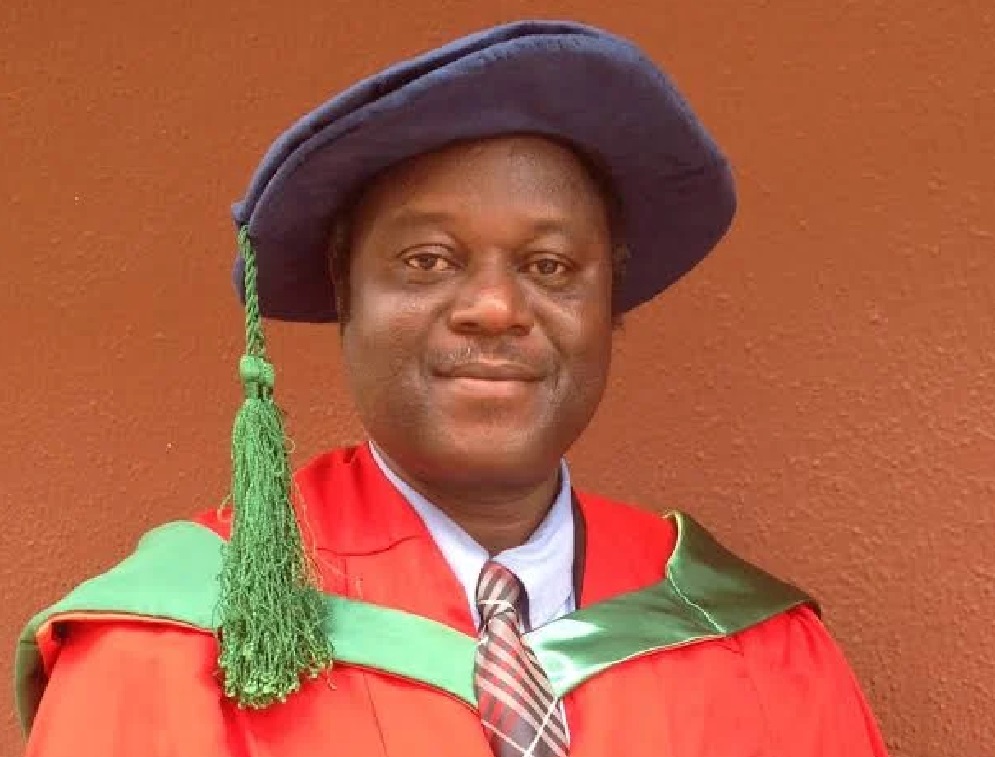
Osun State Governor, Ademola Adeleke, has noted the steady development that Osun State University has witnessed under the current management of the institution.
He said the visible progress under the current Vice-Chancellor, Prof Clement Adebooye, was the main factor considered to approve tenure extension for the VC.
Adeleke, who was represented by the Deputy Governor, Kola Adewusi, asserted on Thursday while addressing the 16th UNIOSUN convocation ceremony held at the main campus of the university in Osogbo,
The governor listed Adebooye’s accomplishments, saying various breakthroughs recorded by the current management had transformed the institution.
Flaunting the multiple achievements in academic and infrastructural growth within the university, Adeleke, in a statement signed by his spokesperson, Olawale Rasheed, further said, “In the last four years, 40 main building projects have been constructed and commissioned for use. There is no year that I have not personally come to the campus to commission legacy projects.
“In August this year alone, I commissioned the ultra-modern FIFA-standard Sports Complex, 3-in-1 Science Laboratory Complex, and two landmark Lecture Theatres.
“In addition to these, there have been well over 30 complementary works that include renovations, procurement and supplies, solar installations, etc., all with a view to making teaching, learning and administrative work conducive.
“Of more importance is the sustenance of the long-established culture of peace and industrial harmony in the university. This is why for the past five years, the university has not missed any academic session, nor has it failed to graduate its deserving students as and when due.
“It is on record that UNIOSUN is the second state-owned university to fully implement the 2025 FGN-staff union agreement.
“So, in terms of staff welfare and overall teaching and learning environment, this university remains a model. This is a major commitment of our government to support the responsible and responsive administration that we have put in charge of this university.
“In a bid to sustain continuity of performance and academic excellence, I approved a two-year extension of the tenure of the vice-chancellor with effect from 4th January, 2027 after strategic consultations and compliance with the state law.”
Speaking further on the development, the governor said his pronouncement has, accordingly, been backed up by the amendment to Osun State University Law (2006), passed by the state House of Assembly earlier this month, vowing “to continue to do everything to support the sustenance of academic and administrative excellence in this University.
“It must also be stated very clearly that my decision was well guided and it is rooted in legality, and in the overall best interest of the university.
“Our choice of the new chancellor followed a similar merit-driven thought process, and the innumerable applause from all parts of the world proved us right on Mama BOVAS’ appointment.
“Our resolve to also dissolve and reconstitute the governing council is another product of painstaking review towards accelerating the progressive development of the university. We are therefore not bound by any law or tradition to accept the dictates of any staff union regarding what we think is the best for our university,” the governor insisted.
Rolling out further achievements of the university under the vice-chancellor, Adeleke said, “In this month alone, the current vice-chancellor and his team attracted five major signature projects from the Federal Government and successfully laid their foundations with a view to completing the projects before December 2027.
“This is a vice-chancellor who met a half-alive medical school but diligently worked to ensure that all accreditation requirements by the Medical and Dental Council of Nigeria were met by the university, and has presented all 90 pioneer MBBS students both for MDCN induction and award of UNIOSUN degrees.
“This is a vice-chancellor who massively expanded the university’s academic landscape, thus increasing the student population from 14,260 in 2022 to 42,791 in 2026.
“This is a vice-chancellor who worked very closely with the great family of Apostle Folorunso Alakija to ensure the completion and commissioning of the 250-bed state-of-the-art Modupe and Folorunso Alakija Medical Research and Training Hospital.
“The hospital has since started full operation. In terms of global impact and visibility, for the first time in 11 years, UNIOSUN emerged as the third-best state university in Nigeria, 19th out of 312 universities in Nigeria, and 137th out of 2,390 universities in Africa,” he posited.
He urged staff and management to join hands with the governing board to continue to take the university to greater heights.
He restated the readiness of his administration towards providing maximum support for improved university governance and service delivery.

Miners’ deaths: NSCDC pledges justice, says no cover-up

EFCC Hands Over N80m Recovered Funds To Businessman

Ghanaian lawmaker collapses while addressing students





-

 News15 hours ago
Video: Apo-Karshi road getting required finishing touches
-
 News15 hours ago
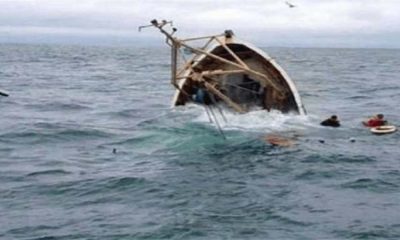
SAD! Four Teenage Girls Die As Boat Carrying Eight Capsizes In Jigawa
-

 News15 hours ago
US firm declares America won’t allow Tinubu rig 2027 polls in Nigeria
-

 Opinion15 hours ago
OF TEEJAY YUSUF, KOGI WEST SENATORIAL DISTRICT, AND RESPONSIVE SERVANTHOOD
-
 News15 hours ago
FG Cuts Late Tax Payment Interest as New Rate Takes Effect October 1
-

 Sports15 hours ago
FCT emerges winner of Abuja zone, book ticket to 1st Bank/Okwaraji U-16 finals