News
Senate set to adopt dual system — e‑transmission where networks exist, manual collation for offline areas
- /home/naijuinz/public_html/wp-content/plugins/mvp-social-buttons/mvp-social-buttons.php on line 27
https://naijablitznews.com/wp-content/uploads/2024/11/Senate.jpg&description=Senate set to adopt dual system — e‑transmission where networks exist, manual collation for offline areas', 'pinterestShare', 'width=750,height=350'); return false;" title="Pin This Post">
- Share
- Tweet /home/naijuinz/public_html/wp-content/plugins/mvp-social-buttons/mvp-social-buttons.php on line 72
https://naijablitznews.com/wp-content/uploads/2024/11/Senate.jpg&description=Senate set to adopt dual system — e‑transmission where networks exist, manual collation for offline areas', 'pinterestShare', 'width=750,height=350'); return false;" title="Pin This Post">
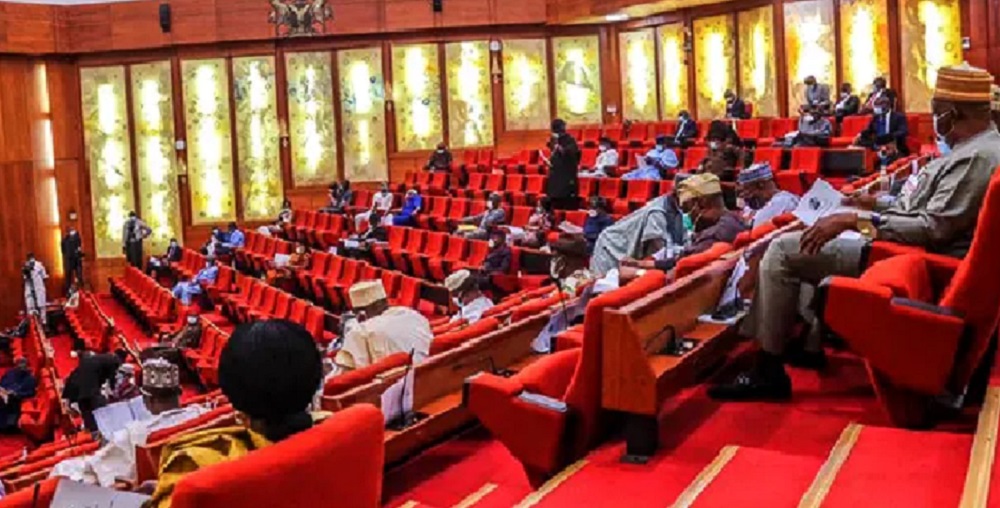
The Senate is set to adopt a simultaneous approach to election-result management: mandatory electronic transmission to INEC’s IREV portal in polling units with reliable network and power, and manual collation in areas without connectivity.

A Senate insider said the decision — expected to be formalised at today’s emergency plenary convened by Senate President Godswill Akpabio — is aimed at preventing the disenfranchisement of voters in rural and network‑poor communities while preserving the benefits of e‑transmission in urban and well‑served areas.
“It will be a twin system: e‑transmission where the network and power permit, and manual collation where they do not. The idea is to ensure nobody is disenfranchised,” the source said on condition of anonymity.

The emergency sitting — summoned in a memo dated 8 February and signed by the Clerk of the Senate, Emmanuel Odo — follows nationwide outrage over amendments to the Electoral Act, especially the Senate’s removal of the word “real‑time” from clauses on electronic transmission of results. Critics say the change weakens safeguards against post‑poll manipulation; protesters have demonstrated at the National Assembly demanding reinstatement of “real‑time” transmission.
The upper chamber had adjourned for two weeks after passing the amendment bill to allow lawmakers to defend budget proposals before Ministries, Departments and Agencies. The sudden recall for an emergency plenary and the disclosed dual‑track approach suggest senators are attempting a compromise that balances transparency with practical realities on the ground.
Senate leaders have repeatedly insisted they did not reject electronic transmission outright. Over the weekend, Senate President Akpabio, speaking at a book launch, emphasised that work on the Electoral Act amendments was ongoing and that further consultations would continue.
If adopted, the dual system would direct votes from connected polling units to the IREV portal in near‑real time while preserving paper processes and manual collation in black‑spot areas — a model supporters say could blunt accusations of exclusion. Opponents warn that bifurcating the process risks creating two standards of verification and new legal questions about reconciliation of electronically transmitted and manually collated results.
Today’s session will be closely watched by civil society groups, political parties and protesters, who have called for full transparency and the reinstatement of explicit “real‑time” mandates. It will also test whether the Senate can craft a solution that addresses both technical constraints and public demand for electoral integrity.
Requests for comment sent to the Clerk of the Senate and the office of the Senate President were not immediately answered. This report will be updated when official responses are received.
Observer Times
News
Senator Wadada promises to deepen legislative ties, stop inactivity
The Chairman of the Senate Committee on Inter-Parliamentary Affairs, Senator Aliyu Wadada has promised to revive the committee’s activities after acknowledging concerns over its prolonged inactivity.
Wadada spoke on Thursday at the end of the committee’s meeting in Abuja.
Specifically, the chairman admitted that the committee had been underutilised, noting that it had met only once in the last three years.
He, however, said issues responsible for the situation had been identified during a closed-door session and would be addressed.
“Of course I feel concerned about it, but when we got into the details in a closed-door meeting, we got to know where the problems are, and they will all be taken care of. The committee will be as active as it should always be,” he said.
Commenting further, the chairman said the committee would focus on its core mandate of promoting and strengthening legislative relations between Nigeria’s National Assembly and parliamentary bodies across the world.
According to him, the committee will deepen engagement with regional and international legislative institutions, including the ECOWAS Parliament, the Pan-African Parliament, the Inter-Parliamentary Union (IPU), and other parliamentary organisations.
He disclosed that a new work plan had already been developed to guide the committee’s activities.
He added: “The direction is basically around the responsibilities of the committee, which is to promote and deepen legislative relationship within Nigeria and with other legislative bodies around the world”.
The chairman added that the committee’s first major activity would be a courtesy visit to the Speaker of the ECOWAS Parliament in Nigeria as part of efforts to strengthen inter-parliamentary cooperation.
SINL NIgeria Online reports that Senator Wadada assured that the public would be kept informed of the committee’s activities as the new work plan is implemented.
News
Just in: FG jerks up salaries soldiers to N100k monthly
The Minister of Defence, Christopher Musa, has revealed that the minimum monthly salary of Nigerian soldiers has increased to N100,000 after the Federal Government reviewed their welfare package.
Musa made the disclosure during an interview with News Central ahead of his appearance on the NC Exclusive programme.
He said the adjustment was part of efforts by the government to improve the living conditions of military personnel.
Executive Branch
The former Chief of Defence Staff, however, said the country’s defence sector still requires more funding despite the improvement in soldiers’ earnings and welfare.
He stated that the current defence budget remains inadequate, adding that more resources are needed to effectively support the armed forces and their operations.
Musa explained that soldiers who previously earned about N49,000 monthly now receive at least N100,000 following the salary review carried out by the government.
The minister also called for tougher punishment for kidnappers, saying stronger measures are needed to reduce the increasing cases of abduction across Nigeria.
News
DAY 22 of Projects Commissioning in the FCT
Remodelled Abuja City Gate To Be Commissioned Today, Thursday, July 9
#ProjectsFCT2026
#FCT31DaysCommissioning
-
News21 hours ago‘Serial liar’, Presidency debunks Obi’s death threat claim
-
News21 hours agoSenate approves customs’ N11.07tn 2026 revenue target
-
News21 hours agoDefence minister orders troops to shoot bandits on sight
-
News21 hours agoInsecurity: NGF inaugurates Northern Nigerian Security Trust Fund
-
News21 hours agoEFCC Arraigns Ex-Port Harcourt Refinery MD over Money-laundering Allegations
-
Economy21 hours ago2024 Bid Round: NUPRC hands oil prospecting licences to 12 firms
-
News21 hours agoGroup Urges FG To Probe Alleged Threats To Peter Obi’s Life
-
News21 hours agoNSCDC deploys 1,300 personnel for Edo LG poll