

News
ECOWAS Parliament Pushes for Urgent Reform of West Africa’s Education System
- /home/naijuinz/public_html/wp-content/plugins/mvp-social-buttons/mvp-social-buttons.php on line 27
https://naijablitznews.com/wp-content/uploads/2026/03/IMG-20251015-WA0037-1000x600.jpg&description=ECOWAS Parliament Pushes for Urgent Reform of West Africa’s Education System', 'pinterestShare', 'width=750,height=350'); return false;" title="Pin This Post">
- Share
- Tweet /home/naijuinz/public_html/wp-content/plugins/mvp-social-buttons/mvp-social-buttons.php on line 72
https://naijablitznews.com/wp-content/uploads/2026/03/IMG-20251015-WA0037-1000x600.jpg&description=ECOWAS Parliament Pushes for Urgent Reform of West Africa’s Education System', 'pinterestShare', 'width=750,height=350'); return false;" title="Pin This Post">
By Gloria Ikibah
The Parliament of the Economic Community of West African States (ECOWAS) has called for a comprehensive overhaul of the education system across West Africa in order to better reflect the aspirations of the people and the evolving needs of the region’s economies.
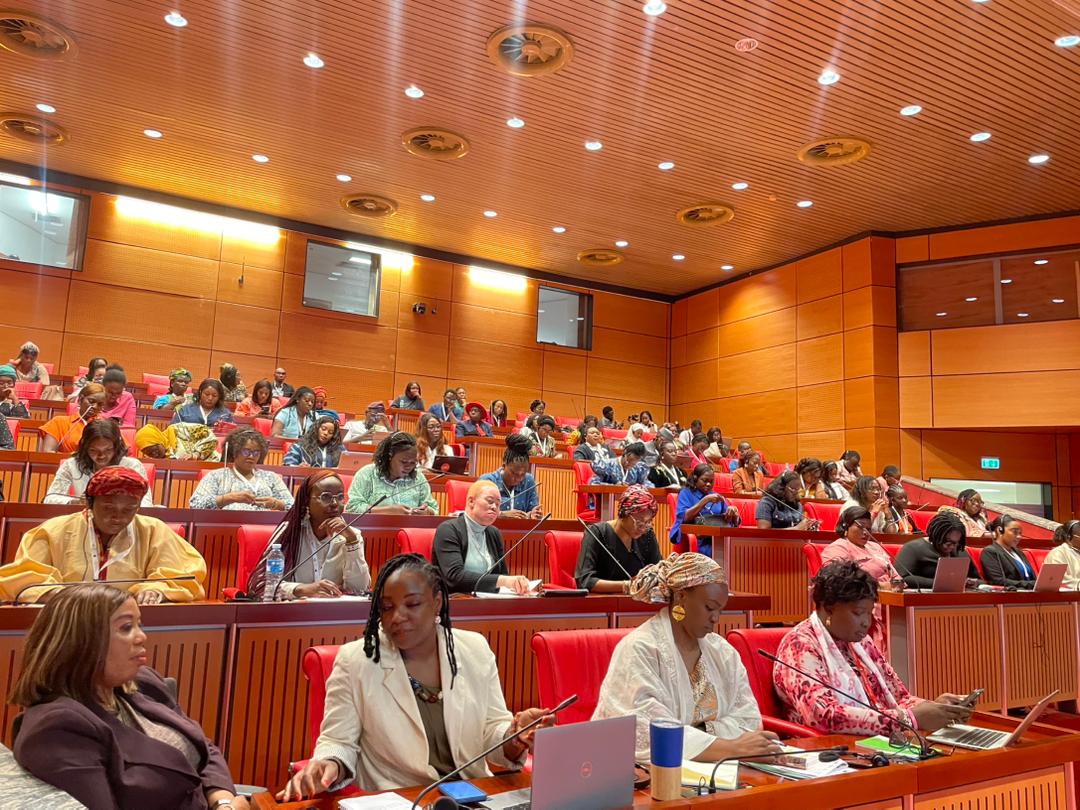
The call was made during the opening of a joint committee delocalised meeting held in Lomé, Togo, where lawmakers and stakeholders gathered to examine how education in the sub-region can be better aligned with socio-economic realities.
The meeting, which brought together committees on Education, Science and Culture, Health, and Telecommunications and Information Technology, is centred on the theme “Strengthening Curriculum Alignment with Socio-Economic Needs of the ECOWAS Region.”

President of the National Assembly of Togo, Komi Selom Klassou, highlighted the urgent need for reforms, warning that a failure to align education with labour market demands could create a widening gap between skills acquired in schools and the needs of modern industries.
Such a disconnect, he noted, could ultimately weaken productivity, reduce competitiveness and threaten stability within the region.
Klassou emphasised that education remains the cornerstone of national and regional development, playing a crucial role in shaping human capacity and preparing future generations to contribute meaningfully to society.
He also stressed that the theme of the Lomé meeting presents an opportunity for ECOWAS member states to rethink their educational systems in the face of rapid technological change, growing skills gaps in the labour market and the increasing need for industrial diversification.
Klassou who was represented by the Speaker of the ECOWAS Parliament, Rt. Hon. Mémounatou Ibrahima, reiterated the importance of strengthening education frameworks that are responsive to contemporary economic and technological realities across West Africa.
He said: “The theme of this meeting, ‘Strengthening the alignment of educational programs with the socio-economic needs of the ECOWAS region’, is extremely relevant. It invites us to rethink our educational systems in the face of technological developments, the mismatch of skills with the job market, and emerging industrial diversification.
“This theme is a call to action. It urges us to transform our demographic wealth, this dynamic youth, into a lever for building a prosperous future. This involves overhauling our educational programs so that they meet the aspirations of our people and the needs of our economies.
“This call requires us to reclaim our historical and intellectual narrative, revive pride in our cultural heritage, the foundation of our identity, and redefine our teaching programs so that they truly serve our own aspirations.
“Education is no longer just a tool for transmitting knowledge; it is the foundation of our intellectual, economic, and social sovereignty. Our nations cannot achieve sustainable emergence without a qualified human capital. Of course, education remains a right, but it is now a strategic lever for our intellectual, economic, and social sovereignty. Without a qualified human capital, our nations cannot achieve sustainable emergence.
“We must align our educational programs with socio-economic realities. This involves anticipating skills needs, promoting innovation and adaptability, and strengthening technical and vocational education. This is a priority to reduce youth unemployment and transform our demographic potential into a real economic dividend.
“Also, it becomes imperative to conceive education, beyond the citizen’s right it constitutes, as a strategic lever. The need to align our programs with the real needs of our economies, to reduce youth unemployment and transform our demographic potential into an economic dividend, is clear. Indeed, without a resolute alignment of curricula with socio-economic realities, whether it is emerging sectors, technological changes, or entrepreneurial skills needs, we risk perpetuating a cycle of disconnection that hinders productivity, competitiveness, and stability in our region.”
The President of the National Assembly of Togo, reminded members of the joint committee that their deliberations are firmly supported by an existing regional legal framework aimed at improving education across West Africa.
Klassou pointed out that the work of the committee aligns with Protocol A/P3/1/03, adopted by the Conference of Heads of State and Government of the Economic Community of West African States (ECOWAS) in 2003. The protocol provides a foundation for the harmonisation of educational policies across the region while promoting education that is accessible, relevant and of high quality.
He urged participants to remain focused on practical reforms that will help education systems respond to changing economic realities and labour market needs.
“It is in this spirit that we must rely on the identified pillars: better knowledge of the labour market and anticipation of future skills; a reform of programmes focused on practical skills, innovation, and adaptability; the strengthening of Technical and Vocational Education and Training; and a greater commitment of stakeholders through solid public-private partnerships,” he stressed.
He also highlighted ongoing education reforms in Togo, noting that the government is working to modernise the national education system to better prepare young people for the future.
Referring to the reforms being implemented under the leadership of Faure Essozimna Gnassingbé, he said the vision of the Togolese president has already begun laying a strong foundation for an education system designed to respond to modern challenges and opportunities.
“Thanks to his leadership, we have been able to rely on fruitful collaborations between educational institutions and the private sector, thus promoting education in entrepreneurship and increased investment in continuous training to meet the challenges of the job market.
“These efforts, driven by this strategic vision, fully meet the objectives of this meeting. It is about evaluating the relevance of study programs, from primary to higher education, while strengthening technical and vocational education to improve employability and encourage self-employment. These initiatives also support pedagogical approaches focused on problem-solving and critical thinking, with the aim of harmonizing certification standards within ECOWAS.
“It is clear that it is through this ambition that Togo is positioning itself today as a key player in the educational transformation of our region and in building a promising future for our youth.
“The presence of the Joint Committee on Health and Telecommunications underscores the interdependence of our challenges. Health is a fundamental right, and the training of health professionals must meet the specific needs of our region. Information technologies are a key catalyst for improving access to health and education, even in the most remote areas. We must also reduce the digital divide, ensure cybersecurity, and promote distance learning. These actions are essential for inclusive governance and sustainable development.
“Imagine an ECOWAS where youth, armed with digital and entrepreneurial skills, is a driver of growth and regional integration. This is the goal we share: reduce unemployment, harmonize qualifications, and transform education into a powerful lever for development.
“I therefore consider this meeting as both a space for discussion and the starting point for concrete actions. I call on all participants: governments, academic actors, the private sector, civil society, and development partners, to unite their positive energies to formulate strategic and realistic recommendations. Together, we can build educational systems capable of preparing our young people for the challenges and opportunities of tomorrow”, he stated.
In his remarks, Hon. Kweku George Hagan member of Parliament from Ghana and Chairman Committee on Education, Science and Culture said education remains the most strategic lever for sustainable development.
He however said that its transformative power depends not merely on access, but on relevance.
The Committee chairman therefore cautioned that the region’s educational system must adapt to a fast-evolving landscape characterised by rapid population growth, technological disruption, youth unemployment, and climate vulnerability.
“Currently, our labour markets are shifting faster than our curriculum. The widening gap between training and opportunity created a troubling paradox: vacancies without skilled disconnect between what we teach and what our economies demand,” he added.
To unlock the demographic dividends of the regional youth population, Hon. Hagan said there must be a shift from credential-oriented system to competency-driven framework.
“Curriculum alignment is not a theoretical exercise; it is a strategic necessity l. When education responds to the demands of agriculture, industry, and the digital economy, we do more than teach-we build a workforce that is adaptable and competitive.
“The task ahead requires evidence-based policymaking, investment in teacher capacity, and the integration of emerging technologies”, he stressed.
Listing things that must be done for the sub-region to turn the corner, the Ghanaian Parliamentarian said it must embed digital literacy, green skills, and entrepreneurial thinking at all educational levels; strengthen technical and vocational education and training and Institutionalise continuous curriculum review in partnership with the private sector.
“Education must not merely follow economic transformation; it must drive it. This requires a structured, continuous dialogue between ministries of education, labour, and industry, alongside private sector leaders and academic institutions”, he added.
Leader of the Togoless delegation to ECOWAS Parliament, , Hon. Soklingbé Senou in his remarks said the issue is very deep considering the challenges facing education in the sub-region.
He noted that time is changing with emerging new trends; and that matching education with job demand must be taken seriously.
He stressed that the issue at hand is deep and so the educational sector must not be about production of certificates.
News
Ogene Fires Back at Oshiomhole Over Obi Security Claims, Calls Remarks ‘Revisionist Comedy’
By Gloria Ikibah
A fresh war of words has erupted over the security record of former Anambra State Governor Peter Obi, with the Leader of the Nigeria Democratic Congress (NDC) Caucus in the House of Representatives, Afam Victor Ogene, launching a scathing rebuttal to recent comments made by former Edo State Governor and Senator, Adams Oshiomhole.
The controversy followed remarks by Oshiomhole during a podcast interview in which he reportedly questioned Obi’s performance on security while serving as governor of Anambra State, arguing that the former presidential candidate lacked the credentials to tackle Nigeria’s current security challenges.
Responding in a statement, Ogene described Oshiomhole’s assertions as inaccurate and politically motivated, insisting that Obi’s security record remained a matter of public record.
“Senator Oshiomhole’s revisionist attempt to rewrite history is both laughable and insulting to Nigerians who know the facts. The data on security under Obi’s tenure in Anambra remains public record, and no amount of political grandstanding can erase it,” Ogene declared.
The lawmaker accused the former Edo governor of distorting historical facts in a bid to undermine Obi’s reputation, while also taking aim at Oshiomhole’s frequent interventions in national political debates.
Ogene further argued that Oshiomhole’s comments overlooked key events in Anambra’s political history, particularly the administrations that preceded Obi’s tenure.
“Oshiomhole has now officially joined the growing league of self-appointed press secretaries to President Tinubu. His trademark loquaciousness routinely puts him at odds with his own colleagues in the Senate, and he invariably ends up issuing humiliating apologies.
“In his latest desperate bid for ranking status among presidential attack dogs, Oshiomhole has again flown off tangent, mangling basic facts that even secondary school students know. What revisionist history would Oshiomhole teach Nigerian children when he can not accurately situate simple national events?”, he said.
Addressing references to the Bakassi Boys vigilante group, Ogene maintained that Oshiomhole had wrongly linked the group to Obi’s administration.
He also challenged Oshiomhole’s claims regarding efforts to dismantle criminal hideouts in Anambra State, insisting that the policy predated the administration of former Governor Willie Obiano.
“For the record: the Bakassi Boys operated under the four-year administration of the late Dr. Chinwoke Mbadinuju. Yet in his haste to smear Obi, Oshiomhole conveniently erased the three-year tenure of Dr. Chris Ngige before Obi’s assumption of office in 2006.
“Not done with his comedy of fallacies, Oshiomhole went further to claim that the demolition of kidnappers’ dens began under former Governor Obiano. False. That deterrence policy was introduced and executed by Obi”, he added.
The NDC caucus leader went on to contrast the leadership styles of both former governors, arguing that Obi’s administration focused on institutional reforms and security initiatives.
Ogene also pointed to security measures introduced during Obi’s administration, including community-based policing initiatives, which he said laid the foundation for a state-wide security framework.
“It is pitiable that a man who governed Edo State during Obi’s tenure would be so consumed by envy that he deliberately forgets basic facts. This is the same Oshiomhole who, while Obi was bringing civility and due process to governance in Anambra, was busy demolishing the houses of political opponents in Edo.
“In deed, for a man who pioneered the current attempt at evolving a state police structure, through the recruitment, training, kitting, and provision of security vehicles to each of Anambra’s 177 communities, it is uncharitable for Senator Oshiomhole to begin now to promote a contrary narrative”, he voted.
According to Ogene, Obi’s tenure was recognised through several security-related awards, and he argued that independent testimonies from senior law enforcement officials further supported the former governor’s record.
“Despite several security-related awards garned by Obi as governor, Oshiomhole’s desperate revisionism collapses under the weight of verifiable testimony. Philemon Leha, who served as Commissioner of Police in Anambra State during Mr. Peter Obi’s tenure has put the record straight.
“As I undertook my assignment in the state, I was greatly encouraged by the commitment and determined focus of Governor Obi. Security was on his priority list, and he always offered us logistics and other support on a scale I had not witnessed elsewhere.
“This is firsthand evidence from the man who ran security operations on the ground. While Oshiomhole peddles fallacies from a podcast chair, those who actually secured Anambra credit Obi’s leadership, logistics, and political will. Facts always triumph propaganda.
“The unprovoked and coordinated attacks on Mr. Peter Obi’s person and political aspiration, by hirelings across both the ruling party and the opposition, are unprecedented. They point to only one thing: Obi is the real issue in the conversation for the 2027 general elections.
“Yet, Obi has committed no crime by aspiring to lead. He has not barred anyone from contesting for the presidency. So it is both strange and uncharitable that many now want him muscled out of the race out of sheer jealousy and palpable fear of his rising popularity.
“Like every other Nigerian, Obi is entitled to exercise his fundamental rights. Oshiomhole, and any one else, is free to run for the highest office if they so desire. No amount of sponsored smear campaigns,therefore, can deny Obi of that same democratic rights,” Ogene stated.
The exchange adds to the growing political debate surrounding the records of leading political figures as discussions ahead of future electoral contests continue to gather momentum.
News
Just in: Kwara traditional ruler reportedly dies in kidnappers hideout after demand of N21m ransom
The traditional ruler of Olayinka community in Ifelodun Local Government Area of Kwara State, Oba Salman Olatunji Aweda, has been confirmed dead after his abductors reportedly demanded ₦21 million, two new motorcycles and a jerrycan of petrol for his release.
The monarch’s death was confirmed in an emotional voice message obtained by Sahara Reporters from a member of a committee involved in efforts to secure his freedom.
In the message, the committee member announced the development to residents of Olayinka community, saying several efforts made by family members, residents, community leaders and religious figures to rescue the monarch were unsuccessful.
The committee member described the death as the will of God and urged residents to accept the development.
He said, “Allah in His mercy said in the Holy Qur’an that we all human beings on earth belong to Him, and to Him we shall return, whether when we expect it or when we do not expect it.
News
HoR move to address security challenges, strengthen military architecture
By Ojomah Austin.
The House of Representatives on Monday commenced a two-day public hearing on a series of defence-related bills aimed at strengthening Nigeria’s military architecture, improving the welfare of service personnel and retirees to combat security challenges.
Speaking at the opening of the hearing at the National Assembly Complex, Speaker of the House of Representatives, Abbas Tajudeen, described the proposed legislation as a direct response to Nigeria’s evolving security challenges and a key component of the 10th House Legislative Agenda.
Abbas noted that the country continues to grapple with insurgency in the North-East, banditry and kidnapping in the North-West, farmer-herder conflicts in the North-Central, separatist agitations in the South-East, as well as emerging threats such as maritime piracy, cyber warfare, and organised crime linked to terrorism.
“We cannot pretend that our nation is at ease. Our Armed Forces are stretched, yet they remain our first and last line of defence,” the Speaker said.
He explained that the bills under consideration seek to strengthen the legal and institutional frameworks governing the military, making it more resilient, accountable, inclusive and capable of responding to modern security realities.
Among the bills before the committee are proposals for the establishment of an Armed Forces Farms and Ranches Scheme to promote food security in conflict-prone agricultural areas, legislation to improve gender representation in the Armed Forces, a comprehensive repeal and replacement of the Armed Forces Act through a new Nigerian Military Force Bill, and a bill to establish a Veterans’ Federation of Nigeria to improve support for retired military personnel.
The Speaker stressed that the hearing was not intended as a “rubber stamp” exercise but a platform for robust and evidence-based engagement.
“I give you my word every memorandum will be read, every oral presentation will be noted, and all relevant contributions will be considered and, where applicable, incorporated into the final reports and bills,” Abbas assured stakeholders.
He urged serving and retired military personnel, civil society organisations, gender advocates, legal experts and ordinary citizens to actively participate in the process, emphasizing that legislative innovation was necessary to address the country’s complex security challenges.
Abbas also commended the House Committee on Defence for organising the hearing and expressed confidence in its ability to conduct a transparent and fair process.
“We are here to serve the Nigerian people and to produce legislation that will make our Armed Forces more professional, more accountable, more gender-sensitive, and more effective in protecting lives and property,” he said.
In his welcome address, Chairman of the House Committee on Defence, Babajimi Benson, described the public hearing as a critical democratic exercise designed to ensure stakeholder participation in the lawmaking process.
According to Benson, defence legislation directly impacts national sovereignty, military effectiveness, operational readiness and the safety of Nigerians, making public input essential.
“The importance of public participation becomes even more significant when dealing with matters of defence and national security,” he said.
He explained that the bills address key areas including military education and professional development, joint operational effectiveness, medical training and healthcare support, strategic research and doctrine development, military governance reforms, food security initiatives, veterans’ welfare and inclusiveness within the Armed Forces.
“Collectively, these proposals represent an important effort to build a stronger, more professional, innovative and future-ready military institution,” Benson stated.
The lawmaker encouraged stakeholders to make oral presentations and submit memoranda, assuring them that all submissions would be carefully reviewed by the committee.
He also paid tribute to officers and soldiers of the Armed Forces of Nigeria for their dedication and sacrifices in safeguarding the nation despite difficult operating conditions.
The hearing also witnessed strong reactions from some veterans who expressed reservations about aspects of the proposed Veterans’ Federation of Nigeria Bill.
Supporters of the proposed (VFN) Bill urged lawmakers to adopt a framework they said aligns with international best practices for veterans’ welfare and representation.
In a policy brief submitted to the Committee, G.A Olonisakin speaking on behalf of veteran stakeholders argued that the debate surrounding the bill should focus on facts, global standards and the welfare of Nigerian veterans rather than on institutional sentiments or nomenclature.
The memorandum noted that in countries such as the United States, the United Kingdom, Canada and Australia, veterans’ organisations such as the American Legion, the Royal British Legion and the Royal Canadian Legion operate as non-governmental charitable associations rather than statutory government bodies.
According to the submission, responsibility for veterans’ welfare in those countries rests with dedicated government agencies, including the United States Department of Veterans Affairs, Veterans Affairs Canada, the United Kingdom’s Office for Veterans Affairs and Australia’s Department of Veterans Affairs.
The stakeholders further argued that Nigeria’s current arrangement, in which the Nigerian Legion combines the roles of both an association and a statutory government body, is uncommon internationally.
They maintained that the proposed VFN model would bring Nigeria closer to global standards by creating a government-driven umbrella body for veterans while preserving the identities of existing associations.
“The proposed Veterans Federation of Nigeria follows international practice by creating one umbrella body for all veterans and veterans’ associations, ensuring inclusiveness across Army, Navy and Air Force veterans, strengthening welfare coordination and improving engagement with government,” the memorandum stated.
The submission also sought to allay fears that the bill would undermine the Nigerian Legion, stressing that the federation would not erase the Legion’s history, traditions or identity.
Rather, it said, the Nigerian Legion would continue to exist as one of the recognised constituent bodies within the proposed federation alongside other veterans’ associations.
The position contrasted with concerns raised by some retired personnel who argued that the bill concentrates leadership positions in the hands of senior officers and called instead for the establishment of a standalone Ministry of Veterans Affairs headed by veterans.
The differing perspectives highlighted the intense interest among stakeholders in shaping the future structure of veterans’ welfare and representation in Nigeria, one of the key issues under consideration during the two-day public hearing.
Also a retired non-commissioned officer and legal practitioner, Sadiqe Nwabuezeh who identified himself as a former sergeant in the Nigerian Army, argued that the draft legislation was overly tilted in favour of senior military officers and failed to adequately accommodate the interests of rank-and-file veterans.
According to him, provisions of the bill appeared to reserve key leadership positions for retired senior officers, including the office of the Director-General, which he said was proposed to be occupied by a retired major general.
He urged lawmakers to reject the bill in its current form and instead consider the establishment of a dedicated Ministry of Veterans Affairs that would be managed by veterans themselves.
“The bill was not properly prepared. It was rushed and concentrates power in the hands of senior officers. We want a level playing ground where all veterans, regardless of rank, can participate in leadership and decision-making,” he told the hearing.
The retired soldier further questioned the involvement of serving military personnel and civilians in handling veterans’ affairs, arguing that retired personnel were best positioned to manage issues affecting former service members.
He maintained that veterans should have greater control over institutions established for their welfare and called for reforms that would guarantee broader representation across all ranks of retired military personnel.
The submission added to a range of perspectives presented by stakeholders as lawmakers continued deliberations on proposals aimed at reforming military administration, strengthening veterans’ welfare and enhancing the effectiveness of Nigeria’s defence sector.
The two-day hearing is expected to produce recommendations that will guide the House Committee on Defence in finalising the bills before their consideration by the House of Representatives.
-
Sports22 hours agoReal Madrid complete a Shocking Signing of Chelsea Superstar
-
News13 hours agoNot Diabetes And hypertension, Son Reveals Shocking Details About General Rabe’s death
-
Sports21 hours agoEnzo Maresca wants Chelsea Defensive Superstar as Top Target at Man City
-
News13 hours agoI risked Abacha’s wrath to push for Abiola’s release, says Abubakar
-
Metro13 hours agoPolice Launch Massive Manhunt As Gunmen Abduct Ondo Community Leader
-
Sports13 hours agoDebutants Curaçao Score First-Ever World Cup Goal In 8-goal Thriller Against Germany
-
News13 hours agoAt least 30 Yoruba Monarchs Flee Palaces After Bandits Abduct 11th Oba
-
Foreign13 hours agoIran Agrees US Peace Deal, To Reopen Strait Of Hormuz