Economy
CBN warns non-interest banks over rising risks
- /home/naijuinz/public_html/wp-content/plugins/mvp-social-buttons/mvp-social-buttons.php on line 27
https://naijablitznews.com/wp-content/uploads/2024/02/CBN.jpg&description=CBN warns non-interest banks over rising risks', 'pinterestShare', 'width=750,height=350'); return false;" title="Pin This Post">
- Share
- Tweet /home/naijuinz/public_html/wp-content/plugins/mvp-social-buttons/mvp-social-buttons.php on line 72
https://naijablitznews.com/wp-content/uploads/2024/02/CBN.jpg&description=CBN warns non-interest banks over rising risks', 'pinterestShare', 'width=750,height=350'); return false;" title="Pin This Post">
The Central Bank of Nigeria has warned that growing risks in Nigeria’s non-interest banking sector could weaken public confidence and threaten financial stability if they are not properly managed.

The apex bank said the rapid growth, increasing sophistication and stronger connections within the banking industry have exposed Non-Interest Financial Institutions (NIFIs) to several challenges, including non-compliance with regulations, weak governance structures, operational weaknesses and emerging technology-related risks.
Speaking during the second Annual Interactive Session between the CBN Financial Regulation Advisory Council of Experts (FRACE) and the Advisory Committees of Experts (ACE) of Non-Interest Financial Institutions in Abuja, the Deputy Governor in charge of Financial System Stability, Mr. Philip Ikeazor, said the risks facing the sector require stronger oversight and improved governance.

Represented by the Director of the Financial Policy and Regulation Department, Dr. Rita Ijeoma Sike, Ikeazor said poor management of these risks could damage the credibility of the non-interest finance industry and reduce public trust in the system.
He explained that the creation of FRACE and the mandatory establishment of ACEs in all Non-Interest Financial Institutions were meant to build a stronger and more coordinated governance structure for the industry.
According to him, regular engagement between FRACE and ACE members is important to ensure that institutions clearly understand regulatory expectations and apply them properly.
“The objectives of today’s session include fostering the institutionalisation and effective operation of a robust Shariah governance system within Non-Interest Financial Institutions, and providing a structured platform for dialogue, knowledge-sharing, and collaboration,” he said.
Ikeazor said the CBN remains committed to strengthening Shariah governance, improving regulatory clarity and promoting effective risk management in the non-interest financial services sector in order to maintain financial stability and public confidence.
He noted that the current engagement builds on discussions from the inaugural session and reflects the CBN’s determination to sustain a sound and resilient non-interest banking system driven by good governance, compliance and prudent risk management.
The deputy governor added that Non-Interest Financial Institutions have become increasingly important to Nigeria’s financial system by providing ethical and Shariah-compliant financial services while supporting financial inclusion, financing for the real sector, Micro, Small and Medium Enterprises (MSMEs), and shared economic growth.
In his opening remarks, the Deputy Chairman of FRACE, Prof. Bashir Aliyu Umar, said the meeting was organised to strengthen governance in the non-interest finance industry and encourage constructive engagement between the CBN and advisory committees of the institutions.
He also praised the management of the CBN for reviving the interactive session which was first introduced in 2014.
Earlier, Dr. Rita Ijeoma Sike said the central bank remained focused on building a credible and properly governed non-interest financial services industry.
She said the increasing variety of products, institutions and financial service channels, especially the rise of Islamic fintech, has made continuous dialogue, strong regulation and quality advisory support more important.
The event featured technical presentations on Shariah non-compliance risks and the impact such risks could have on the non-interest financial services industry. Another presentation focused on Islamic fintech and its role in promoting financial inclusion.
Participants at the session also held discussions on practical challenges affecting the sector, including capacity building, the independence of advisory committees, risk management strategies and ways to improve governance and innovation within the industry.
In his closing remarks, Prof. Abdul-Razzaq Alaro commended participants for their contributions and thanked the CBN for organising the session.
He urged stakeholders to take practical steps towards implementing the resolutions reached during the engagement, saying the success of the meeting would depend on visible improvements across the non-interest financial sector.
FRACE serves as an advisory body that helps bridge the gap between conventional financial regulation and faith-based financial practices. The council supports consistency, investor confidence and proper regulation within Nigeria’s non-interest finance industry, while the ACEs carry out similar oversight responsibilities within individual institutions.
Economy
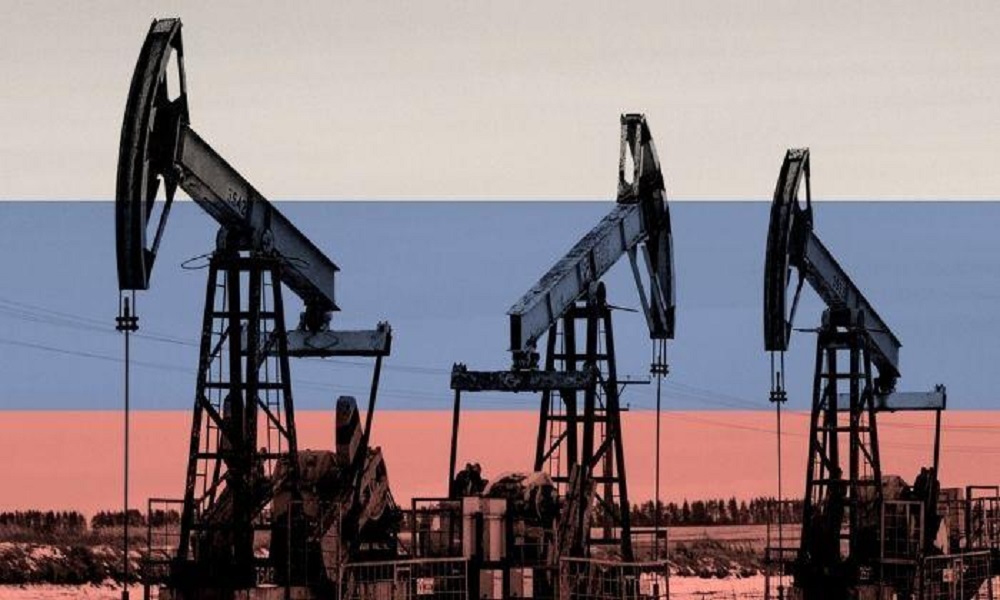
OPEC+ approves fourth oil output increase since Hormuz closure
The Organisation of Petroleum Exporting Countries and its allies, also known as OPEC+, has approved the fourth oil output increase since the Hormuz closure crisis.
The decision followed renewed commitments by Saudi Arabia, Russia, Iraq, Kuwait, Kazakhstan, Algeria and Oman to support market stability.
In a statement issued at the weekend, OPEC stated: “The seven OPEC+ countries, which previously announced additional voluntary adjustments in April and November 2023, namely Saudi Arabia, Russia, Iraq, Kuwait, Kazakhstan, Algeria and Oman, met virtually on June 7, 2026, to review global market conditions and outlook.
“In their collective commitment to support oil market stability, the seven participating countries decided to implement a production adjustment of 188,000 barrels per day from the additional voluntary adjustments announced in April 2023.
“This adjustment will be implemented in July 2026. The additional voluntary adjustments announced in April 2023 may be returned in part or in full, subject to evolving market conditions and in a gradual manner.
“The countries will continue to closely monitor and assess market conditions and, in their continuous efforts to support market stability, reaffirmed the importance of adopting a cautious approach and retaining full flexibility to increase, pause or reverse the phase-out of the voluntary production adjustments, including reversing the previously implemented voluntary adjustments announced in November 2023.
“The seven OPEC+ countries also noted that this measure will provide an opportunity for the participating countries to accelerate their compensation.
“The seven countries reiterated their collective commitment to achieving full conformity with the Declaration of Cooperation, including the voluntary production adjustments, which will be monitored by the Joint Ministerial Monitoring Committee (JMMC).
“They also confirmed their intention to fully compensate for any overproduced volumes since January 2024. The compensation period will be extended until the end of December 2026.”
It added: “The seven OPEC+ countries will hold monthly meetings to review market conditions, conformity and compensation. The seven countries will meet on July 5, 2026.”
Economy
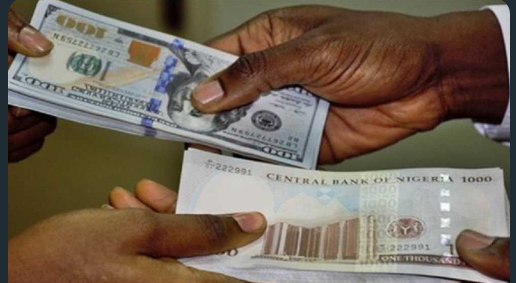
Naira depreciates to N1,397/$ in parallel market
The naira on Friday depreciated to N1,397 per dollar in the parallel market from N1,390 per dollar on Thursday.
Likewise, the naira depreciated to N1,365 per dollar in the Nigerian Foreign Exchange Market, NFEM.
Data from the Central Bank of Nigeria, CBN, showed that the indicative exchange rate for the market rose to N1,365 per dollar from N1,359.75 per dollar on Thursday, reflecting N5.25 depreciation for the naira.
Consequently, the margin between the parallel and official markets widened to N32 per dollar from N30.25 per dollar on Thursday.
The turnover in the interbank foreign exchange market recorded its fourth daily decline by 42.5 per cent to $73.6 million from $128.2 million on Thursday.
This week, the naira strengthened by N1 per dollar in the official market, with turnover in the interbank foreign exchange market climbing to N683.2 million, representing a 76.7 per cent rise compared to N386.54 million recorded the previous week.
However, the local currency weakened in the parallel by N2 against the greenback.
Economy
See Dollar to Naira exchange rate today, June 5, 2026
The Nigerian naira maintained a relatively stable performance against the United States dollar at both the official and parallel foreign exchange markets as traders monitored liquidity conditions and demand pressures.
Data from the Central Bank of Nigeria’s Nigerian Foreign Exchange Market (NFEM) showed the naira trading around ₦1,361 to the dollar, reflecting a largely steady trend compared to recent sessions. The most recent NFEM rate published by the apex bank stood at approximately ₦1,361.05/$, while trading during the week remained within the ₦1,359–₦1,365 range.
Market data from recent official trading sessions also indicated that the naira had strengthened modestly in early June, supported by improved foreign exchange supply and sustained interventions aimed at enhancing market liquidity.
At the parallel market, commonly referred to as the black market, the dollar traded at between ₦1,390 and ₦1,405 on Friday, depending on location and transaction size. Several market trackers reported buying rates around ₦1,380–₦1,395 and selling rates between ₦1,393 and ₦1,405 per dollar.
The gap between the official and parallel market rates remained relatively narrow compared with previous months, reflecting ongoing efforts to improve transparency and liquidity in the foreign exchange market.
Currency dealers said market participants continue to watch foreign portfolio inflows, crude oil earnings, and Central Bank policies, all of which remain key factors influencing the naira’s direction in the coming weeks.
As of June 5, 2026, the dollar exchanged at about ₦1,361 in the official NFEM market, while parallel market transactions ranged from approximately ₦1,390 to ₦1,405 per dollar.
-
News22 hours agoSad: Nigerian Labour Leader Dies At International Labour Conference In Geneva
-
News22 hours agoThe 30 Days of Projects Commissioning in the FCT starts today
-
News20 hours agoTinubu Swears In New Ministers
-
News21 hours agoIran holds funeral ceremony for two air defense personnel slain in Israeli airstrikes
-
News18 hours agoTinubu Commissions OSEX Main Carriageway, Vows End To Era Of Abandoned Projects(Photos)
-
News20 hours agoReps Demand Answers on Defence Spending, Summon Service Chiefs, Finance Minister
-
News6 hours agoNECO to recruit 22,000 supervisors, cautions applicants against fake recruitment portals
-
News17 hours agoINEC Parleys With Parties, Defends Decision To Appeal Court Ruling On Primary Deadlines