Connect with us

Opinion

The Insecurity Triad: Azikiwe, Awolowo, and Chinweizu — Nigeria’s Elite Class of Framework Builders

Published

on

ADVERTISEMENT
Zoom Ad
ADVERTISEMENT
Zoom Ad

The Sunday Stew Column 

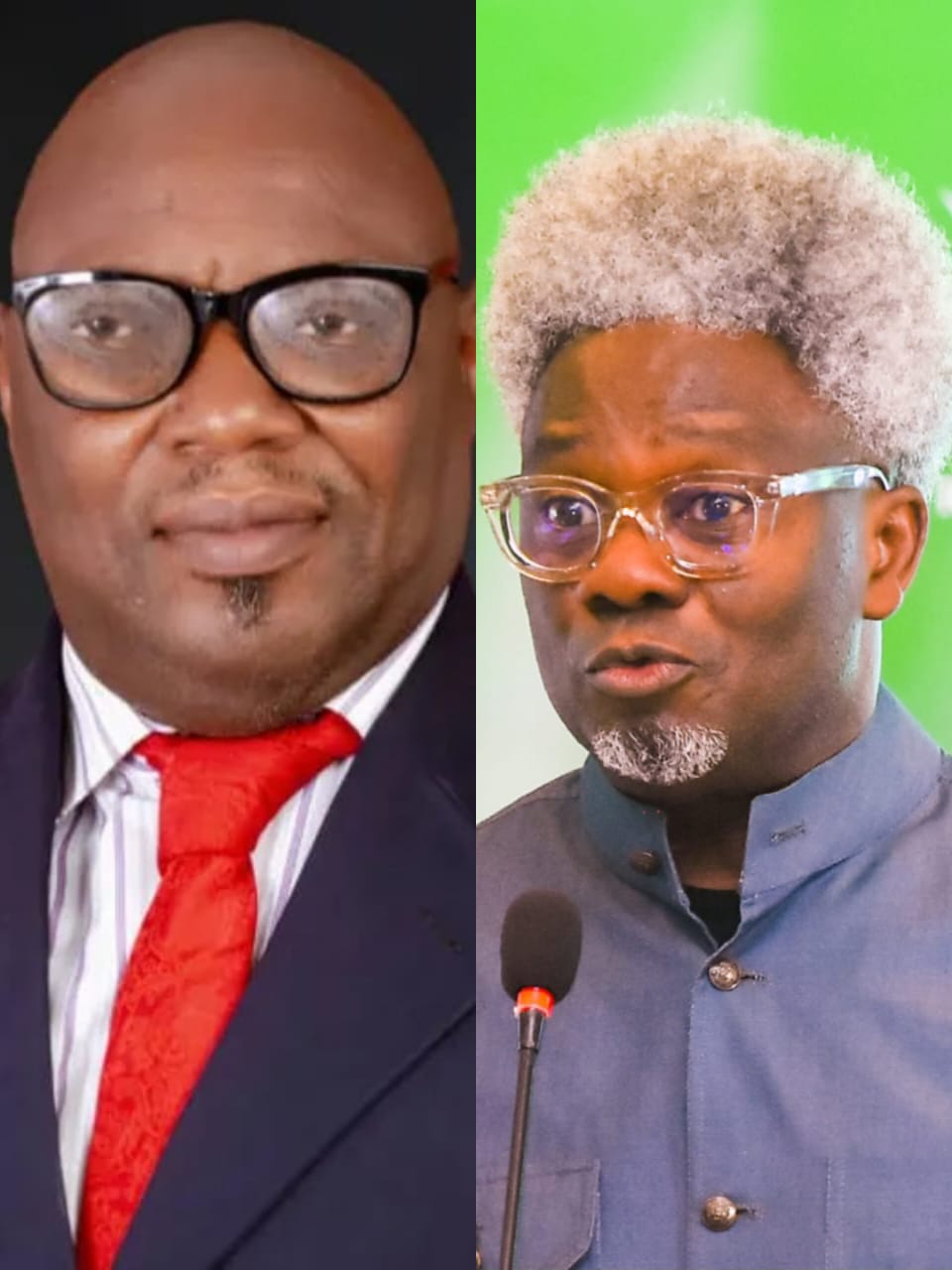
By Max Amuchie

Last Sunday, I indicated that this week’s edition of The Sunday Stew would pay tribute to the late political economist and public intellectual, Claude Ake. That tribute remains, but its timing has shifted. Later this year will mark the 30th anniversary of his passing — a more fitting moment to revisit the life and legacy of one of Africa’s most consequential intellectual minds. Until then, this column turns to a related but less discussed tradition in Nigerian thought: the rare lineage of framework builders who operated outside the academy yet reshaped how society understood itself.

Nigeria’s intellectual landscape faces a persistent challenge: not the total absence of indigenous frameworks, but their relative scarcity and limited institutional consolidation. Much of our analytical vocabulary still arrives pre-assembled from elsewhere — adapted to Nigerian conditions rather than born from them. We reach habitually for tools forged in other fires, calibrated for other crises, and carrying the residue of other civilisational assumptions. The consequence is not merely intellectual dependency. It is explanatory incompleteness. Borrowed frameworks, however sophisticated, can illuminate local realities, but they do not always capture the structures beneath them.

Advertisement

Yet Nigeria has never been entirely without its own framework builders. What it has lacked is not indigenous conceptual production itself, but its sustained institutionalisation. Alongside the academy, it has historically produced another tradition — rarer, more independent, and deeply sovereign in character.

It is a tradition built largely beyond university faculties and disciplinary boundaries. Its practitioners did not merely interpret events; they created new conceptual vocabularies. They refused inherited explanatory tools when those tools proved insufficient, choosing instead to engineer indigenous frameworks for immediate national and civilisational questions. Their objective was not institutional approval but conceptual sovereignty.

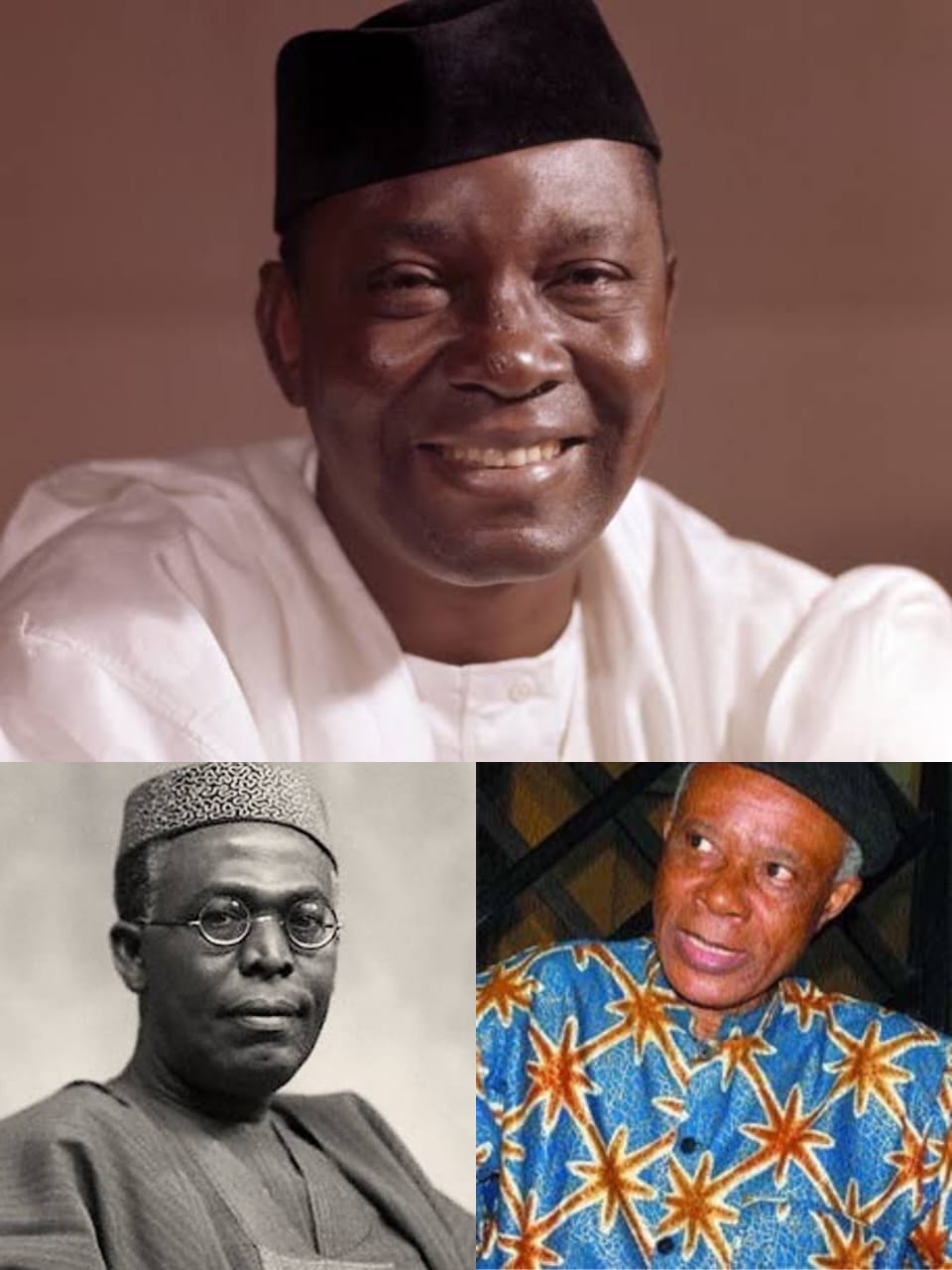
This is the elite class of Nigeria’s framework builders. And it is within this largely extra-academic lineage — one operating beyond the formal boundaries of university production and disciplinary gatekeeping — that figures such as Azikiwe, Awolowo, and Chinweizu emerge — not merely as statesmen or writers, but as framework builders. Each refused the role of interpreter. Each chose, instead, the more demanding vocation of architect.

Nnamdi Azikiwe: The Newsroom as Primary Laboratory
To understand what Azikiwe accomplished, one must resist the temptation to reduce him to his political biography — to the president, the governor-general, the nationalist icon. These are accurate descriptions, but they obscure the more foundational achievement. Before Azikiwe was any of those things, he was a theorist of communications power.

Advertisement

His intellectual contribution extended beyond communications infrastructure into explicit framework construction. Through Zikism in Africa and works such as Renascent Africa and Liberia in World Politics, he advanced a political philosophy centred on spiritual balance, social regeneration, mental emancipation, economic reconstruction, and political resurgence. Zikism was not merely nationalist rhetoric. It was an indigenous ideological framework — an attempt to articulate a distinctly African vocabulary for liberation, modernity, and civilisational renewal.

Azikiwe understood, with unusual clarity for his era, that newspapers were not passive instruments of reportage. They were engines of consciousness formation. Through The West African Pilot, launched in 1937, he built a mass communications infrastructure designed not merely to inform but to manufacture national awareness where none yet existed in consolidated form. The newsroom became a laboratory of political imagination.

The West African Pilot therefore functioned not only as a newspaper but as the transmission mechanism for Zikism itself — a vehicle through which ideas moved from theory into public consciousness.

This was framework building in the most consequential sense: the creation of a conceptual technology — the politically purposive newsroom — that could transform the relationship between a population and its own self-understanding.

Advertisement

Azikiwe drew from global traditions of activist journalism but adapted them into a distinctly West African instrument of nationalist mobilisation.

The lesson for the contemporary era is unmistakable, and uncomfortable. The modern digital newsroom has, in large measure, abandoned this mandate. Optimised for traffic, calibrated for virality, and disciplined by the imperatives of advertising revenue, it has become a largely reactive institution — faster than its predecessors, but shallower in purpose. Azikiwe’s example issues a rebuke and a challenge in equal measure: the newsroom cannot survive, in any meaningful civilisational sense, as a purely commercial machine. It must recover its older mandate as a theory laboratory — a place where original socio-political frameworks are serialised, tested, refined, and introduced into the public square. The medium has changed. The obligation has not.

Obafemi Awolowo: The Geometry of State Architecture
Where Azikiwe worked through the newsroom, Awolowo worked through the monograph. And where Azikiwe’s primary instrument was consciousness, Awolowo’s was structure.

Awolowo approached the Nigerian state with something that can only be described as geometric discipline. He did not merely criticise colonial administration or lament political dysfunction. He subjected the Nigerian project to systematic, structural examination. Through works such as Path to Nigerian Freedom (1947) and Thoughts on Nigerian Constitution (1966), he mapped constitutional arrangements, regional balances, socio-economic organisation, and the friction points embedded within the federation with a precision that distinguished him from his contemporaries. He treated governance as architecture — as a designed system with load-bearing elements, stress points, and the capacity to collapse if its internal logic was violated.

Advertisement

This temperament is what separates framework builders from analysts. The analyst produces interpretation. The framework builder produces a map of the system generating the events that require interpretation. Awolowo was interested not in the headline but in the structure producing the headline — and he was willing to do the painstaking intellectual labour of rendering that structure visible and legible.

The diagnosis of state fragility demands this same architectural temperament today. Nigeria’s security crisis is narrated, almost universally, at the level of events: the attack, the abduction, the reprisal, the press release, the lament.

But events are symptoms. Framework builders map systems. They move beneath the surface of occurrence to identify the structural arrangements generating those occurrences — the incentive structures, the sovereignty vacuums, the institutional failures that are not aberrations but outputs of a deeper logic.

His engagement with federal design, regional autonomy, and constitutional engineering reflected an understanding of governance not as administration alone, but as institutional geometry.

Advertisement

Awolowo’s method remains not only valid but urgently necessary.

Chinweizu Ibekwe: The Mandate of the Intellectual Border Guard
If Azikiwe built the communications laboratory and Awolowo built the architectural method, Chinweizu performed a different but equally indispensable function. He stood watch.

Chinweizu’s role was expressed not only through critique but through conceptual production. Among his notable interventions was Culturecide — his framework describing the systematic erosion, displacement, and destruction of indigenous cultural systems through external domination and internalised dependency. It was an attempt to name a process that conventional political language often failed to capture: the destruction of a people’s civilisational software while the institutional hardware of the state remained formally intact.

Through works such as The West and the Rest of Us (1975) and Decolonising the African Mind (1987), Chinweizu issued one of the sharpest warnings in Nigerian — and indeed African — intellectual history: the danger of mental capture. He challenged imported analytical vocabularies with a directness that was, by design, confrontational. He questioned the dependence on external civilisational lenses for interpreting African realities. He argued, with sustained rigour and deliberate provocation, that a society which cannot explain itself to itself in its own conceptual terms is a society that remains, whatever its formal independence, intellectually colonised.

Advertisement

His role was that of an intellectual border guard. Not merely a critic — a guardian of the threshold between conceptual sovereignty and conceptual dependency.

The challenge Chinweizu issued has not expired. It has, if anything, intensified. For every contemporary Nigerian thinker, his questions remain active and uncomfortable: Where are your own tools? What indigenous vocabulary explains your society? What framework have you built rather than borrowed? What analytical structure emerges from your own reading of your own conditions — rather than from the application of a foreign theoretical template to a local dataset?

These are not rhetorical questions. They are the standard by which any serious tradition of framework building must measure itself.

The Lineage and Its Continuation
Azikiwe built both the communications laboratory and the ideological architecture of Zikism. Awolowo built the architectural method of state design. Chinweizu defended conceptual sovereignty while naming the dangers of civilisational erosion through frameworks such as Culturecide.

Advertisement

Together, they constitute a tradition — dispersed across time, never formalised as a school, but coherent in its underlying conviction: that the most consequential intellectual work is the construction of original frameworks capable of explaining a society to itself.

The Insecurity Triad is offered in continuity with that tradition. It is an attempt, specific to this moment and these conditions, to construct an indigenous diagnostic framework for Nigeria’s security crisis and its relationship to state decay — one that does not merely apply existing theory but builds the conceptual architecture from the ground up, from the evidence of Nigerian and Sahelian experience, on its own terms.

The tradition is older than any single framework. What matters is that it continues — that each generation of Nigerian thinkers refuses the false comfort of borrowed explanation and accepts, instead, the more demanding obligation of original construction.

Nations are sustained not only by institutions, but by the concepts through which they understand themselves.
That obligation is not academic. It is civilisational.

Advertisement

A Note on This Moment
This is the twelfth edition of The Sunday Stew.
Three months ago, this column launched with a single ambition: to occupy a different intellectual space — one between journalism and scholarship, between immediate events and deeper structures, where Nigeria’s crises could be examined not only through reportage or theory, but through original reflection and framework construction. What has emerged from that ambition has exceeded the original brief.

In twelve editions, this column has produced two original analytical frameworks. The Insecurity Triad — theorising the mechanism by which armed networks sustain themselves relative to state authority through the convergence of a ransom economy, land contestation, and ideological capture — has been presented and deposited across six scholarly repositories, and has received scholarly engagement.
It has increasingly moved beyond commentary toward contribution within debates on the Nigerian state.

The Trinity of State Decay, developed as its companion diagnostic, theorises the structural condition that the Triad sustains: a decoupling into rival sovereignties, in which the state performs authority it no longer possesses while shadow orders exercise authority the state has vacated.

These are not borrowed frameworks dressed in local language. They were built here, in this column, for this crisis.

Advertisement

That is what this lineage — from Azikiwe to Awolowo to Chinweizu — ultimately demands: not admiration, but continuation. The Sunday Stew is, in its modest but deliberate way, an attempt to honour that demand.

Twelve editions. Two frameworks. The work continues.

Trust is Sacred. Stay Seasoned.

Dr. Max Amuchie is the CEO of Sundiata Post and architect of The Insecurity Triad and Trinity of State Decay. He writes The Sunday Stew, a weekly syndicated column on faith, character, and the forces that shape society, with a focus on Nigeria and Africa in a global context.
X — @MaxAmuchie | Email: max.a@sundiatapost.com | Tel: +234(0)8053069436

Advertisement

Continue Reading
Advertisement

Opinion

Imo North chooses experience: Araraume’s primary election win and what it means, By Sufuyan Ojeifo

Published

on

ADVERTISEMENT
Zoom Ad
ADVERTISEMENT
Zoom Ad

In politics, some victories are wins. Others are reaffirmations.

Senator Ifeanyi Araraume’s decisive victory in the APC senatorial primary for Imo North, winning across all 54 wards, falls in the second category. At a time when political loyalties shift quickly, the outcome sent a message beyond party mechanics: some structures aren’t built for one election cycle. They’re built over decades through relationships, consistency, and a real grassroots presence.

For his supporters, the ticket was secondary. The vote reaffirmed a political force whose relevance has survived changing governments, shifting alliances, and repeated attempts to sideline him.

In Imo politics, Araraume has become rare: a politician whose staying power doesn’t depend solely on holding office. He has remained visible and active across Imo North, not as the campaign-only candidate who vanishes after elections. His machinery endures because it was built outside electoral convenience.

Advertisement

That durability rests on three pillars: deep grassroots networks, institutional experience, and strategic calculation.

Those foundations first brought him national prominence when he was elected to the Senate in 1999 under the PDP and re-elected in 2003. In the Senate, he chaired the Committee on Power and Steel, served as Vice Chairman of the Niger Delta and Culture and Tourism committees, and led the Southern Senators Forum. His tenure produced tangible projects, including the transmission line from Alaoji to Okigwe and the inclusion of Imo and Abia in the Niger Delta Development Commission.

His influence extended beyond the National Assembly. As a Commissioner at the Nigerian Communications Commission, he was part of the team that oversaw Nigeria’s telecoms liberalisation. Later, as Non-Executive Chairman of the Nigerian National Petroleum Company Limited under President Muhammadu Buhari, he reinforced his standing in national policy circles.

But his core base remains the grassroots. Across Imo North, Araraume has maintained a structure that has survived multiple party configurations. While many politicians rely on incumbency, his influence has repeatedly shown it can survive outside office.

Advertisement

That resilience was tested in 2007. After winning the PDP governorship primary, he was excluded from the ballot. He challenged it in court and won at the Supreme Court, an outcome that cemented his reputation as a politician who doesn’t yield easily. To many supporters, he became a symbol of endurance.

He has remained a recurring force since. His 2019 governorship run under APGA again forced opponents to recalibrate. Political observers have predicted his decline for years, yet each cycle returns him to the centre of the conversation.

Rumours that he had stepped down from the senatorial race collapsed when APC party members voted. For many in Imo North, his emergence felt less like an upset than the restoration of a familiar order.

Araraume’s style aids his longevity. He’s not a flamboyant populist. His approach is measured, strategic, and focused on timing and structure. Those who mistake his composure for weakness often underestimate a veteran tactician.

Advertisement

Beyond Imo State, his likely return to the National Assembly is seen as a boost for experienced legislative engagement. Supporters argue his years in national politics and his network position him to play a stabilising role as Nigeria’s governance landscape evolves.

For Imo North, the calculation is simpler: they see a familiar figure with the experience and connections to attract federal attention and development to the zone. That expectation explains why his influence has endured.

In a system where relevance often fades quickly, Araraume has remained. Others rise and vanish. He stays.

With this primary election win, Imo North has signalled that experience and structure still command respect in Nigerian politics. After decades in the arena, Araraume retains the rare ability to return to the centre of relevance when many assume the story is over.

Advertisement

■ Sufuyan Ojeifo is a journalist and publisher.

Continue Reading

Opinion

Threats to Quality of Telecom Services

Published

on

ADVERTISEMENT
Zoom Ad
ADVERTISEMENT
Zoom Ad

By Sonny Aragba-Akpore

With recorded cases of 27,000 fibre optic cable cuts in 2025 alone, the Nigerian Communications Commission (NCC) is worried about the state of quality of service and seeks help from the Office of the National Security Adviser (ONSA) to manage and reduce to the barest minimum the incessant cuts on fibre optic cables by alleged vandals across the country. The NCC is equally disturbed that unless the ONSA and other security and concerned agencies support the moves to checkmate the increasingly sophisticated fibre optics cuts, its desire to reduce vandalism may be a pipe dream. And the quality of service will continue to decline.
In 2024, NCC published guidelines on Quality of Service (QoS) thresholds, and among others, specifies possible sanctions for operators who do not comply with the threshold. But while this appears to be in the right direction, poor QoS does not rest alone on the Mobile Network Operators (MNOs), the commission reasons. Only recently, it signed a Memorandum of Understanding (MoU) with the Central Bank (CBN) on how Mobile Network Operators (MNOS) should compensate subscribers for failed and incomplete calls. The NCC wants to enforce standards and strict regulations for optimum subscribers’ experience, and it wants us to believe. Early last week, Communications, Innovation and Digital Economy Minister Bosun Tijani gave a marching order to the NCC to enforce compliance with the Quality-of-Service guidelines it initiated in 2024.
The Minister, in a statement said among other things that since transparency in the sector has brought operators to profitability, to whom much is given, much is expected from them. And so the “NCC, has been fully empowered, without interference, to carry out its mandate of monitoring performance, enforcing service standards, and ensuring compliance across the industry “adding that the Ministry “will continue to rely on the Commission’s periodic reports to track network performance, as well as feedback from Nigerians, including complaints and experiences shared across public platforms, to engage both the NCC and operators even more actively in the days, weeks, and months ahead.” Also, last week, the NCC released mandatory improved performance metrics for Mobile Network Operators (MNOs) and Tower companies, with a focus on reducing dropped calls and increasing data speeds.
​These Operators must now notify consumers during major service outages and report them via the NCC’s Major Network Outages Reporting Portal. The Operators have equally been specifically directed to upgrade infrastructure, with plans for over 12,000 additional sites in 2026, of which nearly 3,000 have already been completed, including 5G site expansion. Enforcement of the updated QoS Regulations 2024, including potential sanctions and automatic consumer compensation for poor network service, is said to be ongoing. On Performance Metrics, the regulator targets improvements in network coverage, capacity, and internet speed, with a goal of raising the national median download speed above 20 Mbps.
​The reality of incessant complaints about the quality of service by consumers weighs heavily on the NCC that it returned to the drawing board to release elaborate ongoing efforts, including massive infrastructure investments, and strict regulatory enforcement that are aimed at permanently resolving the country’s Quality of Service (QoS) challenges.Admitting the stagnated period of under-investment to grow the networks, the commission said the massive, ongoing network expansion and modernisation cycle is beginning to yield fruits. The commission’s working document, signed by Head, Public Affairs Nnenna Ukoha, explained that in 2025 alone, Mobile Network Operators injected over ₦2.13 trillion into network upgrades, while Tower Companies contributed an additional ₦373.8 billion, a funding effort that successfully added and upgraded over 2,800 telecom sites nationwide. “This is expected to be accelerated during the course of 2026 with ambitious expansion targets, as the NCC has secured industry commitments to deploy and upgrade over 12,000 sites this year alone, with nearly 3,000 already completed.”
In arriving at its present position to create a meaningful customer experience, the commission noted recent public concerns regarding the quality of telecommunications services in parts of the country. The working paper states that “It recognises the frustration experienced by consumers when calls drop, internet speeds slow down, data services become unstable, or service disruptions affect daily activities. “It admits that telecom services are now central to how Nigerians work, learn, do business, access essential services, and stay connected. “Consumers are therefore entitled to reliable service and must receive value for the services they pay for.”
​For the past two years, improving Quality of Service has been a central regulatory priority for the Commission. Hence, it has intensified monitoring of Mobile Network Operators, Internet Service Providers and Tower Companies, strengthened data-driven oversight, and deepened engagement with relevant public institutions to address structural barriers that affect service delivery. “These measures are intended to ensure that the industry moves towards measurable improvements.” The document states that the sector is currently undergoing one of its most extensive network expansion and modernisation cycles in recent years, following a prolonged period of under-investment. Noticeable interventions include the addition of faster 4G and 5G layers on existing sites, expansion of fibre backhaul to improve site capacity and resilience, targeted deployments in high-demand urban locations, rollout into underserved communities, and general network equipment refresh.
“These investments are welcome, but the Commission expects that they must translate into visible and measurable service improvements for consumers. “While there appears to be a semblance of improvement in QoS, the NCC says the expansion drive is continuing in 2026 in response to Nigeria’s rapidly evolving digital ecosystem and the exponential growth in data consumption. “This is likely to enjoy a boost through industry commitments for the addition and upgrade of several sites within the year, of which a large number have already been delivered. The deployment of next-generation infrastructure is also accelerating, with more than 730 additional 5G sites already deployed across 27 states so far in 2026 “In addition, and in line with its Spectrum Trading Guidelines, the Commission has facilitated the reallocation of a majority of idle and underutilised valuable radio spectrum among the three major Mobile Network Operators, while also rearranging spectrum blocks to provide contiguity for operators.” The NCC is optimistic that the interventions are designed to improve spectral efficiency, network capacity, and service performance. On the Commission’s Quality of Service and Quality of Experience assessments, which it conducted using crowdsourced and field-based analytics, gradual improvements in network capacity, coverage, and average data download speeds across several parts of the country are expected. “And as subscribers continue to migrate to faster 4G networks, with 4G penetration rising from 45% in January 2024 to 54% currently, national median download speeds have increased from 16.5Mbps to 20Mbps within the same period. Power availability at telecom towers has also improved from a national average of 99.3% in January 2025 to 99.7% currently.”
These improvements are most evident in areas where recent upgrades and new site deployments have been completed. However, the Commission is equally clear that the pace and consistency of improvement must increase, particularly in locations where consumers continue to experience poor call quality, slow data speeds, congestion, and service instability. In alignment with government policy to deepen fibre penetration to homes, businesses, schools, and public institutions, the Commission is also at an advanced stage of conducting a market study aimed at creating a wholesale market segment. This will enable smaller and more localised Internet Service Providers to expand service penetration and deliver internet services at a lower cost. This complements government-backed initiatives such as Project BRIDGE and other efforts aimed at strengthening Nigeria’s national digital infrastructure. The Commission claims it is also addressing persistent external risks that continue to affect network performance, including frequent fibre cuts, vandalism of telecommunications infrastructure, theft at network sites, power-related disruptions, and denial of access for maintenance and operations.
​With avoidable fibre-cut incidents, which involved 27,000 cuts in 2025 alone, primarily linked to road construction and vandalism, nationwide, the commission said each incident has a direct impact on network performance, service availability, and consumer experience, saying the commission is working closely with the Office of the National Security Adviser and other stakeholders to operationalise the Presidential Order on Critical National Information Infrastructure.
“Through this collaboration, organised syndicates involved in the theft and resale of telecom equipment have been disrupted, while engagement with Federal and State Ministries of Works is putting in place a governance mechanism to reduce avoidable fibre cuts arising from road construction. “And to improve transparency, the Commission has mandated operators to provide timely notifications to consumers whenever there is a major service outage and to restore affected services within defined timeframes. The NCC claims it continues to hold all key players in the Quality-of-Service value chain accountable. Under the updated Quality of Service Regulations 2024, which were gazetted in July 2024, Mobile Network Operators and Tower Companies were allowed a defined transition period to order, ship, and install required equipment nationwide to enhance service quality. That transition period was not open-ended. The Commission commenced enforcement from November 2025, including consumer compensation measures for poor service quality and additional investment obligations on Tower Companies where performance failures were identified.
“This enforcement will continue, and where operators fail to deliver measurable improvements, the Commission will take appropriate regulatory action, including escalation where necessary. “The NCC calls on all stakeholders—across federal, state, and local governments, as well as host communities—to support efforts aimed at protecting telecommunications infrastructure, facilitating timely access for maintenance, and creating an enabling environment for sustained investment in the sector. The NCC claims it is firmly committed to ensuring that all Nigerians enjoy reliable, affordable, and high-quality telecommunications services. There are manifest indications that if all goes well, QoS may be on the upward swing.

Continue Reading

Opinion

ZAKARI MOHAMMED: SPOTLIGHTING THE CREDENTIALS OF A SEASONED GRASSROOTS POLITICIAN

Published

on

ADVERTISEMENT
Zoom Ad
ADVERTISEMENT
Zoom Ad

The demand for a new model of leadership recruitment in Nigeria has moved beyond rhetoric. Years of patronage-driven politics have produced a system where ethnic, religious, and social considerations outweigh competence, temperament, and intellectual depth. The consequences are measurable; economic instability, expanding insecurity, and a widening gap between citizens and government.

As 2027 approaches, voter sentiment is shifting. New political realignments are testing the ruling party’s dominance, especially in the North where subsidy removal, naira floatation, and escalating violence have weakened its base. A coalition featuring Atiku Abubakar, David Mark, Rauf Aregbesola, Rotimi Amaechi, Abubakar Malami, and Nasir El-Rufai is positioning the next election as a choice between continuity and structural reform.

Kwara State is a microcosm of that national contest. The Otoge movement that delivered APC in 2019 has not translated into consolidated grassroots loyalty. Insecurity once limited to the Northeast now affects communities in Kwara North and South, displacing families and reshaping the political map. That environment favors candidates with institutional experience and verifiable delivery.

Zakari Mohammed, widely called Mai Jama’ah, brings that combination. His public career began in broadcasting, with ten years at Radio Kwara and Kwara TV between 1992 and 2002, where he rose to Government House producer. The role required editorial judgment, crisis communication, and political sensitivity.

Advertisement

He moved into the executive as Special Assistant on Sports, simultaneously serving as Sole Administrator of Kwara United. Under his leadership the club secured a continental ticket, linking administrative reform with competitive performance. He was later appointed Commissioner for Youth and Sports Development, then Commissioner for Energy.

As Commissioner for Energy, well over three hundred rural communities were connected to the national grid on his watch. More than one thousand transformers were installed or replaced across Kwara State, directly addressing distribution gaps. He also supervised the completion of the Federal Government’s abandoned NIPP project by the Kwara State Government. The late President Umaru Musa Yar’Adua commissioned the project, a federal acknowledgment of state-level delivery.

From 2011 to 2019, he represented Baruten/Kaiama Federal Constituency in the House of Representatives. In the 7th Assembly, as a first-term member, he was elected Chairman of the House Committee on Media and Publicity, becoming spokesperson for 360 lawmakers, including ranking members on third and fourth terms. He executed the role without controversy and maintained consistent, issue-based contributions during plenary.

In the 8th Assembly, he chaired the House Committee on Basic Education. That assignment had direct constituency impact, over 75 classroom blocks were built and renovated in Baruten/Kaiama under his oversight. He also collaborated with colleagues to push for the extension of retirement age for teachers and lecturers from 60 to 65 years, a policy shift aimed at retaining experience and stabilizing the education sector.

Advertisement

His most significant intervention in education was the construction, from scratch, of a Federal Government Girl Child Secondary School in Okuta, Baruten LGA. The project included boarding hostels and staff quarters, designed to improve access and retention for girls in a border community. Kwara is one of the few states with two such federal schools, the other located in Ilorin East by Oke Oyi, beside the NNPC Depot in Ilorin.

His academic profile reinforces his public service. He holds a Diploma in Civil Law, a BSc in Sociology and Anthropology, and a Master’s degree in Criminology. He earned a certificate in Emerging Leadership for the 21st Century from the Harvard Kennedy School of Government. He is completing his PhD thesis in Defence and Security Studies at the Nigerian Defence Academy, NDA, equipping him to address Kwara’s security challenges with both scholarly and operational insight.

The case for Zakari in 2027 rests on seven pillars.

First, infrastructure delivery. Rural electrification for over 300 communities, deployment of 1,000+ transformers, and completion of the NIPP project are documented.

Advertisement

Second, education infrastructure. 75+ classroom blocks renovated or built, plus a purpose-built Federal Government Girl Child Secondary School with boarding facilities in Okuta.

Third, education policy. The legislative push to extend teachers’ retirement age to 65 reflects a systems approach to human capital retention.

Fourth, legislative credibility. Two terms in the House, chairmanship of Media and Publicity in the 7th Assembly, and chairmanship of Basic Education in the 8th Assembly.

Fifth, executive range. SA Sports, Sole Administrator of Kwara United with continental qualification, Commissioner for Youth and Sports Development, and Commissioner for Energy.

Advertisement

Sixth, security scholarship. Advanced degrees in criminology and defence studies align with the state’s need for evidence-based security strategy.

Seventh, the equity argument. Kwara North has not produced a governor since 1999 despite consistent support for the APC since 2015. Zakari contested in 2023, lost the PDP ticket to SY Abdullahi, and remains a leading advocate for power shift. The ADC has zoned its governorship ticket to the North, creating a defined political path.

The constraints are clear. Incumbency commands structure, and coalitions are fragile. But if the 2027 contest in Kwara is judged on who has connected communities to power, built schools and classrooms, run public institutions to continental standard, legislated on education, and studied security at doctoral level, then Zakari Mohammed presents a record, not a promise.

He is not a candidate of convenience. He is a product of the newsroom, the cabinet, the National Assembly, and the academy. In a cycle where networks often replace process, that blend of delivery, education investment, and security scholarship is the most concrete alternative available, one to birth a deep, an urbane and intellectually mobile Governor come 2027 if elected.

Advertisement

Ahmed Mohammed is a seasoned PR strategist, and writes from Wuse II, Abuja.
Ahmedjiggy93@gmail.com

Continue Reading

Trending

Copyright © 2024 Naija Blitz News