Connect with us

News

NIMC worries over low NIN enrolment in Jigawa

Published

on

ADVERTISEMENT
Zoom Ad
ADVERTISEMENT
Zoom Ad

The Jigawa Coordinator of the National Identity Management Commission, NIMC, Mr Aminu Jakada, has expressed concern on the low enrolment for National Identification Number, NIN, in the state.


Jakada said in an interview with the News Agency of Nigeria in Dutse on Saturday that only about 2.6 million people in the state have so far obtained the NIN.

NAN reports that Jigawa, which is the eighth most populous state in Nigeria, has a population of over 7,499,100 people as at 2022.

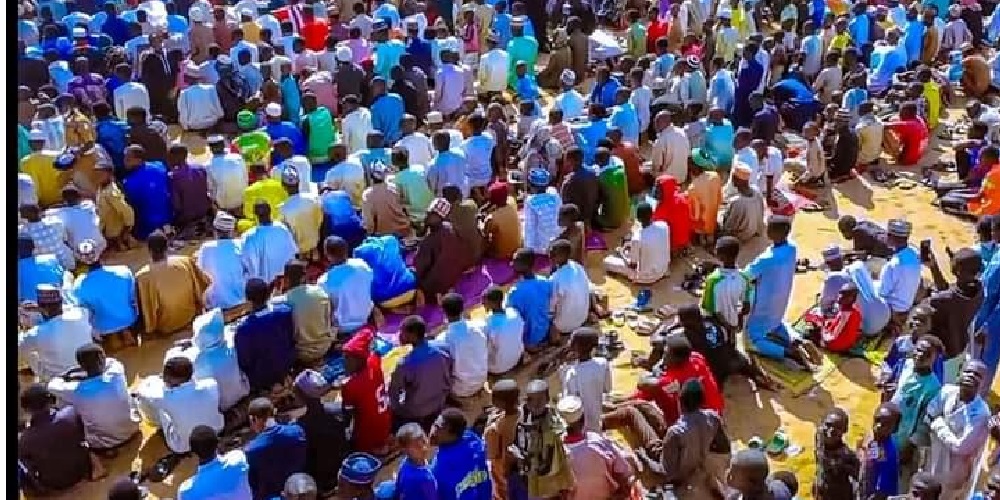
The Coordinator said that the enrolment figure was too low and urged citizens and legal residents to obtain their NIN.

Advertisement

“The problem we have now is that people are not coming out to register.

“It is only when we have an isssue like now that people are registering for JAMB that you see crowd in all centres.

“But immediately after the JAMB registration, everybody will stay at home until when something required them to obtain NIN that they will come again,” he added.

The NIMC coordinator appealed to traditional rulers in the state to assist the commission in sensitisating their subjects to give priority to obtaining their identity number.

Advertisement

According to him, aggressive campaign on the enrolment will speed up registeration of more citizens and legal residents in the state.

Jakada particularly appealed to Dutse, Gumel, Ringim and Hadejia Emirate Councils to emulate Kazaure emirate by establishing special NIN enrolment centres in their respective domains.

He explained that Kazaure emirate’s establishment of special NIN registration centres led to the enrollment of 75 per cent of people in the area, hence the need for the other four emirates to emulate the initiative.

The coordinator added that before the establishment of the centres by the Emir of Kazaure, Alhaji Najib Hussaini-Adamu, the area was lagging behind in terms of NIN enrollment.

Advertisement

According to him, the emirate in now leading with 75 per cent, followed by Hadejia emirate with 65 per cent of registered residents.

He added that the record of enrolment in Dutse emirate was 50 per cent, while Gumel emirate has 30 per cent and Ringim emirate, 20 per cent.

“Traditional institutions can assist us through sensitisation so that people will be more aware of the exercise and that will speed it up.

“We are calling on other individuals in the state who can afford to assist by establishing special centers in their respective communities to do so, in order to register more people,” Jakada said.
Advertisement
Continue Reading
Advertisement

News

ECOWAS Sets Out Sweeping Reform Plan To Steady Regional Bloc Amid Mounting Crises

Published

on

ADVERTISEMENT
Zoom Ad
ADVERTISEMENT
Zoom Ad

By Gloria Ikibah

The Economic Community of West African States has introduced an extensive roadmap aimed at overhauling regional integration, as it seeks to rebuild confidence, restore cohesion and respond more effectively to growing political, economic and security pressures across West Africa.

The proposal, unveiled during a session of the ECOWAS Parliament in Abuja on Tuesday, was presented by the organisation’s Commissioner for Political Affairs, Peace and Security, Ambassador Abdel-Fatau Musah. It outlines a broad reset of the bloc’s direction, with a renewed focus on making integration more inclusive and people-centred.

At the core of the initiative is the implementation of the ECOWAS Vision 2050 framework, alongside efforts to reposition the organisation at a time when it faces one of its most challenging periods since its establishment in 1975. Ongoing governance concerns, democratic backsliding and the rise of alternative alliances such as the Alliance of Sahel States, involving Burkina Faso, Mali and Niger, have all contributed to the strain.

The reform plan stems from a directive issued by regional leaders during their 65th Ordinary Session in Abuja in July 2024, which called for a dedicated summit to reassess the future of integration in West Africa.

Structured around six key pillars, the framework sets out priorities including economic transformation, peace and democratic governance, advances in science and technology, social inclusion, institutional reform and a clearer geopolitical strategy for the bloc.

On the economic front, the organisation is targeting a significant increase in intra-regional trade, with ambitions to deepen industrialisation, strengthen food security and introduce a single regional currency, the ECO, in the coming years.

Security and governance proposals emphasise stricter opposition to unconstitutional changes of government, alongside plans to reinforce regional peacekeeping capacity through a stronger standby force.

In the technology space, the roadmap envisions the creation of a unified digital market, while social measures include increasing women’s representation in leadership roles and embedding youth participation in governance structures.

Institutional reforms are also central to the plan, with proposals aimed at improving accountability, strengthening merit-based systems and achieving financial independence for ECOWAS institutions through enhanced revenue mechanisms.

A major feature of the document is its emphasis on “strategic autonomy,” positioning ECOWAS as a unified geopolitical actor capable of defending West Africa’s sovereignty in an increasingly multipolar world.

The proposal further outlines a framework for structured dialogue and confidence-building measures with the AES countries to prevent permanent fragmentation of the region.

To address ECOWAS’ longstanding implementation deficit, the Compact introduces a robust monitoring and evaluation system, including compliance scorecards for member states and an evidence-based approach to policy implementation.

Musah said the ultimate goal is to transform ECOWAS from an institution known for issuing declarations into one that delivers concrete public goods such as security, economic mobility and digital connectivity to citizens.

He noted that the draft Compact was developed through extensive consultations involving citizens across West Africa, civil society groups, the African diaspora, ECOWAS institutions and heads of state and government.

“The Compact for the Future of Regional Integration is a survival strategy for the region,” Musah said. “It seeks to rebuild trust between states and their peoples, ensuring that regional integration remains relevant, citizen-centred and capable of responding to 21st-century challenges.”

The presentation formed part of deliberations at the ongoing ECOWAS Parliament session, where lawmakers are examining the future of regional cooperation amid rising insecurity, democratic instability and economic pressures across West Africa.

Continue Reading

News

WATCH: This is Karu, Abuja express road now(Video)

Published

on

ADVERTISEMENT
Zoom Ad
ADVERTISEMENT
Zoom Ad

Construction work is almost concluded at the Karu, Abuja road.

Watch:

Continue Reading

News

UUTH sealed as EFCC tries to arrest only Prof of cardiothoracic surgery, three staff members

Published

on

ADVERTISEMENT
Zoom Ad
ADVERTISEMENT
Zoom Ad

Activities at the University of Uyo Teaching Hospital, UUTH, Akwa Ibom State, were brought to a halt on Tuesday, May 12, following the attempted arrest and eventual arrest of Prof. Effiong Ekpe and three other staff members of the hospital by operatives of the Economic and Financial Crimes Commission, EFCC, Uyo Zonal Office.

It was gathered that EFCC officials, while attempting to arrest Prof. Ekpe, who is the Deputy Chairman, Medical Advisory Committee, CMAC, on a court warrant, met resistance from other staff members of the hospital, while the hospital security also locked the gate, barring their exit from the facility.

It was further gathered that the operatives called for backup as the atmosphere became tense before the police arrived.

Following the incident, Dr. Aniekan Peters, the State Chairman of the Nigerian Medical Association, NMA, directed doctors across the state to immediately shut down services, while JOHESU leaders also declared a total hospital shutdown in protest against what they described as an inhumane and barbaric act.

Confirming the incident, the Public Relations Officer of the Nigerian Medical Association, NMA, Dr. Gabriel Eyo, said the action of the EFCC was an onslaught on the hospital and its workers.

Eyo said it was wrong for a professor of cardiothoracic surgery and the only one in the state, to be treated like a criminal, noting that the man was injured in the process. As such, the strike was called to protest the alleged injustice.

“Prof. Ekpe is the professor of cardiothoracic surgery, the only one we have in Akwa Ibom State. Anyway, we don’t know what he has done, but we don’t really care at this point. Whatever he did, there is due process for this kind of thing. Even criminals are not treated this way. The only thing that should have been done would have been to send an invitation, which was not done.

“The NMA just had a meeting of its members, so we’ve begun the indefinite strike. The resolutions will be made public very soon.”

Meanwhile, the police have distanced themselves from involvement in the arrest of the professor, saying their operatives were only drafted to the scene to calm the situation and verify the authenticity of the officers who came for the arrest.

The Commissioner of Police, CP Baba Mohammed Azare, said he ordered some policemen to join the EFCC officials to pick up a staff member of the hospital on the instruction of the judge in an ongoing court case.

Azare said that before the policemen entered the hospital premises for the arrest, he had informed the Chief Medical Director, Prof. Emem Bassey, to instruct his staff to grant the policemen access into the premises.

“The EFCC went for an arrest in the hospital this morning, and the CMD called me to verify if my men were among those in the hospital.

“I called the head of the EFCC, who confirmed to me that they were actually the ones who went to pick up that person on the instruction of the court. Right now, they are in court and handling a court case, and the judge stood down the matter and ordered that they bring that person. That is why they went to bring him.

“I called the CMD and advised him to open the gate for them to take the man because it is a legitimate duty.”

However, the spokesperson of the EFCC, Dele Oyewale, in a statement dismissed allegations of assault by the operatives on anyone, saying rather that the officers suffered unprovoked attacks and resistance when they visited the facility for “inquiries.”

Speaking on why the EFCC operatives visited the UUTH in the first place, Oyewale explained: “The operatives’ visit was informed by the need to authenticate a medical report presented by a suspect under remand by Justice M.A. Onyetunu of the Federal High Court, Uyo, for allegedly defrauding multiple microfinance banks, including the University of Uyo Microfinance Bank.

“The suspect had presented a medical report which required authentication by the UUTH management. The Commission wrote two different letters, dated March 11, 2026, and April 20, 2026, to the hospital management to this effect without receiving any response. The Investigating Officer handling the matter took the further step of visiting the hospital to enquire about the status of the request. Still, no response.

“As a last resort, operatives of the commission visited the chief medical director of the hospital on Tuesday to make further enquiries, only to be locked in with a false alarm and subjected to unprovoked attacks by misguided staff of the facility, who pelted them with stones and other dangerous objects.

“While within the hospital, the CMD reportedly directed that the gates of the facility be shut, making it impossible for any lawful enquiry to be made. Police authorities in Akwa Ibom State advised the CMD to open the hospital gates to enable the operatives to exit the premises peacefully, but the entreaties were turned down.

“In spite of the hostility and provocation, there was no breakdown of law and order as the operatives exercised restraint and professionally made their way out of the hospital premises without disrupting its activities.

“Enquiries bordering on operational engagements of the Commission are lawful. It is therefore necessary to remind the public and corporate bodies that they are obligated to cooperate with the agency in such circumstances. Contrary action could be deemed obstruction, which is criminal with attendant legal consequences.”

Continue Reading

Trending

Copyright © 2024 Naija Blitz News