Economy
Hardship: Nigeria experiencing deepening economic crisis – IMF
- /home/naijuinz/public_html/wp-content/plugins/mvp-social-buttons/mvp-social-buttons.php on line 27
https://naijablitznews.com/wp-content/uploads/2024/02/IMF.jpg&description=Hardship: Nigeria experiencing deepening economic crisis – IMF', 'pinterestShare', 'width=750,height=350'); return false;" title="Pin This Post">
- Share
- Tweet /home/naijuinz/public_html/wp-content/plugins/mvp-social-buttons/mvp-social-buttons.php on line 72
https://naijablitznews.com/wp-content/uploads/2024/02/IMF.jpg&description=Hardship: Nigeria experiencing deepening economic crisis – IMF', 'pinterestShare', 'width=750,height=350'); return false;" title="Pin This Post">
The International Monetary Fund, IMF, has warned that Nigeria is experiencing a deepening economic crisis.

IMF expressed concern that the stagnant per-capita growth, widespread poverty, and severe food insecurity have further intensified the persistent cost-of-living crisis in Nigeria.
This was contained in its recently published report titled ‘Review of Nigeria’s Post Financing Assessment by the IMF Executive Board.’

In line with the report, the inadequate collection of revenue has impeded the delivery of services and the allocation of resources towards public investment.
According to the report, the observed inflation rate for October stood at 27 percent compared to the same period last year (with food inflation at 32 percent).
The growth was attributed to the removal of fuel subsidies, the depreciation of the exchange rate, and the negative impact on agricultural production in the country.
The report read in part, “Nigeria faces a difficult external environment and wide-ranging domestic challenges. External financing (market and official) is scarce, and global food prices have surged, reflecting the repercussions of conflict and geo-economic fragmentation.
“Per-capita growth in Nigeria has stalled, poverty and food insecurity are high, exacerbating the cost-of-living crisis. Low reserves and very limited fiscal space constrain the authorities’ option space. Against this backdrop, the authorities’ focus on restoring macroeconomic stability and creating conditions for sustained, high and inclusive growth is appropriate.”
In the midst of Nigeria’s ongoing economic challenges, the report highlighted that on January 12, 2024, the Executive Board of the International Monetary Fund completed an evaluation of post financing and approved the Staff Appraisal without delay.
Additionally, it emphasized that Nigeria possesses sufficient capability to repay its debts to the IMF.
Economy
See Black Market Dollar To Naira Exchange Rate Today 12th May 2026
Dollar To Naira Exchange Rate
The Black Market Dollar-to-Naira Exchange Rate for 12th May 2026 Can Be Accessed Below.
NOTE: The exchange rate changes hourly. It depends on the volume of dollars available and the Demand. This means…you can buy or sell 1 dollar at a certain rate, and the price can change (high or low) within hours.
The official naira black market exchange rate in Nigeria today, including the Black Market rates, Bureau De Change (BDC), and CBN rates.
Please note that the exchange rate is subject to hourly fluctuations influenced by the supply and demand of dollars in the market.
What’s the dollar to naira black market today, 12th May 2026?
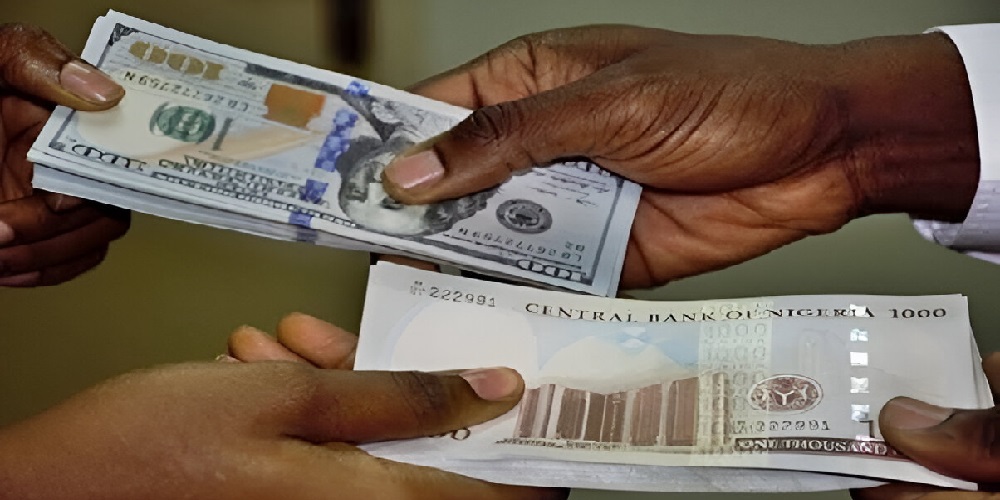
The exchange rate for a dollar to naira at Lagos Parallel Market (Black Market) players sell a dollar for ₦1400 and buy at ₦1387 on Tuesday, 12th May, 2026, according to sources at Bureau De Change (BDC).
Please note that the Central Bank of Nigeria (CBN) does not recognize the parallel market (black market), as it has directed individuals who want to engage in Forex to approach their respective banks
Dollar to Naira Black Market Rate Today
Dollar to Naira (USD to NGN) Black Market Exchange Rate Today
Selling Rate ₦1400
Buying Rate ₦1387
Dollar to Naira CBN Rate Today
Dollar to Naira (USD to NGN) CBN Rate Today
Highest Rate ₦1375
Lowest Rate ₦1367
Disclaimer:NEWSRAIN NIGERIA does not set or determine forex rates. The official NAFEX rates are obtained from the FMDQOTC website. Parallel market rates (black market rates) are obtained from various sources, including online media outlets. The rates you buy or sell forex may be different from what is captured in this article.
Economy
CBN warns non-interest banks over rising risks
The Central Bank of Nigeria has warned that growing risks in Nigeria’s non-interest banking sector could weaken public confidence and threaten financial stability if they are not properly managed.
The apex bank said the rapid growth, increasing sophistication and stronger connections within the banking industry have exposed Non-Interest Financial Institutions (NIFIs) to several challenges, including non-compliance with regulations, weak governance structures, operational weaknesses and emerging technology-related risks.
Speaking during the second Annual Interactive Session between the CBN Financial Regulation Advisory Council of Experts (FRACE) and the Advisory Committees of Experts (ACE) of Non-Interest Financial Institutions in Abuja, the Deputy Governor in charge of Financial System Stability, Mr. Philip Ikeazor, said the risks facing the sector require stronger oversight and improved governance.
Represented by the Director of the Financial Policy and Regulation Department, Dr. Rita Ijeoma Sike, Ikeazor said poor management of these risks could damage the credibility of the non-interest finance industry and reduce public trust in the system.
He explained that the creation of FRACE and the mandatory establishment of ACEs in all Non-Interest Financial Institutions were meant to build a stronger and more coordinated governance structure for the industry.
According to him, regular engagement between FRACE and ACE members is important to ensure that institutions clearly understand regulatory expectations and apply them properly.
“The objectives of today’s session include fostering the institutionalisation and effective operation of a robust Shariah governance system within Non-Interest Financial Institutions, and providing a structured platform for dialogue, knowledge-sharing, and collaboration,” he said.
Ikeazor said the CBN remains committed to strengthening Shariah governance, improving regulatory clarity and promoting effective risk management in the non-interest financial services sector in order to maintain financial stability and public confidence.
He noted that the current engagement builds on discussions from the inaugural session and reflects the CBN’s determination to sustain a sound and resilient non-interest banking system driven by good governance, compliance and prudent risk management.
The deputy governor added that Non-Interest Financial Institutions have become increasingly important to Nigeria’s financial system by providing ethical and Shariah-compliant financial services while supporting financial inclusion, financing for the real sector, Micro, Small and Medium Enterprises (MSMEs), and shared economic growth.
In his opening remarks, the Deputy Chairman of FRACE, Prof. Bashir Aliyu Umar, said the meeting was organised to strengthen governance in the non-interest finance industry and encourage constructive engagement between the CBN and advisory committees of the institutions.
He also praised the management of the CBN for reviving the interactive session which was first introduced in 2014.
Earlier, Dr. Rita Ijeoma Sike said the central bank remained focused on building a credible and properly governed non-interest financial services industry.
She said the increasing variety of products, institutions and financial service channels, especially the rise of Islamic fintech, has made continuous dialogue, strong regulation and quality advisory support more important.
The event featured technical presentations on Shariah non-compliance risks and the impact such risks could have on the non-interest financial services industry. Another presentation focused on Islamic fintech and its role in promoting financial inclusion.
Participants at the session also held discussions on practical challenges affecting the sector, including capacity building, the independence of advisory committees, risk management strategies and ways to improve governance and innovation within the industry.
In his closing remarks, Prof. Abdul-Razzaq Alaro commended participants for their contributions and thanked the CBN for organising the session.
He urged stakeholders to take practical steps towards implementing the resolutions reached during the engagement, saying the success of the meeting would depend on visible improvements across the non-interest financial sector.
FRACE serves as an advisory body that helps bridge the gap between conventional financial regulation and faith-based financial practices. The council supports consistency, investor confidence and proper regulation within Nigeria’s non-interest finance industry, while the ACEs carry out similar oversight responsibilities within individual institutions.
Economy
SEE Dollar to Naira exchange rate today, May 11, 2026
The Nigerian naira traded within a relatively stable range against the United States dollar on Monday, May 11, 2026, across both the official Nigerian Foreign Exchange Market (NFEM) and the parallel market, amid sustained forex interventions and cautious market sentiment.
Data obtained from the Central Bank of Nigeria’s exchange rate portal showed that the official NFEM rate hovered around ₦1,361 per dollar in the latest trading session. The market recorded fluctuations between approximately ₦1,355 and ₦1,366 to the dollar as demand and supply dynamics continued to shape trading activities.
In the parallel market, also known as the black market, Bureau De Change operators in Lagos and Abuja exchanged the dollar at about ₦1,385 for buying and between ₦1,395 and ₦1,405 for selling, depending on location and transaction volume.
Market analysts said the relatively narrow gap between the official and parallel market rates reflects improved liquidity in the formal forex window and continued efforts by the Central Bank of Nigeria to stabilise the naira.
Recent trading data also indicated that the naira posted marginal gains in previous sessions at the NFEM, supported by stronger turnover and increased market activity.
-
News24 hours agoFG waives UTME requirement for admission into colleges of education
-
News10 hours agoBREAKING: Popular Nollywood actor, Alex Ekubo is dead
-
Economy24 hours agoCBN warns non-interest banks over rising risks
-
News15 hours agoFG in Talks With World Bank For Fresh $1.25bn Loan
-
News24 hours agoINEC To Mobilise Over 1.4m Corps Members For 2027 Elections
-
Foreign24 hours agoTrump to suspend US gas tax as Iran war raises prices
-
Politics24 hours ago2027: “Why I am in same boat with Peter Obi”-Kwankwaso gives reasons
-
News24 hours agoPolice begin probe into brutal shooting incident at UNIBEN