Connect with us

News

‘Why New Supreme Court Justices can’t resume now’

Published

on

ADVERTISEMENT
Zoom Ad
ADVERTISEMENT
Zoom Ad

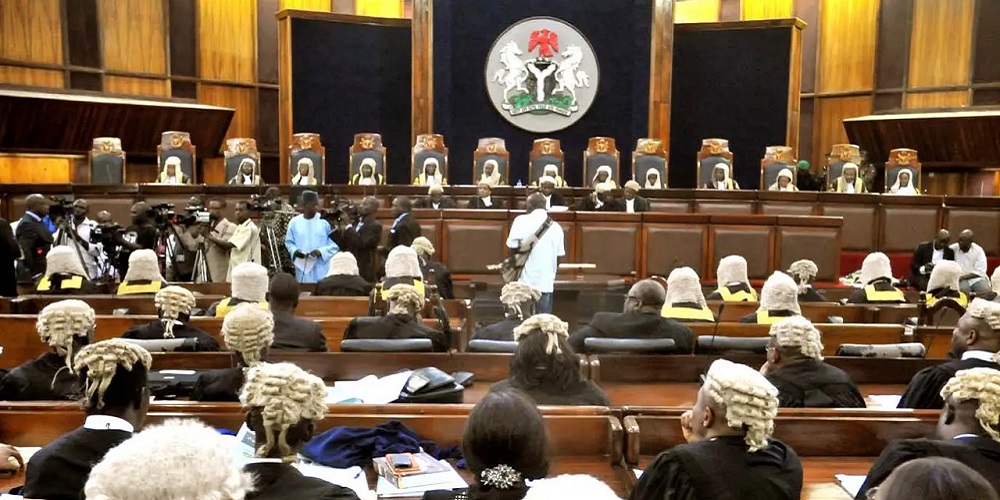
In this report, Vanguard’s Law & Human Rights digs out factors responsible for the delay in the inauguration of 11 new justices of the Supreme Court almost two full months after the Nigerian Senate had confirmed their appointment.


Background

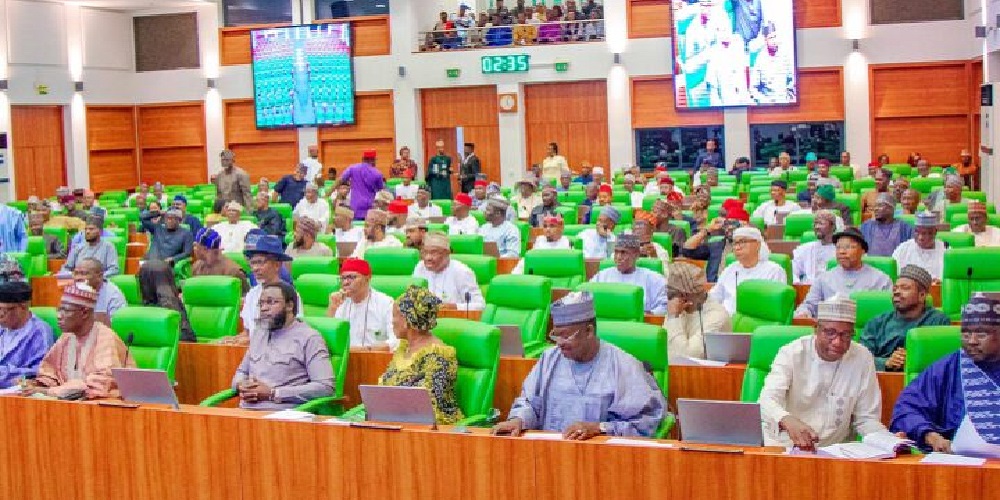
On December 21, 2023, the Nigerian Senate approved a list of 11 new justices for the Supreme Court of Nigeria, SCN.

The senators had cleared the justices at the plenary through a voice vote after the Chairman of the Committee on Judiciary, Mohammed Monguno (APC, Borno), reported that his committee received the curriculum vitae of the nominees, invited them for screening and found that they demonstrated inspiring competence required for the performance of their assignment.

Advertisement

Monguno also noted that the nomination and appointment satisfied the constitutional provision of section 231 (3) of the Constitution which states that an individual needs 15 years experience in the bar to be qualified for appointment into the Supreme Court bench.

He said there were no petitions or criminal records against any of the nominees and that the committee members were satisfied with the nomination of the justices and, therefore, recommended their confirmation.

The list of the justices was sent to the upper chamber of the National Assembly by President Bola Tinubu following recommendation of the candidates by the National Judicial Council, NJC from the shortlist received from the Federal Judicial Service Commission, FJSC for the top job.

On the recommended list were Haruna Tsammani representing the North-East; Moore Adumein (South- South); Jummai Sankey (North-Central); Chidiebere Uwa (South-East); Chioma Nwosu-Iheme (South-East) and Obande Ogbuinya (South-East).

Advertisement

Others were Justices Stephen Jona Adah (North-Central); Habeeb Abiru (South-West); Jamilu Tukur (North- West); Abubakar Umar (North-West);  and Mohammed Idris (North-Central).

Section 231 (2) of the 1999 Constitution of the Federal Republic of Nigeria spells out the process of appointing justices for the SCN.

The section provides: “The appointment of a person to the office of a Justice of the Supreme Court shall be made by the President on the recommendation of the NJC, subject to confirmation of such appointment by the Senate.

By implication, both the executive and the legislature play distinct roles in appointing justices for the apex bench.

Advertisement

The appointment process into the Supreme Court bench would be inchoate until the two other arms of government have fully played their roles as spelt out in the constitution.

But almost two months after the justices were cleared by the Senate and more than two years when the Supreme Court has been itching to get more competent hands to fill vacant seats in the court, the 11 new justices are yet to be inaugurated.

The Supreme Court has kept mum on the issue ditto for the Presidency in spite of the alarm raised by a retiring justice of the Supreme Court, Justice Dattijo Muhammad on October 27, 2023, in Abuja that with his exit, the number of justices serving in the apex court had dropped to 10, its lowest in the contemporary history of the court.

The Chief Justice of Nigeria, CJN, Justice Olukayode Ariwoola had himself consistently lamented that the apex court has been battling with workload crisis arising from manpower shortage, explaining that the situation gets worse for the third arm of government because in every little disagreement, Nigerians rushed to court and in every lost case, they rushed to appeal even up to the Supreme Court, no matter how little the issue might be.

Advertisement

He had said that alone had obviously accounted for the several appeals pending in the Supreme Court, adding that though the court received scathing criticisms from members of the public over its over-bloated docket, yet the institution is neither in any position to regulate case inflow to the court nor has the supernatural powers to attend to all in one-fell-swoop.

What is delaying the inauguration of the 11 new justices?

Vanguard’s Law & Human Rights’ investigation revealed that the 11 new justices are yet to be inaugurated simply because the Supreme Court was having challenges providing them with the required working tools.

According to an impeccable source at the Supreme Court who spoke with Vanguard on condition of anonymity, the justices’ inauguration was deliberately delayed.

Advertisement

His words: “You were aware some justices of the Supreme Court were sworn in on November 6, 2020. As tradition demanded, they were supposed to be given three assorted brand new cars each: A Mercedes Benz, a Land Cruiser and one utility vehicle.

“But at that time, the justices of the Supreme Court were given only a Land Cruiser which some critics said were refurbished. A Hilux was added after one year while the Mercedez Benz was late in coming. Because of the breach of that tradition, hell was let loose.

“We want to avoid such unnecessary bad image for the Supreme Court this time around. What is sure is that the justices have been appointed already. The Senate has given approval. That approval cannot be withdrawn.

“All that is left now is for necessary working tools to be provided. We do not want to inaugurate them without providing the necessary things that may attract bad press for the institution,” the source added.

Advertisement

The source also told Vanguard that apart from the issue of cars, accommodation was another.

“You will agree with me that the issue of accommodation for serving justices of the Supreme Court has been a recurring challenge.

“This is the first time we are having a full complement of 21 justices. They can’t live in the air. They must be made comfortable. The Supreme Court will have to acquire apartments for them.

“I can confirm to you that the Supreme Court has gone far. But the court is yet to get comfortable accommodation for all of them.

Advertisement

“Until that one is sorted out, they may have to tarry,” he said.

Another source and member of the Federal Judicial Service Commission, FJSC, who also pleaded anonymity, told Vanguard Law and Human Rights that the affected new justices have been asked to use the opportunity of the delay in inaugurating them to quickly conclude all outstanding cases they have at the Court of Appeal on the account that they would not have the opportunity of going back to sit on such cases as justices of the Court of Appeal.

The source reminded Vanguard of what happened sometime in May 2020 when the Supreme Court, in a unanimous decision by a seven-man panel of Justices led by Justice Bode Rhodes-Vivour (now retired), nullified the entire proceedings that led to the conviction of a federal lawmaker representing Abia North Senatorial District, Dr Orji Uzor Kalu, his company—Slok, and a former Director of Finance in Abia State, Jones Udeogu, for allegedly using the firm to defraud the Government of Abia State in the eight years Kalu held sway as governor of the state.

Vanguard indeed recalled that the Supreme Court had in the lead verdict that was read by Justice Ejembi Eko, held that the trial High Court Judge, Justice Mohammed Idris, acted without jurisdiction in the case when he convicted Kalu, his firm, Slok Nigeria Limited and a former Director of Finance in Abia State, Jones Udeogu since he was no longer a judge of the Federal High Court as at December 5, 2019, when he sat and delivered the judgement that convicted the defendants for allegedly stealing about N7.1billion from Abia State treasury.

Advertisement

According to the Supreme Court, Justice Idris, having been elevated to the Court of Appeal before then, lacked the powers to return to sit as a High Court Judge.

It held that the Fiat that was issued to him by the Court of Appeal President pursuant to section 396(7) of the Administration of Criminal Justice Act, ACJA, 2015, was unconstitutional.

The apex court held that no statute in Nigeria empowered the Court of Appeal President to give vires to a Justice of the appellate court to return to the High Court to deliver judgement in a pending criminal trial, stressing that the Court of Appeal President, “acted ultra-vires his powers when she purportedly gave the authorisation” with respect to Kalu’s case.

But the source hinted that the 11 new justices of the Supreme Court would be inaugurated very soon as their services are very much required at the apex court.

Advertisement

S’Court to get full complement of 21 justices for the first time since 1999

Hopefully, when the justices resume office by the end of the month, the Supreme Court would have a full complement of 21 justices for the first time since 1999 with five representing the North-West; four of the justices representing the South-West geo-political zone of the country, three representing the South-East, another three representing the North-East, three others representing the South- South, and the remaining three representing the North-Central.

Whereas, Section 230 (2) of the 1999 Constitution allows the sitting President to appoint a Chief Justice of Nigeria, CJN and other justices of the Supreme Court not exceeding 21, the highest number of justices appointed to the Supreme Court ever was 20 since the constitution was promulgated into law.

Specifically, that history was made on November 6, 2020 when eight (8) newly appointed Justices of the Supreme Court were sworn into office, upping its membership from 12 to 20.
Advertisement
Continue Reading
Advertisement

News

FRSC Returns N3.7m Recovered From Kaduna Crash To Victims

Published

on

By

ADVERTISEMENT
Zoom Ad
ADVERTISEMENT
Zoom Ad

Operatives of the Federal Road Safety Corps (FRSC) attached to the Zaria Unit Command in Kaduna State have recovered and returned ₦3,727,500 in cash and valuables worth about ₦500,000 from the scene of a fatal road crash.

The accident occurred on Sunday, March 15, 2026, along the Zaria–Funtua Highway near Zaria Academy. It involved a Toyota Corolla and a Peugeot 806 carrying nine passengers.

A statement issued on Monday by the Corps Public Education Officer, Felicia Kalu, said one passenger died at the scene while eight others sustained varying degrees of injuries.

“Upon receiving the distress call, FRSC rescue teams responded swiftly, providing immediate first aid before evacuating the injured victims to the Ahmadu Bello University Teaching Hospital, Shika for urgent medical attention.

“During the rescue and post-crash clearance operation, the vigilant FRSC personnel discovered a large sum of money and other valuable items scattered across the crash site.

“Demonstrating exceptional discipline and moral courage, the officers carefully secured the ₦3,727,500 and safeguarded all recovered valuables, ensuring they were protected until they could be properly returned to their rightful owners,” the statement read.

The Zaria Unit Commander, Chief Route Commander Nasiru Falgore, formally handed over the recovered cash to the victims on Monday in the presence of their relatives and other witnesses.

Reacting, the Corps Marshal of the FRSC, Shehu Mohammed, commended the officers for their integrity and professionalism.

He described the action as a reflection of the FRSC’s institutional values of honesty, accountability and service to humanity.

The Corps Marshal praised the Zaria operatives for upholding high standards of discipline and transparency, stressing that integrity remains central to all FRSC operations.

The beneficiaries expressed relief and appreciation, noting that the officers not only helped rescue the injured victims but also safeguarded their money at a critical moment.

They also pledged to promote road safety awareness and responsible driving within their communities.

The FRSC said the incident further demonstrates the corps’ commitment to professionalism, transparency and integrity in the discharge of its duties.

Continue Reading

News

NDDC moves to curb vandalism of projects in Niger Delta communities

Published

on

By

ADVERTISEMENT
Zoom Ad
ADVERTISEMENT
Zoom Ad

The Niger Delta Development Commission (NDDC) has intensified efforts to curb the vandalisation of critical infrastructure projects executed across communities in the Niger Delta region.

The commission also expressed concern over the destruction of several completed and ongoing projects, describing the trend as discouraging and detrimental to development in the region.

As part of its response, the commission on Monday organised a one-day capacity-building programme for stakeholders in Rivers State on community ownership and protection of NDDC projects. The event, held in Port Harcourt, was organised by the Corporate Affairs Directorate of the NDDC and facilitated by Peace and Development Projects in collaboration with Bitood Nigeria Limited.

Speaking at the event, the Director of Rivers Operations at the commission, Okezie Ule, said the training was designed to equip participants with the knowledge required to safeguard projects executed in their communities.

Ule, who represented the Managing Director of the commission, Samuel Ogbuku, said the initiative had become necessary given the scale of projects currently being implemented across the region by the commission’s management.

According to him, the NDDC remains committed to executing people-oriented projects while also taking steps to protect completed and ongoing facilities.

“We have seen with dismay how many of our projects, even those strongly requested by the communities, are left to deteriorate. Vandals have targeted some of these projects, including valuable assets such as solar streetlights that illuminate many of our communities,” Ule said.

He cited instances where newly completed projects were vandalised shortly after commissioning, describing the development as a major setback to the commission’s development efforts.

“It is discouraging that funds are invested in critical infrastructure, particularly assets such as pathways and lighting systems, only for them to be vandalised,” he added.

Ule also warned individuals involved in vandalism to stay away from NDDC projects and urged community members to take responsibility for protecting facilities located within their areas.

Also speaking, the Rivers State representative on the commission’s board, Tony Okocha, described the training as essential for ensuring that projects executed by the NDDC are properly safeguarded.

Represented by his Special Assistant on Technical Matters, Chibuzor Kwelle, Okocha commended communities that have already taken steps to protect development projects in their areas.

He noted that several NDDC initiatives, particularly solar streetlight projects, have helped to reduce criminal activities in many communities.

Meanwhile, the Project Coordinator of Peace and Development Projects, Francis Abayomi, said the capacity-building programme was aimed at encouraging communities to take ownership of development projects provided for them.

He stressed that community participation in protecting infrastructure was essential to ensuring the sustainability and long-term impact of development efforts in the Niger Delta.

Continue Reading

News

Alleged Cyber-Bullying: Court Threatens To Hold Sowore’s Lawyer For Contempt

Published

on

By

ADVERTISEMENT
Zoom Ad
ADVERTISEMENT
Zoom Ad

Justice Mohammed Umar of the Federal High Court Abuja, has threatened to commit the lead defence lawyer to a politician and online publisher Omoyele Sowore, for contempt over rudeness in court.

For raising his voice in court, the judge ordered Sowore’s lawyer, Marshall Abubakar, to “come out and kneel down” in open court.

Other lawyers, however, quickly prevailed upon the judge to forgive their colleague.

Sowore is being prosecuted by the Department of State Services (DSS) for allegedly making false claims against the person of President Bola Tinubu by referring to him as “a criminal” in a post he made on his “X” and Facebook accounts.

The activist’s lawyer drew the ire of the judge when he raised his voice while making submissions in court, insisting that the date chosen by the court for the defence to open its case was not convenient for him.

Trouble started when, shortly after Abubakar concluded cross examination of the only prosecution witness.

The prosecuting lawyer announced the closure of the case and applied that the defence be called upon to open its case.

When asked by the judge when he planned to open his defence, Abubakar said the defendant would make a no-case submission and suggested that the court should adjourn till a date in July.

The prosecuting lawyer, Akinlolu Kehinde (SAN), objected and argued that it was part of the defence’s tactics intended to further delay proceedings.

He suggested that the case be given an accelerated hearing and be heard on a daily basis.

In his intervention, the judge regretted that, while the prosecution was swift in conducting its case, the defence spent four days cross-examining the prosecution’s only witness.

The judge said it was not feasible to hear the case on a daily basis, but directed parties to return on April 13 for the adoption of their final written addresses in respect of the no-case submission.

Whilst Sowore was addressing the judge from the witness box on how the proposed date might affect his party’s upcoming primaries, his lawyer also simultaneously began addressing the judge, narrating how his client was poised to wrest power from President Bola Tinubu.

“This court belongs to all of us. This court is not for some people alone. It belongs to all of us,” said Abubakar.

Attempts by the judge to make the lawyer lower his voice were unsuccessful.

At that point, Justice Umar bellowed, “If you shout in this court again, I will commit you for contempt. In fact, come here! Come and kneel down here!” pointing to a spot in front of the courtroom.

On realising the unsavoury turn of events, other lawyers, led by the only SAN in the courtroom, Akinlolu Kehinde, jumped to their feet and began begging the judge to forgive the aberrant lawyer.

While the lawyers were still upstanding begging, the judge pronounced that the case had been adjourned till April 13 for adoption, and rose for the day.

Earlier, when the case was called in the morning, Kehinde told the court that Sowore had a recording device with him in the dock.

He urged the court to direct that the device be taken from the defendant.

But Sowore denied being in possession of any recording device, adding that he only had with him his eye glasses, power bank, and phone.

Justice Umar recalled that the court had earlier made an order that the defendant should not bring any gadget with him while in the dock.

The judge then asked him to submit the items to his lawyers, which he handed to a court official, who transferred them to Sowore’s lawyer.

When asked to proceed with the case, Abubakar claimed to have only learnt about Monday’s sitting a few moments before the court’s session began.

He said he was not in court with the case file because he was in another court for a separate case. He then applied for a stand-down until 12:30 pm to enable him to retrieve the file from his office.

Although Kehinde objected, arguing that it was a ploy by the defence to further delay proceedings, the judge granted the stand down.

When proceedings resumed at about 1 p.m., Abubakar cross-examined the sole prosecution witness, Cyril Nosike (a DSS operative), for about two hours.

He also tendered copies of newspaper publications, some of which he later gave to the witness to read.

Continue Reading

Trending

Copyright © 2024 Naija Blitz News