
News
NLC President Leads Protesters To National Assembly, says Nigerians are dying of hunger

- /home/naijuinz/public_html/wp-content/plugins/mvp-social-buttons/mvp-social-buttons.php on line 27
https://naijablitznews.com/wp-content/uploads/2024/02/NLC.jpg&description=NLC President Leads Protesters To National Assembly, says Nigerians are dying of hunger', 'pinterestShare', 'width=750,height=350'); return false;" title="Pin This Post">
- Share
- Tweet /home/naijuinz/public_html/wp-content/plugins/mvp-social-buttons/mvp-social-buttons.php on line 72
https://naijablitznews.com/wp-content/uploads/2024/02/NLC.jpg&description=NLC President Leads Protesters To National Assembly, says Nigerians are dying of hunger', 'pinterestShare', 'width=750,height=350'); return false;" title="Pin This Post">


…as NASS Leadership say efforts on to urgently address problem
By Gloria Ikibah
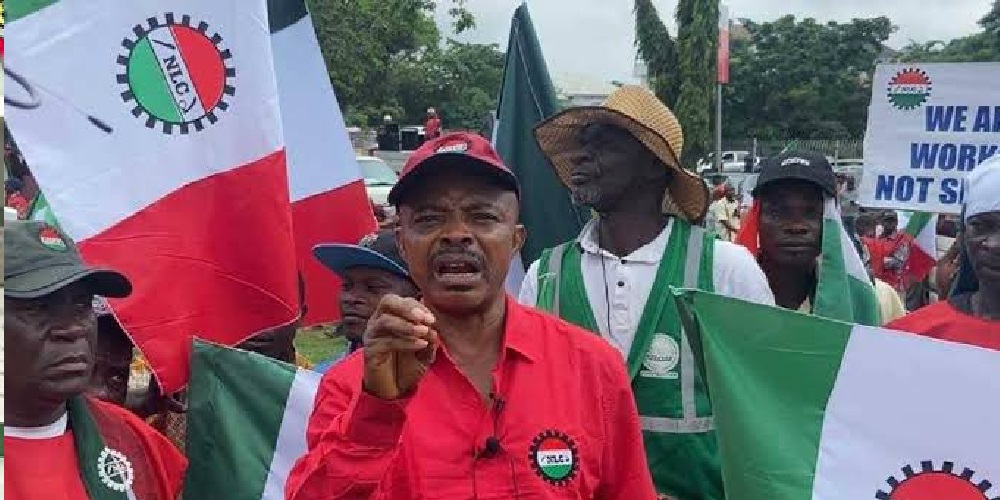
The Nigeria labour Congress NLC, has commenced its two-day national protest in Abuja.
Addressing members of the national Assembly on Tuesday at the NASS complex, President of the Nigeria Labour Congress, Comrade Joe Ajaero, who decried that Nigerians are dying of hunger as a result of the economic hardship in the country, urged the Federal Government to urgently address the situation.
Naijablitznews.com reports that Comrade Ajaero led thousands of protesters including civil society organizations in protest against the economic hardship.
He said: “We thank everyone for making this happen. Today has come to pass. They said we should not be but we are here. We are here because there is hunger in the land. History will not forgive us if we do not protest at the level of hunger in the land. It is to signal to the authorities that there is a problem in the land”.
Tje NLC President further lamented the falling value of the Naira, growing insecurity, and rising unemployment among other issues.
He said that immediate measures must be taken to address the suffering, adding that the NLC would decide its next line of action.
The NLC President presented a letter containing their grievances to the representative of the leadership of the National Assembly.
Chairman Senate Committee on Labour, Employment and Productivity, Senator Diket Plang, who accepted the letter on behalf of the National Assembly said they were aware of the hardship and assured that efforts would be made to urgently address the situation.
He promised that the letter would be dispatched accordingly.
“We are supposed to stand in for Nigerians where it pinches them. I want to assure you that the National Assembly is very sensitive to what is happening, very sensitive.
“The leadership of the National Assembly, yesterday, the Senate President and the Speaker met. I was with them. We parted around 12 midnight and all the issue is about bringing solution to the suffering and yearnings of Nigerians.
“We are at a very critical period that Nigeria is taking a decision that would be of economic advantage to all of us.
“My plea and our plea is for the union to reason with us, understand with us. There is no way we will allow this thing to continue. But steps must be taken.
“Already the 15th agenda of the Memorandum of Understanding given between government and labour are being tackled. The last issue that is in place is the issue of minimum wage and negotiations are going on.
“There is no way that we will not end up with a resolution and a decision that will benefit Nigerians.
“I assure you that all of us, the press, general public, everybody is feeling it, but Nigeria will succeed. The president will succeed. We will succeed. We are very sensitive to it. So may God Almighty, help us to maximize our potentials, maximize our natural resources, may we intervene in such a way that all Nigerians will be able to exploit the God-given wealth that we have. We are all on the same page”, he stated.
Also, the Chairman, House of Representatives Committee on Labour and Productivity, Rep. Adefarati Adeboyega, supported his Senate counterpart.
“We will take your letter to the leadership of the Nation Assembly. Very soon you will hear from us. We are facing the same challenges.
The economic challenges and hardship faced by Nigeria is borne by everybody.
“I want to assure you that the leadership of the National Assembly will look into your request and demands and take swift and bold action. I can assure you Nigeria will breathe again,” he added.
Naijablitznews.com reports that various security agencies were seen stationed around the entery and exit points of the National Assembly particularly the Federal Secretariat axis to ensure the orderliness of the action.
Despite several warning by some security agencies, the NLC went ahead with a protest against the economic hardship in the country.
Naijablitznews.com recalled that the DSS had last week warned that some persons are planning to use the opportunity of the planned protests by organized labour slated for 27th and 28th February to foment crisis and widespread violence.
The Director of Public Relations and Strategic Communications, DSS National Headquarters in Abuja, Dr. Peter Afunanya, in a statement, had called on labour to shelve the action meant to protest the economic situation in the country in the interest of peace.
He had urged that they pursue dialogue and negotiation rather than engaging in conducts that could heighten tensions in the country.
These entreaties however seem to have fell on deaf ears as the President of the NLC, Joe Ajaero, insisted that the protest must go on.
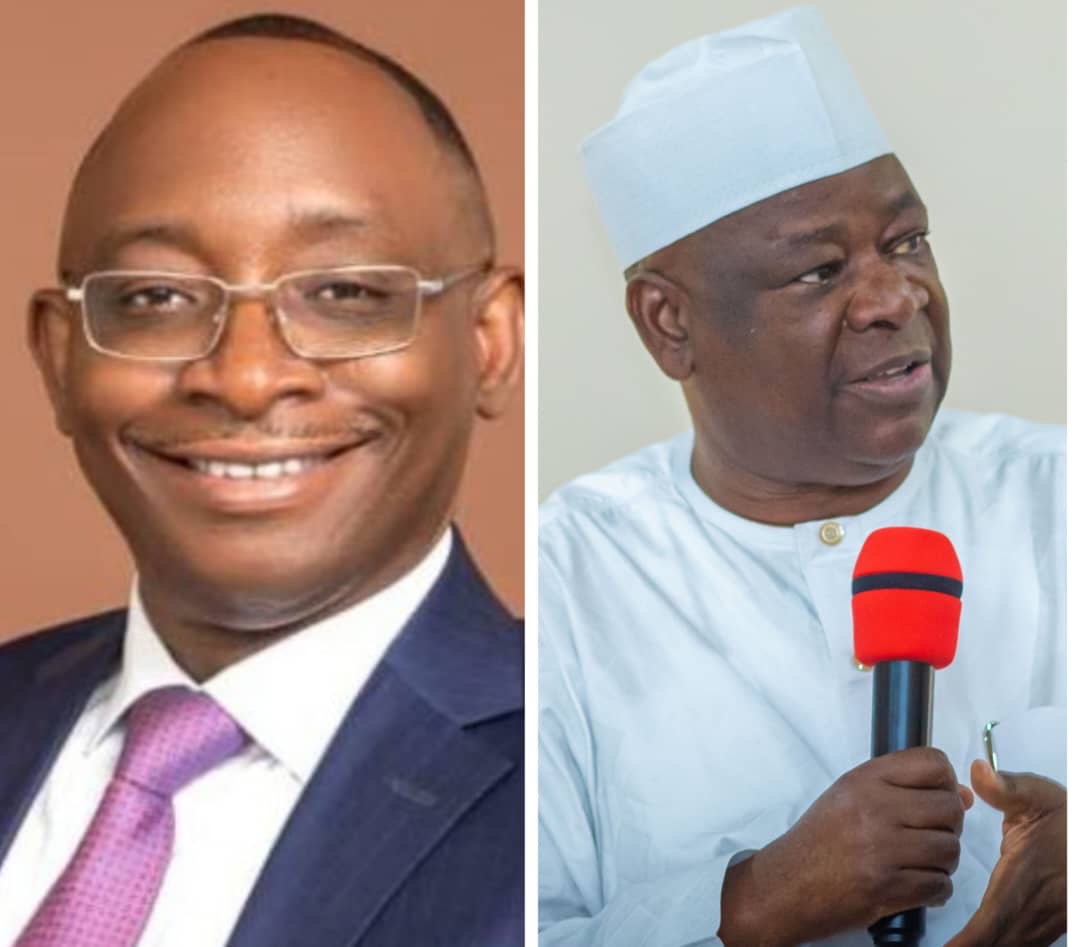
The Nigeria Governors’ Forum (NGF) has inaugurated the Forum of State Directors-General of Public Procurement, with stakeholders describing the initiative as a major step towards strengthening transparency, accountability and efficiency in public spending across Nigeria.
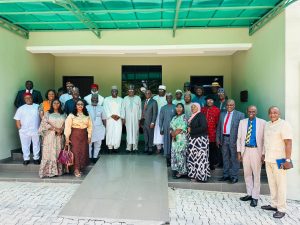
The inauguration was held on Tuesday at the NGF Secretariat in Abuja and brought together Directors-General of the Bureau of Public Procurement (BPP), or their equivalents, from the 36 states and the Federal Capital Territory.
Development partners and other stakeholders in the procurement sector also attended the event.
Speaking at the ceremony, the Director-General of the NGF, Abdulallateef Shittu, said the inauguration came at a critical time when the country was seeking to recalibrate its economic architecture.
Shittu stressed the enormous responsibility before state procurement authorities, noting that public procurement plays a critical role in budget implementation and the delivery of government projects at all levels.
He urged members of the forum to uphold professionalism, transparency and efficiency in the discharge of their responsibilities.
The Director-General of the federal BPP, Adebowale Adedokun, said President Bola Ahmed Tinubu was aware of the inauguration of the Committee of Practice of Public Procurement and had given his support to the initiative.
According to him, the initiative aligns with the administration’s Renewed Hope Agenda and its commitment to improving living standards and reducing poverty.
Adedokun described the inauguration as a significant development in Nigeria’s procurement history, saying an effective and transparent procurement system could attract foreign direct investment, boost GDP and stimulate the growth of domestic industries.
He urged members of the forum to strictly adhere to due process, fairness and transparency in the implementation of public projects.
ADSC, DDI Commend BPP Leadership
In a goodwill message, Dr Osahanze Idahosa, who represented the President/CEO of the Africa Development Studies Centre (ADSC) and Douglas Development Institute (DDI), commended Adedokun for creating an enabling environment for collaboration and capacity development in the procurement sector.
Idahosa said Adedokun’s openness to partnerships had enabled ADSC and DDI to contribute to efforts aimed at strengthening Nigeria’s procurement systems at the federal level.
He described the inauguration as significant not only to the forum but also to the broader public procurement reform agenda, particularly at the subnational level.
“Subnational procurement systems are where policy meets people, where transparency and value for money either take root or falter,” Idahosa said.
He urged the new leadership of the forum to deepen accountability, efficiency, professionalism and transparency in public procurement across the states.
According to him, ADSC and DDI have supported procurement transformation through capacity-building programmes, study exchanges and institutional development initiatives aimed at modernising public spending.
Idahosa also recalled a study exchange to South Africa involving one of the forum’s members, saying the experience underscored the need to extend procurement reforms achieved at the federal level to the states.
He said public procurement was too important to governance to be left to isolated efforts, stressing the need for collective commitment across federal and subnational institutions.
He further noted that public procurement accounts for an estimated 15 to 30 per cent of GDP and is linked to between 50 and 60 per cent of leakages in public financial management.
ADSC and DDI congratulated the new leadership and pledged continued support through training, research, knowledge-sharing platforms and international study exchanges.
New Chairman Promises Collective Leadership
In his acceptance speech, the newly elected Chairman of the forum, Ehimoni Ibiyomi, described his appointment as the beginning great of things.
“Today is not simply another meeting or gathering of procurement regulators. It represents the beginning of a new institutional chapter in our collective efforts to strengthen public procurement administration, regulation and professional practice at the sub-national level in Nigeria.I am deeply grateful to my colleagues for the confidence reposed in me and for the opportunity to serve as Chairman of this Forum.I accept this responsibility with full recognition that the office is not about an individual. It is about collective leadership, institutional cooperation and a shared commitment to improving the quality of public procurement across our States.
APPRECIATION TO THE NIGERIAN GOVERNORS’ FORUMLet me begin by expressing our profound appreciation to the leadership and Management of the Nigerian Governors’ Forum Secretariat for providing the platform for the formal inauguration and recognition of this Forum.
“This gesture is significant.For the Forum to function effectively, there must be a structured relationship between the institutions responsible for procurement regulation and the political leadership of the States.
“The Nigerian Governors’ Forum provides an important national platform through which the collective interests of State Governments can be discussed and advanced.
The recognition of our Forum within this broader institutional environment therefore creates an opportunity for procurement to receive the level of strategic attention it deserves in the governance and development agenda of our States.We are particularly grateful for the confidence demonstrated through this engagement, and we assure the Nigerian Governors’ Forum that we will justify this confidence through professionalism, responsibility, transparency and measurable results.
APPRECIATION TO THE FEDERAL BUREAU OF PUBLIC PROCUREMENT
“I also wish to acknowledge the presence and support of the Federal Bureau of Public Procurement.
The Federal BPP has a critical role in Nigeria’s public procurement architecture, and the relationship between the Federal BPP and State Procurement Regulatory Authorities must be one of partnership, knowledge exchange, coordination and mutual institutional respect.Our Forum does not seek to duplicate or compete with the Federal BPP.Rather, we seek to complement the national procurement reform agenda by strengthening the sub-national procurement institutions and ensuring that the experiences, innovations and challenges of the States are effectively brought into national conversations on procurement reform.We look forward to a closer and more structured relationship with the Federal BPP in the areas of technical support, capacity building, professional development, regulatory knowledge sharing, research, standardization and procurement reform.APPRECIATION TO THE WORLD BANK AND DEVELOPMENT PARTNERS
“Our appreciation also goes to the World Bank, particularly the team working under SPESSE, for its continued commitment to strengthening public procurement systems and professional capacity in Nigeria.
“The establishment and formal recognition of this Forum comes at a time when procurement is increasingly being recognized not merely as an administrative function, but as a critical instrument for achieving fiscal responsibility, value for money, infrastructure development, service delivery and sustainable economic development.We therefore see development partners not merely as sources of funding, but as strategic partners in institutional development, knowledge transfer, innovation, research, capacity building and sustainable reforms.
“As a Forum, we are prepared to develop practical programmes that can attract technical assistance and partnership from the World Bank and other development partners.We would particularly welcome collaboration in areas such as:professionalization of State procurement institutions;continuous capacity development for procurement officers;sustainable and socially responsible procurement;digital procurement and procurement data management;procurement performance measurement;development of procurement policies and guidelines;institutional strengthening;research and knowledge development; andpeer learning and exchange programmes.
APPRECIATION TO OTHER INSTITUTIONAL PARTNERS
“I equally acknowledge the presence and interest of the African Development Study Center, the Association of Procurement Professionals of Nigeria, the Corporate Affairs Commission, and other invited institutions and stakeholders.Their presence demonstrates a fundamental reality: public procurement cannot be successfully reformed in isolation.Procurement intersects with corporate governance, business registration and compliance, professional standards, research, finance, technology, infrastructure development and broader public-sector reform.
“For this reason, our Forum intends to pursue strategic partnerships with relevant institutions and organizations whose mandates can contribute to improving the quality and effectiveness of public procurement across the States.
THE VISION OF THE FORUM Distinguished ladies and gentlemen,As we commence this new chapter, we must be clear about what we want this Forum to become.Our vision is to build a strong, professional, collaborative and nationally recognized platform for the Heads of State Public Procurement Regulatory Authorities, capable of contributing meaningfully to procurement reform and good governance in Nigeria.
“We want a Forum that does not merely meet, but delivers”, he added.

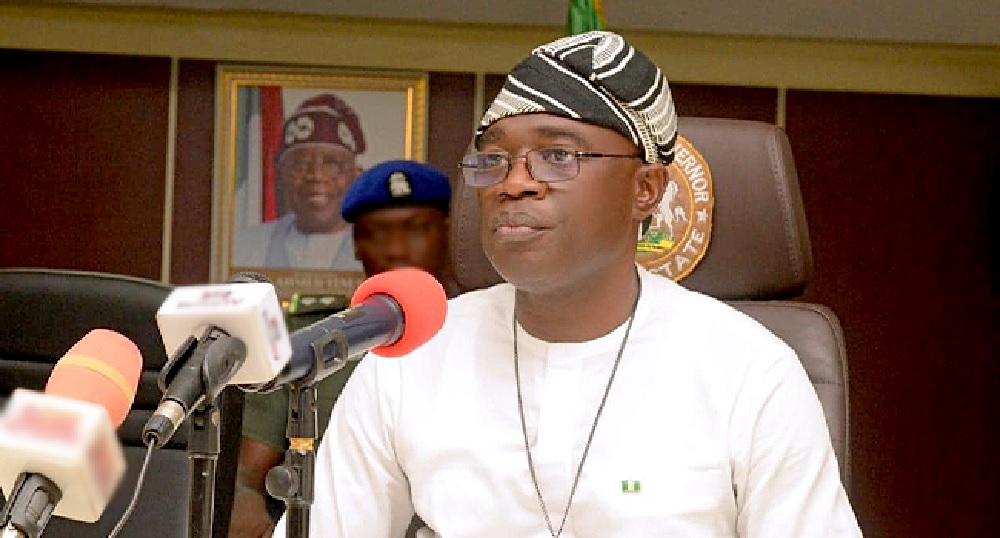
The Benue State Government has denied prior knowledge of Peter Obi’s visit to the state, following reports that youths blocked the presidential candidate’s convoy on Tuesday.
Obi, the presidential candidate of the Nigeria Democratic Congress (NDC), was reportedly stopped by youths at Gyado Villa along the Gboko Road while travelling to Yelewata.
The former Anambra State governor was in Benue to meet families affected by the deadly June 2025 attack in Yelewata, in which several people were killed.
His visit was aimed at commiserating with bereaved families and assessing the situation in the affected community.
Reacting to the incident, Kula Tersoo, Chief Press Secretary to Governor Hyacinth Alia, said the state government was not informed about Obi’s arrival.
Tersoo said the government would have responded more promptly to the incident if it had been notified ahead of the visit.
He also questioned the security arrangements surrounding Obi, arguing that a presidential candidate and former governor should have adequate protection from federal security agencies.
According to him, the security authorities in the state should also have been informed of Obi’s movement so appropriate protection could be provided during his visit.
The governor’s aide further dismissed claims that the youths who blocked Obi’s convoy were acting on behalf of the state government.
He said the Alia administration does not engage thugs and had no reason to view Obi as a threat.
“We are not aware of his coming to the state, and if it were security agents that stopped him, it would have been easy for us to find out what happened,” Tersoo said.
“As presidential candidate of a party and former governor, he is a property of the federal government and ought to have been given security.
“Where are those security agents around him? If he is going to any state, the security of the host state should know so as to provide security for him.
“We were surprised that youths would stop someone. Youths cannot do anything on behalf of government. Our government doesn’t patronise thugs, and in any case, Obi is not a threat to the governor.
“We are not aware that Obi is coming to Benue. I am hearing it from you.”

Troops of Operation Hadin Kai have foiled an ambush by suspected Boko Haram terrorists and destroyed several makeshift camps in Biu Local Government Area of Borno State.
The operation took place on Monday, September 7, along the Buni Gari-Buratai axis, where troops of the 27 Task Force Brigade, Sector 2, encountered the terrorists during a routine patrol.
Acting Military Information Officer, Headquarters Joint Task Force North East, Capt. Mohammed Goni, disclosed this in a statement.
Goni said the troops responded swiftly to the ambush, forcing the terrorists to retreat in disarray.
Reinforcements were subsequently deployed to secure the area, clear the ambush site and search the surrounding terrain.
The operation led to the discovery and destruction of several makeshift camps believed to have been used as temporary hideouts and staging points by the terrorists.
The troops also recovered a motorcycle, bicycles, a magazine, ammunition and rocket-propelled grenade bombs.
No soldier was killed or injured in the encounter, although some military vehicles were damaged during the engagement.
Despite the damage, the troops remained operational and successfully completed the mission, Goni said.
He described the operation as another demonstration of the military’s determination to deny terrorist groups freedom of movement and disrupt their activities across the North-East.
Goni, however, said the security situation in the area remained calm but unpredictable, with troops sustaining aggressive patrols and coordinated operations.
He urged residents to remain vigilant and promptly report suspicious persons, movements or activities to security agencies.
According to him, timely information from residents remains critical to detecting, disrupting and neutralising terrorist activities across the theatre.

NGF Inaugurates State Procurement DGs Forum, BPP Boss Hailed for Reform Drive

Benue Govt Denies Knowledge Of Peter Obi’s Visit, Reacts To Convoy Attack

Benue Bans Phones, Extra Lessons In Schools, Warns Parents Against Abusing Teachers



-
 News14 hours ago
Tunji-Ojo: No Extra Charges For Special Passport Intervention In UK
-

 Entertainment14 hours ago
BBN: Nomy Kicked Out Of Big Brother House, Her Participation Revoked
-
 News14 hours ago
Osun: APC Legal Team Rejects Petition Challenging Adeleke’s Victory
-

 News14 hours ago
7 Things Parents and Students Should Know About FG’s New Learner Identification Number (LIN)
-

 News14 hours ago
Man Who Returned to Nigeria for His Wedding Beaten to Death
-
 News14 hours ago
Fake agency sagas: Ministers, DGs face fresh hurdles over foreign trips
-

 Foreign14 hours ago
Iraqi court affirms woman’s right to Change and register her religion from Muslim to Christian
-
 News11 hours ago
Tinubu Is Beatable in 2027, I Know Him Well — Makinde’s Running Mate, Daura