Connect with us

News

All You Should Know About Lagos Red Line Rail Project Commissioned By President Tinubu

Published

on

ADVERTISEMENT
Zoom Ad
ADVERTISEMENT
Zoom Ad

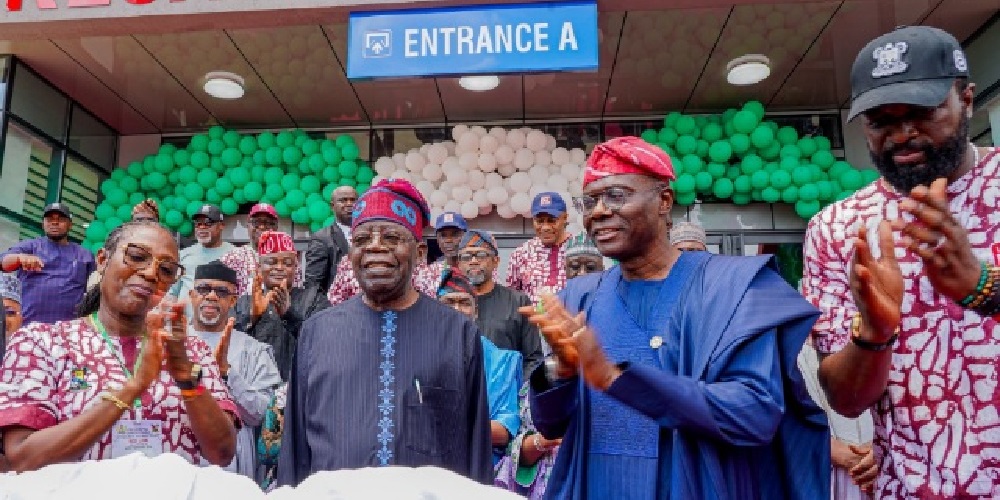
President Bola Tinubu has inaugurated the Red Line Rail Project in Lagos. The project, an intra-state rail service aimed at improving transportation within the city, spans 37 kilometers.


The Red Line Rail Project in Lagos, Nigeria, represents a significant infrastructure development aimed at improving transportation within the city.

Below are things to know about the Red Line Rail:

1. The Red Line is a 37km rail route proposed to run from Agbado to Marina with 13 stations at Agbado, Iju, Agege, Ikeja, MMIA International, (domestic), Oshodi, Mushin, Yaba, Ebute Metta, Iddo, Ebute Ero, and Marina.

Advertisement

2. It is the second mass transportation system in Lagos, after the 27km Blue Line that is already in operation, designed to run from Okokomiko to Marina

3. The Red Line proposed as Public Private Partnership (PPP) is one of the six rail lines and one metro line designed to revolutionise public transportation system in Nigeria’s economic hub.

4. The six rail lines are encapsulated in the state’s transportation master plan, developed by Lagos Metropolitan Area Transport Authority (LAMATA).

5. To ensure the smooth operation of the rail line and safety for commuters, significant infrastructure has been developed. This includes the construction of 10 vehicular overpasses and pedestrian bridges, separating train traffic from vehicular and pedestrian flows.

Advertisement

6. Once operational, it is expected to facilitate 37 trips daily, accommodating approximately 500,000 passengers.

7. The primary objectives include reducing travel time, mitigating health issues related to stress, and enhancing economic productivity.

8. The project aims to alleviate traffic congestion, minimise road accidents, and improve commuter safety within Lagos.

9. Unlike the electric-powered Blue Line, the Red Line will utilise a diesel-powered system known as Diesel Multiple Unit (DMU). DMU employs on-board diesel engines to propel multiple-unit trains. This choice of transmission aligns with the project’s objectives and operational requirements.

Advertisement

10. The Red Line Rail Project represents a significant milestone in Lagos’ transportation infrastructure development.

11. Initial estimates pegged the cost at $135 million, however, Governor Babajide Sanwo-Olu revealed that both the Blue and Red Lines combined would exceed ₦100 billion.

Continue Reading
Advertisement

News

2027: Akiolu Endorses Tinubu 2nd Term Bid, Declares No Vacancy in Aso Rock

Published

on

By

ADVERTISEMENT
Zoom Ad
ADVERTISEMENT
Zoom Ad

The Oba of Lagos, Rilwan Akiolu, has endorsed President Bola Ahmed Tinubu’s bid for a second term in office, declaring that there will be “no vacancy” in the Presidential Villa, Abuja for the next four or five years.

Oba Akiolu gave the support when the Director-General of the All Progressives Congress (APC) Presidential Campaign Council, Senator Abdulaziz Yari, led members of the council on a courtesy visit to his palace in Lagos on Monday.

The monarch urged politicians to approach the 2027 General Elections with responsibility and ensure that the electoral process is peaceful and serves the interests of Nigerians.

Oba Akiolu cautioned members of the campaign council against actions capable of undermining the peace and stability of the country, even as he urged them to uphold honesty and shun the Machiavellian principle that the end justifies the means.

Advertisement

Speaking, the Director-General of the Campaign Council, Yari, said the delegation was in Lagos to seek the monarch’s blessings, prayers and counsel as the council begins its nationwide campaign activities ahead of the 2027 polls.

Yari said the APC believed President Tinubu deserved a second term to consolidate his administration’s efforts in the areas of the economy, security and infrastructure.

The Campaign D-G, while acknowledging the economic difficulties facing Nigerians, appealed for continued support for the president, saying APC leaders from the North would work to secure strong backing for Tinubu’s re-election across the region.

Receiving the delegation, Lagos State Governor, Mr. Babajide Sanwo-Olu, described the visit as significant, noting that the council had made the Oba’s palace one of its early stops following its engagement with the Sokoto Caliphate.

Advertisement

Governor Sanwo-Olu said the visit underscored Lagos’ strategic importance to Nigeria’s political process, describing the state as the country’s commercial and economic nerve centre as well as a major political hub.

The visit was attended by Lagos APC leaders, local government chairmen, members of the National Assembly, state lawmakers and other party stakeholders.

Continue Reading

News

Former FIRS Chairman, Mani, Picks PDP Guber Ticket in Niger

Published

on

By

ADVERTISEMENT
Zoom Ad
ADVERTISEMENT
Zoom Ad

Former Chairman of the Federal Inland Revenue Service (FIRS) Alhaji Mohammed Mani, has been endorsed as the governorship candidate of the Peoples Democratic Party PDP in Niger state

Alhaji  Mani replaces  Abubakar Sulaiman, who was elected at the PDP primary last May.

Sulaiman voluntarily withdrawn from the position in the interest of the peace unity and progress of the party.

The endorsement of the former FIRS boss for the governorship contest was made by PDP stakeholders from across the state at the state party secretariat.

Advertisement

Addressing the stakeholders, Alhaji Mani promised to deliver the state to the PDP in next year’s election and solicited  the support of party faithful for the realisation of the objective.

The new PDP candidate had earlier contested for the governorship ticket of the All Progressives Congress(APC) which Governor Mohammed Umaru Bago got by “ consensus.”

He was among the APC aspirants who lost in the primary election and recently defected to the PDP.

Advertisement
Continue Reading

News

ICPC, NFIU open stocktake on financial intelligence, asset recovery

Published

on

By

ADVERTISEMENT
Zoom Ad
ADVERTISEMENT
Zoom Ad

The Independent Corrupt Practices Commission (ICPC) a has commenced a three-day stocktake meeting focused on converting financial intelligence into prosecutions and asset recovery.

The ICPC Chairman, Dr Musa Aliyu, SAN, said this at the opening of the exercise, held in preparation for Nigeria’s Financial Action Task Force (FATF) 3rd Round Mutual Evaluation Exercise.

The meeting was organized in conjunction with the Nigerian Financial Intelligence Unit (NFIU)

Represented by the Commission’s Secretary, Mr Clifford Oparaodu, Aliyu said the exercise would test how effectively ICPC investigations were converting financial intelligence into prosecutions, asset recovery and stronger enforcement outcomes.

Advertisement

He said the stocktake provided an internal mirror to measure performance under the Money Laundering (Prevention and Prohibition) Act 2022, POCA 2022 and POCR 2024 regulations.

According to him, the Commission had in recent years made parallel financial investigations mandatory in every corruption case to strengthen the tracing of illicit funds and recovery efforts.

While stating that previous reviews focused largely on laws and policies, he said the stocktake would drill deeper into operational performance and assess Nigeria’s enforcement effectiveness.

He listed five Immediate Outcomes as benchmarks, emphasising that the exercise focused on FATF Immediate Outcomes 1, 2, 6, 7 and 8 for institutional assessment.

Advertisement

He said these included risk understanding, international cooperation, financial intelligence use, effectiveness of money laundering investigations and asset recovery, adding that participants would assess operational implementation.

On corruption risks, he said participants would assess whether the ICPC and sister agencies were aligning investigations with Nigeria’s national risk profile and identified priority threats.

“We must show that our operations reflect where the real threats are, including bribery and grand corruption,” he said.

For cross-border crime, he said the team would review formal Mutual Legal Assistance channels and informal intelligence networks to assess Nigeria’s capacity for international cooperation.

Advertisement

The goal, according to him, was to demonstrate that Nigeria could swiftly share information, support investigations and secure convictions through effective cooperation with international partners.

“A major focus will be on financial intelligence under Immediate Outcome 6. The question before the room: are agencies not just generating reports, but actually using them to trace illicit flows and freeze assets before they disappear?”

He said enforcement would receive significant scrutiny under Immediate Outcomes 7 and 8, with Nigeria expected to demonstrate results from relevant money laundering laws and regulations.

“That means convictions, confiscations, and proper management of recovered assets,” he said, urging institutions to provide verifiable evidence of operational effectiveness during the stocktake exercise.

Advertisement

He urged visiting Country Experts to be blunt in their assessment, saying their feedback would help Nigeria close gaps, clean up statistics and sharpen strategies before the main evaluation.

He said the commission had aligned with the NFIU’s strategy by making parallel financial investigations mandatory in every corruption case handled by its investigators.

He added that the ICPC now leveraged the Corporate Affairs Commission Beneficial Ownership Register to expose corporate shells and strengthened systems for managing recovered assets.

He, however, warned that laws alone would not secure a good rating, stressing that effective implementation and measurable enforcement outcomes remained critical to Nigeria’s assessment.

Advertisement

“Technical compliance is only half the battle. What ultimately safeguards our financial system is demonstrating high operational effectiveness across these Immediate Outcomes,” he said.

He charged ICPC investigators and prosecutors to be candid and data-driven, while welcoming country experts to provide objective feedback that would help close gaps before the evaluation.

Speaking, the Chief Executive Officer of NFIU, Hajia Hafsat Bakari, said the exercise was designed to measure how effectively anti-corruption agencies converted financial intelligence into concrete enforcement outcomes.

Represented by Dr Emmanuel Sotande, an NFIU official, Bakari said the exercise was not about fault-finding but about assessing institutional preparedness ahead of Nigeria’s next FATF assessment.

Advertisement

“We want to be able to see how well the information and investigation lead to prosecution, seizure of assets and whether there’s a deterrent mechanism in place,” she said.

According to her, the core objective was to track the full value chain of intelligence use, from information supplied by the NFIU to enforcement outcomes.

“That includes how data supplied by the NFIU is consumed by the ICPC and other agencies, and whether it translates into convictions, asset recovery, and stronger deterrence against illicit financial flows.”

The NFIU boss emphasised that the timing was critical, noting that Nigeria was preparing for its 3rd Round Mutual Evaluation 2027 and needed institutional readiness.

Advertisement

“This is not a witch-hunt exercise but to ensure that we prepare for the next evaluation, which is going to be taking place next year.

“We want all institutional agencies and systems in Nigeria to be ready for the FATF assessors that will be coming from all parts of the world,” she said.

She explained that the framework for the stocktake was developed by the NFIU specifically to enable agencies to evaluate their preparedness and identify areas requiring improvement before assessment.

She said that assessors would demand detailed data and evidence, much of which the ICPC already held, making inter-agency coordination essential to Nigeria’s preparedness.

Advertisement

“It is in that context that the CEO of NFIU deems it fit to put the framework of the stocktake exercise in place for us to evaluate ourselves before the assessors will come,” she added.

She called for stronger collaboration, warning that the goal was to ensure Nigeria did not slip back onto the FATF grey list when the evaluation was concluded in 2027.

“The assessors will be asking for a lot of information, which I am sure the ICPC already have and it is only pertinent for us to work together,” she said.

Advertisement
Continue Reading

Trending

Copyright © 2024 Naija Blitz News