News
SERAP sues Tinubu over failure to probe missing $3.4bn IMF loan to finance budget, respond to COVID-19
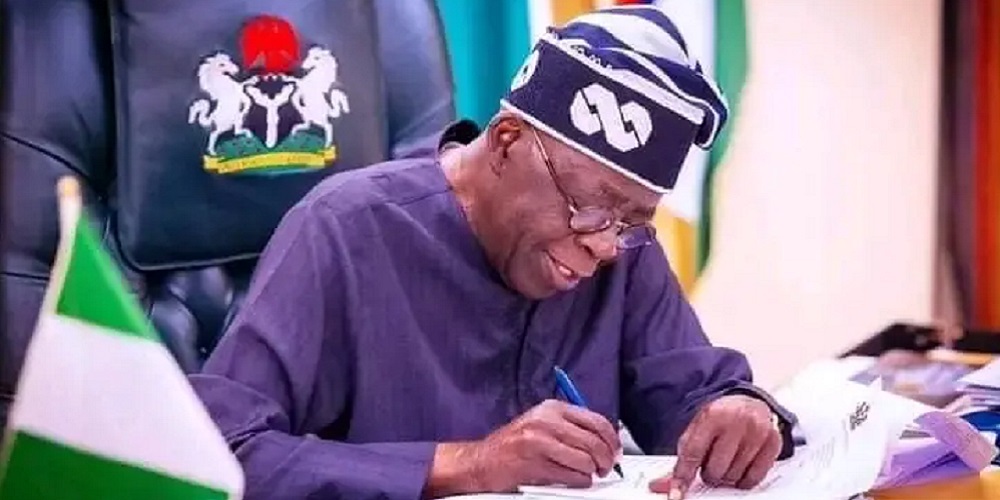
The Socio-Economic Rights and Accountability Project (SERAP) has filed a fresh lawsuit against President Bola Tinubu.

The lawsuit concerns “the failure (of the President) to probe the grim allegations that $3.4 billion loan obtained by Nigeria from the International Monetary Fund (IMF) to finance the budget and respond to COVID-19 is missing, diverted or unaccounted for.”
The allegations are contained in the recently published 2020 Nigeria’s annual audited report by the Auditor-General of the Federation.

In the suit numbered FHC/ABJ/CS/269/2024, filed last Friday at the Federal High Court, Abuja, SERAP is asking the court “to direct and compel President Tinubu to probe the allegations that $3.4 billion loan obtained by Nigeria from the IMF to finance the budget and respond to COVID-19 is missing, diverted or unaccounted for.”
SERAP is also seeking: “an order of mandamus to direct and compel President Tinubu to ensure the effective prosecution of anyone suspected to be responsible for the alleged mismanagement and diversion of the $3.4 billion IMF loan obtained by Nigeria to finance the budget and respond to the COVID- 19 pandemic.”
SERAP is also seeking: “an order of mandamus to direct and compel President Tinubu to ensure the full recovery of the missing $3.4 billion IMF loan obtained by Nigeria to finance the budget and respond to the COVID-19 pandemic.”
In the suit, SERAP argues: “Investigating these grave allegations, bringing suspected perpetrators to justice and recovering any missing IMF loan would contribute to addressing the country’s economic crisis and debt burden.
“The findings by the Auditor-General suggest a grave violation of the public trust, the provisions of the Nigerian Constitution 1999 [as amended], national anticorruption laws, and the country’s obligations under the UN Convention against Corruption.”
SERAP noted that “servicing IMF loan that is allegedly missing, diverted or unaccounted for is double jeopardy for Nigerians—they can neither see nor benefit from the projects for which the loan was approved; yet, they are made to pay back both the loan and accrued interests.”
The suit filed on behalf of SERAP by its lawyers Kolawole Oluwadare and Andrew Nwankwo, read in part: “There is a legitimate public interest in ensuring justice and accountability for these serious allegations. Granting the reliefs sought would end the impunity of perpetrators and ensure justice for victims of corruption.
Granting the reliefs sought would facilitate the effective implementation of the recommendations by the Auditor-General in the 2020 annual report that the missing $3.4 billion IMF loan be fully recovered and remitted to the public treasury and those responsible be ‘sanctioned and handed over to anticorruption agencies’.
“The allegations of corruption in the spending of IMF loan documented by the Auditor-General undermine economic development of the country, trap the majority of Nigerians in poverty and deprive them of opportunities.
“According to the 2020 annual audited report by the Auditor-General of the Federation published last week, the US$3.4 billion emergency financial assistance obtained from the International Monetary Fund (IMF) to finance the budget and respond to the COVID-19 pandemic is missing, diverted or unaccounted for.
According to the Auditor-General, no information or document was provided to justify the movement and spending of the Fund.
“The Auditor-General has recommended that the money should be fully recovered and remitted to the public treasury and for the evidence of remittance to be forwarded to the Public Accounts Committee of the National Assembly.
“The Auditor-General has also recommended that anyone suspected to be involved should be ‘sanctioned and handed over to the EFCC and ICPC for investigation and prosecution, as provided for in paragraph 3112 of the Financial Regulations.’
According to SERAP’s information, Nigeria has signed an agreement to spread the repayment of the IMF loan/interests from 2023 to 2027. The first instalment, due in 2023, is worth $497.17 million. The second instalment, due in 2024, will be worth $1.76 billion. The third instalment, due in 2025, will be worth $865.27 million.
The final two instalments, due in 2026 and 2027, will each be worth $33.99 million. These instalments will only be interest payments.
“Impunity for corruption in the management of loans obtained by Nigeria will continue as long as high-ranking public officials go largely unpunished for their alleged crimes.”
Joined in the suit as Respondent is Mr Lateef Fagbemi, SAN, the Attorney General of the Federation and Minister of Justice.
News
Suspected Fulani Militias K!ll Christian Leader In Plateau
A Christian leader, identified as Markus Musa, has been k!lled by suspected Fulani bandits in Mangu Local Government Area of Plateau State, amid continuing reprisal attacks in parts of the area.
According to security analyst, Zagazola Makana, Musa was reportedly on his way to attend a meeting of the Christian Association of Nigeria (CAN) when he was ambushed at about 1:30 p.m. on Monday, September 14, 2026, between Rimi and Kaduno communities.
The victim was travelling on a motorcycle with his younger brother, Arum Musa, when suspected Fulani bandits attacked them.
The attackers reportedly shot Musa in the head, k!lling him, while his younger brother escaped unharmed.
The k!lling comes amid renewed tensions and reprisal attacks in Mangu, following a series of violent incidents involving farming and herding communities.
Troops of Sector 8, Sub-Sector 81, Operation ENDURING PEACE, responded to the incident and commenced fighting patrols and a manhunt for the assailants.
Security forces have continued to dominate the affected areas as efforts intensify to prevent further escalation and track down those responsible for the k!lling.
News
Nigeria-India Deepen Ties as Trade, Consular Issues Dominate BRICS Talks
By Gloria Ikibah
Nigeria and India have reaffirmed their commitment to deepening bilateral relations, with trade, consular matters, education and cultural cooperation taking centre stage during talks between their foreign ministers in New Delhi.
Nigeria’s Minister of Foreign Affairs, Ambassador Bianca Odumegwu-Ojukwu, held bilateral discussions with India’s External Affairs Minister, Dr S. Jaishankar, on the sidelines of the 18th BRICS Leaders’ Summit hosted by India.
The summit is being held under the theme, “Building Resilience, Innovation, Cooperation and Sustainability.”
In a statement issued on Sunday, the minister’s Special Assistant on Communication and New Media, Dr Magnus Eze, said the welfare of Nigerians living in India was among the major issues discussed by the two ministers.
A key concern was the situation of Nigerians who have overstayed their visas. Odumegwu-Ojukwu appealed to the Indian authorities for an extension of the existing amnesty arrangement to allow affected Nigerians to return home voluntarily without facing penalties.
The ministers also discussed the possibility of concluding a bilateral Memorandum of Understanding on the Transfer of Sentenced Persons.
The proposed agreement would establish a framework for the humane and orderly transfer of eligible prisoners between Nigeria and India.
On economic relations, the two sides examined opportunities for increasing trade and investment, while stressing the importance of building stronger and mutually beneficial economic partnerships.
Education and cultural exchanges also featured in the discussions, with both countries recognising the sectors as important tools for strengthening people-to-people relations.
Greater cooperation in these areas, the statement said, is expected to promote mutual understanding while creating more opportunities for citizens of Nigeria and India.
The meeting formed part of Nigeria’s efforts to use its participation in the BRICS platform to strengthen bilateral partnerships, attract greater economic opportunities and advance South-South cooperation.
Nigeria’s engagement with India comes as both countries seek to broaden their areas of cooperation beyond traditional diplomatic relations, particularly in trade, investment, education and people-to-people exchanges.
News
Nigeria Eyes India’s Tech Edge, Youth Power at BRICS Summit
By Gloria Ikibah
Nigeria is seeking to tap into India’s experience in technology and youth engagement as Vice-President Kashim Shettima leads the country’s delegation to the 18th BRICS Summit in New Delhi.
Vice President Shettima is representing President Bola Tinubu at the summit, where Nigeria is expected to pursue opportunities in trade, investment, agriculture, technology, manufacturing and industrial development.
The high-level Nigerian delegation includes the Minister of Foreign Affairs, Ambassador Bianca Odumegwu-Ojukwu; Minister of Industry, Trade and Investment, Jumoke Oduwole; Minister of Communications, Innovation and Digital Economy, Bosun Tijani; and Minister of Environment, Balarabe Lawal.
Nigeria became a BRICS partner country in January 2025 and has since used the platform to strengthen South-South cooperation and expand economic and diplomatic relations with major emerging economies.
A major focus of Nigeria’s engagement at the summit will be India’s progress in technology, artificial intelligence and the digital economy, particularly its approach to harnessing its large youthful population.
Odumegwu-Ojukwu said India’s experience offered important lessons for Nigeria, especially in agriculture, the digital economy, artificial intelligence and the participation of women in the technology sector.
She said Nigeria was determined to learn from India’s expertise and its “greatest strength” in engaging young people to promote innovation, economic growth and inclusive development.
The minister stressed that India’s ability to deploy technology while creating opportunities for its youthful population could provide useful ideas for Nigeria as it seeks to expand its digital economy and create more opportunities for its young people.
Beyond technology and youth development, Nigeria is expected to use its participation in the BRICS Summit to strengthen economic ties with India and other emerging economies.
The country will also seek to attract investment and expand cooperation in agriculture, manufacturing and industrial development as it explores ways of turning its BRICS partnership into tangible economic opportunities.
Nigeria’s participation underscores the Federal Government’s broader push to deepen engagement with emerging economies and strengthen partnerships capable of supporting technology-driven growth and sustainable development.
-
News23 hours agoI’Ve Nothing To Hide, Nothing To Fear – Senator Buba On Banditry Allegations
-
News23 hours agoUCH Ibadan Emerges As Nigeria’s Top Health Institution In 2026
-
Economy23 hours agoDangote Refinery IPO Rush Overwhelms Two Investment Sites
-
News23 hours agoI Don’t Want To Be Called The Richest Man In Africa — Dangote
-
Metro23 hours agoKidnappers Abandon Victim, Flee At Police Checkpoint In Anambra
-
News17 hours agoKaru Residents Hail Tinubu, Wike As Road Project Ends Years Of Traffic, Flooding Woes(Photos)