
News
Global Peace: Kalu wants amendment of IPU rules to allow more emergency items from Africa, others

- /home/naijuinz/public_html/wp-content/plugins/mvp-social-buttons/mvp-social-buttons.php on line 27
https://naijablitznews.com/wp-content/uploads/2024/03/6634C344-CBDE-4FC3-A196-9CA3CE2C7DFA.jpeg&description=Global Peace: Kalu wants amendment of IPU rules to allow more emergency items from Africa, others', 'pinterestShare', 'width=750,height=350'); return false;" title="Pin This Post">
- Share
- Tweet /home/naijuinz/public_html/wp-content/plugins/mvp-social-buttons/mvp-social-buttons.php on line 72
https://naijablitznews.com/wp-content/uploads/2024/03/6634C344-CBDE-4FC3-A196-9CA3CE2C7DFA.jpeg&description=Global Peace: Kalu wants amendment of IPU rules to allow more emergency items from Africa, others', 'pinterestShare', 'width=750,height=350'); return false;" title="Pin This Post">


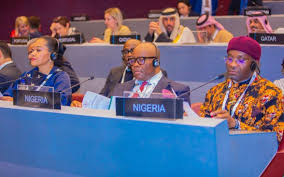
Deputy Speaker of the House of Representatives, Hon. Benjamin Okezie Kalu has requested the amendment of the Inter-Parliamentary Union (IPU) General Assembly rules to accommodate more emergency items.
Incidentally, the proposal has been accepted for consideration alongside others such as raising awareness of the International Court of Justice provisional measures for Israel in relation to Palestinians in Gaza, and the need for urgent action on the humanitarian crisis in Gaza, South Africa, with the support of the Arab Group and the African Group
22 March 2024; the immediate release of the hostages in Gaza; parliamentary diplomacy for peace in Palestine Indonesia and Malaysia.
Some other proposals also tendered for consideration were a call for urgent action regarding the conflict in the Middle East, Denmark, France, Hungary, Portugal, Sweden and United Kingdom;
free, fair and transparent elections
without prohibitions: Towards an orderly
and peaceful democratic transition in the Bolivarian Republic of Venezuela
Argentina, on behalf of the delegations of Ecuador, Guyana, Peru, Trinidad and Tobago, and Uruguay and the call for urgent action to end the aggression and massive violations of human rights in the Democratic Republic of the Congo.
Speaking at the just concluded 148th meeting of the Union in Geneva, Switzerland, Kalu said that the current IPU General Assembly Rule 11(2) shortchanges Africa and the crises that bedevilled the continent.
He said: “We must reconsider our approach to addressing emergency items. Rule 11.2 allows for flexibility, suggesting the possibility of addressing multiple urgent issues. Neglecting regions like Africa, where significant challenges persist, is unacceptable. Let us interpret the rule’s purpose – addressing pressing issues – to allow for consideration of multiple emergency items. By reforming our processes, we can ensure parliamentary diplomacy truly reflects the world’s diverse needs.
“I am proposing one item per continent at every assembly to energize the voices of concern across the globe”, he said.
Rule 11(2) of IPU General Assembly stated that “Consideration and acceptance by the Assembly of a request for the inclusion of an emergency item in its agenda shall be subject to the following provisions: (a) A request for the inclusion of an emergency item must relate to a
recent major situation of international concern on which urgent action
by the international community is required and on which it is appropriate for the IPU to express its opinion and mobilize a parliamentary response. Such a request must receive a two-thirds majority of the votes cast in order to be accepted.
“(b) The Assembly may place only one emergency item on its agenda.
Should several requests obtain the requisite majority, the one having
received the largest number of positive votes shall be accepted.”
Kalu who bemoaned the conflicts in some parts of the world urged the IPU to urgently address the humanitarian crisis in Gaza and also create a task force for Sudan and other countries facing similar challenges in Africa.
“Sunday’s deliberation on the humanitarian crisis in Gaza showed us what parliamentary diplomacy should not be. We failed to reach a consensus, missing a crucial opportunity for
collective action.
“It is a cause for concern that the plight of Africa, where thousands of lives are lost to ongoing conflicts, has yet to be addressed as an emergency item. From the horrific situation in Sudan, with over 13,000 lives lost, to the ongoing tragedy in the D.R. Congo, to the militancy and terror in Sahel Africa, the human cost of these conflicts cannot be ignored because the ripple effects of these crises in Africa ultimately impact the world.
“It is in this regard that IPU must as a matter of utmost imperative create a task force for Sudan. The unchecked crises in Sudan, Somalia, and D.R. Congo, all in Africa, create a ripple effect of instability across the continent, breeding conditions for extremism, mass displacement, and a drain on resources that could be used for development”, he said.
Lamenting the poor percentage of women in politics, the Deputy Speaker called for gender equality and inclusion in governance, stressing that women’s underrepresention in parliament impeded progress.
“Gender equality and inclusion in governance and peacebuilding is
essential. Statistically, the representation of women in parliament in the world, hovering around 26%, is a stark reminder that we have yet to fully utilize the talent and perspective of half of the world’s
population”, Kalu said.

News
BREAKING: Nigerian Government Hit with N10m ECOWAS Court Award for Assault on Journalist Oyekunle

By Gloria Ikibah
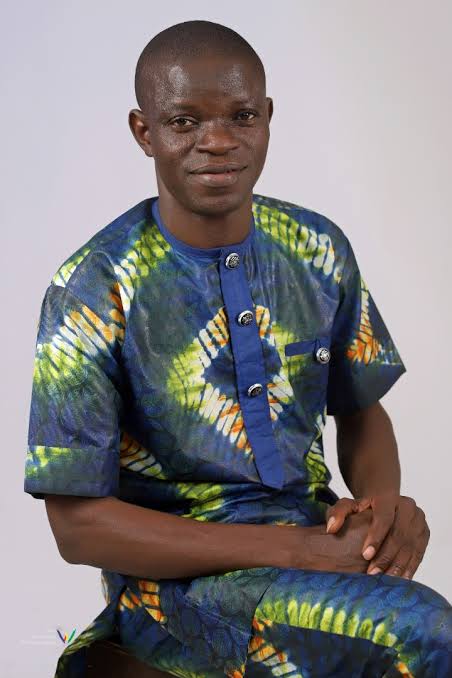
The ECOWAS Community Court of Justice has slammed a N10 million in general damages against the Federal Republic of Nigeria over the physical assault, unlawful arrest, and seizure of property belonging to a journalist with Independent Newspaper by name Jide Oyekunle.
The landmark ruling in Suit No. ECW/CCJ/APP/29/25 was secured by Avocats Sans Frontières France (Lawyers Without Borders France) on June 22, 2026, under its eRIGHTS project, supported by the European Union, which focuses on defending human rights in the digital space.
Comrade Oyekunle who is currently the Secretary of the Nigeria Union of Journalists, NUJ, Federal Capital Territory Council, on August 1, 2024, during the coverage of the #EndBadGovernanceInNigeria protests at the Eagle Square, Abuja, was physically assaulted, unlawfully detained, his photo camera was damaged, while his mobile phone was seized by armed police officers on the order of former FCT Commissioner of Police, Benneth Igweh.
The Court in agreement with Counsel to the applicant, Collins I. Maidoh-Anene, Esq., that the detention of the journalist and seizure of his mobile phone by the Nigerian police, was “excessive, unjustified, and in violation of international law”.
The ECOWAS Court subsequently found the Federal Republic of Nigeria liable for violating the applicant’s rights to freedom of expression, personal liberty, dignity, and property under the African Charter.
The Court therefore ordered the Nigerian government to pay Comrade Oyekunle the sum of N10 million in general damages.
The court found that Nigeria’s actions suppressed his live coverage, thereby breaching his right to freedom of expression under Article 9 of the African Charter.
It also ruled that the assault and detention violated his rights to personal liberty, human dignity, and freedom from degrading treatment under Articles 6 and 5, while the temporary seizure of his phone violated his right to property under Article 14.
The Court further held that Nigeria’s justification failed the test of necessity under international law, making the conduct of the security forces excessive and unlawful.
In a statement signed by the Country Director of Avocats Sans Frontières France, Barrister Angela Uwandu Uzoma-Iwuchukwu, on Tuesday, said the judgment sends a clear message that a journalist’s digital tools are extensions of the modern press and newsroom and that their arbitrary confiscation by security forces constitutes a direct assault on the public’s right to know.
She said: “The court’s pronouncement adds to the growing jurisprudence from the regional court protecting journalists and human rights defenders who document protests and public interest events.
“ASF France will continue to monitor compliance with the judgment and provide legal aid to journalists facing similar violations.
“For Avocats Sans Frontières France and the eRIGHTS project partners, this ruling strengthens legal protections for journalism in the digital age. It shields reporters from tech-based censorship and intimidation, puts security agencies on notice that targeting media practitioners during protests will attract accountability, and reaffirms the ECOWAS Court as a vital shield for civic space in the region.”
Reacting to the landmark judgment, Comrade Oyekunle, said it as a significant affirmation that journalists have the right to carry out their constitutional duties without intimidation, harassment, or attack.
According to him, democracy cannot thrive where journalists are attacked for documenting events or where citizens are punished for exercising their lawful rights.
“The decision of the ECOWAS Court is not only about me; it is about every journalist, media worker, and Nigerian citizen who believes in the right to freedom of expression, access to information, and peaceful civic participation.
“This judgment sends a clear message that security agencies and government institutions must be held accountable when they violate fundamental rights.
“Because if democracy is all about good governance, accountability, and transparency, then press freedom should not be curtailed, denied, or restricted”, he said.
Oyekunle appreciated everyone who stood by him throughout the journey, including the Nigeria Union of Journalists FCT Council, Avocats Sans Frontières France, colleagues and rights advocates, and all Nigerians who continue to defend press freedom and democratic values.
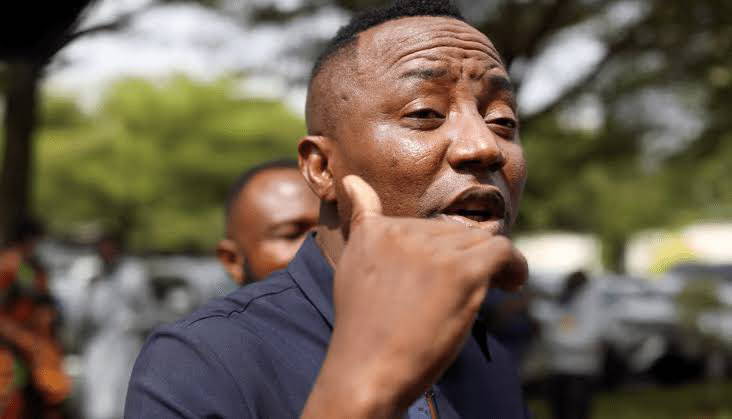
A Federal High Court in Abuja has fixed June 30 for a ruling on Omoyele Sowore’s motion seeking to vacate the order revoking his bail, as his lawyer pushed for a stay of execution while DSS counsel mounted opposition.
Omoyele Sowore’s freedom hinges on June 30.
The Federal High Court in Abuja on Wednesday fixed that date for a ruling on the activist’s motion seeking to set aside the bail revocation order that landed him in Kuje Custodial Centre, according to Vanguard.
Sowore’s lawyer, Raphael Adakole, moved the motion for stay of execution before Justice Mohammed Umar, arguing that the June 16 order revoking bail and issuing a bench warrant — triggered by Sowore’s absence from court — should be set aside entirely and the status quo restored.
The application, filed June 19, leans on Sections 35(4), 36(1), and 66(a&b) of the 1999 Constitution and Sections 169 and 352 of the Administration of Criminal Justice Act (ACJA) 2015, alongside the court’s inherent jurisdiction.
“We adopt the said reply on points of law while placing reliance on the further affidavit and urge the court to grant the application as prayed in the interest of justice,” Adakole told the court.
Justice Umar has now heard both sides. June 30 will deliver the verdict.
News
NDLEA unearths another massive industrial scale clandestine meth laboratory in Oyo forest(Photos)
. Arrests Mexican, 4 others; recovers multi-billion-naira worth of illicit substances
. We’ll find you in the cities, track you into the forests, and dismantle your infrastructure of death, Marwa warns drug cartels
Operatives of the National Drug Law Enforcement Agency (NDLEA) have struck yet another decisive blow against transnational drug syndicates following the discovery and dismantling of a fortified, industrial-scale clandestine methamphetamine laboratory operated by a Nigerian-Mexican cartel deep within the forest of Tapa Village, Ibarapa North Local Government Area, Oyo State.
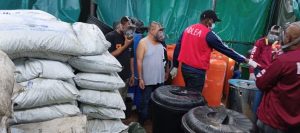
The breakthrough comes barely four weeks after the Agency dismantled a similar massive meth laboratory in a forest in Ijebu East, Ogun State, signaling a desperate attempt by drug barons to turn the Southwest axis into a synthetic drug manufacturing hub.
Speaking on the development at the NDLEA Headquarters in Abuja, the Chairman/Chief Executive Officer of the Agency, Brig. Gen. Mohamed Buba Marwa (Rtd) who was represented by the Director of Media and Advocacy, Femi Babafemi at a press briefing on Wednesday 24th June 2026, commended the gallantry, dedication, and clinical professionalism of the officers involved in the operation.
According to him, “On Wednesday, 17th June 2026, tactical operatives of the NDLEA stormed a highly fortified, industrial-scale clandestine methamphetamine laboratory operating deep within the forest of Tapa Village, Ibarapa North Local Government Area, Oyo State.
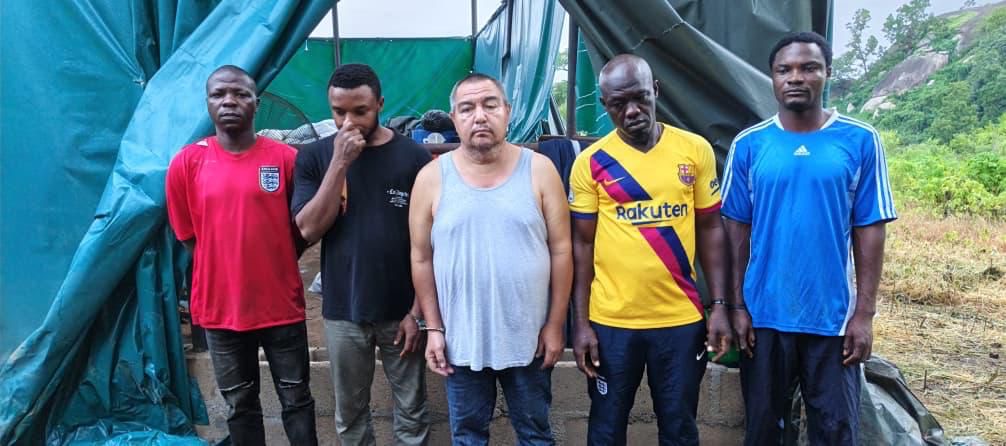
“This was not a rudimentary setup; it was a sophisticated, highly organized transnational syndicate. During the raid, our operatives successfully arrested five key members of the cartel on-site.
They include a 56-year-old Mexican Methamphetamine expert, Jose Villa Ochoa, brought in specifically to provide the technical expertise for large-scale synthesis and four Nigerian collaborators providing logistical support, cover, and local operations. They are: Maxwell Uche Nevoh, 30; Olatunji Yusuf, 37; Bankole Akeem Owolabi, 45; and Ganiu Monsiu, 43.
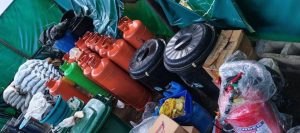
“The arrest of a foreign cartel specialist on Nigerian soil underscores the transnational nature of this threat, but more importantly, it underscores our Agency’s world-class intelligence capability to track, intercept, and neutralize them. Following the successful raid, a specialized team from our Directorate of Forensic and Chemical Monitoring moved in on June 18th, 2026, to conduct a rigorous forensic examination of the facility. What they uncovered is a massive, factory-level production line of poison.
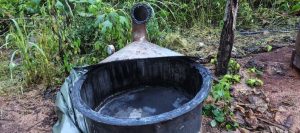
“The laboratory was fully stocked with a frightening array of precursor chemicals, industrial catalysts, and heavy-duty processing equipment. Chemicals and Materials recovered include: Phenyl-2-propanone (P2P), which is the the main, highly controlled precursor required for methamphetamine synthesis; 1800-litre drums containing Phenylacetic acid (the primary precursor used to synthesize P2P); Two 180L drums containing a staggering 300 litres of whitish crystalline substance; Four 180L drums containing dark liquid undergoing synthesis.
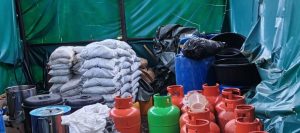
“Others include: 101 bags (25kg each) of Caustic Soda; 17 containers (25L each) of Sulphuric Acid; 19.5 containers (25kg each) of Tartaric Acid; 5 containers of Reniso Ultracool 68 (three 50L and two 25L capacity; 25 bottles (500ml each) of 80% Thioglycolic Acid; 2 containers (25L each) of Ethyl Phenylacetate, and 25 cartons of aluminum foil.
“The Industrial Processing Equipment discovered at the site include: One (1) Reactor Pot, which is the heart of the chemical synthesis; Two (2) mounted distillation units and three (3) fabricated mixers and condensers; as well as Two (2) vegetable dehydrator machines used for the rapid drying of the crystals.
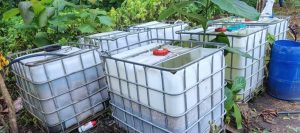
“As a result, immediate field tests were conducted by our forensic experts. Samples of the finished crystals recovered yielded a definitive positive result for Methamphetamine. Furthermore, the crystalline substance from the 180L drum tested positive for Phenylacetic acid. Every single gram of these exhibits has been safely evacuated, documented, and preserved for comprehensive and strict evidential presentation in court.
This is yet another multibillion-naira worth of illicit substances and production equipment ready to push millions of doses of synthetic drugs into our streets, communities and the international community but for the vigilance of our dedicated officers.”
Marwa noted that the proximity of the latest discovery to the Ogun State lab uncovered about four weeks ago reveals a desperate attempt by drug barons to establish a synthetic drug manufacturing hub in the Southwest axis, adding that the cartels thought hiding in dense forests would shield them from the long arm of the law but were wrong.
“Let the message go out clearly to all drug cartels, domestic and international that Nigeria is not, and will never be, a safe haven for your illicit trade. We will find you in the cities, we will track you into the forests, and we will dismantle your infrastructure of death. They thought hiding in dense forests would shield them from the long arm of the law. They were wrong”, the NDLEA boss warned.
“We want to commend the gallantry, dedication, and clinical professionalism of our officers of the Oyo state Command involved in this operation. To the Nigerian public, we say thank you for your continued trust and credible information. Together, we are securing the future of our nation”, he added.

BREAKING: Nigerian Government Hit with N10m ECOWAS Court Award for Assault on Journalist Oyekunle

Sowore to relax in Kuje prison as court fixes June 30 for bail ruling

NDLEA unearths another massive industrial scale clandestine meth laboratory in Oyo forest(Photos)



-

 News22 hours ago
Southern Parkway Service Lanes to End Gridlock, Transform Abuja’s Southern Corridor, Tinubu Assures
-
 Metro10 hours ago
Alleged Drug Trafficking: Billionaire, Two Others Face Trial in Lagos
-

 Foreign10 hours ago
US Targets Alleged ISIS Funding Network, Names Nigerian
-
 News2 hours ago
DAY 11 of Projects Commissioning in the FCT: TInubu set to commission Kuje, Gwagwalada road today
-

 News10 hours ago
Hajj: NAHCON concludes return of pilgrims’ airlifts
-

 News10 hours ago
Benin monarch to place a curse on kidnappers, armed robbers, fixes date
-
 Sports10 hours ago
Super Eagles: Chelle, NFF Reach New Contract
-
News3 hours ago
DAY 11 of Projects Commissioning in the FCT